
He bought back the block in Liberty City. Now he’ll lead Miami’s MLK Day parade
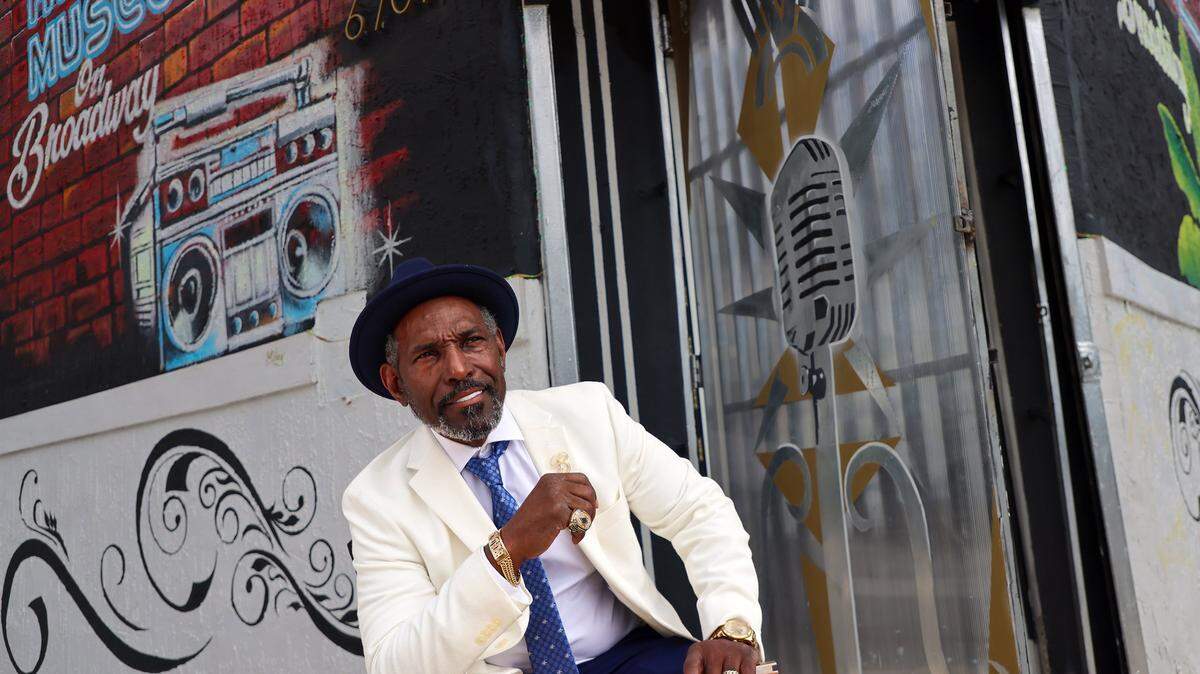
Strolling down 18th Avenue in Liberty City with a lit cigar in one hand, Broadway Cuthbert Harewood Jr. is greeted like a celebrity.
“Hey Broadway,” at least a dozen people say as they dap him up and stop to chat with him.
Affectionately, he’s considered the mayor of Liberty City: known for buying real estate in the area with the hopes of revitalizing the neighborhood he grew up in while encouraging people on the path to prosperity.
He has amassed a real estate portfolio of at least 40 properties in Miami-Dade County, which he slowly began amassing in the 1990s. His properties now include a museum dedicated to celebrating hip-hop culture, a community clinic and countless residential rentals.
Harewood’s passion for Liberty City runs deep. He’s worried about the increasing development in the area, particularly Liberty Square. “You have developers coming from all over the world and making it easy for them to build everything,” Harewood said. This is part of what motivates him to keep buying back the block.
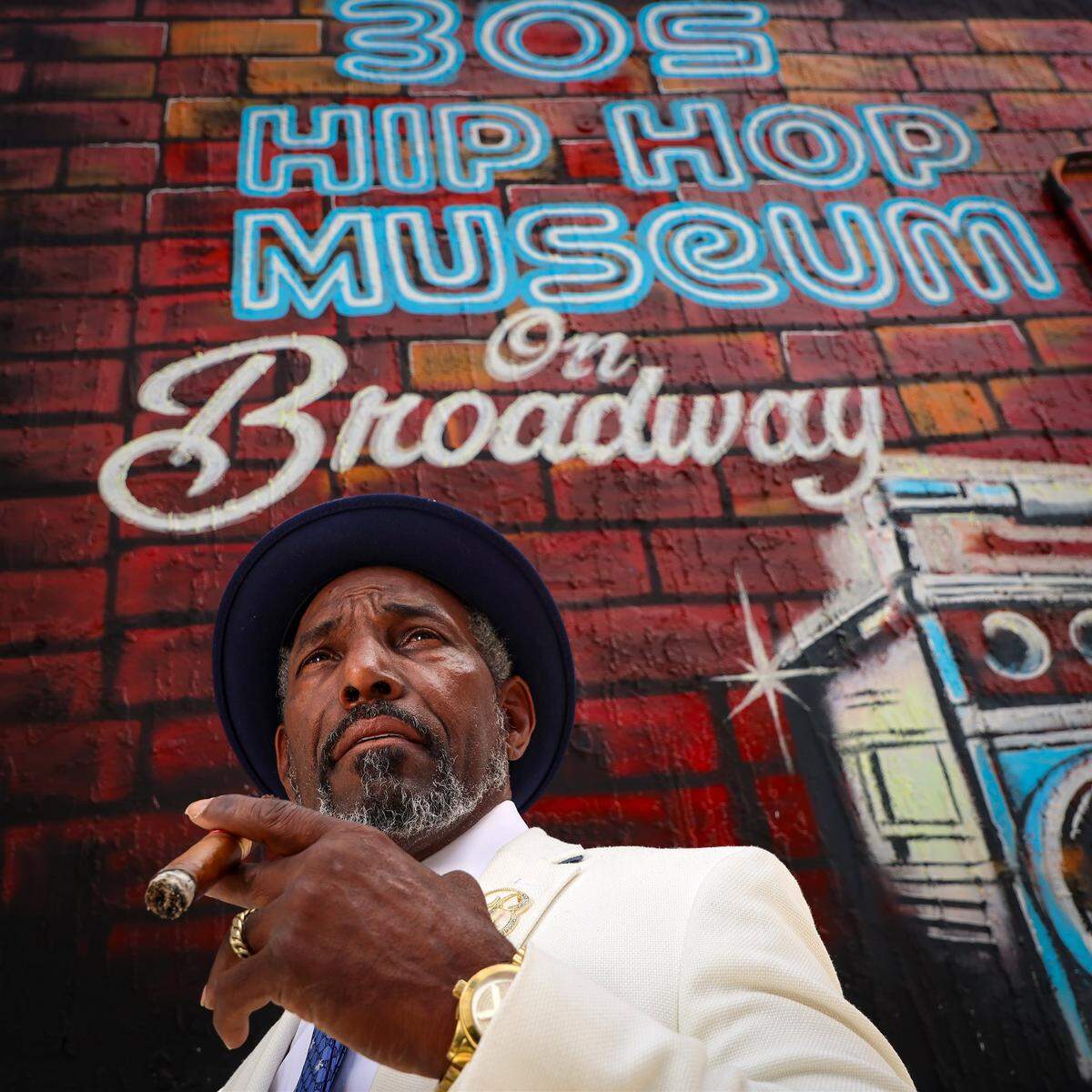
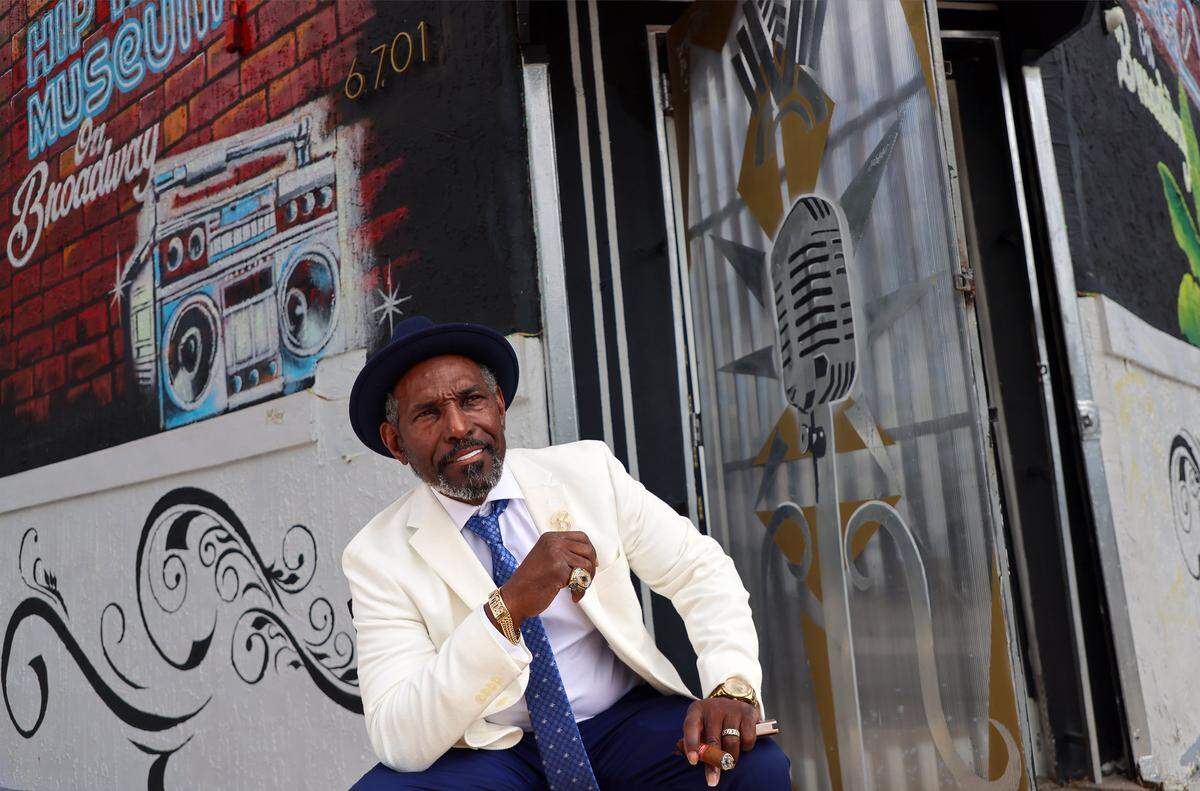
The suave suit, fedora and cigar are a part of Harewood’s signature look, and as he walks through Liberty City you hear the pride he has for a community he says shaped the man he is today.
This is why being named as a grand marshal of the 49th Annual Martin Luther King Jr. Parade, which takes place along Northwest 54th Street between 7th and 32nd Avenues on Monday at 11 a.m., is an incredible honor to Harewood.
“This is the highlight of highlights to me,” he said. “I can’t speak for no one else. To actually have an honor like this…none of them come as close to this. It shows other inner city kids that grow up that anything is possible.”
‘You can’t stand next to me’
Born Cuthbert Harewood at Jackson Memorial Hospital — Broadway came later, it was a nickname he eventually made official— Harewood was raised in Liberty City just blocks away from the route of the MLK Day parade. But since he was raised in a strict household, he didn’t attend his first parade until well into his adult years when he snuck his 1972 blue Caprice Classic into the parade.
“I acted like I was supposed to be inside there, and they waved me on,” he said. “I’m just that cool.”
Harewood gets nostalgic when he thinks about his upbringing under his Bahamian mother, who worked as a custodian at Liberty City Elementary School when Harewood and his three sisters were growing up. She often brought food from the school or clothes that were in the lost and found bins to give to her neighbors.
Harewood described Liberty City as a community where kids could be as close to free as possible: jumping rope, playing with marbles and hand games. “It was a village,” he said. “Anything you need or want, it was in our neighborhood. Everybody knew everybody. And don’t do anything wrong! Your mom would know by the time you get to the house.”
His mother’s strictness helped Harewood avoid getting caught up in selling drugs. When he was 18, Harewood thought he could make fast money by standing on the corner being the lookout guy for drug dealers, something he saw other boys do.
“That was my plan, but when I went up on the corner, everybody told me, ‘you can’t stand next to me,’ ” he said. Turns out, the kids on the corner had just as much respect for his mother as he did. “Man, your mama asked that her one and only son not be on the corner doing what we do,” they told him.
Harewood’s childhood home would eventually fill up with extended family, and they would move from place to place — something that wore on him. His goal was to get out and be on his own.
“It was the spark that fueled me to do that,” he said. “I was looking at how hard my mom had to work; we’re moving from this property to that property, and I’m like, ‘I’m not going to be stuck in this position.’”
‘This is gonna be the spot’
Once he graduated from Miami Jackson High School in 1980, Harewood began working for the Miami Herald as a platemaker and later did many other jobs at the paper. He credits his time at the Miami Herald, specifically his relationship with former publisher Dave Lawrence, for encouraging him build his real estate portfolio.
Harewood recalled wanting to buy property closer to Miami Beach, but said Lawrence told him to buy in his own neighborhood.
“He knew about global warming, sea level rising, he knew all that stuff in the ‘90s,” he said. “He was talking about this stuff, and I told myself I better listen to this man saying — this is gonna be the spot.”
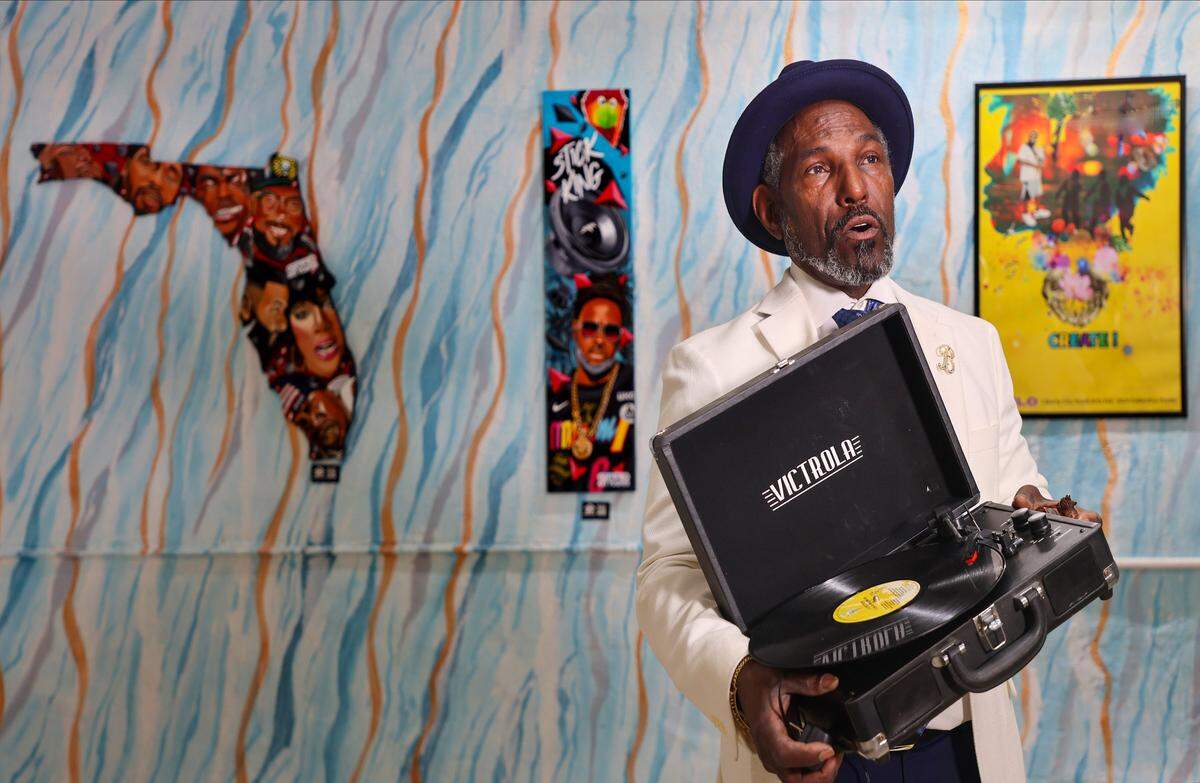
Harewood has since bought about 40 properties and opened the 305 Hip-Hop Museum on the corner of 18th Avenue and 67th Street, which celebrates Miami’s local hip-hop culture and its contributions to the larger rap landscape. He also helped nonprofit healthcare provider Doctors United Group relocate to the one of his properties at the corner of 18th Avenue and 62nd Street.
Juan Davalos, chief operating officer of DUG, said he’s seen a reduction in people on the street since they’ve set up shop in the community. “We see a lot of impact in the community because we’re helping them on the prevention side,” Davalos said, adding the nonprofit also does food distributions for nearby residents.
Harewood has also been a mentor to those who grew up in the community. His caring spirit is what Amir Williams credits with directing his life on a better path. When he met Harewood, he was a student at Miami Dade College with parents who had substance abuse issues. He had been living on his own since he was 15, and was just trying to make a way.
“I didn’t know him that well, and knew he was real cool and everyone liked him because he dressed well,” Williams said. He recalled a time when Harewood asked for a ride home since his car was in the shop. Williams obliged, but told him his tires were in bad shape.
For Harewood, that was no problem. He told Williams to pull into a nearby body shop and he asked a mechanic to look at the car. Williams, however, was worried since he had no money to pay for the repairs. He assumed Harewood’s winks and nods were for him to floor it once the work was done.
“I got the car in neutral ready to punch it, and I looked over my shoulder, and he reached in his pocket and he paid for it,” Williams said. “I’m bone silent and I’m confused.”
When they arrived at Harewood’s house, Williams demanded to know why he paid for the tires. “He said something I had never heard: ‘Man, everybody needs help sometimes.’ ”
Williams said Harewood, who he considers a mentor and a friend, changed the trajectory of his life with what seemed like simple words. Williams got his degree and would later become a correctional officer and eventually supervisor of security operations at Mount Sinai Medical Center.
“The important part, I guess, for a young Black man, was to see somebody talking like that that was cool,” he said. “He was fresh-dressed, but he didn’t talk like everybody else talked. He didn’t talk about selling drugs and all this stuff. He talked about working hard.”
Homegrown hero
Harewood’s mystique and work in the Liberty City community is what drew muralist Marvin Weeks to him when he came to Miami in the late 1980s. Weeks said Harewood was an entrepreneur in the community who was looking to focus on the arts to help beautify the area.
Weeks appreciates Harwood’s focus on community collaboration when it comes to revitalization. “He’s connected to the people,” Weeks said.
The two have worked on various art projects, including murals on Harewood’s buildings and the 305 Hip-Hop Museum.
Miami District 5 Commissioner and Chairwoman Christine King, who is also a grand marshal this year alongside Miami-Dade County Commissioner Oliver Gilbert and Miami-Dade County State Attorney Katherine Fernandez Rundle, met Harewood when she was in charge of the Martin Luther King Economic Development Corporation and said that the most powerful part of Harewood’s influence is that he’s homegrown.
“He wants our community to be better. He wants our families to be better,” she said. “That is his walk in this lifetime. He’s a giver and not a taker. And he shows you by his actions. He doesn’t just talk. He walks the walk that he talks.”
This story was originally published January 16, 2026 at 4:30 AM.