‘Not just an urban story.’ New docuseries explores how ‘Miami Kingpins’ rose to national acclaim

In the early 80s, Burt Simmons had a choice.
On one hand, the American Senior High graduate could continue a successful wrestling career that had already earned him district honors, a state title and even a scholarship to the University of Ohio. Or, the Liberty City native could dive headfirst into the streets, a pathway that had begun to prove lucrative – at his peak, he claimed to have “$100,000 days” – but always ended in one of two places: a penitentiary or coffin.
“I turned down the wrong road,” Simmons, known world over as “Convertible Burt,” told the Miami Herald, calling himself and others “products of our environment.”
“That was the trend back then. Miami was built off of that drug money. We were just part of the process.”
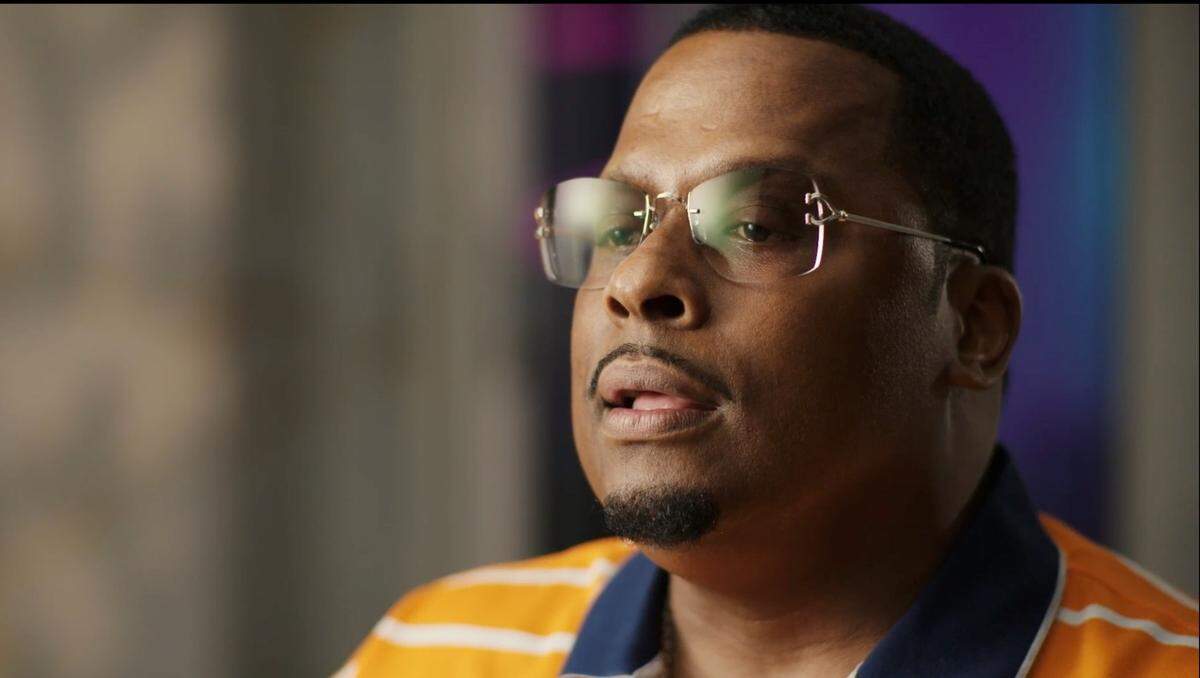
The consequences of Simmons’ decision undergirds the recently released docuseries “Miami Kingpins.” Produced by Slip-N-Slide Records CEO Ted Lucas, the three-part anthology shows how the trappings of the inner city created three antiheroes in Convertible Burt, Nathaniel “Bo Dilley” James and James “Bossman” Sawyer. The trio would individually climb to the top of the drug game, leaving a legacy that extends into both hip-hop and Miami culture.
“This is not just an urban story,” Lucas said of “Miami Kingpins” which can be purchased and streamed via Amazon Prime. “We really showed you an overall view. If you grew up in Miami in the 70s, 80s and 90s, these are things that we were able to see through our eyeballs.”
It’s no secret that Miami used to be the drug capital of the world. From the infamous “Paradise Lost” Time Magazine cover to films like “Scarface” to the Cocaine Cowboys era that turned South Florida into the set of a tropical Western, the examples are endless. What’s often missed in these stories, however, is melanin.
“If you look at the top echelon of crime in the city, the folks who are really at the very top are white,” historian Marvin Dunn said in the docuseries. “But they need people right below them to implement their dirt, to implement their strategy of getting drugs distributed and Black people have satisfied that role and it’s very profitable.”
Think about the confluence of events that transformed Miami’s urban enclaves in the early 80s. The McDuffie Riots. The poverty. The influx of crack cocaine.
“It was the perfect time for the community to lose itself,” Dunn added. “They saw how well the Cubans and Colombians were doing dealing with drugs so that was a draw for people.”
As much as the historical context was important, the docuseries doesn’t hide the flashiness, either. These guys made real money during the 80s, even going as far as building their own sub-economy that afforded somebody like Simmons the opportunity to buy a Rolls Royce or party with Mike Tyson or even become a fashion icon. And while many could see the story as glorification, the filmmakers see the project as an educational tool.
“I asked Burt and I asked Bossman ‘Would you do it again?’” Lucas said. “And they told me ‘Ted, I spent more time in prison than I spent out in society. It’s not worth it.’ That story needs to be told before somebody else goes and gets 31 years.”
The glorification piece was why former Miami Herald journalist Peter Bailey hesitated to take on the story in the first place. He didn’t want to seemingly praise what was objectively a dark part in not just Black Miami but American history. Something, however, changed when he thought about the unique perspective that the project highlights.
“This series is a moment of reckoning that puts the weight of morality on America,” said Bailey who not only directed but narrated the project. “How do we have American citizens living in the wealthiest country in the world forced to sell poison to their own community to survive?”
Added Bailey: “Both addict and dealer are bold in desperation. In a state of survival, morality gets thrown out the door. So from an educational standpoint, America and the judicial system, we want to educate them and see how this can inspire some kind of reform.”
Therein lies one of the main through lines of the series: how much one’s environment can shape their upbringing. In the case of Simmons, James and Sawyer, it clearly had disastrous consequences. But for Lucas, who grew up passing by Sawyer’s luxurious estate, it showed him a life outside of what his parents wanted. He viewed Sawyer and others as catalysts for him founding Slip-N-Slide Records, the label that launched the careers of Trina, Trick Daddy and Rick Ross.
“Bo Dilley had the biggest house in Carol City,” Lucas said. “The biggest house. When you ride by that house and there’s a car in the picture window and the picture window is almost as big as your house. You see a white security guard standing in front of his house. Nobody had a white security guard standing in front of they house in Carol City. It inspired me. Like I could do more than just get a job, be there for 30 years and wait for that pension.”
Ross, whose 2006 breakthrough record “Hustlin’” includes a boast that he touched work like the infamous Convertible Burt, felt similarly.
“The music I began to make tapped into that lifestyle,” Ross said in the docuseries.
That lifestyle didn’t come without pain. Simmons spent nearly 24 years behind bars inside some of the worst federal penitentiaries in the country. He didn’t get a chance to really raise his four children. And the community – from addicts to dealers to everyday citizens – suffered greatly.
As he reflects, Simmons wonders what could’ve been if he would’ve chosen wrestling. He’s not shy on confidence – “it would’ve led into some type of greatness because I’m just a great individual,” Simmons quipped – yet acknowledges how the mistakes he made has allowed him to speak life into others. That, more than anything, is his life’s mission now.
“That means the world to me because they were able to take what we did and turned it to a positive,” Simmons said of Lucas and Ross. The whole point of this docuseries, he continued, was “to change the narrative of people using crime to get money. I wanted to show them it’s a way to get money and earn it by doing right. You don’t have to do the stuff that we went through.”
This story was originally published July 7, 2025 at 7:00 AM with the headline "‘Not just an urban story.’ New docuseries explores how ‘Miami Kingpins’ rose to national acclaim."