
20 years after opening, Arsht Center moves forward with plans for parking garage

Twenty years after it opened, the Arsht Center for the Performing Arts is embarking on a major production that’s long been high on its patrons’ wishlist: building a dedicated parking garage at its front door.
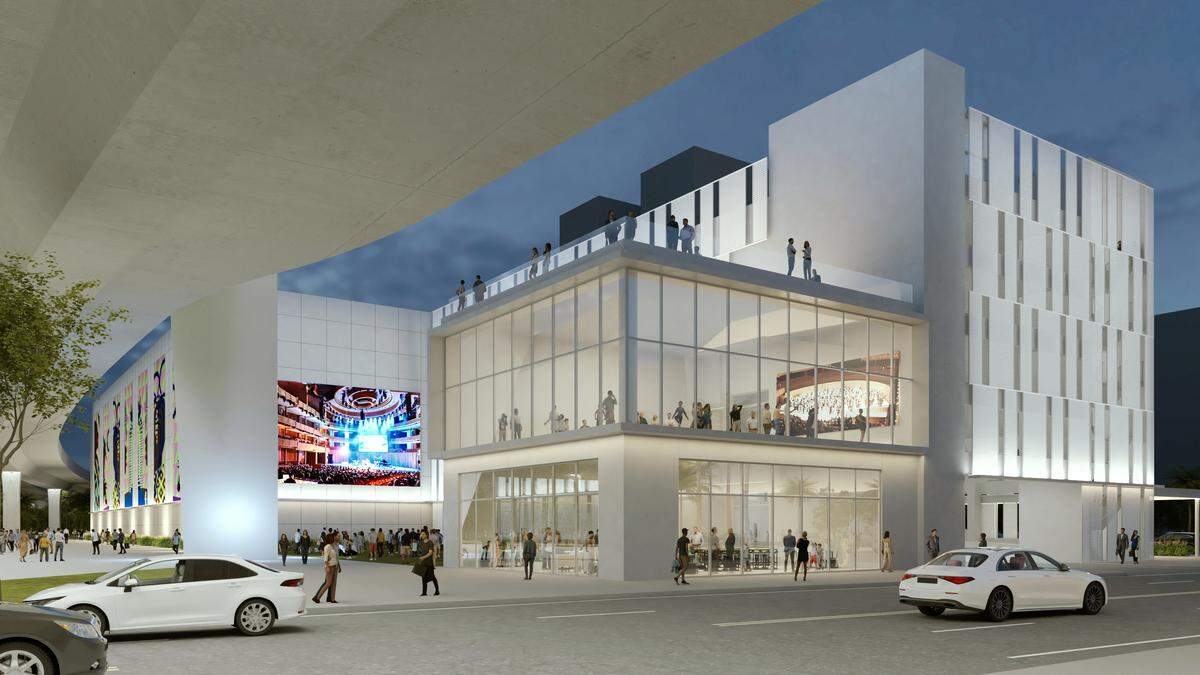
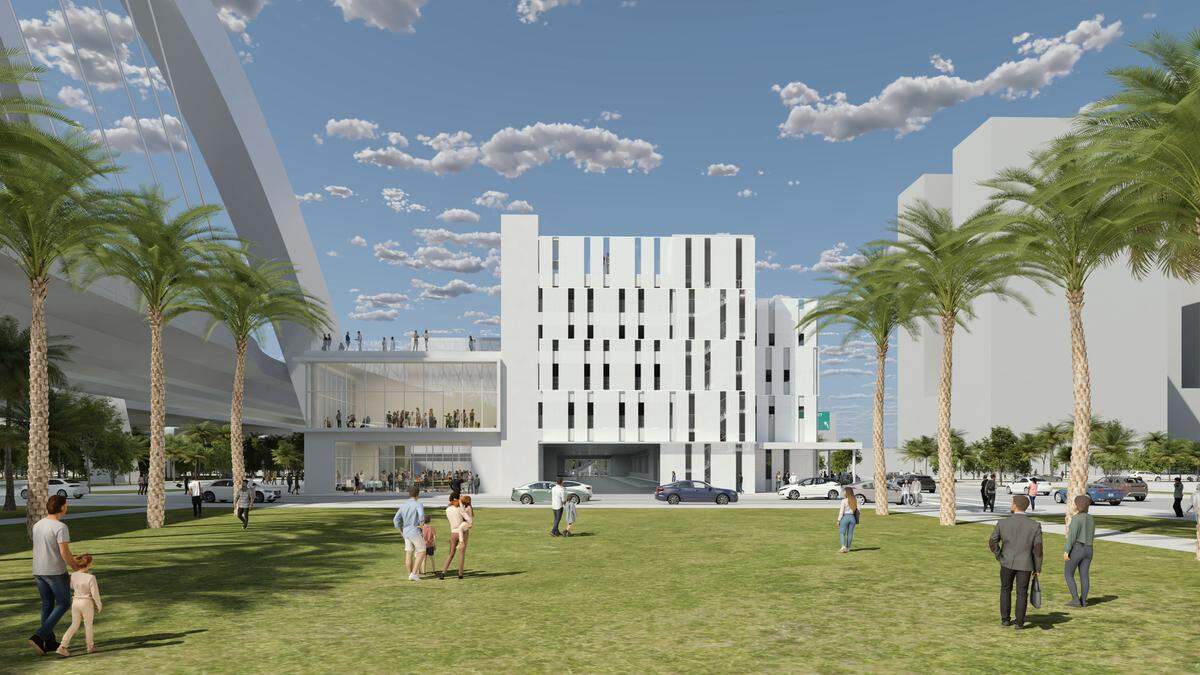
The Arsht said Monday it has submitted a plan to its landlord, Miami-Dade County, for a $61 million, 750-space garage that would also include two performing arts studios to expand the center’s rehearsal, production and educational capabilities.
The six-story garage would rise on public land — a county-owned, 1.5-acre lot on Northeast 13th Street that sits kitty-corner and just to the southwest of the Arsht’s Ziff Ballet Opera House.
The Arsht, which is governed by a nonprofit trust, plans to finance the garage with no direct public money or financial contribution aside from the county land, said president and CEO Johann Zietsman. The Arsht trust is fronting $16 million from investment funds, with the balance coming from private bonds it will issue and pay back with parking revenue over 20 years, he said.
“It’s a very positive project,” Zietsman said. “We’ve been really thorough in thinking it through, and I’m positive it’s going to be a great solution.”
The lack of dedicated parking has long been a sore spot for Arsht visitors and staff. The publicly financed $472 million plan for the center’s construction did not include a garage, which would have been a costly drain on a tight budget for a project of its magnitude.
Since then, the center has relied on surrounding surface lots and garages it doesn’t control, but those are disappearing as new residential towers are built around it.
A nearby 400-space private garage its patrons used was demolished in the last couple of years to make way for a new tower, while lots owned by the adjacent Miami-Dade School Board that are shared by Arsht visitors on evenings and weekends are also now slated for redevelopment.
An analysis done for the Arsht concluded that in five years, only 150 parking spots would be available in the vicinity at the current pace of development, Zietsman said. Valet parking, meanwhile, can no longer rely on inconsistent and ever-shifting availability of space provided by third parties, he said.
“It was already a known fact that parking was a challenge, and it’s become very clear we can’t continue to rely on third parties,” Zietsman said. “That’s not a good plan. So this is the time to do it.”
When will the Arsht Center get a dedicated parking garage?
The timeline for the Arsht garage is not yet entirely clear.
The narrow county lot, which is currently being used as a staging and storage area by Florida Department of Transportation contractors working on the ongoing Interstate 395 reconstruction project, was earmarked for an Arsht garage a decade ago. The county acquired it in a land swap with FDOT as the I-395 project, which is running some eight years behind schedule, got underway.
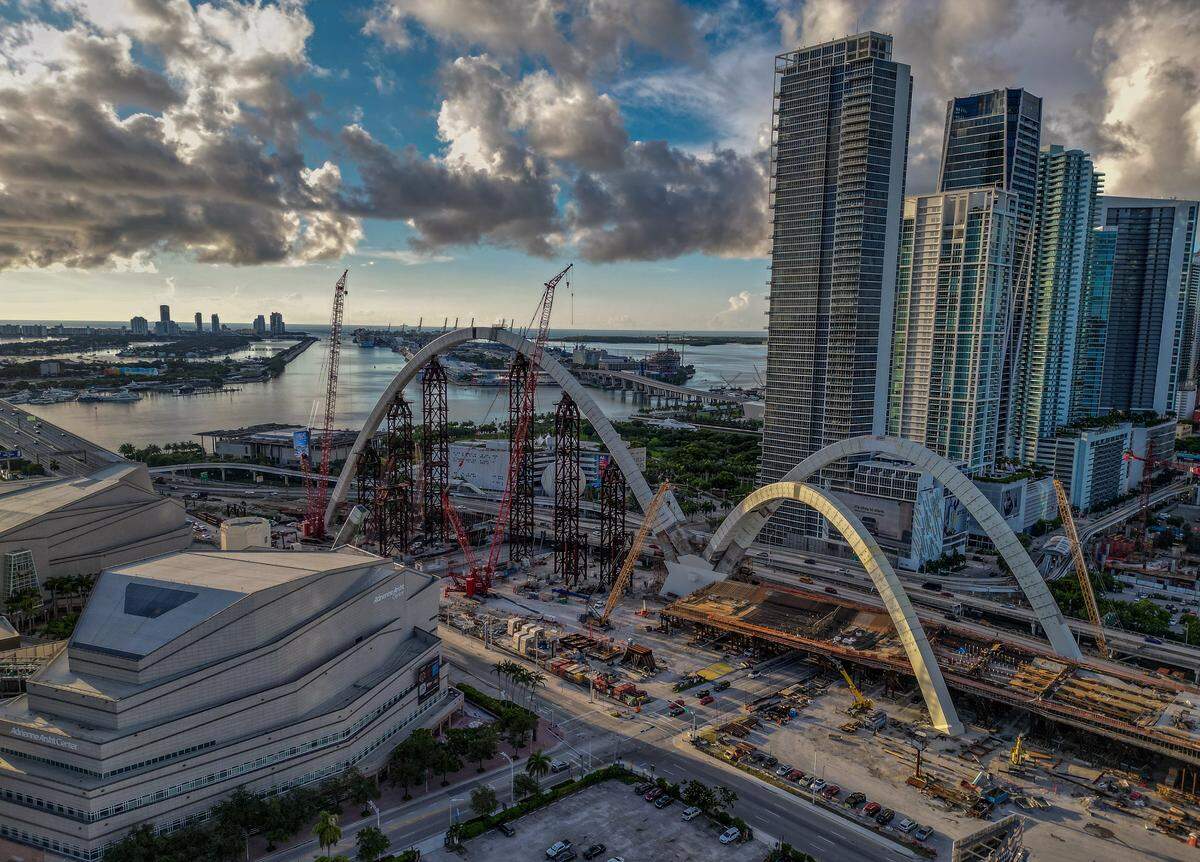
In exchange, FDOT received a lot of equivalent size directly in front of the opera house that the Arsht had also used for parking. The bases for some of the six arches that will support the so-called signature I-395 bridge over Biscayne Boulevard now occupy a large portion of that lot.
FDOT has been using the abutting county-owned lot with permission from the Arsht and has promised to vacate it when the center needs it, Zietsman said. The trust’s application to the county, which includes financing and construction plans, could meanwhile take as long as a year to review and approve, he said.
Once it’s approved, construction would take just 14 months, Zietsman said. The plan calls for precast concrete slabs to be tilted into place at the site, a common construction method for garages and industrial buildings that saves time and money.
The slabs would be covered with decorative panels of a material and design that’s still to be decided, he said. The plan also calls for Art in Public Places works at the garage.
The planned garage is long and relatively narrow to fit the tight lot, which extends from Northeast Second and Northeast First Avenues and will butt up against the new I-395’s elevated westbound span. The building will be about 12 feet taller than the span, allowing for a sign that could be underwritten by a donor, Zietsman said.
The garage will include dedicated space at ground level for 30 school buses at a time. School buses that bring thousands of students to Arsht performances and educational events every year now park by the Knight Concert Hall on North Bayshore Drive, which is closed on those occasions.
However, when FDOT reopens the I-395 ramp at the end of that street, closing Bayshore Drive will no longer be possible, Zietsman said.
The garage plan also encompasses two studios, each at 2,500 square feet, to be used to develop productions, provide rehearsal space and public programming, he said.
What about previous plans for parking at the Arsht?
The Arsht has been discussing garage options for years under several alternatives.
The decision to move forward with the garage on its own means it’s no longer waiting for a complex development plan by Miami Beach-based developer Russell Galbut’s Crescent Heights that would incorporate shared parking space for center patrons and staff as part of a massive residential and commercial project next door to the opera house.
That plan, which envisions 1,100 parking spaces, is still moving forward, according to Galbut, who said in an interview that he expects school board approval of the project in June. The project would be built on land owned by a Crescent Heights affiliate and the school board.
But Galbut said he doesn’t yet know whether the Arsht remains interested in sharing parking or whether he will need to scale down his garage in response to the center’s announcement.
“It would be silly to build so much parking,” Galbut said. “The whole concept was school board parking during the day, and Arsht nights and weekends, but it doesn’t matter to us.”
Galbut said he expects financing for his overall project to be finalized in December, with start of construction coming a year after that. He’s not sure FDOT will be able to vacate the county lot any time soon since construction on the highway project, now scheduled for 2029 completion, is so far behind.
Given the need for the county lot to be prepared for construction once FDOT does leave, he said he believes it’s unlikely the Arsht garage will be done before his project is completed.
“We’ll be long done by then,” he said.
Zietsman said FDOT has repeatedly assured Arsht and county officials that it will leave the lot when asked. He also said he expects county review to be streamlined since officials have been closely involved in the planning of the garage project.
The Crescent Heights project, he noted, has been “on and off” for years. The Arsht board of trustees concluded three years ago that it could no longer afford to wait and decided to forge ahead without Galbut, Zietsman said.
“It was clear the project was not secure enough at the point when we decided to go forward with the garage,” he said. “We couldn’t wait for things to fall into place. We wanted to control the timing.”
What will the garage look like?
Another variable the Arsht wanted control over is design. While a commercial or residential garage is designed to handle vehicles trickling in and out at different times, a garage for a theater needs to manage large flows produced by hundreds of cars arriving and leaving all at once.
“We want that experience to be the best it can be,” Zietsman said.
Another factor that Zietsman said should help move the garage project smoothly along is that it will be built by Servitas, a Texas-based developer specializing in public-private partnerships. Servitas, which Zietsman said is also advising on the garage financing plan, has some substantial local experience.
The firm developed and built a 410-bed student residential building at Florida International University’s North Miami campus, and it developed and built a new 80-unit workforce apartment building for cops, firefighters and artists in collaboration with the city of Miami Beach. The Anamar at Collins Park, which opened a year ago, also includes dorm suites for Miami City Ballet students at its school across the street.
Echoing concerns from other observers, Galbut also raised questions about what he said were previous plans for the county lot where the Arsht plans to build the garage to be incorporated into the Underdeck, the 33-acre park that’s supposed to be built under the new I-395 span once it’s finished.
Plans for the park have in substantial flux over the years and were cast into uncertainty when the Trump administration last year canceled a $60 million grant to the city of Miami that would have paid for the bulk of the Underdeck’s construction.
A portion of the FDOT lot that the agency received in the swap with the county was also supposed to be turned into a plaza in front of the opera house in some versions of the park proposal. A civic group launched with support of the Arsht independently outlined an elaborate plan for that plaza, but it was never officially adopted, and the group is now defunct.
Zietsman said the Arsht will explore other ways to defray garage-construction costs once the county approves the project, including the selling of naming rights, sponsorships and a fundraising campaign.
Separately, the center is also pursuing alternative funding sources for its operation. While Zietsman said ticket sales are substantially exceeding estimates this year, the county faces a revenue crunch that may force steep cuts in its cultural programs, including at the Arsht, this coming budget year.
Zietsman said the trust is still pursuing a plan for a pair of stand-alone digital advertising billboard towers facing I-395 that the county put the brakes on in 2024 after the city had granted a permit. A similar electronic billboard installed at the nearby Perez Art Museum Miami provoked a public outcry but remains in place.