Why did several rays and sharks die in the span of a week at Frost Science Museum?
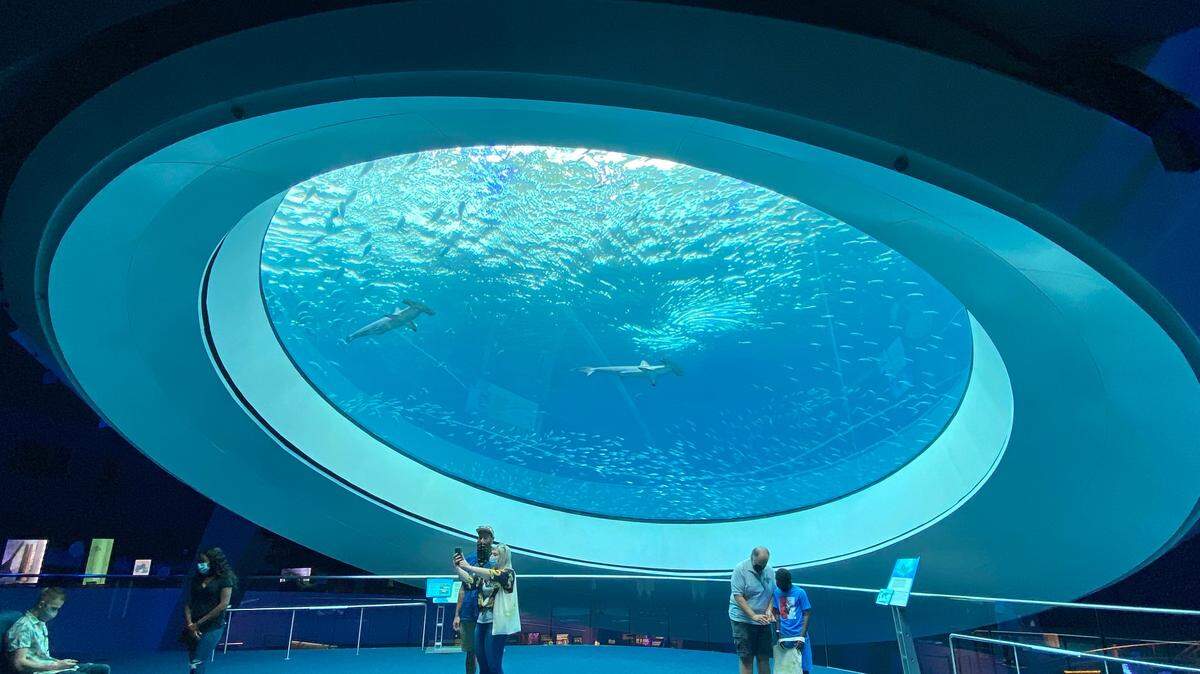
Scientists are investigating a recent fish kill at the Frost Science Museum in Miami where a number of bait fish, rays and sharks recently died in the span of a week.
It was mid-March when an unknown number of false pilchards — a type of bait fish — started dying inside the museum’s fish tanks, said resident Frost Science veterinarian Dr. Kristen M. Dubé. And before anybody realized what was happening, she said, a few devil rays, a scalloped hammerhead and a silky shark also died.
Scalloped hammerheads are considered critically endangered by the International Union for Conservation of Nature. Most types of devil rays are endangered and silky sharks are vulnerable, according to the international agency.
Dubé called it an “absolute tragedy.”
“This has taken a huge toll on our staff,” she said Tuesday.

The museum is home to a 100-foot wide, 500,000-gallon Gulf Stream Aquarium, where different species of fish, devil rays and hammerhead sharks travel through open water.
Dubé’s team is working with experts in water quality, nutrition and animal health from across the country — including from the University of Florida and University of Miami — to figure out what killed the aquatic creatures. Scientists have been performing necropsies and lab tests, but so far, the results have been inconclusive, with most of the likely causes ruled out, she said.
“We have not seen any signs of any sort of contagious disease,” she said. “We also haven’t seen any signs of a bacteria or a virus.”
Dubé said researchers continue to test numerous water, tissue and blood samples to find out what killed the animals, a process that can take several weeks. She said that a myriad of potential causes are being considered, from toxins to external factors that could be causing stress to the animals.
“It’s like looking for a needle in a haystack,” she said.

The rest of the animals appear to be safe and the museum continues to be open to the public, according to Dubé.
“In the meantime, we are watching the animals very closely, making sure they maintain their appetite and watching for any behavior changes,” she said. “If we see anything of concern, we can int//ervene and treat them if necessary.”
Recent shark deaths at Frost Science
This is not the first time that sharks died in the custody of Frost Science, which first opened its doors in 2017.
Last year, two juvenile scalloped hammerheads and one adult silky shark died in a three-month span from September to December, Dubé said Wednesday, confirming an earlier report from Miami New Times.
The hammerheads, which had arrived in August, died after showing signs of fusarium, a potentially deadly fungus that can cause inflammation in the skin of certain sharks, according to a 2017 research paper written by Michael Hyatt, an associate veterinarian at the Wildlife Conservation Society’s New York Aquarium.
The museum did not determine what killed the silky shark, which was in a separate tank and had been with Frost Science since the museum’s opening, Dubé said.
There is no reason to believe that the fungus is the cause of the museum’s most recent fish kill, Dubé said. The veterinarian added that these sea creatures had been with the museum nearly since its inauguration and that no wildlife had been recently introduced to the affected tanks.
“That is something we can find on the tissue samples that we have submitted and the lab has conclusively said there is no sign of fungus on these tissues,” she said.
Dubé said that the museum’s primary goal is to determine the cause of the problem and to make sure that the remaining animals remain healthy.
“We are leaving no stone unturned to get to the bottom of what caused this problem,” she said.
This story was originally published April 12, 2022 at 5:01 PM.