
Bid to redevelop Vizcaya Metro station parking lots sets up battle of big developers
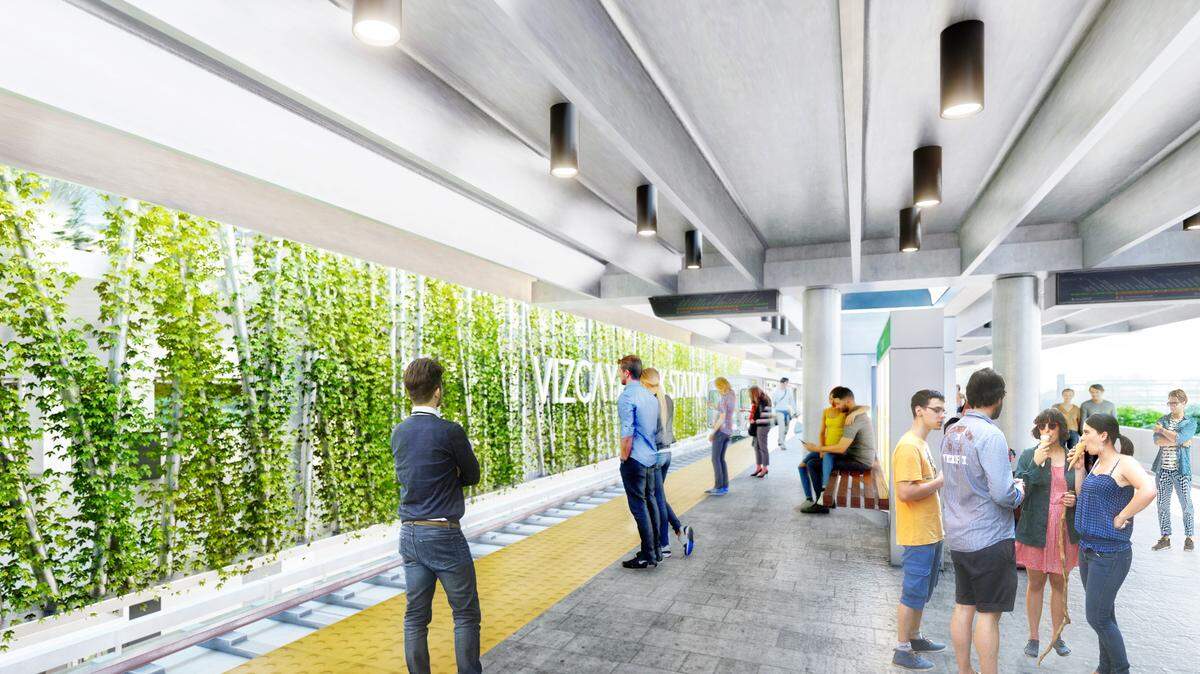
In a real-estate version of Battle of the Bots, seven of Miami-Dade’s most prominent developers are vying to build apartments and commercial space at the Vizcaya Metrorail station, making its underused parking lots in a quiet residential enclave the most coveted 2.5 acres in the city.
The contenders include Miami megalith Related Group, the ever-expanding Terra Group, national apartment-community heavyweight Mill Creek and the increasingly visible duo of the Adler Group and 13th Floor Investments. All have submitted extensive proposals to Miami-Dade that range from modestly scaled, mostly residential projects to a massive plan from Related for high-rise offices and apartments that appears to significantly exceed the county’s parameters.
The seven proposals were scheduled to receive their first public vetting by a county selection committee Friday, but the meeting was postponed until a date to be announced later. The committee will score and whittle down the contenders to a shortlist, and later send a recommended winner to Miami-Dade Mayor Daniella Levine Cava, though any development agreement her office negotiates will also have to win county commission approval.
The unusually intense level of interest was triggered by a request for proposals from Miami-Dade’s transit agency to redevelop the station property. That makes Vizcaya the latest Metrorail stop targeted for a transformation by the county as it seeks to generate revenue and promote what’s known as transit-oriented development to boost rail and Metrobus use while reducing auto dependency.
Both Terra and the Adler-13th Floor partnership are now building major mixed-use projects at the Coconut Grove and Douglas Road Metro stations, respectively. Terra’s partner in the Grove station project is Grass River Properties, which also submitted a separate proposal for the Vizcaya station with a partner.
The competition winner would lease the land from the county for 90 years and pay all costs of construction and development, including a new bus station to replace stalls at the parking lots that would be lost.
Other proponents are Housing Trust Group, or HTG, a Coconut Grove-based developer of rental communities that bills itself as Florida’s largest affordable-housing developer, and a partnership led by the Rilea Group, builders of key office and residential towers in Brickell.
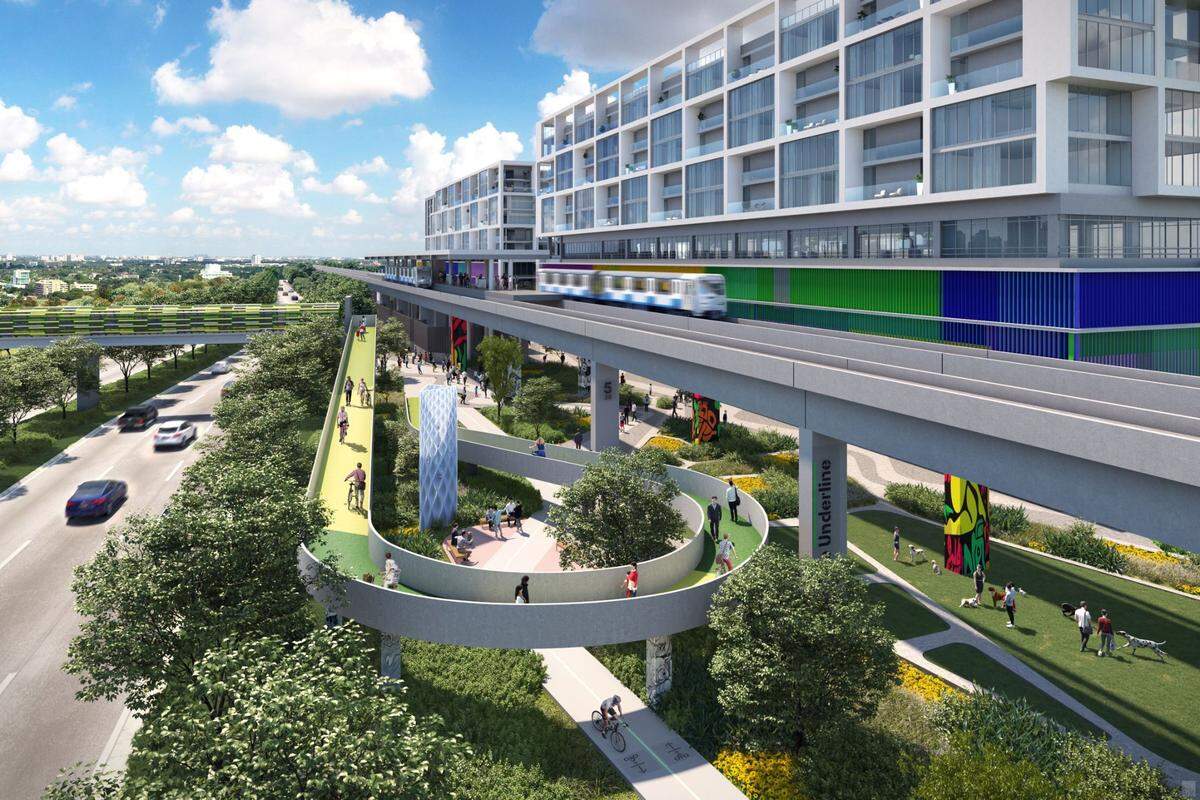
Adler and 13th Floor’s slab-like, 36-story tower at The Link at Douglas project, which will be by far the tallest structure for miles around when completed, has prompted consternation from Miami and Coral Gables neighbors as it rises.
In contrast, the county’s request for proposals for the Vizcaya station emphasizes the site’s sensitivity. The bid documents require that submissions respect the low scale of neighborhood it fronts and provide residents amenities and improved connections for pedestrians. Though the station sits along busy South Dixie Highway, its entrance and parking lots are tucked away on a side street in The Roads, one of Miami’s oldest neighborhoods. Across the street are several blocks of mostly single-family homes and duplexes wedged between the Metrorail line and Coral Way.
Residents closest to the station are anxious and apprehensive, said Katie Gant, president of the Miami Roads Neighborhood Civic Association. Gant said no one from the county has contacted residents or the association. And while Terra and another proponent, a the Rilea partnership, held neighborhood meetings in November, those were “poorly attended” because residents and homeowners didn’t understand what was going on, Gant said.
Although the station sits inside city of Miami boundaries, the county controls the use and zoning of the property through a relatively obscure rapid transit zone approval process — one reason few people were aware of the Douglas station tower until it had been approved. Gant questioned whether residents would get any meaningful say before a project is selected.
Neighborhood concern
“People didn’t realize until they saw these proposals that this was coming. At this point, the close neighbors are really upset,” Gant said. “No matter what goes in there, it’s going to be very big, very contrasting to what’s there, which is a quiet station. But it doesn’t feel like the county is going to care what we think. The county isn’t giving us any information.”
How much say residents will have in shaping the final project depends on what’s selected by the county. Because of a cone of silence rule designed to prevent lobbying on such competitions, county officials can’t speak to members of the public until the mayor’s office announces a winner. The selection committee that will meet starting Friday does not take public input, but judges projects on a specific scoresheet.
But public testimony takes place at meetings of a Rapid Transit Impact Committee, made up of Miami-Dade and city of Miami staffers, that will separately review the selected proposal to ensure it meets zoning for the site, among other factors, and when county commissioners vote on the plan.
There’s another reason for concern over height and scale: Anything built at the site could have an impact on views from the publicly owned, historic Vizcaya Museum and Gardens, which sits across South Dixie from the Metro station.
The station directly faces the estate’s farm village, formerly the site of the Miami Museum of Science, where historic buildings are now being gradually restored. While the main house is on Biscayne Bay east of South Miami Avenue, a tall structure at the station could be visible from the gardens, especially since the Metrorail site sits along a high ridge of ground.
Museum administrators have long sought to limit views of modern construction from the historic site, and Vizcaya supporters successfully helped fight off a high-rise condo project by Related at an adjacent Mercy Hospital property nearly 15 years ago.
The underlying zoning for the Vizcaya station actually permits construction to 15 stories, and up to 25 stories if the towers meet certain “green building” standards. The transit departments call for proposals limited height at 10 stories to protect the surrounding neighborhoods.
Six of the Vizcaya station proposals respect or come under the county’s required 10-story maximum height, with some scaling down heights to three or four stories on the neighborhood side. Most also provide a suite of benefits ranging from community meeting spaces, parks and landscaping to small neighborhood retail and bicycle parking. Proponents are also required to incorporate a bus station to replace the existing surface stalls that would be lost. At least 12.5 percent of proposed apartments must be set aside as workforce housing affordable to households making up to 120 percent of the county’s median income.
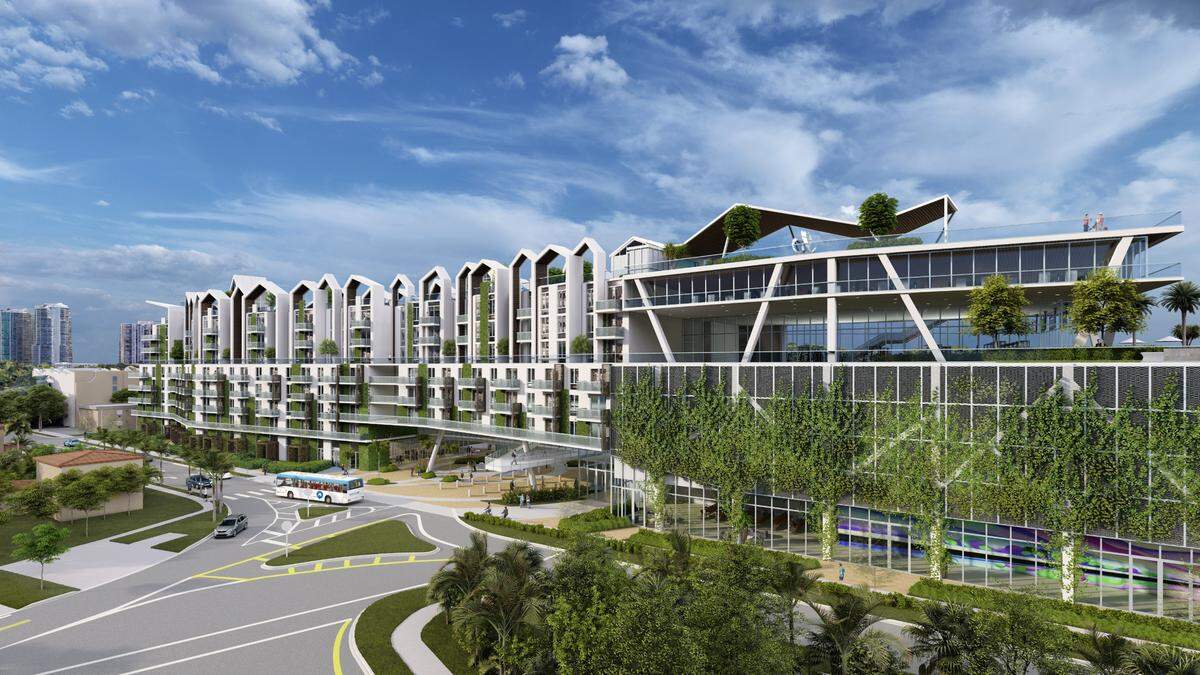
Related was the only one to exceed the height cap, proposing an office tower and an apartment tower, both 25 stories tall. Its proposal also provides no neighborhood improvements or public amenities beyond a restaurant space. A spokesman for Related said company executives did not want to comment.
But proposal details can change during contract negotiations between the county and developers, and the county commission has broad latitude to accept them, alter them or reject the plan altogether.
All proponents have lined up prominent land-use lawyers and at least some have also hired lobbyists.
INTENSE COMPETITION
The county decided to launch a request for proposals after receiving an unsolicited bid last year from the Rilea Group, which has built key office and residential towers in Brickell, and its partners. One of the partners, Jorge Brugo, said he would run by the tired-looking station while training for the Miami Marathon and wonder why the mostly vacant lots couldn’t be put to better use.
The group approached transit officials and put together a proposal for two tall towers after the agency asked for a high-density plan during discussions. But it was scaled it back considerably to 10 stories after the county reduced the desired height cap, in part because of concerns over the impact of intense development on The Roads and Vizcaya neighborhoods.
The county then concluded it was legally obligated to open up bidding to all comers, the Rilea partners said.
The partners said they worked for 18 months to develop a proposal that’s compatible with the neighborhood while helping the county draw more riders to the station. According to transit department figures, the Vizcaya station logs the fewest boardings of any Metrorail stop along South Dixie Highway.
Brugo and Rilea President Diego Ojeda said residents were keen on having small retail catering to the neighborhood, like a cafe or market or a dry cleaners, but were concerned about a large project that would loom over their homes and draw more congestion to an area already plagued by cut-through traffic.
“We knew how delicate it was bringing something like this to the neighborhood,” Ojeda said. “Anything with any sort of height, we knew the neighborhood would oppose. “We were here from the beginning and had more time to brainstorm, so we feel we have the nicest and best version in response to what the community needs.”
But the extensively detailed responses to the transit department’s call for proposals suggests at least some of their competitors also spent considerable time and money drafting plans that might satisfy the county goals and still allay the neighborhood’s and Vizcaya’s concerns. One contender, Terra, went so far as to commission a “view-shed” study using drones and video to make sure its proposed buildings could not be seen above the thick tree canopy from the VIzcaya gardens or farm village.
The intense competition for the site, said Terra president and CEO David Martin, is explained by several factors. For one, major developers like Terra and Related have seized on infill development as Miami’s traditional model of new suburban sprawl becomes harder to achieve, he said.
At the same time, the shrinking supply of large developable urban lots means competition will be keen for any opportunity, especially when it’s as visible and well positioned as the Vizcaya station. It lies at a key intersection of U.S 1, Interstate 95, South Miami Avenue and the entrance to the Rickenbacker Causeway, he noted. It’s also close to booming Brickell but removed from its density, and nestled amid some of the city’s most desirable neighborhoods, including the Grove and The Roads.
“Every opportunity today has robust interest from local and international players. We’re in a very, very competitive landscape,” Martin said. “This is just an asset that’s not generating much revenue for the county, not generating amenities for the neighborhood. And it’s a special location. It’s a place people are going to want to live.”
It’s also adjacent to the developing Underline, the 10-mile linear park that will run beneath the Metro tracks from Brickell to Downtown Dadeland. The volunteer-driven, county transit-run Underline project just completed its first segment, Brickell Backyard, and is designing the section that includes the Vizcaya station for its next phase.
The Vizcaya Metorail proposal from Martin, who sits on the volunteer Friends of the Underline board, would incorporate rebuilding and landscaping the existing, lightly used trail following the new design and connecting it directly to the station.
It’s such extra strategies, he said, that will likely determine the competition winner, in addition to a reliable revenue stream for the county and secure project financing.
The results should represent a boon to residents, he said.
“Everyone is trying to be compatible with the neighborhood,” he said, referring to the competing proposals. “What’s special about the station project is that it’s not about maximizing the site, but making this a nexus point for Vizcaya, the Underline and the Rickenbacker and outdoor activities. It’s not a typical station, so it lends itself a lot to creativity.
“At the end of the day, what are we promoting here? It’s promoting ridership, living around transit. But it will come down to who is delivering the best amenities and who has the best financial package. How can we make pedestrians and cyclists safer and more protected? And how does this proposal also not impact the character of the neighborhood? It should be an amenity to the immediate neighborhood.”
PROPOSALS
The proposals take a variety of approaches. The county would lease the land to the winning bidder for 90 years, with options to renew. One significant factor the county will weigh is economic benefits, including the amount of rent generated and property taxes.
Projections for rent payments will likely get particular scrutiny. Two proponents, Terra and Adler-13th Floor, based calculations for rent payments over 90 years on expectations of a relatively high 4 percent rate in annual increases, while other proponents used a more conservative 2 percent to 3 percent. The figures are important because the county wants to maximize revenue while ensuring projections are realistic. Also, lenders use the figures in deciding whether to finance a project.
▪ The Adler-13th Floor combo’s Vizcaya District would be primarily residential, with minimal retail space for a small cafe. It calls for 327 apartments in a pair of 10-story buildings pushed back towards the train station. A series of townhouses at half that height would face the neighborhood. Project cost would be $110 million.
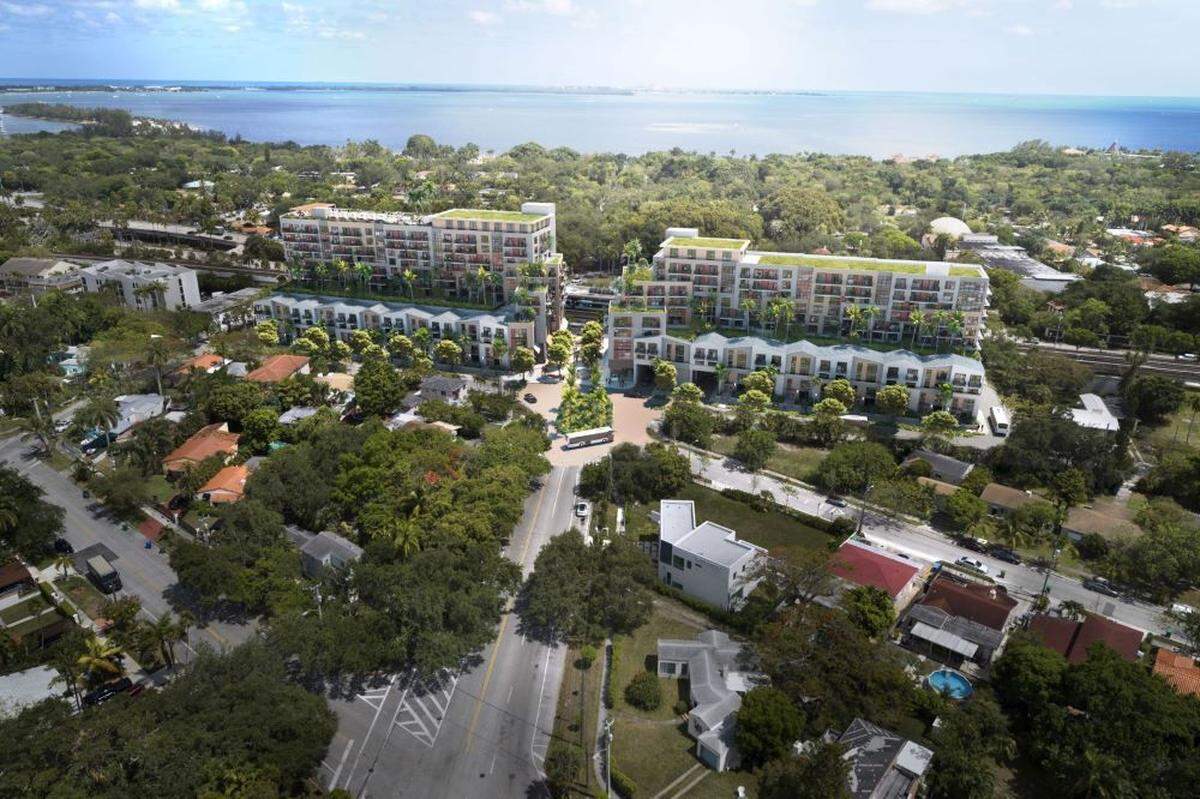
The partners also pledge to provide $4.5 million for renovation of the worn-down train station, invest $1.4 million to build a public park designed by an artist and build “speed tables” to slow down motorists on neighborhood streets.
They project a cumulative rent revenue over 90 years of $154 million, or $48 million in today’s dollars.
▪ Grass River Property and partner Coral Rock Development Group propose Vizcaya Roads, with a “new age Mediterranean design.” The plan calls for 292 apartments in two eight-story buildings. All units would be aimed at what the proposal describes as “low-to-middle income essential workers.” It boosts the share of workforce units to 234. In addition, the partners propose setting 58 apartments as affordable units for households making 50 percent of the county median income. Project cost would be $83 million.
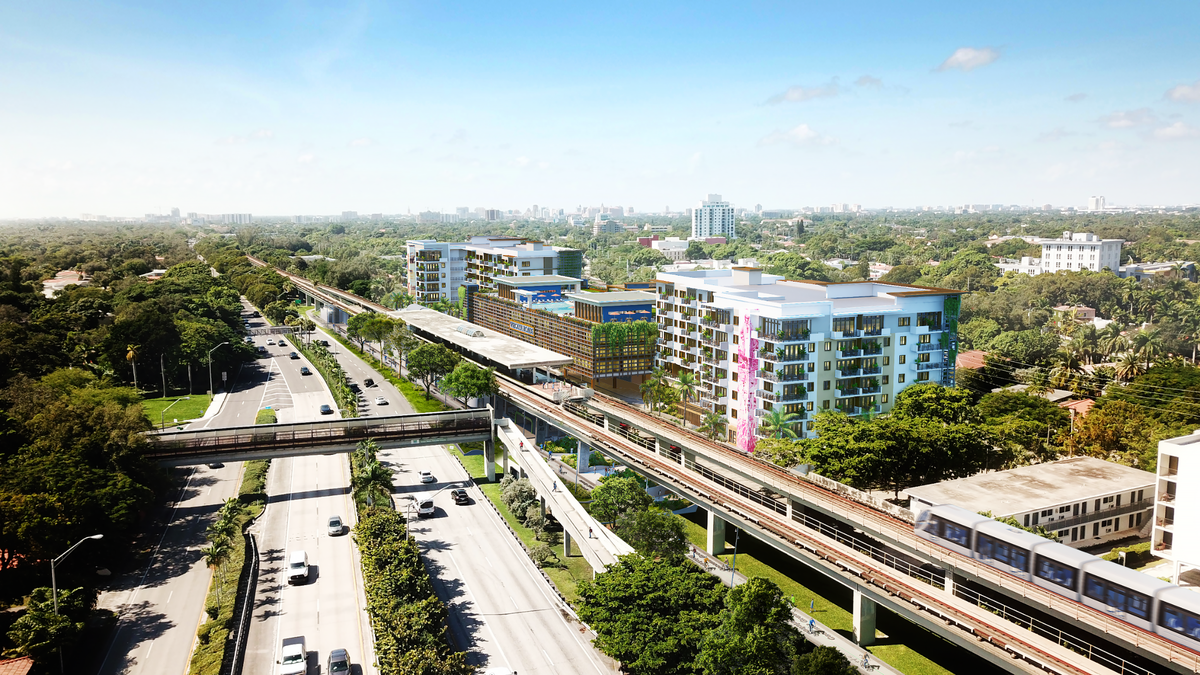
The proposal includes 9,000 square feet of street-front retail for small local retailers such as a cafe and market, as well as a community and visitor’s center to be run by Dade Heritage Trust and named for late Miami historian Arva Moore Parks, a longtime neighbor who played a key role in saving VIzcaya. The plan also proposes a statue of Parks to be placed in a refurbished central plaza, a dog park and a butterfly garden.
At the train station, the plan would install new, secure bicycle parking and a bike-share station.
The project’s rent revenue projections were not immediately available.
▪ The Housing Trust Group proposal, Brickell Hammock, envisions a single large, eight-story building, with an apartment wing and and office wing spanning an open breezeway at ground level. It calls for 209 apartments, all classified as workforce housing at 65 percent to 140 percent of county median income. The commercial side would consist of 15,000 square feet of office space, probably for a single tenant, and 2,600 square feet of “incidental” retail. Project cost would be $71 million.
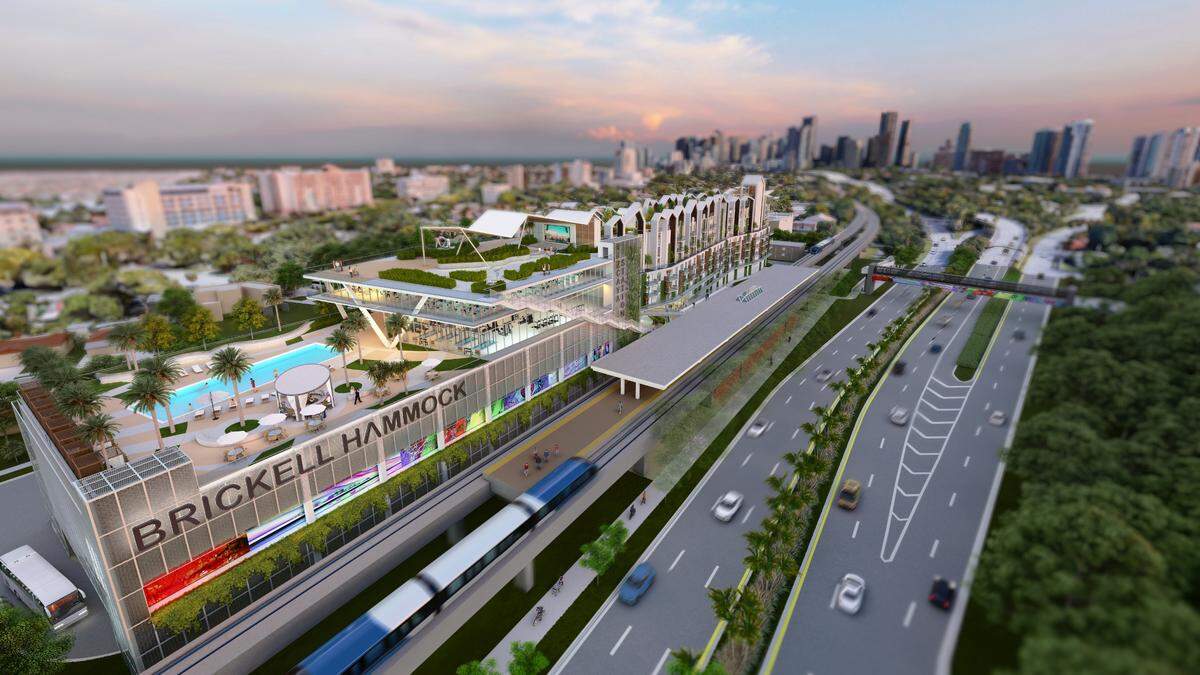
Public amenities include a rooftop Sky Park reached by a glass elevator from the ground level, a vita-course exercise stairway leading from the ground to the root and 1,5000 square feet dedicated to bicycle storage and rentals. The plan mentions no direct improvements to the train station.
The group projects total lease payments at $160 million over 90 years, or $50 in today’s dollars.
▪ Mill Creek’s proposed Modera Vizcaya Station would include 392 apartments in two 10-story buildings. The project also includes 8,000 square feet of retail. Project cost is $118 million.
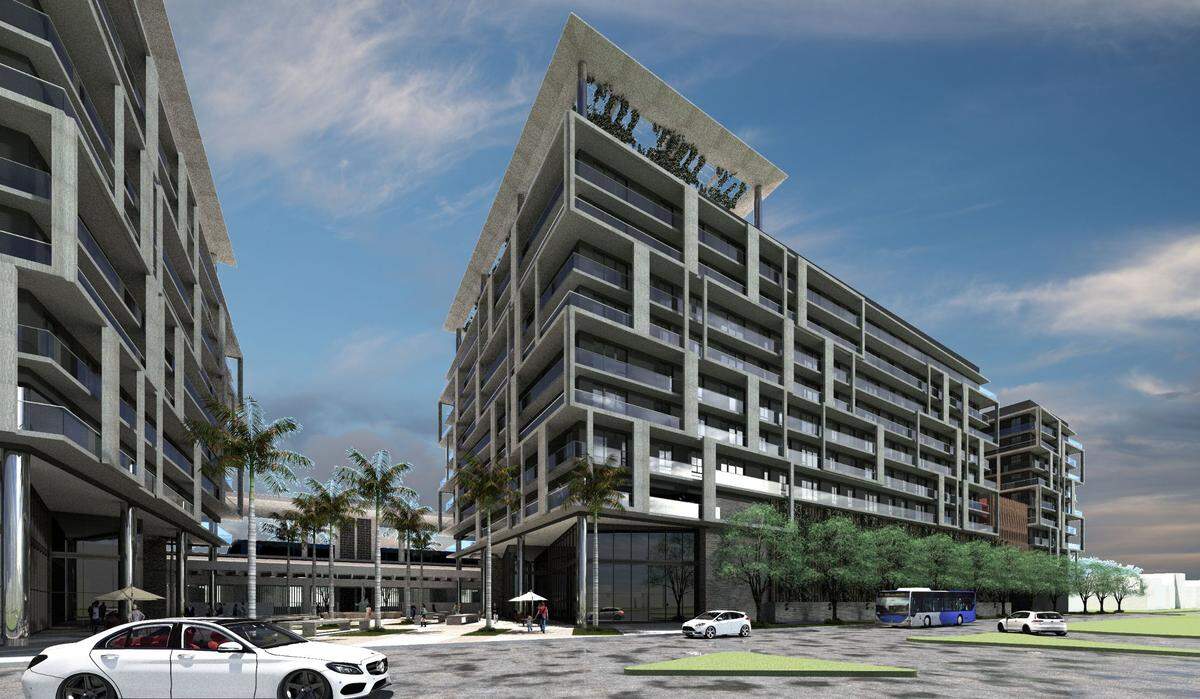
The developers pledge $350,000 towards train-station improvements. The plan doesn’t mention any neighborhood improvements or amenities. Representatives did not respond to requests for further details.
They pledge to pay the county a base rent of $550,000 a year, but the proposal does not provide calculations for payments over the 90-year lease term.
▪ Related Group’s Icon Vizcaya contemplates 391 “luxury” apartments in a 25-story building in a first phase. A second phase would comprise 320,000 square feet of offices. Project cost would be $129 million.
The proposal contains no mention of train-station improvements or specific neighborhood amenities.
Related projects cumulative rent payments of $119 million, or $46 million in today’s dollars.
▪ Rilea Group and its partners in Vizcaya Park propose two 10-story, mostly residential buildings connected by a bridge over a central breezeway. The buildings would step back at the neighborhood side in a series of terraces. The plan calls for 288 apartments and 19,000 square feet of neighborhood retail space. Project cost would be $102 million.
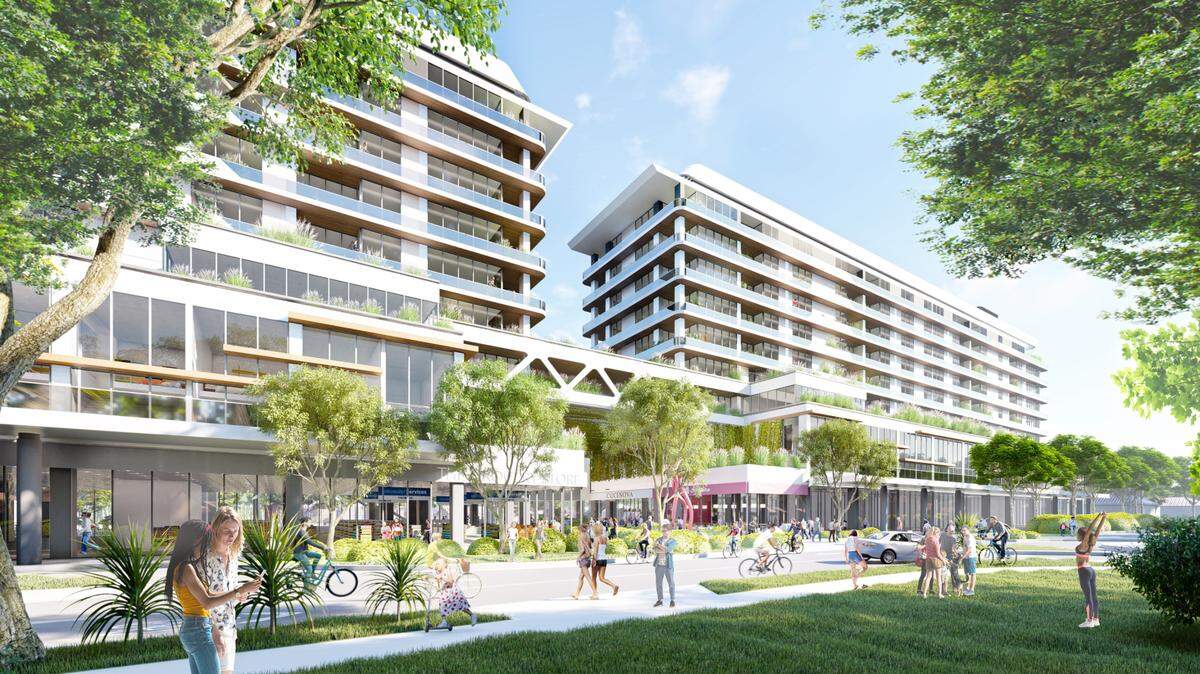
The plan would invest $2.6 million for significant improvements at the train station. The partners also pledge a donation of $500,000 to Vizcaya for ongoing renovation work. The proposal contemplates providing e-bike charging stations and an electric shuttle to take nearby residents to and from the station. It would also “fully integrate” the Underline into the redevelopment project by establishing a direct connection to the station.
The partners project a cumulative $132 million in rent payments to the county, or $47 million in today’s dollars.
▪ Terra Group’s Vizcaya Place would comprise two primarily residential buildings, with a 10 story tower abutting the train station and a five-story structure — including several live-work lofts — facing the neighborhood. The proposal calls for a total of 327 apartments. Project cost would be $92 million.
The plan envisions an ancillary “hub” for cycling and other outdoor activities, with about 15,000 square feet of “flex space” and retail, including extensive, air-conditioned bike storage, a bike shop and an office for Friends of the Underline. It also includes a meeting space requested by The Roads Neighborhood Civic Association for community use.
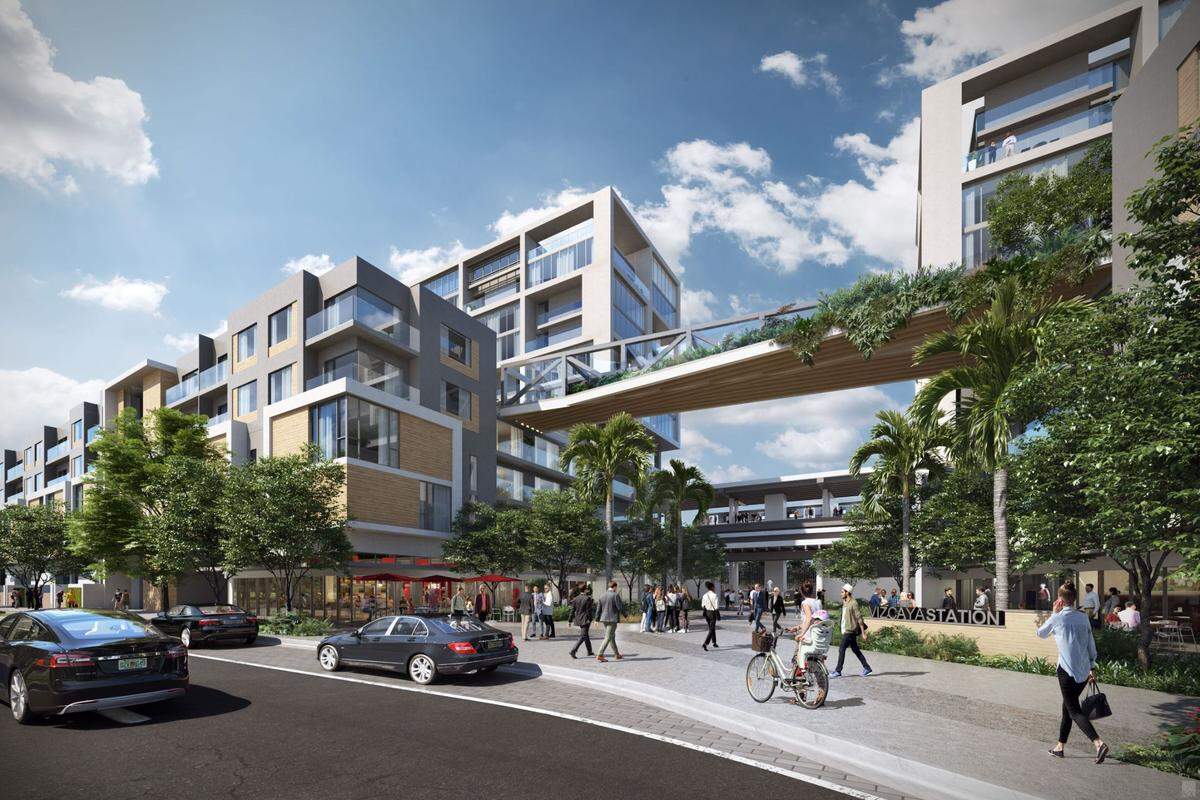
Terra would also rehab the deteriorated pedestrian bridge connecting the station to the Vizcaya museum and improve a hair-pin access ramp that’s hazardous for cyclists.
Terra would also build new Underline paths for pedestrians and cyclists and install landscaping and murals on the stretch running along the station property.
The developers project total lease payments of $248 million, or $69 million in today’s dollars.
This story has been updated to reflect that a Miami-Dade evaulation committee meeting on the proposals has been postponed.,
This story was originally published March 18, 2021 at 11:00 AM.