Boil-water order issued after water-main break closes Metromover, floods Miami streets
A Wednesday morning water-main break flooded downtown Miami streets before 8 a.m., closed parts of Biscayne Boulevard and caused shutoffs of water and Metromover.
Miami police closed Biscayne Boulevard from Southeast Third to Fifth streets. Also closed: Southeast First Avenue to Biscayne Boulevard.
Shortly after 8 p.m., Miami-Dade’s Water and Sewer Department announced water service had been restored to nearby buildings. The agency also issued a boil-water order for four buildings that lost water service when workers shut off the water supply to the damaged pipe. Those buildings are: Met 1 at 300 S. Biscayne Blvd.; Muze, at 340 SE 3rd St.; the Southeast Financial Center at 200 S. Biscayne Blvd., and the Citi Group Center at 201 S. Biscayne Blvd.
The agency said only those buildings are covered by the boil-water order; nearby properties are free to continue using tap water as before. Under the boil order, water should be boiled before drinking, cooking, brushing teeth, making ice and washing dishes, the agency said. “There is no problem with using the water for bathing and other household needs,” according to the release. The order will be lifted after two days of clean results on tests of the water.
The early morning pipe rupture sent off a cascade of disruptions, from Metromover being closed out of concern about the stability of water-logged ground underneath one of the train system’s support columns to traffic shutdown on Biscayne as road crews ripped up asphalt to begin repairs.
Metromover service resumed shortly after 5 p.m.
Kevin Lynskey, Miami-Dade’s Water and Sewer director, said he thinks the water-main rupture was caused by metal contraction in an older pipe brought on by colder weather.
“It was spontaneous. In these cold fronts, some of these older iron pipes will snap.”
Miami-Dade Transit shut down Metromover on Wednesday morning and was using a bus shuttle system instead. Miami Commissioner Ken Russell, broadcasting live on Instagram just before 10 a.m., said the county closed Metromover out of caution because the cracked asphalt is near a Metromover support pillar.
“There are concerns. Nothing yet confirmed that would compromise the pillar, but they’ve shut down the Metromover just in case,” Russell said during the broadcast, as he showed water flowing out of a fissure in the middle of Biscayne Boulevard.
Cloudy water on a sunny day
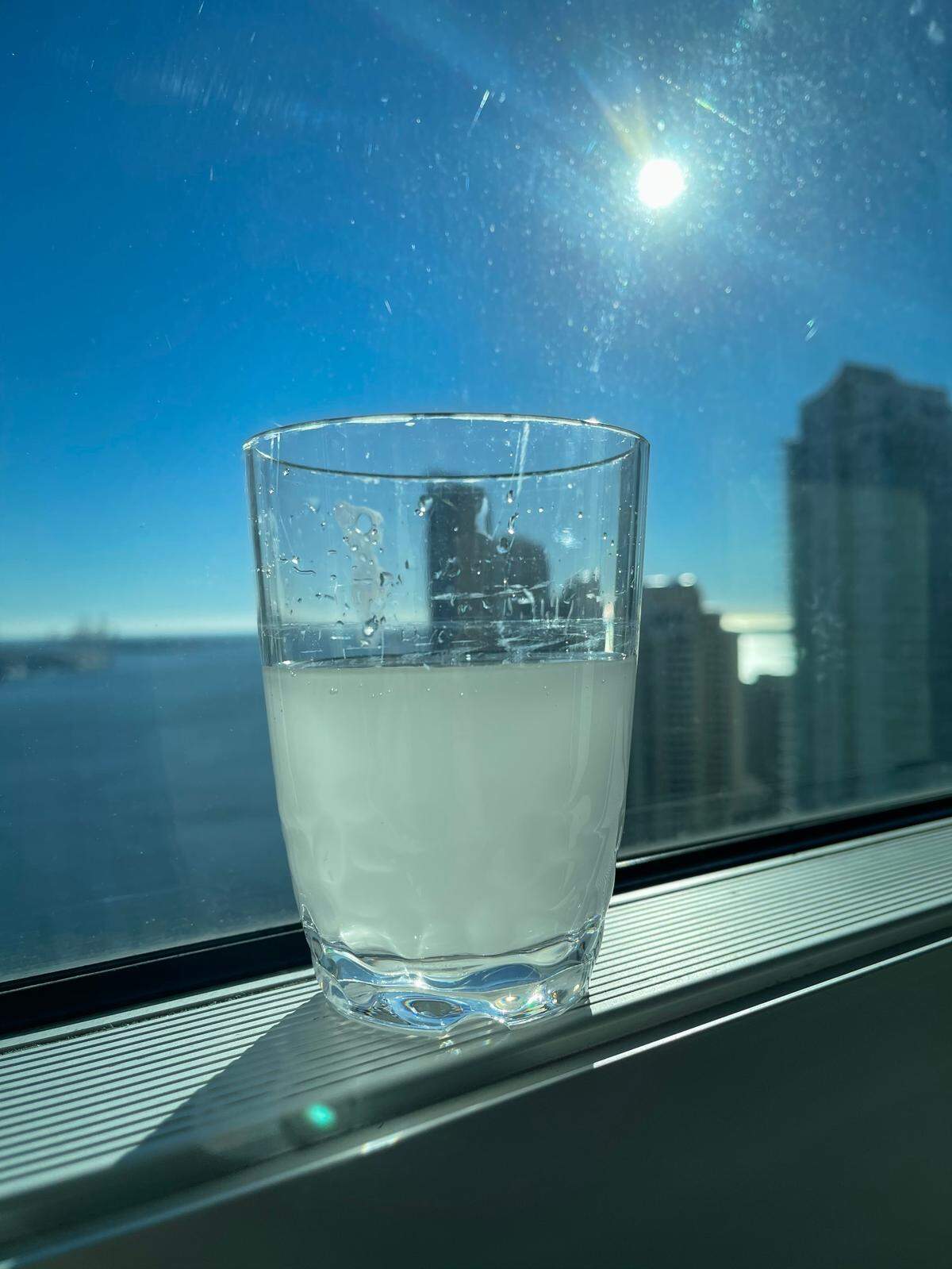
At least one tower saw its drinking water turn opaque.
“I can’t even get out of my building. And now every single faucet I turn on in my apartment is spewing out odd-looking water,” said Brian Andrews, a government affairs consultant who lives in the Met 1 tower at 300 S. Biscayne Blvd. He shared a photo of a glass of water on a balcony railing, the once clear liquid cloudy. “That’s not Alka-Seltzer,” he said. Lynksey said the discoloration likely came from calcium in the pipes being dislodged during the rupture.
Shortly before 8:30 a.m., Met 1’s building management sent out a notice to residents: “This morning a water main break occurred on Biscayne Blvd and SE 3rd St. This has caused wide spread flooding. Authorities are allowing residents to leave with their vehicles from the building but they are currently not allowing residents or employees to enter the area or the garage,” read the note from Edwin Guido, the property manager.
“Thus far this water main break has not affected the building’s domestic water system nor our cooling towers. Our Chief Engineer Douglas will continue to monitor the building systems and we will notify you of any emergency shut downs, if possible,” he wrote.
Why the water main broke
Miami-Dade’s Water and Sewer Department said it was a 12-inch water pipe, not a sewer pipe. Cellphone footage from a nearby high-rise shows water filling an entire street and snaking around the corner as the gusher overlapped with morning rush hour in the heart of Miami’s office district.
As he spoke, a county front-end loader broke through the edges of an asphalt crater on Biscayne Boulevard and SE Third Street. Water filled the space below, and beneath that somewhere was the ruptured pipe. It was about 50 feet from a two-story column holding up track from the Metromover system.
Lynskey said pipe ruptures like this are fairly common, but that it’s usually somewhere impacting a small number of households.
“Before the week is out, these crews will be on another break somewhere,” he said.
Sand covered parts of Biscayne Boulevard, sediment washed up from under the road by the water spill.
Lynskey said they will remove asphalt until they encounter surface below free of sand. That will indicate the extent of the impact. Crews hadn’t located the rupture yet but have an idea it’s close.
“It’s an educated guess,” Lynskey said. “It’s probably right at the center of that hole.”
He estimated the ruptured pipe was about 50 years old, but said that’s not always an indication of weakness: “The World War II pipes just don’t break for some reason,” he said. The replacement pipe will be made of iron, he said.
The rupture arrives at a time when the county’s pipe system is under more scrutiny for sewage leaks and the pollution problems plaguing Biscayne Bay.
Eileen Higgins, the county commissioner who represents that part of downtown, said it’s too soon to tell whether a more aggressive maintenance program would have prevented the rupture.
“I don’t think we know yet,” she said after inspecting the damage.
She said she was heartened that the storm-drainage system seemed to have fared well. “That worked,” she said. “We didn’t have outrageous flooding.”
This breaking news story will be updated.
This story was originally published December 9, 2020 at 8:29 AM.