
COVID-19 stalled Gables’ pitch to bury power lines. Now residents may vote in 2022
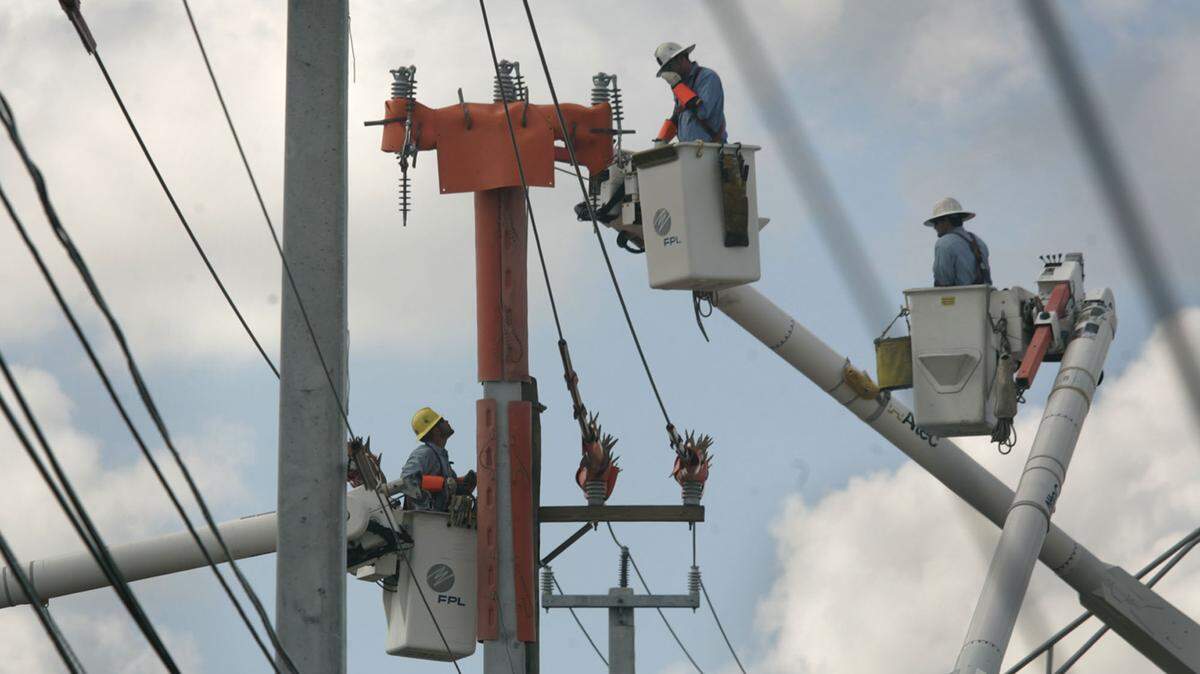
Coral Gables wants to be the latest Florida city to bury its power lines in an effort to keep the lights on during storms and avoid damage from downed utility poles.
But the decision would be up to voters, who would finance the roughly $250 million project over the next 20 or 30 years.
Gables commissioners will vote Tuesday on whether to resume meetings with residents and workshops with the prospect of asking voters in November 2022 to approve the undertaking. Ballot language and details of what that may entail are still months away.
The proposal, put forward by Mayor Vince Lago, would direct city staff to conduct an analysis, plan community engagement and create an expected timeline for workshops on burying utilities, an increasingly popular concept in Florida’s storm-prone regions.
The commission will vote in June 2022 on whether to place the proposal on the ballot.
“I strongly believe that it is best to engage with residents and get their thoughts on major projects that affect the future of our city,” Lago said through a spokeswoman.
2019 redux
The conversation is not a new one. In November 2019, the commission heard cost estimates for burying utilities from Florida Power & Light, AT&T and Comcast, and passed a resolution similar to the one Lago has proposed.
The next month, staff presented the commission with a timeline that would have immediately begun work on a community engagement campaign and scheduled workshops with the commission in April 2020. Commissioners would have voted in June 2020 to put the question on the November 2020 ballot.
But days before the first public meeting in March 2020, businesses shut down due to the COVID-19 pandemic and the project was shelved.
Now that vaccines are widely available, the city is set to return to regular operations on June 14 and regular meetings will resume, which is why Lago is bringing the resolution forward.
A hefty price tag
In 2019, global engineering firm Stantec and strategic advisory firm Hamptons Group told the commission that the project would cost about $25,000 per property, based on conversations with the utilities. The entire project was estimated to between $250 million and $275 million.
The cost would be about $1,500 per property per year if the city annualized the cost over 20 years, according to estimates provided to the commission in 2019.
At that time, there were 12,000 single-family homes, 2,000 multi-family homes and 1,600 commercial buildings in the city. North of Sunset Drive, about 80% of residents are served with overhead utilities. South of the major thoroughfare, 80% have underground utilities.
“Basically, you know what the costs are going to be, and these are probably a lot,” Stantec’s Ramon Castella said during a 2019 presentation.
The project would take about 10 years to complete, according to a 2019 report provided to the city commission.
Lago this week acknowledged the steep cost and time investment.
“While burying power lines would bring many benefits to our city, it would also require a financial commitment and bring the disruption that construction of public projects can cause,” he said in a statement. “Listening to what the community has to say is definitely the best policy.”
A popular plan
The conversation around putting utilities underground began in the early 1990s, after Hurricane Andrew decimated parts of Miami-Dade County.
Burying utilities is a popular concept, as it protects them during storms and leads to better service, even in communities where some neighborhoods already have underground utilities.
However, it is costly, and buried lines can be harmed by flooding, storm surge and uprooted trees.
Statewide, some of the major investor-owned utilities have already started putting lines underground as part of existing programs. FPL is in the midst of a three-year pilot program to bury overhead neighborhood power lines in its service area, including South Florida. Duke Energy, another utility company that operates in Florida, has started burying power lines in new developments like the subdivisions along State Road 54 in Pasco County. The company also has put existing power lines underground through a program that targets outage-prone areas.
In 2019, the Legislature passed a bill that would require utilities to give storm-protection plans to the Florida Public Service Commission. Supporters said the proposals would keep more homes and businesses out of the dark when future hurricanes inevitably wreak havoc on the state.
But critics at the time said investor-owned utilities like FPL would be allowed to improve its own system and then charge customers for the capital improvements. As a result of the 2019 law, utilities can now recover the costs of implementing a 30-year storm protection plan through what is called the base rate.
Wealthy Miami-Dade enclaves such as Sunny Isles Beach and Key Biscayne have all moved toward burying their own power lines, though the bills have been far smaller than what Coral Gables would face. Golden Beach Town Manager Alexander Diaz said the tiny town paid $9 million, funded by a broader general obligation bond, to move its power lines underground more than a decade ago.
And in Surfside, voters approved a non-binding ballot referendum last year for the town to spend $16 million to $18 million to put the town’s utilities underground.
Key Biscayne voters OK’d a $100 million general obligation bond in November that will partially pay to bury utilities in the tony island community. Mayor Mike Davey said the topic was part of village conversations since he moved to the Key in 2003. No shovels have hit the ground yet, but Davey said “we have a pretty good plan to move forward.”
“[Undergrounding] allows you to weather a storm in terms of having your power continue,” Davey said Thursday. “That has been one of our biggest issues.”
His advice to other cities considering a similar project is to “make sure what you’re doing is comprehensive, look at all facets.”
“It’s going to work in some communities, it’s not going to make sense in others,” he said. “For us, we are a barrier island and it makes sense to go underground. ... It’s unique to each situation.”
Herald staff writer Aaron Leibowitz contributed to this report.
An earlier version of this story incorrectly labeled the Hamptons Group. It is a strategic advisory firm.
This story was originally published June 3, 2021 at 4:23 PM.