
What my pepper plant can teach us about nurturing others in these difficult days
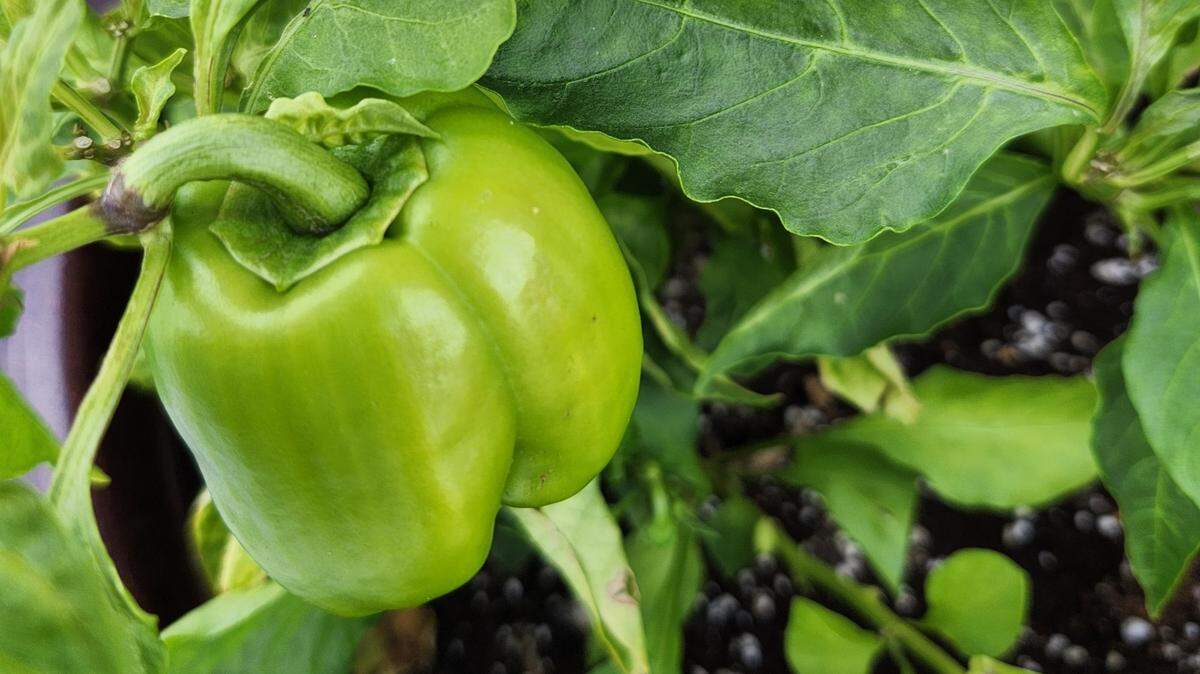
I have two small bell pepper plants in a large pot near my front porch. The plants are from the seeds I harvested from peppers I bought in the grocery store a few months ago.
Since I planted the seeds, I can’t pass by the pot without stopping to speak lovingly to them. Over the months, I watched as the tiny seedlings pushed their way up through the potted soil I bought just for them. I have watered them and pulled any invading weeds.
It has been a joy to watch them grow, especially when tiny white blossoms started to appear on the branches, a signal the blossoms would soon grow into tiny peppers. That meant that it wouldn’t be long before I would have peppers grown by my very own hands. You may call me Farmer Bea.
What I hadn’t anticipated was that my precious little bell pepper bush would be surrounded by predators – insects, and the ever-present iguanas that live in the shrubs and trees in my yard. These enemies were perched from day one, ready to devour my peppers before they reached my dinner table.
Like many other farmers, I lost some of my crop. The predators got to my first two peppers – one yellow and one green – before they were big enough to harvest. But there was hope: Branches sprouted with tiny new peppers. The warm sun and the constant rain kept them growing.
Recently, my watchful eye and work paid off: I harvested one whole pepper. It wasn’t very big, only about two-and-a half inches in diameter. But it was perfect, and it hadn’t been nibbled on by insects or any other predator.
And it was mine. I had grown it with my own hands, nourished the mother plant from a seedling. I gently cut the fruit of my labor from the bush and carried it inside to the kitchen sink, where I washed it and placed it in the refrigerator until later.
Growing things, be they vegetables or flowers or trees, is a beautiful feature of life. It reminds me of how we humans are nurtured from inception to birth and throughout our lifetime, by our parents, by people who are placed in our lives to help us fulfill our dreams. And by the Lord, Himself. It is truly a circle of love.
Yet, like my tiny bell pepper plant, there are predators in the world, ready to devour us before we have a chance to grow or to fulfill our dreams. The predators that threaten us do not always come in human form. They are often the kind we don’t see. The kind that gnaws at our soul and mind, feeding us poisonous thoughts that sometimes we put into action.
Today, there are many such predators in our world. Today, we are being bombarded with challenges on every side – the shutdown of our government, and in a country where there are already too many hungry children, the added threat of them not having adequate housing or medical care.
Florida Surgeon General Joseph Ladapo said during a recent press conference that mandating childhood vaccinations is “wrong and drips with disdain and slavery,” according to an article in the Herald by Raisa Habersham.
READ MORE: Ladapo’s statement equating vaccines with slavery perplexes Black leaders, doctors
Health experts and Black leaders were outraged at his statement. My friend, Congresswoman Frederica Wilson, a former teacher and principal, and I are old enough to remember the pain inflicted on children who contracted polio before the Salk Vaccine was declared “safe, effective and potent” in 1955. Three years earlier, polio killed more than 3,000, primarily children, and left tens of thousands with severe disabilities.
“Our children had polio, and they suffered. They had braces, some died,” Wilson told Habersham.
Wilson is right. Polio was a predator that threatened an entire generation. I remember some children having to live the rest of their life in a monster-looking machine called the iron lung.
I was a child in the summer of 1947, when we weren’t allowed to be in crowds, because of the threat of polio. One of my little friends became a victim. While she survived, she spent the rest of her life wearing uncomfortable iron braces on both legs, using crutches to help her walk. I can still see her tiny legs; the polio had stripped most of the flesh from them, leaving what seemed like only skin covering her bones.
Polio the predator was eradicated when Dr. Jonas Salk developed the polio vaccine, which was free to all school children. For decades Americans lived free from the threat of polio. Until now.
Yet, polio isn’t our only predator. There are other predators just waiting to devour us. These predators are attacking our American freedoms – like peaceful protests and whether we care about what happens to immigrants – some illegal and some not – who are being snatched off the street without warning.
This is not good, my friends. I still pray for the young children who have been cruelly separated from their parents. Some of these children will never see their parents again.
I wish solving the world’s problems were as easy as growing my bell pepper plant. While the predators threatening my plants are just a speck, compared to those facing us as a nation, we would do well to be as careful about protecting each other and our country just as I have been about protecting my bell peppers.
I know. You are asking, “What in the world does bell peppers have to do with what’s going on in the world today?”
“Nothing,” I say.
But then I think about it. And I say, “Everything.”
We must take tender care of each other and of our country, just as I have been taking care of my precious bell peppers. I water them the days when there is no rain, and I check the nearby bushes to see if there are insects or other predators nearby. This is how diligent, I believe, that we as humans, and fellow Americans, must care and watch out for each other.
We can do this.
.JPG "MIA_20231006AD0543BeaHines (5).JPG")