Miami’s KKK kidnapped him 100 years ago. His descendants returned to celebrate his life
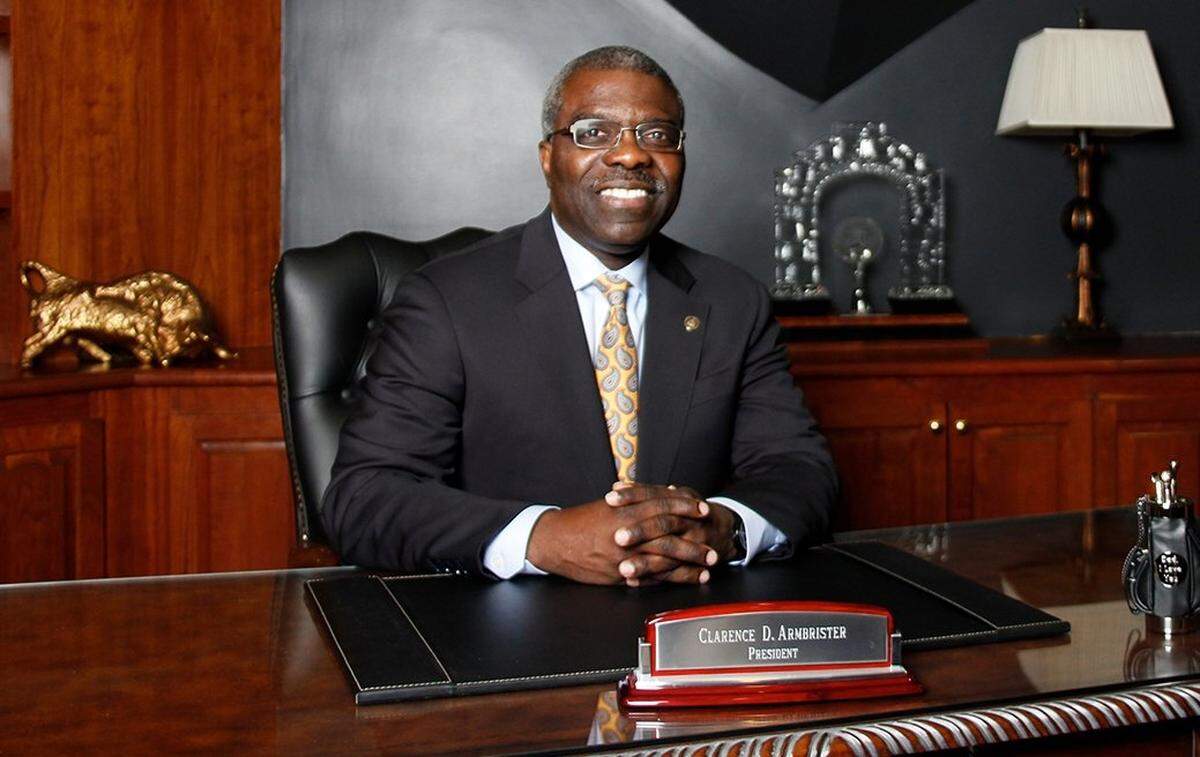
In the months leading to the anniversary of his grandfather’s kidnapping, Clarence Armbrister felt something calling him to Miami. Armbrister had grown up in what’s now Miami Gardens, yet that’s not where he was being pulled. He needed to go south. Eighteen miles. To St. James Baptist Church.
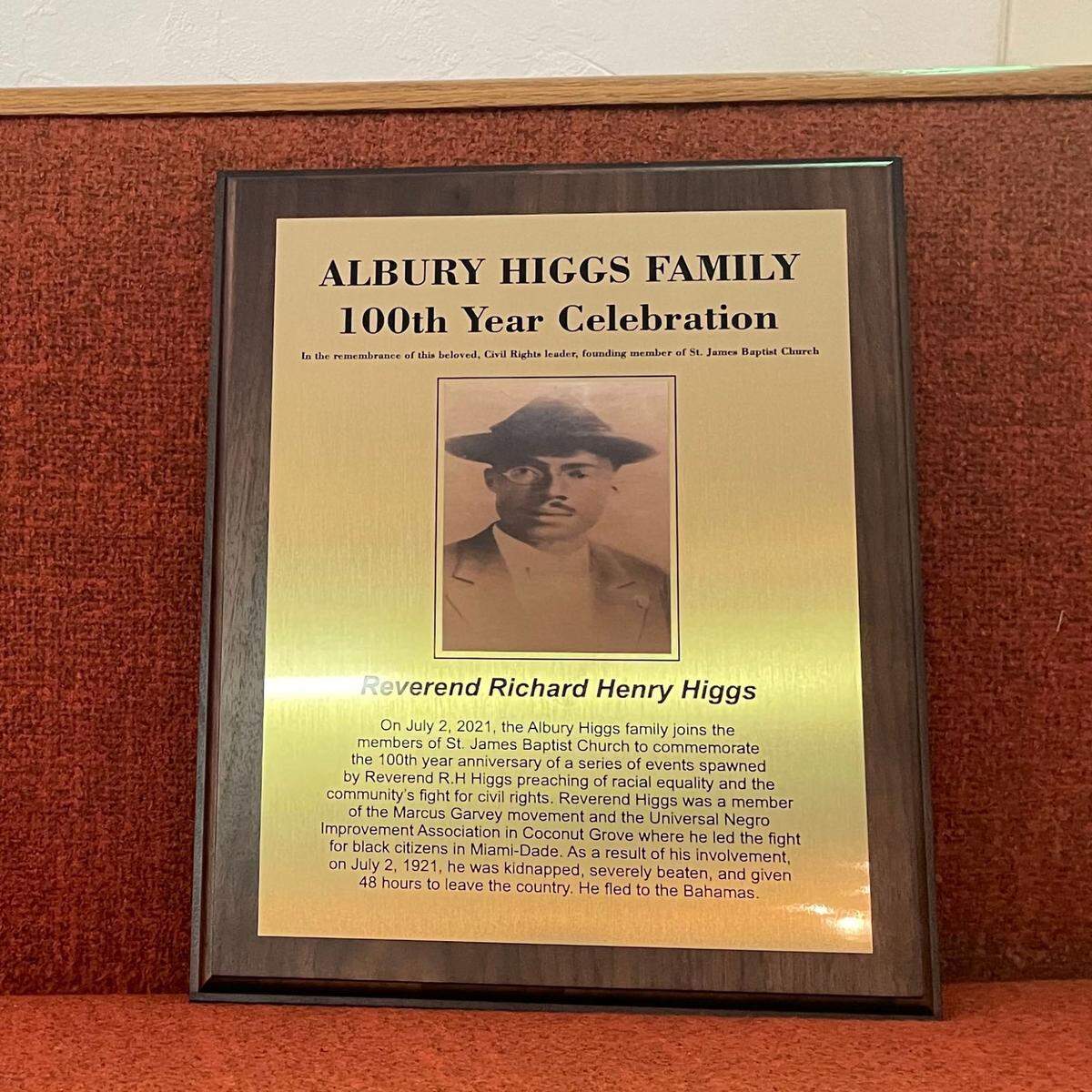
That feeling birthed the Albury Higgs Family 100 Year Celebration at St. James Baptist Church where Armbrister and nearly two dozen descendants of the Rev. Richard Higgs gathered Friday. The ceremony doubled as both a commemoration of Higgs’ life — Miami-Dade Mayor Daniella Levine Cava issued a proclamation honoring his “courage and commitment” while the family presented a plaque to the church — as well as a corrective history of sorts.
As he sat in the pews of his grandfather’s church, Armbrister felt a wave of calm.
“I feel a sense of peace that we’re all here,” said Armbrister, the president of Johnson C. Smith University in North Carolina. “And pride. Peace and pride.”
Eight hooded Ku Klux Klan members dragged Higgs, the pastor and founding member of St James, from his Coconut Grove home on July 2, 1921, because of his sermons on racial equality. The preacher was then taken to nearby woods, whipped and, after the men tied a noose around his a neck, told to leave Miami, according to Tequesta, a journal published through the Historical Association of Southern Florida.
Three days later, he fled to the Bahamas, his home country.
News of Higgs’ kidnapping ran on the front page of the Miami Herald on back-to-back days. The first story made only passing mention of the abduction, primarily focusing on the police response to what the writer had deemed a “riot” — members of Coconut Grove’s Black community, infuriated at Higgs’ capture, armed themselves and took to the streets to find the preacher. Entitled “Kidnapping bares plot to kill whites in Key West,” the second story seemingly justified the abduction, linking it to a speech that local authorities relayed to the Herald.
“Higgs not only endorsed racial equality and inter-marriage but advocated the supremacy of the negro and the use of violent measures to bring this about,” the article read.
Though Armbrister and the family had heard many stories about Higgs, it wasn’t until he stumbled upon a Tequesta article titled “Racial Stirrings in Colored Town: The UNIA in Miami During the 1920s” that the details became apparent. His grandfather’s involvement in the United Negro Improvement Association, founded by Marcus Garvey, had made him a target of Miami’s white population. Part of Friday’s ceremony included reading excerpts of the Tequesta piece so that all of the nearly 50 people there could know the true story, said Carladenise Edwards, one of Higgs’ great-granddaughters.
The Tequesta article presents Higgs and others as people “looking for justice, who were really preaching about love and equality and interracial marriage, yet their accusations were the opposite,” she explained.
Even Pastor Kenton Williams, who has led St. James’ congregation for the past 21 years, learned something new about Higgs. The story instilled in him not only a newfound respect for Higgs but for his fellow Black Americans as well.
“Just to know the struggle that we as people have been through in this country and just seeing some of the descendants of that struggle, of that time period and to see how resilient we are as a people — it really brings [our struggle] to life,” Williams said.
This story was originally published July 3, 2021 at 12:18 PM.