Keep calm: A plan to reduce speeding cut-through traffic at Coconut Grove hot spots
Coconut Grove residents who have seen their tranquil, tree-shaded lanes invaded by cut-through traffic are fighting back with dozens of speed tables, raised intersections and textured pavement segments.
There aren’t enough traffic cops to patrol the backstreets, and stop signs are ignored by drivers racing through neighborhoods, so frustrated Groveites are resorting to traffic calming measures. They hope the impediments will reduce the volume and speed of cars.
“People have been clamoring for years for solutions to the cut-through traffic problem that just gets worse and worse,” said Hank Sanchez-Resnik, a longtime Grove resident. “It’s gone way beyond annoying. We’ve got beautiful streets that have turned into deadly speedways.”
Miami District 2 Commissioner Ken Russell has pledged to push for implementation of the measures by late summer or early fall — ideally before the start of the school year since most of the traffic is generated by parents and students driving to and from private schools in the Grove.
Tired of endless debates about traffic calming alterations to streets and where to put them, Russell intends to win approval for the plan from the city commission and bypass the usual neighborhood balloting process. Property owners who abut a speed table or a raised intersection would still be allowed to reject placement by their homes.
Russell commissioned a traffic study by the planning and design firm Kimley Horn last year, targeting the problems in South Coconut Grove. He wants to use it as a model to expand assessments to other neighborhoods where there is high need for traffic control measures.
“It’s something I asked for after recognizing over the last few years how difficult it is to request traffic calming,” Russell said during a recent webinar discussion of the study’s conclusions. “I don’t want it to be an arbitrary picking of spots just where people ask for it. This was the first time we did a comprehensive neighborhood study by an outside firm.”
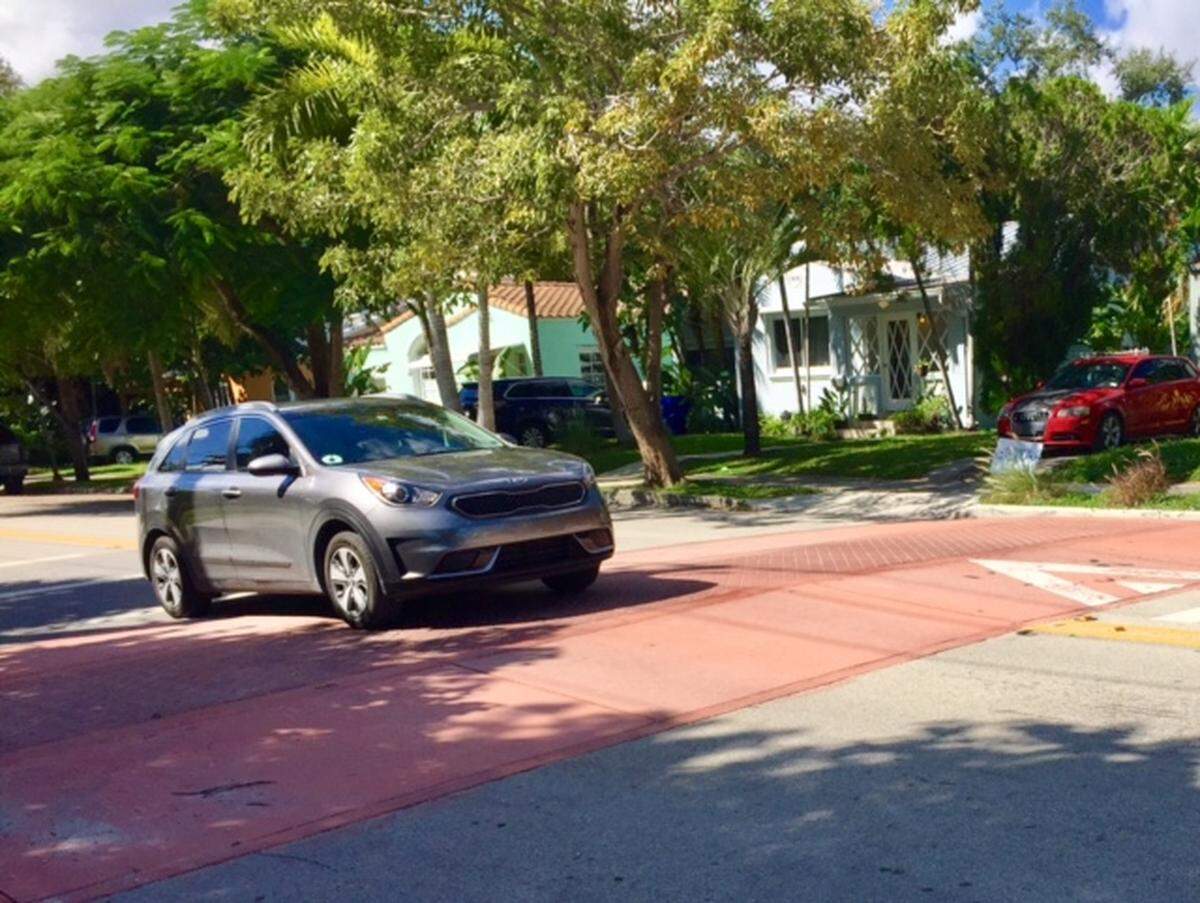
The three-phase plan calls for installation of 34 speed tables (which are flat, elongated versions of speed humps), six raised intersections (elevation of the entire intersection) and nine textured pavement segments (pavers rather than smooth asphalt that alert the driver to slow down, often at crosswalks).
In the first phase, speed tables would be built along Lybyer Avenue, Loquat Avenue, Poinciana Avenue, El Prado Boulevard, Park Avenue, Hardie Street and Battersea Road. The first raised intersection would be built at Poinciana Avenue and Braganza Avenue, and the first textured pavement segment would be built on Crawford Avenue at Kent Road.
The next two phases encompass more trouble spots on additional streets such as Avocado Avenue, Palmetto Avenue, Royal Palm Avenue, La Playa Boulevard, Hibicus Street, Devon Road, Woodridge Road, Douglas Road and LeJeune Road.
“If this doesn’t work, I don’t know what will,” Sanchez-Resnik said. “I hope they raise them high enough that they really make a difference and slow the traffic. Otherwise, if it’s too gentle a rise, you might as well use paint.”
Sanchez-Resnik said the South Grove is the best place to start because of the high volume of traffic speeding to and from Ransom Everglades School and Carrollton School of the Sacred Heart on Main Highway and to other schools nearby.
“The South Grove is suffering because you’ve got streets like Poinciana which is basically a straight shot for young drivers or parents going fast,” he said. “You could also point to Tigertail Avenue as the worst. South Bayshore Drive is terrible and we’ve been waiting many years for safety improvements. The list is long.”
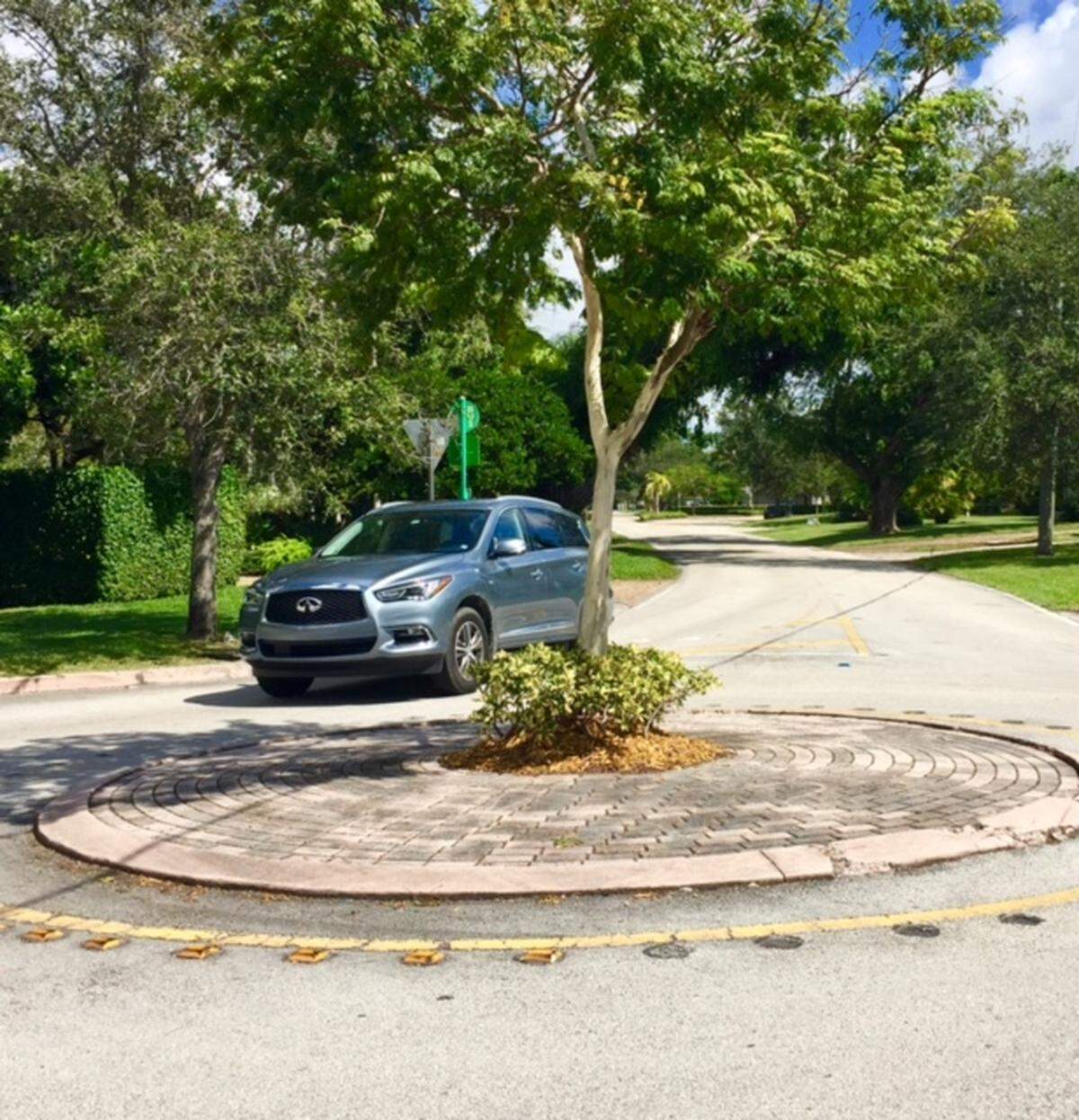
Sanchez-Resnik is a proponent of traffic circles or roundabouts. When he lived in Berkeley, California, he was involved in a community effort to install traffic circles. A traffic circle placed near his home on McDonald Street at Day Avenue after years of citizen lobbying is a “godsend” that has reduced chaos and collisions at that central Grove intersection, he said.
But South Grove streets are too narrow or curved for traffic circles, which can be problematic to construct, so other calming measures will have to suffice.
“Four-way stop signs unfortunately don’t work because people roll through them or gun it after pausing,” said Sanchez-Resnik, an avid cyclist who also serves on the Grove Village Council.
Two glaringly dangerous spots that are not addressed in the plan include Douglas Road at Ingraham Highway and Douglas Road at Main Highway. Those fall under Miami-Dade County jurisdiction and Sanchez-Resnik hopes to remedy them with improvements to the Commodore Trail bike and pedestrian path. He is co-chair of Friends of Commodore Trail, a nonprofit group aiming to renovate the scenic pathway that passes through Coconut Grove.
Though traffic calming has skeptics that consider it a Band-Aid approach, the slowdown measures are essential “baby steps” toward a reimagining of Miami’s unsafe and gridlocked streets, said Lotte Purkis, chair of the GroveConnect Action Team that collaborated with Russell and seeks to improve all modes of travel in the city.
“America is so advanced technologically yet it’s still in its infancy when it comes to mobility because American cities were built around the car,” said Purkis, a North Grove resident and native of England who has lived in Amsterdam, China and India, where she found that travel via foot, bike or public transit was much safer and more convenient than in the United States. “Compared to the rest of the world our calming measures are really basic but for Miami it’s a phenomenal advancement.”
The biggest problem is the volume of cars on overburdened streets, Purkis said.
“That’s why traffic is a wicked problem,” she said. “Ultimately, we need people to get out of their cars. They need to be shamed or inconvenienced or incentivized to get out of their cars. They need to want to leave the car at home because it’s more appealing to walk or bike or use public transport.”