Billboard shames Miami city leaders for allowing illegal ‘kissing’ houses in West Grove
A billboard shaming Miami city government officials for allowing the construction of shoulder-to-shoulder houses on Day Avenue was unveiled Tuesday three blocks away from where the West Coconut Grove duplexes stand in blatant violation of zoning laws.
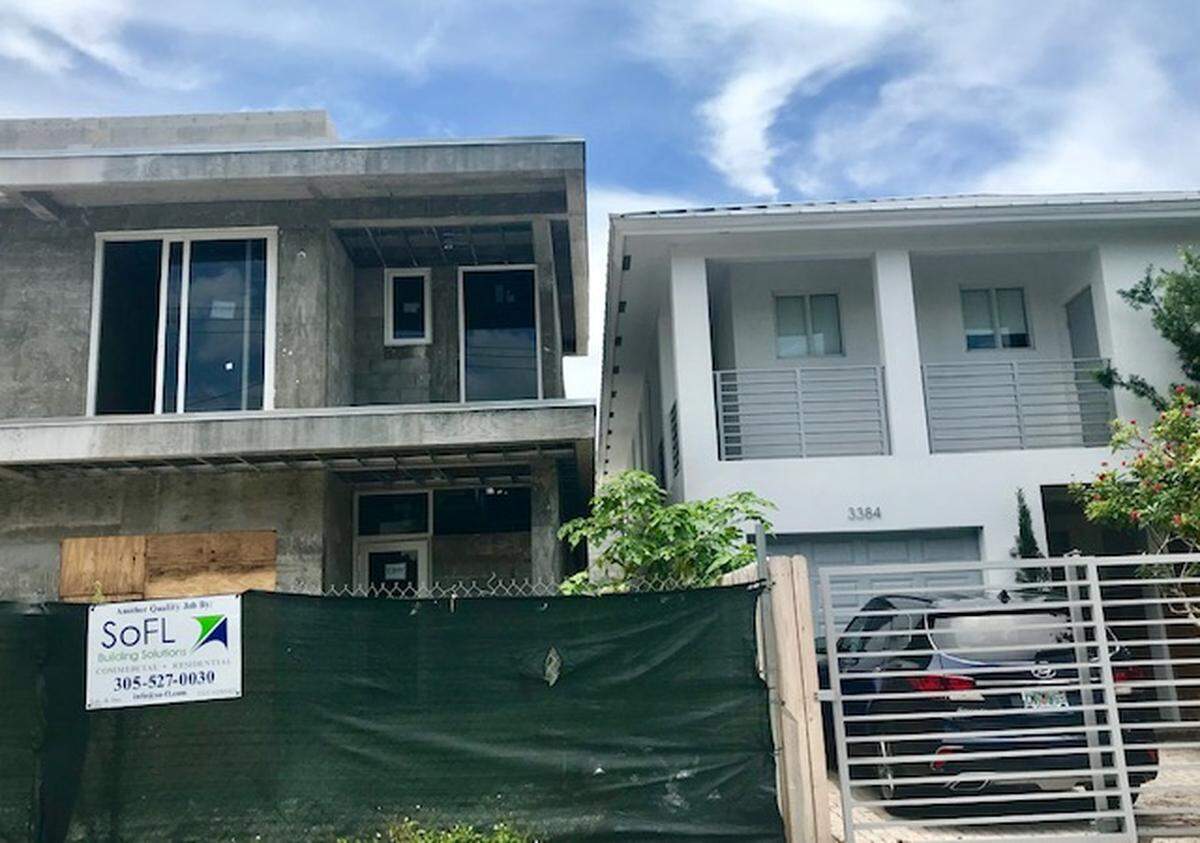
“SHAME on the city of Miami,” reads the sign, above a photograph of the duplexes with a superimposed measurement of the 6 inches separating the second-floor eaves and the 4 feet, 6 inches separating their outer walls. City code requires 5-foot setbacks and a total of 10 feet of separation between houses.
An overhead photo on the billboard shows the roofs squeezed so closely together they are practically touching. The houses are so intimate that occupants could lean out their windows and shake hands or exchange kisses.
“People are outraged about this abomination and we wanted to embarrass all those involved in authorizing these houses to be built in the hopes that it won’t happen again,” said Ellie Haydock, a Coconut Grove resident who collaborated with the Village West Homeowners and Tenants Association, the Coconut Grove Village Council and a half dozen residents to pay $3,100 for a one-month lease of the billboard.
The billboard is on the south side of Grand Avenue at Margaret Street by the Grove farmers’ market, on the thoroughfare that connects the historically Black West Grove and the central Grove.
“Just driving by on Day Avenue it is obvious and absurd to see it,” Haydock said. “How did this happen? It wouldn’t have happened in other parts of the Grove. Why inflict this on the West Grove? We have to stick up for all our neighbors. This sort of development has got to stop.
“It’s shameful. It should be torn down.”
At a July 23 meeting, despite an outcry by residents, city commissioners voted 4-1 to allow construction to continue on the unfinished house at 3374 Day Ave. adjacent to the occupied house at 3384 Day Ave. Commissioner Ken Russell, who represents the West Grove, voted no, warning the city was sending the wrong message to developers.
The developer of the properties sued the city last year when the city’s building department placed a stop work order on the site following months of complaints by a neighbor that the new duplex was being built illegally close to the existing one. Houses lacking 5 feet of breathing space between exterior wall and property line pose fire hazards, degrade property values, inhibit drainage, force tree removal and destroy privacy.
On the recommendation of City Attorney Victoria Mendez, commissioners decided to settle rather than fight the lawsuit because the developer’s plans — identical to others he previously completed in the Grove — were approved by zoning, building and legal department officials.
The developer, 3384 Day Investments, Inc., argued it was unfair to force him to demolish or significantly alter the house because he had proceeded with the city’s permission. The city admitted it erred but that the developer also misrepresented the final configuration of the building when the property was split into two lots.
“For the people who have lived here forever and will have to look at that eyesore forever, this example of uncontrolled gentrification is a slap in the face,” said Linda Williams, 67, a West Grove native. “City leaders must have the will to do what’s right. Don’t give developers carte blanche to stuff overpriced houses in here like sardines and destroy the culture of the neighborhood. It’s got to come down.”
The Day Avenue duplexes have become symbolic of redevelopment in the West Grove, founded by Bahamian settlers who built Miami. Longtime residents have been displaced and their modest homes supplanted by large, modernist, boxy houses — Groveites call it “the invasion of the white cubes” — built to maximize square footage and sales prices.
“We’re saying we want law-abiding government that represents citizens, not transient developers making a quick buck,” said West Grove homeowner Melissa Meyer, an architecture professor at Miami Dade College. She designed the billboard.
Using her tape measure, she initiated complaints when the Day Avenue foundation was poured and has documented another 40 noncompliant buildings with setback and height violations.
“It’s disrespecting homeowners who work hard to pay their property taxes and stealing intergenerational wealth from their children,” she said. “This is where it started, but it’s spreading.”
Residents have formed an organization called Neighborhood Justice to fight the city’s settlement with the developer and demand razing or rebuilding the house.
“The city is signing an illegal contract to allow an illegal condition to exist,” said Miami lawyer David Winker. “The city can no more allow this illegal structure than allow an illegal brothel to operate.”
On Thursday’s virtual city commission meeting agenda are Russell’s proposals for stricter building and zoning enforcement rules and harsher penalties for violators.