Selling a Brickell historic site for condos appears off. But it could be a dog park
When they put off voting on a lease for a small but significant early historic building in the Brickell neighborhood last month, Miami commissioners proposed selling the land for condo development — a move one elected official said could generate millions to relieve a budget crisis.
But when two independent appraisals commissioned by city administrators concluded the lot is too small to be developed, Commissioner Joe Carollo, who came up with the sale idea, moved the goal posts.
With the support of two other commissioners, he persuaded the board in a hearing Thursday to again unanimously postpone a decision on a voter-approved lease extension for Dade Heritage Trust on the 115-year-old James M. Jackson office. The preservation group has occupied and maintained the city-owned property, built as a clinic by Miami’s first physician, for 44 years. The commission is now scheduled to consider the proposed 30-year renewable lease in January.
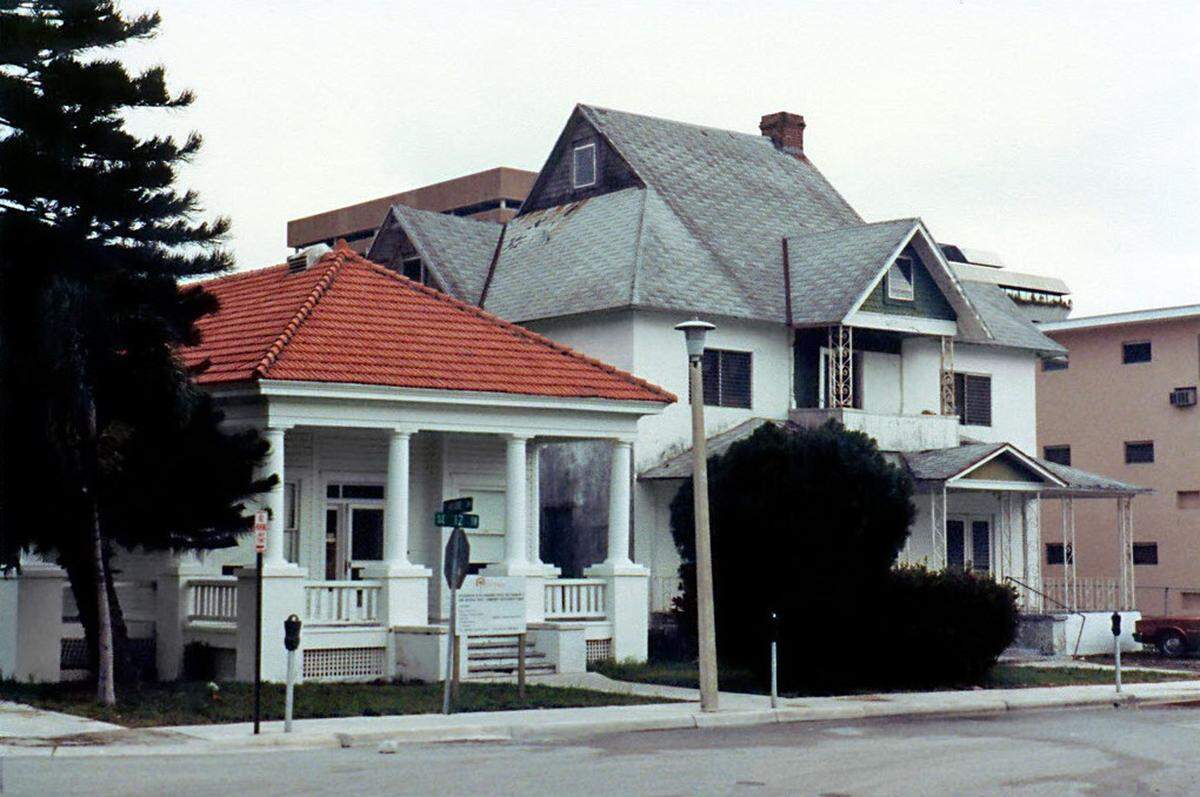
Carollo said he now wants city administrators to explore whether the historic site could be better used as a dog park or a pocket park — or even a museum, although the nonprofit preservation trust maintains a lushly landscaped public butterfly garden, mounts exhibits and runs educational programs in the 1905 bungalow, which was open to the public before the coronavirus pandemic. The historically designated cottage, Carollo said, could be moved elsewhere, though he doesn’t think the city should bear the cost.
“That could become the most used dog park in all the city,” Carollo, who represents a district encompassing Little Havana, said.
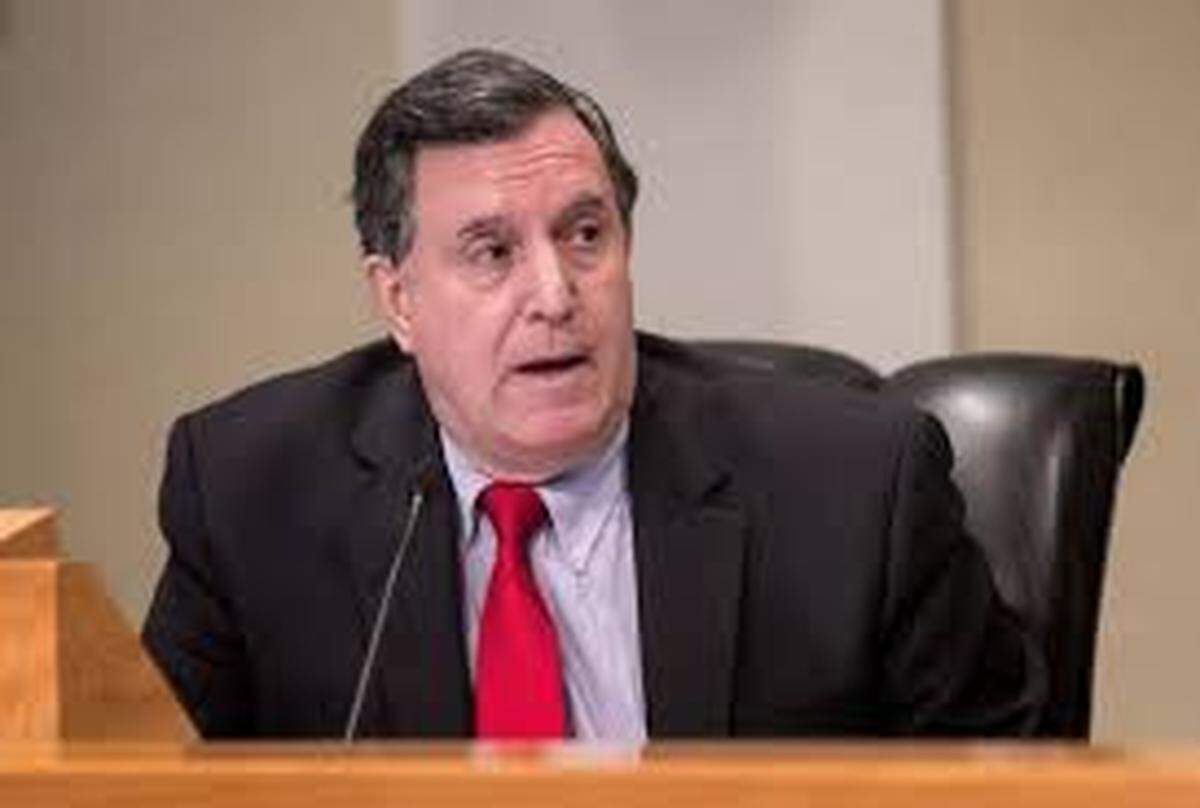
Saying he was tired of seeing Miami officials “give away” property and complaining the city has been “a dumping ground for nonprofits,” Carollo added he’s unconvinced that the lot, at 190 Southeast 12th Terrace, can’t be developed. High-rise zoning in the area requires 25-foot setbacks, leaving virtually no room to build on the narrow lot. But Carollo said the city commission can simply waive the setbacks.
Carollo, with the backing of commissioners Manolo Reyes and Alex Diaz de la Portilla, also dismissed the significance of a 2016 city referendum in which 55 percent of voters backed a city charter amendment to allow Dade Heritage to lease the house long term. Carollo and Diaz de la Portilla said the vote happened too long ago to matter.
Carollo complained about what he described as “all of a sudden, this grab-bag,” referring to the proposed lease, although it has been in the works for years and it was the city that was slow to finalize lease documents.
And Carollo also dismissed a steady stream of people who, during an earlier comment period, implored commissioners to renew the lease. Speakers lauded the character of the bungalow, its modest place in an otherwise bustling high-rise neighborhood, and its function as a place where Miamians can appreciate the city’s history.
But Carollo said many of those witnesses were not “true Miamians” because they live in suburbs outside city boundaries, although many said they live in Brickell.
Longstanding tensions between Carollo and Commissioner Ken Russell, whose district includes Brickell, also played into Thursday’s debate. Carollo, sometimes in tandem with Reyes, has often broken with the traditional deference on district matters to the local commissioner in defying Russell’s preferences on some key issues.
Russell supports approval of the lease with Dade Heritage and keeping the house in place. He noted there are other parks in walking distance of the site and no one from the public has asked for a dog park at the historic site. All members of the public who provided testimony or sent messages support keeping the historic house in place, Russell noted.
He questioned Carollo’s reasoning.
“I’m not fully sure what the motivation is,” Russell said. “It’s not about the money any more.”
Carollo bristled, and at one point took a shot at Russell.
“If it was up to you, you would give everything in your district away,” Carollo said.
Russell snapped back: “Don’t speak for me.” But he voted for the deferral when it became clear he would be outvoted.
Reyes, however, called Carollo’s request “reasonable.” He said he would be willing to leave the house in Brickell if the city’s analysis concludes moving it would be impractical or too expensive. In either case, he suggested, he would support approving the lease for Dade Heritage, which could keep using the building if it’s moved.
Reyes has repeatedly cited a precedent: the move of the original Miami High School, a wooden bungalow also dating to 1905, from a West Brickell lot slated for condo development to the city’s nearby Southside Park. But that lot was privately owned by a developer who, acting at the behest of Dade Heritage, agreed to donate the decrepit school building, long before converted into apartments, to the city. He also contributed $35,000 towards the move.
Dade Heritage, which has also played key roles in saving numerous historic landmarks like the Freedom Tower, the Miami Circle and Miami Marine Stadium, spearheaded the rescue and restoration of the school building. It also raised much of the money, which came from private donations and government grants.
The Miami High bungalow saga also underscores the high cost, complications and pitfalls of moving a historic structure and putting it under city management. A move can be done successfully. The Jackson clinic, for instance, was moved once, in 1917, from downtown to what is today Brickell after the physician sold it to another Miami pioneer.
But the cost in 2003 to move what was essentially a tumbledown shack a few blocks was an astronomical $400,000, and required closing streets and temporarily moving overhead utility cables.
Restoration and conversion for use as a community center cost $1.1 million. But the city neglected the schoolhouse after Southside Park was closed because toxins were discovered in the soil. Today the building, used for storage, is badly deteriorated and is again partially collapsing.
One of Dade Heritage’s selling points for staying in the Jackson building is its long record of stewardship of the property. The group engineered the sale of the house to the city in 1977 with federal grants, then restored it and has since been responsible for all insurance, repairs and maintenance, at a cost director Christine Rupp puts at $30,000 to $40,000 a year.
The organization, which has continued to operate out of the historic building under a city license but with an expired lease, can remain in the house at least until the January decision on the proposed extension.
“We’re just going to keep doing good stuff for the city of Miami,” Rupp said after Thursday’s deferral.
After the deferral, Reyes said in an interview that no one has contacted his office requesting conversion of the property into a city park. He said he simply wants to study alternatives, including what it would cost to move the building and how those funds would be raised.
He emphasized he would only support moving the structure if it makes financial sense and if it would bring more visitors to the site. Even if it is moved, he said he envisions the building remaining in the care of Dade Heritage, so it would not be allowed to fall into disrepair due to neglect.
“We could get some funds from institutions and organizations in order to move the house,” he said. “I would never vote for demolishing the house.”
During the earlier comment period, however, the overwhelming public consensus was to leave the house where it has stood for more than a century.
“We don’t need another condo or building in this area,” Michael Dever, a Brickell resident, said, pointing to the tree-shaded garden maintained by Dade Heritage. “As you can see, there’s a lot of trees and vegetation in this area. A lot of people enjoy being around this area here. So please commissioners, do your job and make sure this building stays where it is.”
Catherine Arty, another Brickell resident, said it was sad to see the city consider removing the building from its location and potentially adding another residential tower in its place.
“Selling this land is a short-sighted move. Brickell has more than enough condos, but very few cultural historic buildings,” she said.
This story was originally published October 9, 2020 at 7:00 AM.