What are Flock cameras and where are they in Miami-Dade and Broward?
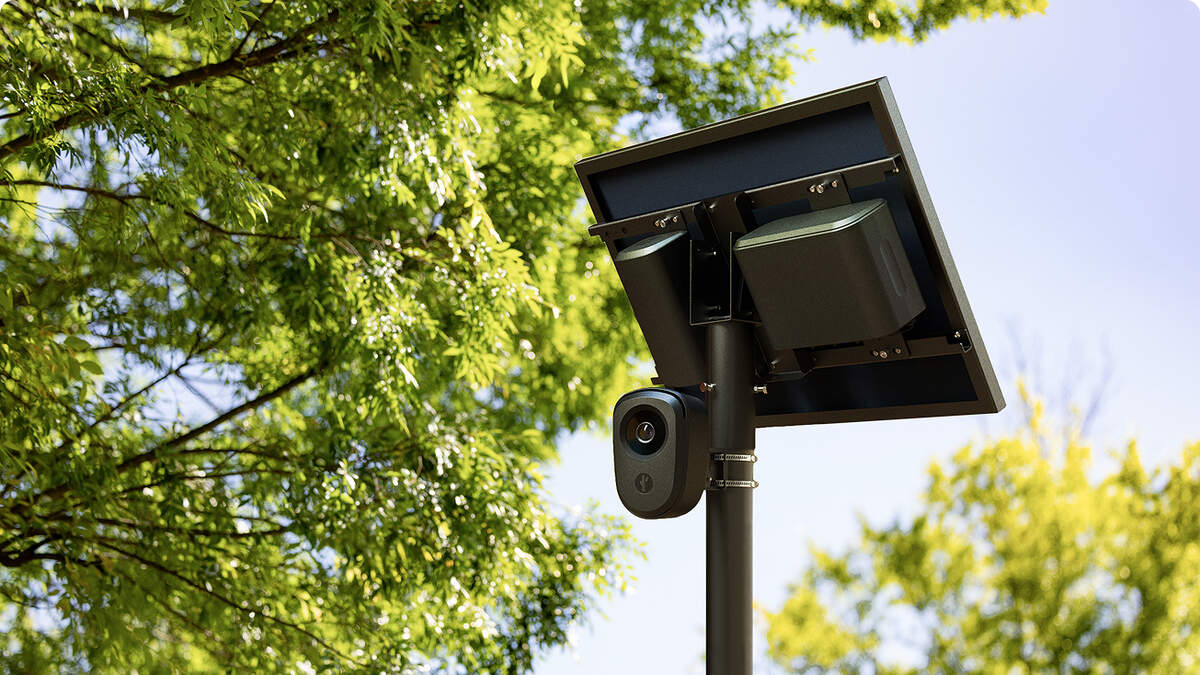
Those black, oval shaped devices you see popping up on poles in Miami-Dade and Broward counties aren’t regular traffic cameras, they’re AI-powered Flock cameras. And residents aren’t too keen on their arrival.
The cameras, also known as ALPR cameras, are powered by Flock Safety and use artificial intelligence to scan license plates. Other Flock technology uses audio-detecting technology to identify sounds like gunfire or car crashes.
DeFlock, an open-source project that maps where the cameras are in the U.S., shows almost 400 Flock cameras installed in Miami-Dade County. The site shows Broward County has twice that many at over 800 cameras, with a big concentration in the Fort Lauderdale area, including Pembroke Pines and Hollywood.
While the Flock Safety website states it partners with businesses and local communities to implement the technology, the company is most known for its partnerships with law-enforcement agencies, which are said to use the technology to solve crimes like missing persons or stolen vehicles.
It is unclear if any Miami-Dade or Broward agencies have partnerships with the company. Neither county’s sheriff’s office immediately responded to a Miami Herald inquiry about a contract or partnership with Flock, nor did police departments from Miami, Miami Gardens, Miami Beach, Hollywood and Fort Lauderdale.
A YouTube video might depict a relationship with Flock Safety and MDSO, though.
In the video, posted by Flock Safety in March, Miami-Dade Sheriff’s Office Major George Perera speaks with a Flock representative concerning a tip that the agency received about the security of the technology.
Perera said MDSO’s Electronic Crimes Task Force analyzed the technology and found it to be secure.
“We feel confident in the product to be able to continue to have a relationship,” Perera said in the video.
Controversy about the cameras
Flock cameras have become so widespread, residents are taking to social media to air their grievances.
Tiffany Hudson, 38, of Plantation, created a Facebook group called “Get the Flock Out of Florida” after learning her city would implement close to 100 cameras. She said in a city of about 100,000 residents, that’s a lot of cameras.
“People are like, ‘So what? Big deal, it snaps a picture of your car,’” she told a Miami Herald reporter. “But what happens is they put a camera on this street, then the next street, then the next street. … They have them all over the place, so you’re under surveillance all the time.”
The Flock Safety website says the license plate-reading cameras don’t detect faces, people, gender or race and its audio-detecting equipment doesn’t record conversations, but Floridians like Hudson are concerned about their data being tracked.
Unless stated otherwise by an individual contract — whether that be with a law-enforcement agency or business — the Flock website says all data gathered from the cameras are only stored for 30 days. But that’s not to say data isn’t being sold, Hudson said.
“We don’t know what’s happening to our data,” she said. “Our data is being taken and given to [people or agencies] we don’t even know.”
On its website, Flock repeatedly states it does not sell data to third parties nor can any outside agencies access it without permission.
ICE and immigration worries
While Flock’s website says it doesn’t work directly with U.S. Immigration and Customs Enforcement or share data with the agency, it says individual agencies like police departments that partner with Flock can share the data if they choose.
Budget data from Florida’s State Board of Immigration Enforcement states several law-enforcement agencies have requested funds for Flock cameras and similar ALPR technology.
“Flock Safety ALPR scans plates in real-time, cross-referencing against immigration databases for warrants, deportees, or smuggling vehicles. Under 287(g) and ICE partnerships, it flags suspicious patterns on routes like US-19, aiding arrests and data sharing,” one of the budget requests said.
Law-enforcement agencies outside of Florida have reevaluated their partnerships with the company based on similar concerns. In Dayton, Ohio, the police department suspended its partnership with Flock and placed trash bags over its cameras after finding more than 7,000 cases of immigration enforcement-related searches. The Los Angeles Police Department ended its partnership with the company last week and is in the process of renegotiating it over concerns of how Flock Safety stored the data.
In Miami Beach
Along the Venetian Causeway — one of the main links between Miami Beach and the mainland — DeFlock shows nine Flock cameras installed. In Miami Beach alone, the website shows four ALPR cameras — two of which are Flock Safety cameras — near the intersection of Alton Road and 14th Street.
Despite the low number of Flock cameras installed in the city, Miami Beach resident Alex Giassa, 56, said he thinks the company is a data-sharing scheme.
“It’s not just an invasion of privacy, it’s really a violation of everything that we stand for as Americans,” he said. “Yes, we have the Fourth Amendment, but isn’t it our choice also when we want somebody to know something?”
With Flock cameras, he said privacy takes on a new meaning — with people needing to recognize their actions are constantly monitored.
“It just infuriates me. … Regardless of where you go and who you meet with, you’re being tracked,” he said.