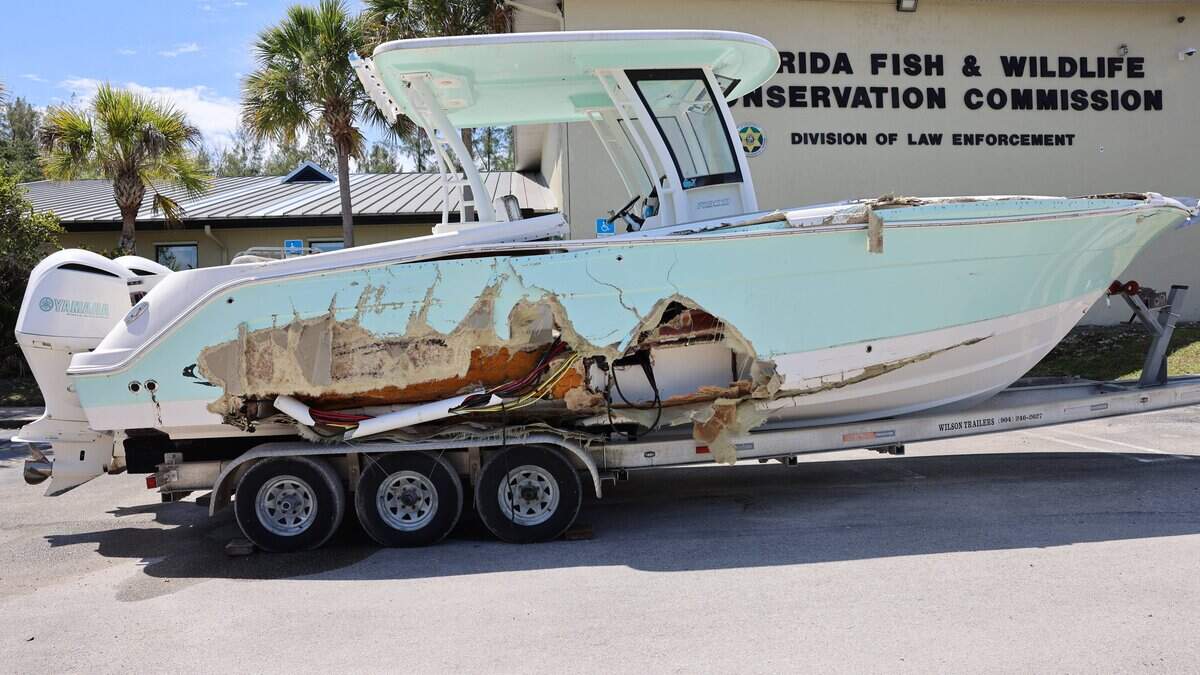
Jurors are taken to see George Pino’s wrecked boat in North Miami lot
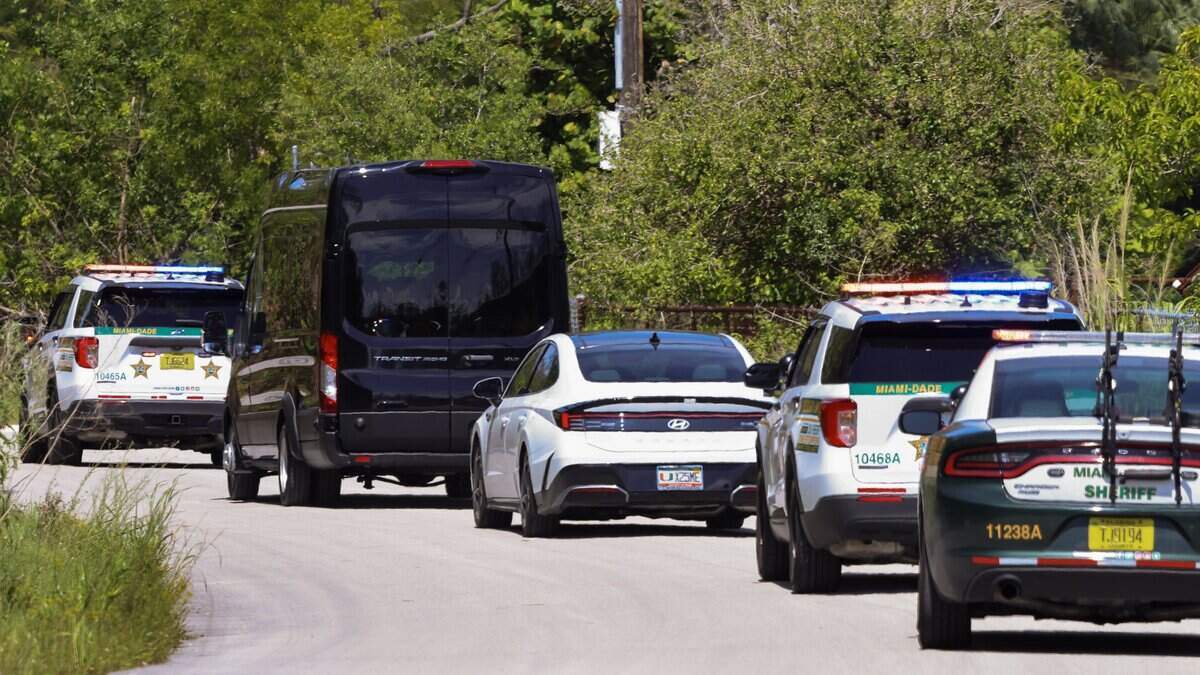
The six jurors in George Pino’s vessel-homicide and manslaughter trial took a road trip to North Miami on Thursday morning to view his boat, which was wrecked in the crash that killed a teenage girl and severely injured two others.
The jurors arrived around 10:30 a.m. in a black Dodge van, escorted by three Miami-Dade Sheriff’s Office deputies who drove them through a gate on Northeast 151st Street near Florida International University’s north campus.
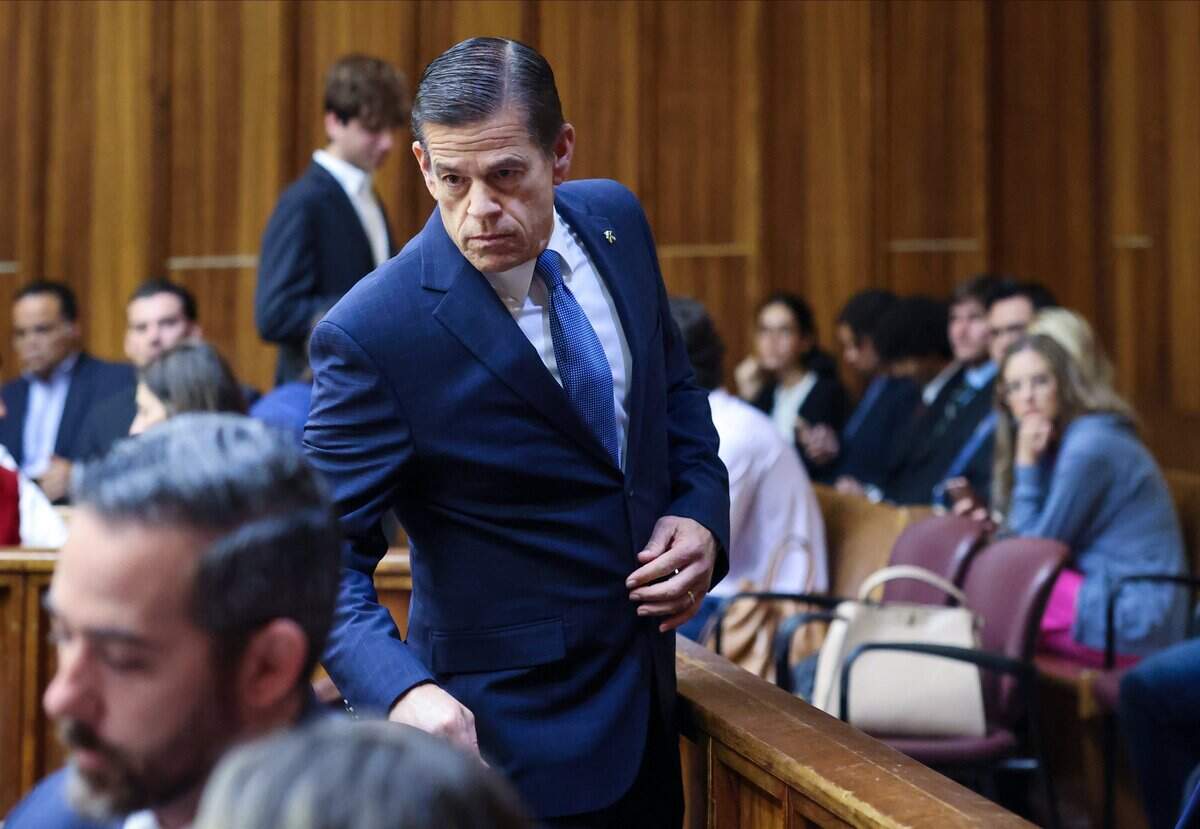
The gate was guarded by two Florida Fish and Wildlife Conservation Commission officers. Along with the jurors and deputies, the caravan included prosecutor Laura Adams and members of Pino’s defense team, led by attorney Howard Srebnick.
The group left the property around a half-hour later.
The news media was not permitted to watch the jurors tour the boat, but were allowed to take photos and videos of it when the jury departed.
While at the storage lot, FWC Lt. William Thompson, who was the lead investigator in the criminal case, pointed to two parts that had green markings, Judge Marissa Tinkler Mendez told lawyers when she returned from the visit. The green markings, an investigator’s testimony would explain later in the day, were left on the boat upon impact with a reflective sign on the channel marker.
Pino is standing trial for the death of Luciana “Lucy” Fernandez, who was aboard Pino’s 29-foot Robalo center-console boat when he crashed it into a steel channel marker in the Cutter Bank channel in Biscayne Bay on Sunday, Sept. 4, 2022. Lucy, who was 17, died at a hospital the next day.
.JPG "IMG_lucy_fernandez_found_2_1_J7QAUHGJ_L886386476 (1).JPG")
The crash also seriously injured two other girls, including now 21-year-old Katerina “Katy” Puig. The Division I soccer prospect now faces a lifetime of neurological and physical challenges because of the severity of her injuries.
George Pino, 55, and his wife, Cecilia, 51, took Katy, Lucy and 10 other teens out to Elliott Key from the Ocean Reef Club in north Key Largo for a day of celebration for their daughter’s 18th birthday. They were heading back to Ocean Reef for dinner around 6:37 p.m. when Pino, who was driving on the wrong side of the channel, slammed into the marker at just under 50 mph.
All the girls on the boat attended either Our Lady of Lourdes Academy, Westminster Christian Academy or Carrollton School of the Scared Heart.
The boat had a cooler full of alcohol on it when cops salvaged it from the water the next day, and some of the girls said they drank heavily on the day of the crash. Pino admitted to a Florida Fish and Wildlife Conservation Commission investigator that he drank “two beers” that day.
Investigators, however, concluded he did not show signs of impairment and that alcohol was not a factor in the crash.
‘A funnel’
When the jury returned to the courtroom on Thursday, Lt. Manuel Pomares, an investigator with the Florida Fish and Wildlife Conservation Commission, testified that he was part of the dive team that recovered the Robalo from the channel.
He described Cutter Bank as “a funnel,” meaning that after heading south in the wide-open Biscayne Bay, boaters enter a much narrower space that requires a great deal more precision to safely navigate.
“You really have to pay attention when you’re going down or through Cutter Bank,” Pomares told jurors and prosecutor Jonathan Borst.
Pino’s attorneys have been disputing the characterization of Cutter Bank as a narrow passage to counter the state’s argument that Pino was reckless by not driving on the right side, the correct side, of the channel for 17 seconds before hitting the piling.
Pino had said from the beginning that another boat coming at his direction caused him to lose control of his vessel. He told police that and repeated the claim in a sworn statement in a civil lawsuit related to the crash.
But no witness on his boat or in the channel at the time of the crash corroborated the claim. His attorneys unsuccessfully tried to have the judge bar the other-boat theory from being mentioned at trial.
Pino’s defense team is prepared to have a doctor testify that a head injury from the crash caused Pino to suffer a traumatic brain injury that gave him a false memory of the events leading up to impact.
The jury saw video that Pomares shot while diving under the capsized Robalo in the channel the day after the crash. A compartment hung loose, and the vessel’s top covering the center console rested on seagrass on the ocean floor.
He said the water was only about six to seven feet deep that morning as he and another diver recovered evidence from the bottom. Miami-Dade Sheriff’s Office divers searched around the channel marker, Pomares said.
The divers found many items, including pieces of clothing, part of a hatch from the boat, fiberglass from the hull, eight cellphones, coolers, “Yeti-type” steel tumblers, a fire extinguisher and Bud Light and Truly cans.
The divers also found a piece of the three-feet-by-three-feet, green, day-glow placard that had been bolted to the navigational channel marker before being smashed and dislodged by Pino’s boat, Pomares testified. The placard is designed to keep boaters on the correct side of the channel.
The shredded piece, which is made of plywood and was covered with a reflective green laminate, was shown to jurors. Pomares also showed an aqua-blue piece of the starboard side of the hull of Pino’s boat, with the word “Robalo” still remaining.
This story will be updated.
This story was originally published June 11, 2026 at 12:56 PM.