
Can a dog help save a bad bridge? How FIU researchers are using smell and tech
A sniffing dog may save a crumbling bridge.
A new toolkit, including a team of dogs, sprayable concrete and an MRI-like machine that can diagnose steel, can help engineers diagnose, strengthen and save ailing bridges. Florida International University researchers are helping to develop the new methods to discover and manage bridge corrosion.
There are about 620,000 bridges in the United States, with the many only in fair condition. Florida has around 13,000 of those bridges.
FIU is leading a seven-university collaboration funded by the U.S. Department of Transportation’s University Transportation Center Program for the mission of addressing the aging infrastructure with next-generation solutions.
Rather than replace a bridge when it fails, the university research collaboration could find ways to make repairs instead.
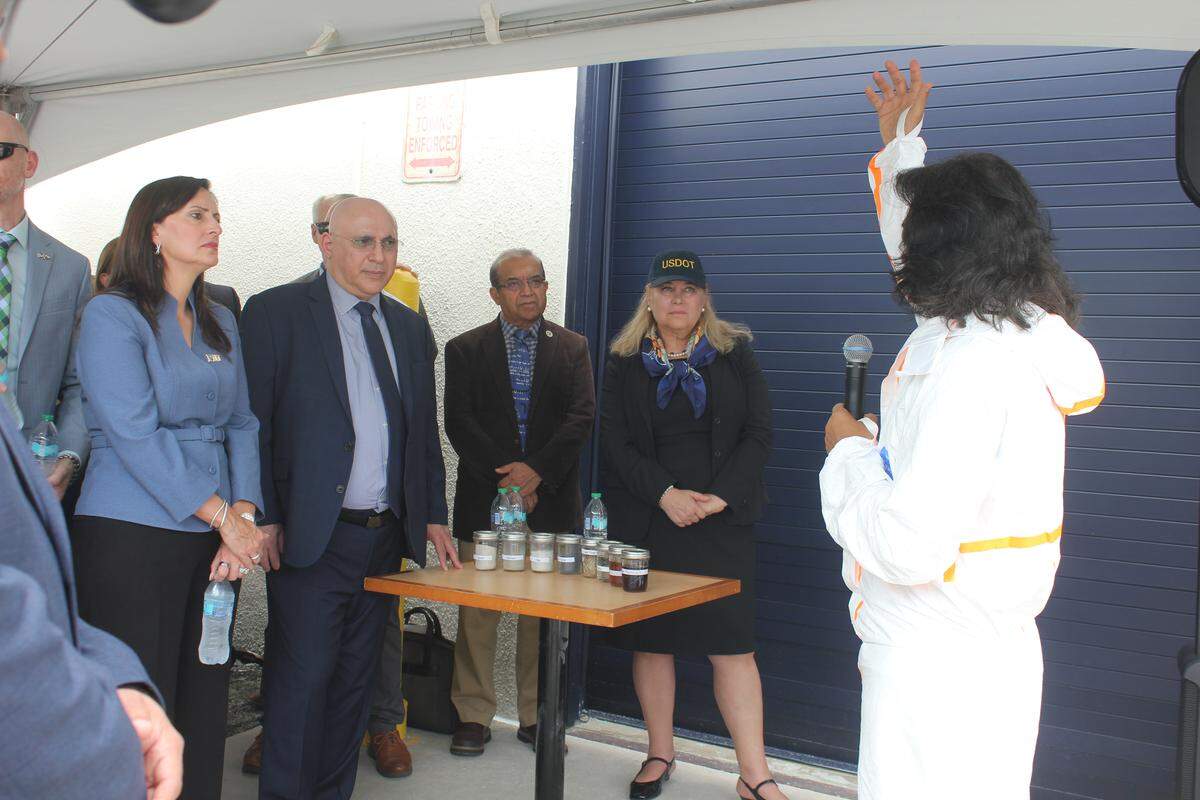
Last week, FIU hosted members of the DOT on its engineering campus to showcase new technologies.
“The ability to take localization, some of the work [they’re] doing here at FIU, and really broaden the nation’s spectrum of capabilities… that’s what it’s going to take,” said Seval Oz, assistant secretary of the U.S. DOT’s Office of Research and Technology. “We’re right here, at the right moment in time, to ... expand on that and build it into our nation’s bridge construction and repair maintenance and inspection efforts.
“So, the eyes of the nation are on South Florida for this project.”
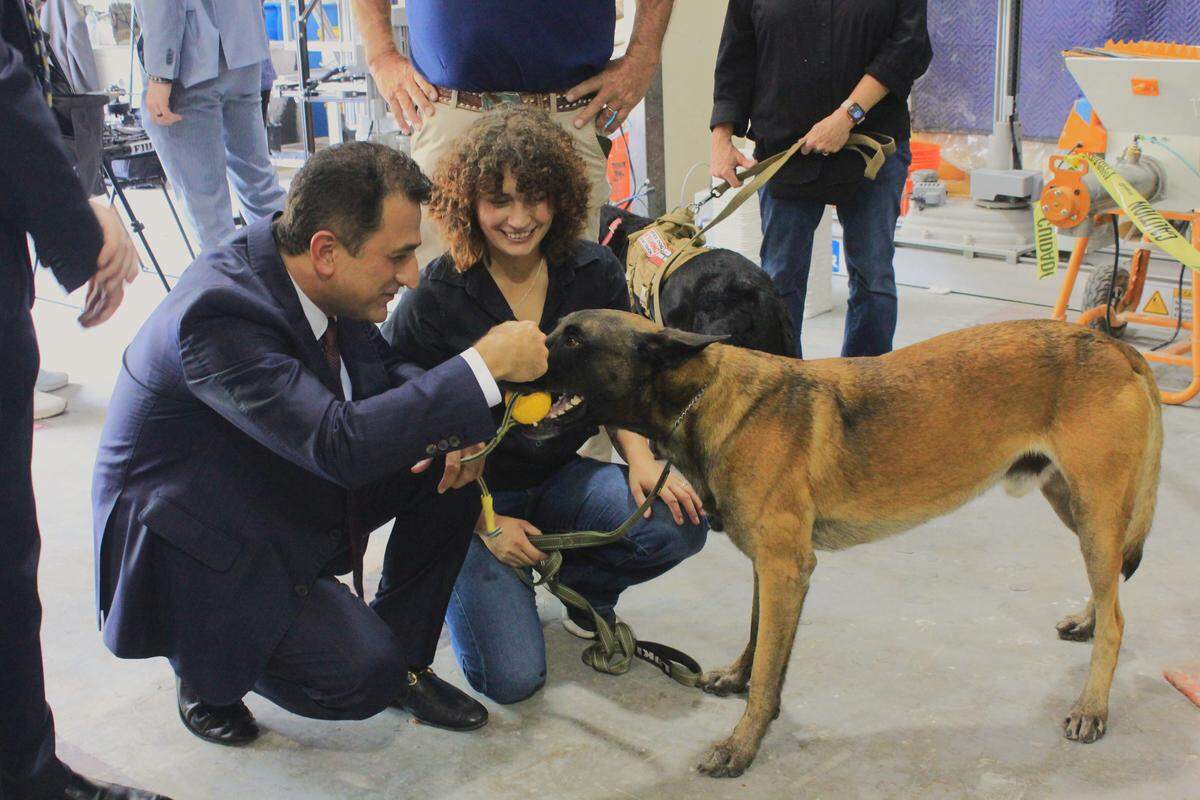
The presentation included two trained dogs, Loki and Pixie, of five total that have been taught to sniff out the chemical odor of corrosion. Before the event, blind field tests found the dogs correctly alerted areas of corrosion through concrete cylinders with a hit rate of 98.7%.
In situations when more is needed than a friendly snout, the teams demonstrated a Magnetic Flux Leakage device that detects corrosion in cables, working like an MRI scan.
Many bridges in South Florida depend on cables containing steel strands to hold them together. Those individual strands support the strength and flexibility of a cable, but they can wear down over time. The condition of the steel isn’t visible to the naked eye without invasive methods of inspection, and their failures could cause a bridge to collapse.
Using a magnetic field, the MFL can be moved over a structure with these cables inside and is meant to spike its sensor chart at possible corrosion.
The actual repairing process has gotten an upgrade as well.
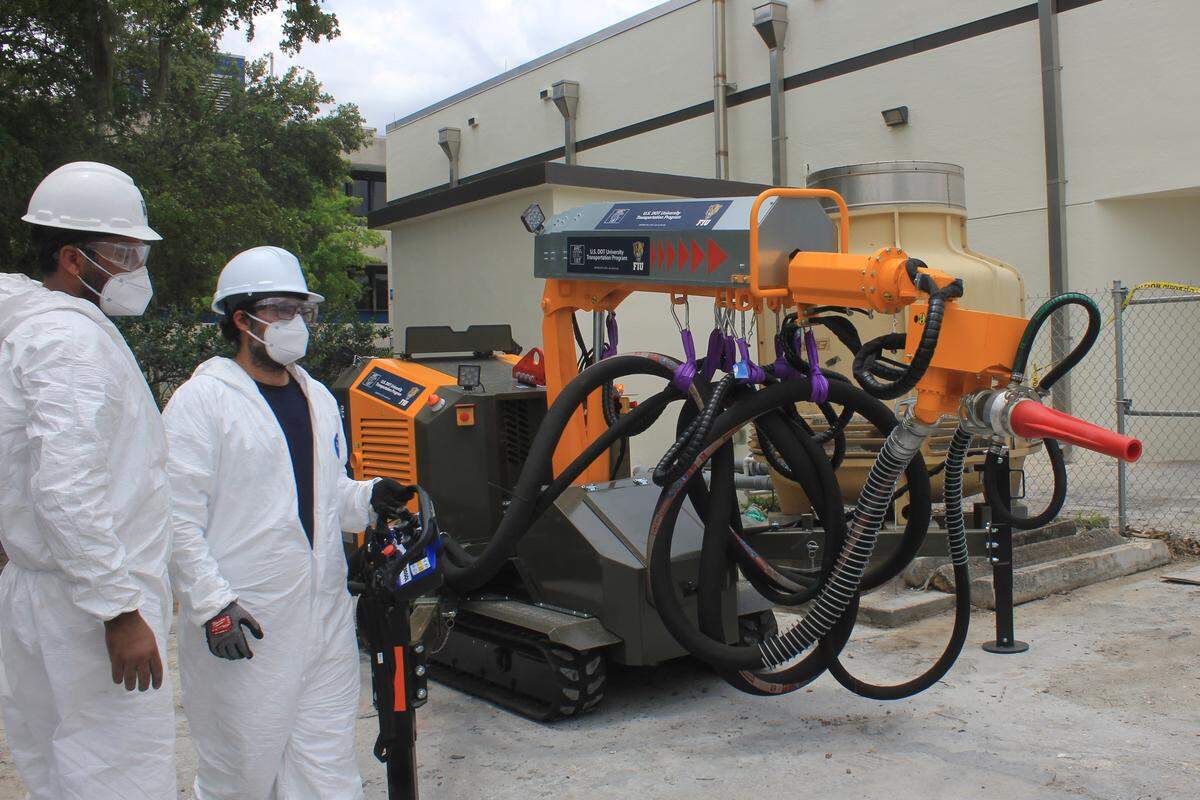
Sprayable Ultra High-Performance Concrete was introduced by an early pioneer of the technology, Atorod Azizinamini, a professor at FIU’s Department of Civil and Environmental engineering and director of the Accelerated Bridge Construction University Transportation Center.
Because the UHPC is sprayable, it does not need molding or support, so a bridge wouldn’t have to shut down for a quick fix in the concrete.
The sprayable UHPC has also been tested to have more than five times the strength of conventional concrete, along with a resistance to moisture penetration, according to Oz.
“The objective of the present administration is to have absolutely the best transportation system that is out there, and a bridge is a very important part of the roads,” Azizinamini said. “And FIU is right there at the forefront of it.”
He added that the U.S. Department of Transportation’s support has put FIU graduate students in high demand in the field as they’ve become more familiar with the latest technologies and practical aspects of the work.
“It starts with the academics, right?” said Oz. “It starts with the students, the new generation of ideas — the idea of, what if I did this?”
The technology “demonstrates the power of innovation, the power of our researchers,” said FIU President Jeanette M. Nuñez. “We know that this country has a problem with infrastructure ... and so, FIU is leading the way and being able to help a national problem right here on our campus, and I’m very proud to be able to demonstrate that.”
Azizinamini said the next step is hitting the market under the company UHPC Technologies.
“This is our present and this is our future,” Oz said. “We’ve spent a lot of time curating quite a lot of research over the years. Right now is the time to actually unleash this capability out into the world.”
This story was originally published June 5, 2026 at 5:00 AM.