
Miami-Dade commissioners inch closer to funding new mental health center
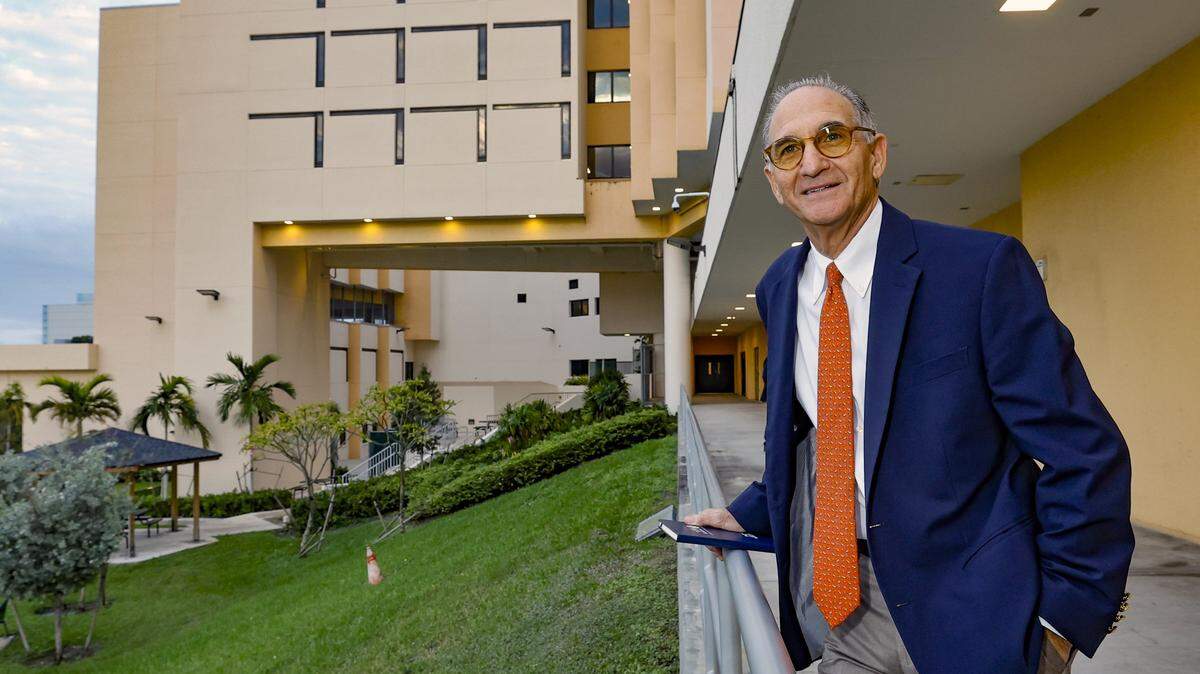
A long-stalled mental health center moved closer Wednesday to being added to Miami-Dade County’s already strained budget forecasts, with commissioners saying the Miami facility is too important to die over cost concerns.
“The fiscal question is not whether the county can afford this,” Commissioner Kionne McGhee said during the four-hour committee meeting dedicated solely to the fate of the proposed center — a project that’s been in the works for 20 years. “I think the question is whether the county can afford to keep it closed.”
Championed by retired Judge Steve Leifman, the seven-story center has already cost Miami-Dade $50 million to retrofit the old state building at 2200 NW Seventh Ave. between Wynwood and Allapattah. It would serve as a short-term residential treatment center with 75 beds for people with mental illness who would otherwise go to a county jail to await trial. Judges would have the option to divert the defendants to mental-health treatment if they did not face charges related to violent crimes.
While Leifman has argued the setup would let Miami-Dade save millions on jail costs, the administration of Mayor Daniella Levine Cava rejects that premise and predicts the facility would cost the county at least $12 million a year to run. “The clear answer is no — this will not save us millions of dollars,” said Arnold Palmer, the Levine Cava deputy who oversees the Corrections Department.
That projection comes at a rough time for new spending in Miami-Dade, where budget forecasts already show deficits hitting $323 million by 2030. Leifman needs approval by the 13-member County Commission to open the center, which would be run by a pair of nonprofit organizations that specialize in mental-health treatment.
Commissioners did not drill down into the central question of how to pay for the center in three or four years once the county runs out of the one-time dollars that have already been secured — including $8 million in leftover federal COVID aid and $16 million from a part of Miami-Dade’s share of a national settlement of an opioid lawsuit against drug companies. But given that opening the center would not cause hard choices on spending this year, multiple commissioners said they’re willing to allow the facility to open and sort out the finances later.
“I recognize that this may cost us money,” Commissioner Vicki Lopez. “The thought that this should be self-sustainable is ridiculous.”
While every commissioner at the meeting endorsed the center’s mission, there was no consensus on how to actually absorb its budget once the short-term funds are gone — a moment likely to arrive after a term-limited Levine Cava leaves office in 2028.
In a hint of the friction surrounding the debate, Commissioner Danielle Cohen Higgins said commissioners should be ready to sacrifice pet causes to make the numbers work. She alluded to one of hers — the Hometown Heroes parade she sponsors each year — and also the CountryFest rodeo hosted by one of her allies on the board, Chair Anthony Rodriguez. And she also alluded to the pet cause of a board rival, Commissioner Raquel Regalado. She’s sponsor of the legislation needed to open the mental health center and the board’s top backer of the Underline, a new linear park running between Miami’s Brickell Avenue and the Dadeland South Metrorail station.
“We have people talking about rodeos and parades. I’ll do it. Let’s put it to the Leifman building,” Cohen Higgins said. “Let’s put walkways for the wealthy toward the Leifman building. Let’s do the hard work now. Because it’s inevitable.”
After the meeting, Leifman and his supporters said it’s clear they have enough commission votes now to open the center. That leaves the issue with Rodriguez, who has so far declined to put Regalado’s legislation on the County Commission agenda for a vote by the full board. During Wednesday’s committee meeting, he said it was important for commissioners to figure out how to pay for the center’s opening.
“We just need to get comfortable with the fact that this will cost the county money,” he said.