
As new Bay of Pigs museum opens in Miami, veterans of the assault ponder future of Cuba
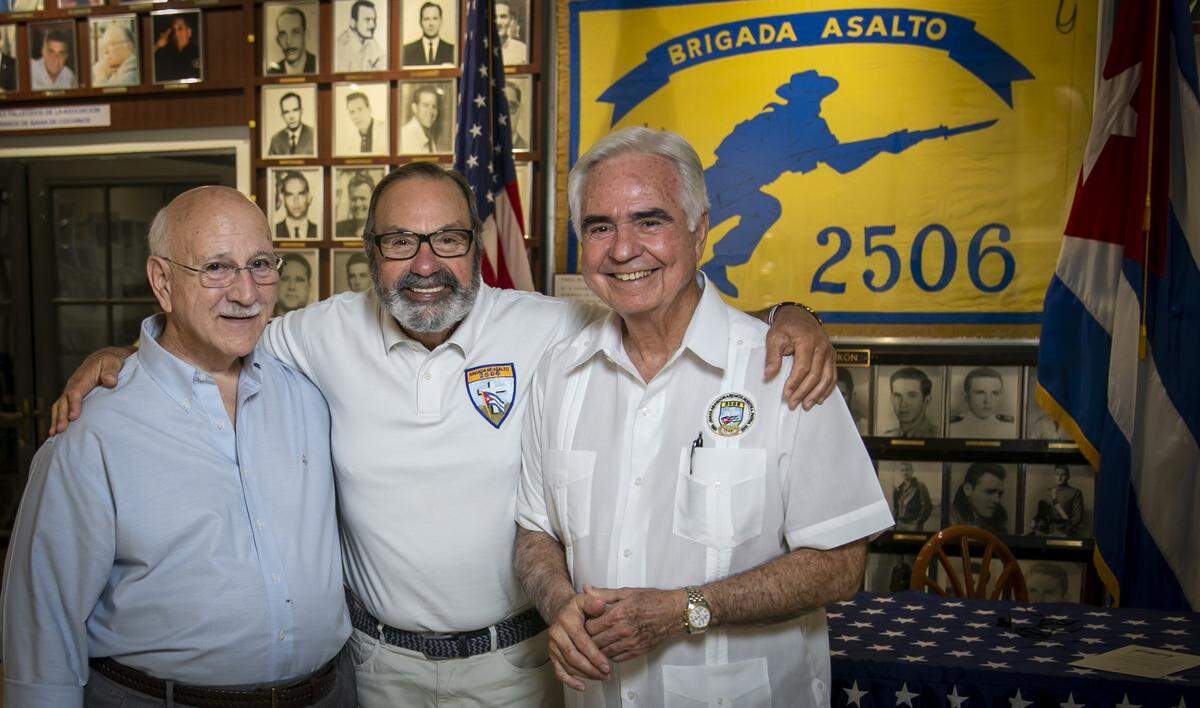
Eduardo Zayas Bazán was one of the first members of Brigade 2506 to open fire when he landed on a southern Cuba beach on April 17, 1961. He was 25 and part of a group of determined Cuban exiles intent on liberating Cuba who left behind their lives, careers and families in the United States to take up arms in the Bay of Pigs invasion.
Sixty-five years after that military action in which 102 brigade members lost their lives, Zayas Bazán, vice president of the Brigade 2506 organization, feels optimistic that the shift toward democracy he and his comrades fought for is closer. But he acknowledges it will not be easy.
“We want a peaceful change, but for that to happen, the Cuban government has to realize they must give up power,” Zayas Bazán. “They need to be pressured, because otherwise there will be a huge bloodbath and that’s what we want to avoid.”
A peaceful transition would make reconciliation among Cubans both on the island and abroad easier, he said.
Zayas Bazán, 90, will assume the presidency of Bay of Pigs Veterans Association Brigade 2506 on Sunday, a day after the opening of the new 11,000-square-foot Museo de la Brigada 2506 de Bahía de Cochinos, built on the lot adjacent to the site that since 1988 has housed the Brigade’s headquarters.
The issue of a possible U.S. military intervention in Cuba has been in the air ever since Cuban leader Miguel Díaz-Canel recently told NBC News in an interview in Havana that he refuses to leave power, despite the deep crisis the country is facing.
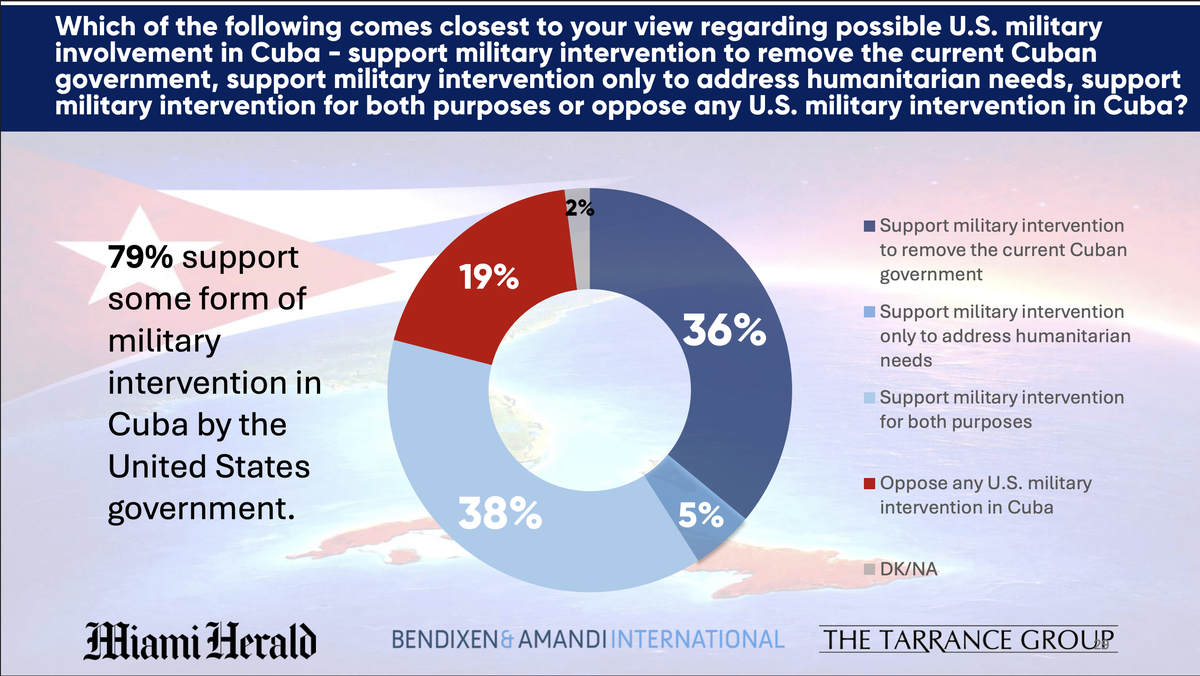
A poll commissioned by the Miami Herald of 800 Cubans and Cuban Americans in South Florida found that 79% support a military intervention in Cuba, including 36% who would back an action to overthrow the government and 38% who would support an intervention to address the humanitarian crisis on the island.
Zayas Bazán, who had a long career as a university professor, supports the strategy of the Trump administration and Secretary of State Marco Rubio to keep channels of communication open with representatives of the Castro family, who are still the real power on the island.
READ MORE: Secret talks: Rubio team meets with Castro grandson on sidelines of Caribbean conference
At the same time, he said the congressional Helms-Burton Act should continue to be enforced; since 1996 it has codified the U.S. embargo on Cuba and prohibits lifting it until free elections are held on the island.
“We don’t want the Castros to have any influence, no matter if they leave with all the money,” he said about the requirements for a possible lifting of the U.S. embargo on the island. “Political prisoners must be released and there must be proof that the country is moving toward a market economy.”
Preserving the legacy
The new museum, built with state, county and City of Miami funds, traces the history and legacy of Brigade 2506 with interactive exhibits and enlarged photographs on the walls that show the scale of the military effort the young men undertook.
The average age of the brigade members — about 1,500 participated in the assault — was between 26 and 28, and they came from all levels of Cuban society. There were students, teachers, fishermen, lawyers and other professionals.
Some were barely 18, like Humberto Cortina, a surviving brigade member who also advocates exhausting all possible channels of communication and pressure on the Cuban regime before resorting to a military intervention.
“The Brigade is a military organization; the goal is to liberate Cuba by all means, but we are smart enough to understand the mechanism the United States uses for these things,” he said.
Cortina, 84, is confident that the Cuban regime will end during the Trump administration. He also noted that Trump has said he will not focus on Cuba until the war with Iran is over.
“The United States is betting on talks first in Cuba,” Cortina said. “When you reach an impasse, that doesn’t mean invading. You can send one or two messages to the government, remove one or two generals, and that gives people time to think.”
A large percentage of those who answered the Herald’s poll, conducted April 6-10 said they supported a military intervention, but many of them later told the Herald they agree that every effort should be made to avoid a bloodbath.
“It’s not necessary to send troops or marines. Cuba is a country on its knees right now,” Cortina said, adding that “the biggest obstacle is Raúl Castro and a coterie of 10 generals close to power who could be offered safe passage out because they have been incapable of governing.”
Cortina was shot several times during action at Central Covadonga in the province of Cienfuegos – wounds that still make it difficult for him to walk. He is also among the 180 members of the Brigade who, after serving time in prison on the island, joined the U.S. Army. Returning to civilian life, he built a political career in South Florida and in 1982 was one of the first Cuban Americans to be elected to the Florida House of Representatives.
During the Bay of Pigs invasion, the brigade members withstood bombardments by Fidel Castro’s forces and the lack of promised support from the administration of President John F. Kennedy, which decided to limit U.S. participation to avoid greater conflict with Castro’s government.
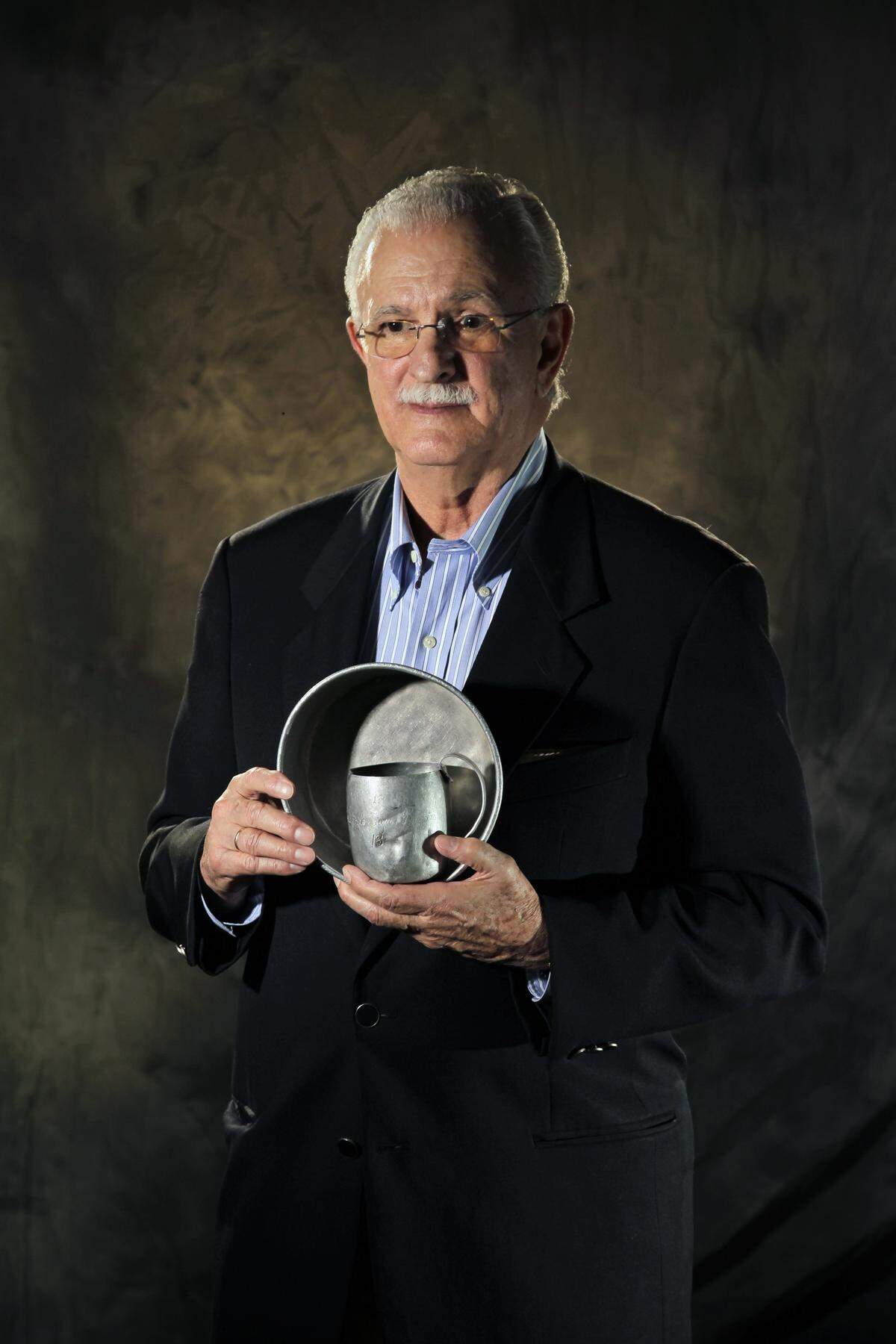
They also faced a public trial broadcast throughout the island, and maintained a dignified stance when Castro met with them in prison and told them he had good news: They would not be executed. The bad news was: They would serve 30-year sentences, Zayas Bazán said.
At the time, Castro said he would demand $64 million in exchange for their release. Kennedy agreed to the exchange, supplying Cuba with medicines and medical supplies valued at $53 million, which helped free the first group of 60 wounded brigade members, including Cortina and Zayas Bazán. The rest were released beginning Dec. 23, 1962.
The final round?
Rafael Montalvo, who will serve as president of the Brigade until Zayas Bazán takes over, says the long fight for Cuba’s freedom continues today.
“The first round was 65 years ago and we came out defeated, but we also came out very informed and very determined,” Montalvo said. “We made a promise to never abandon the cause of Cuba, and we haven’t. Over the years we’ve continued fighting, sometimes in ways we couldn’t before. And it has cost us.”
Montalvo was 18 when he landed with 11 comrades at Playa Larga, a small fishing village 10 miles from the Bay of Pigs. It was a moonless night, and each man carried military gear weighing some 100 pounds; yet, they felt a surge of excitement, for they were sure they were about to liberate Cuba.
“We could sense the shoreline, but we couldn’t see it,” said Montalvo. “We were already under attack, and tracer rounds were whizzing overhead. It was frightening, but it also sent our adrenaline soaring. The taking of Playa Larga was an intensely emotional experience.”
Now, in the final chapter of their quest for Cuba’s freedom, Montalvo acknowledges that it has become easier for brigade members to look back on the hardships they endured—something they have done in numerous interviews with the Brigade’s historian, Professor Victor Triay.
That research was used to compile the information that the public can find, organized chronologically on display screens, when visiting the new museum. The first room features a giant screen projecting videos and photos of pre-Castro Cuba. Next are images and information regarding the Brigade’s training in Central America, the landings in Cuba, the major battles, and subsequently the capture of the brigadistas, their trial, their imprisonment and their eventual release.
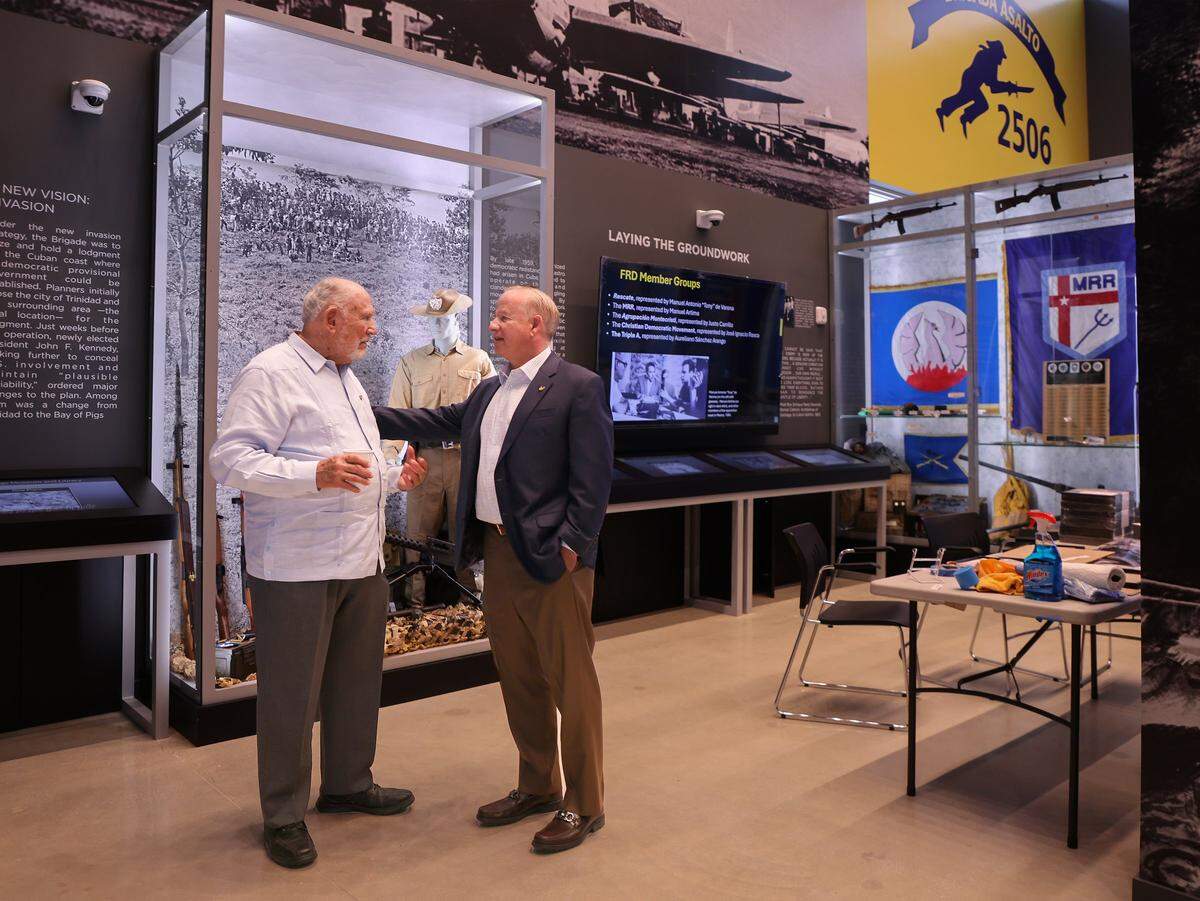
“We were very well trained; the mortars we had were excellent,” recalls Montalvo, but the Castro forces held a numerical advantage. “They sent wave after wave of men and tanks at us, and no one backed down—even though everyone was scared to death, no one showed it.”
‘Prepared to give our lives’
Ricardo Sánchez, an 85-year-old banker from Miami, was among the first members of the Brigade to be captured. He says the only thing that allows people to recognize him as a Brigade member these days is his appearance in the very first photograph to surface of the captured men.
It was published in May 1961 in Life magazine. Sánchez stands in the front row alongside his commander, the late Julio Alonso, who led the paratrooper battalion. Thanks to that photograph, Sánchez’s mother was able to learn that he had survived.
When asked to summarize the Brigade’s legacy, Sánchez says they never bowed their heads before the Castro regime.
“We went there prepared to give our lives.... and that is the contribution we can offer to the future,” said Sánchez, who is set to join the veteran association’s board of directors on April 19.
Regarding Cuba’s future, Sánchez noted that he was speaking solely on his own behalf, and said any solution must involve the Cuban people — particularly the opposition and dissidents residing on the island.
He would like to see Cubans in the U.S. “to be a significant factor. Until now, the discussion has focused solely on a solution between the government of Cuba and the United States,” he said.
The brigade veteran would like to see Cuban exiles and organizations consulted, including Brigade 2606 itself.
He drew parallels to the historical events surrounding the Bay of Pigs invasion, when Cuban exiles established what they hoped would become a civilian government in a free Cuba, presided over by José Miró Cardona, an exile who had served as a minister during the early days of the Castro regime.
At the time, Manuel Artime served as the civilian head of Brigade 2506. The other leaders, José “Pepe” San Román and Erneido Oliva, have since passed away.
Sánchez said Cuban Americans are relying “too heavily on the fact that a Cuban by heritage” — Rubio — is in charge of the State Department. Ultimately, he said, Rubio will need to answer “to the position he holds,” and not necessarily to his Cuban roots.
Sánchez said that where many Cuban exiles find common ground is in the desire to see the regime come to an end as soon as possible.
A historic photo
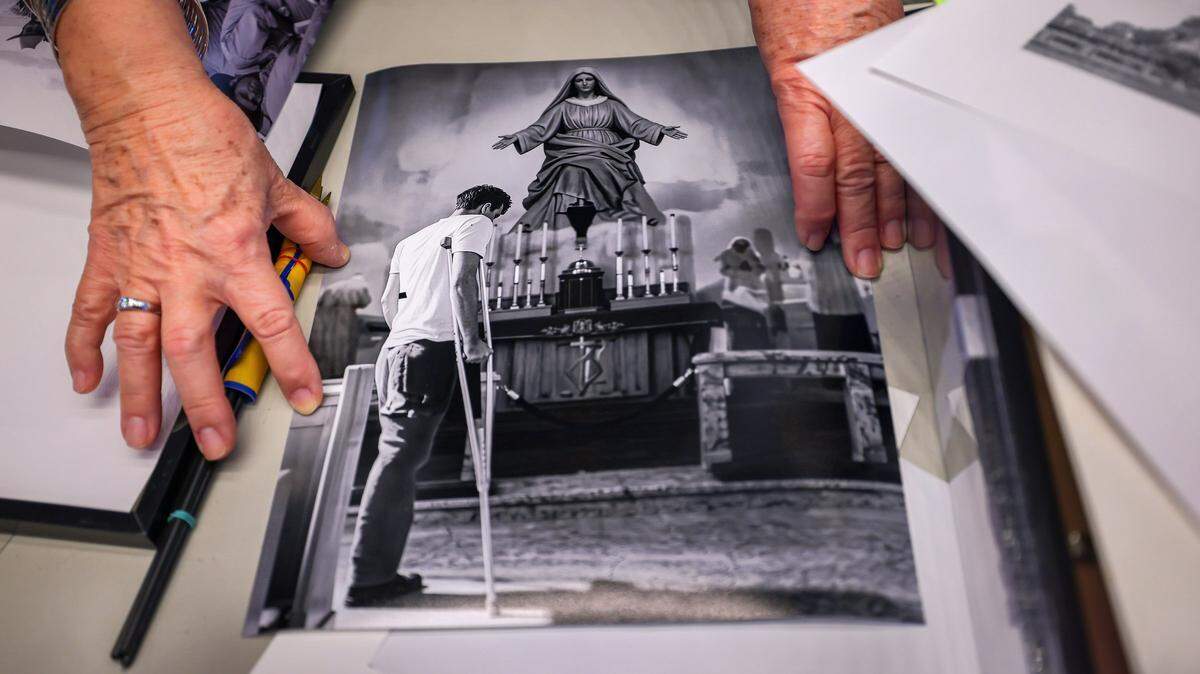
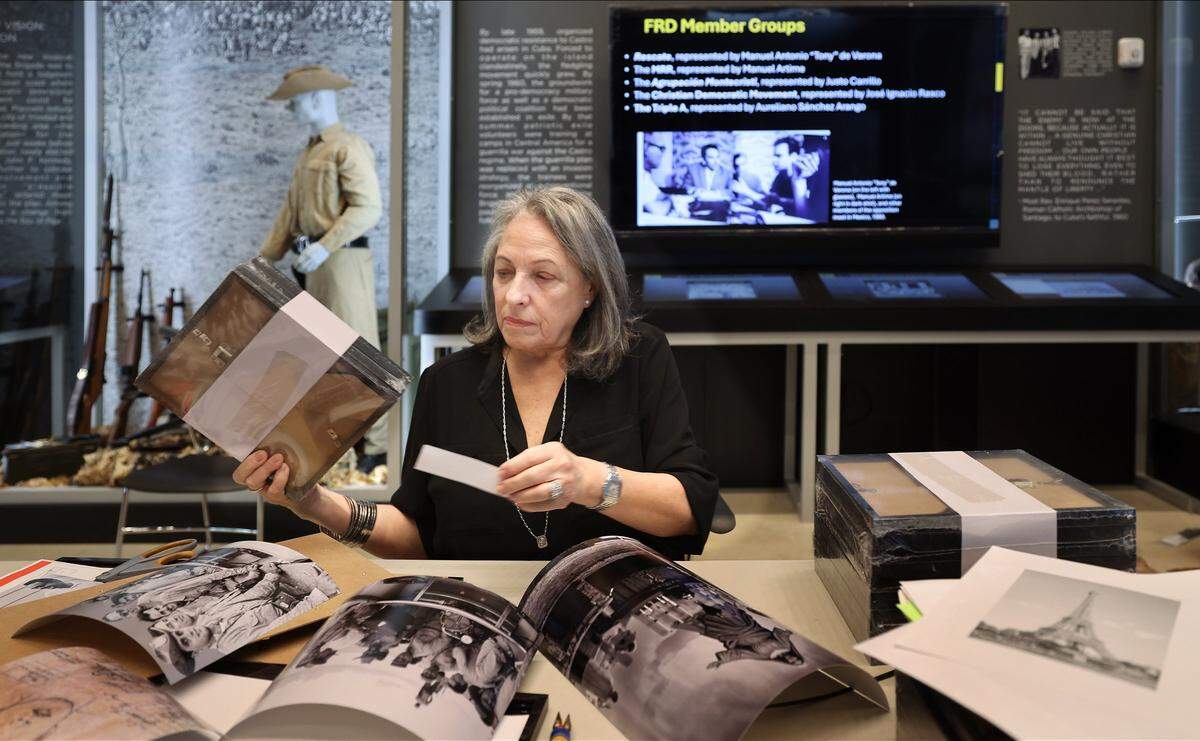
Today, only 200 Bay of Pigs veterans remain, and all are over the age of 80. The museum walls depict them as young men in the midst of action. The photographs have been enlarged and digitized through the work of visual artist Consuelo Castañeda, who has worked closely with the museum’s curator, Carmen Valdivia.
Among the images is the historic photograph capturing the Bay of Pigs veterans presenting the Brigade’s flag to President Kennedy at Miami’s Orange Bowl on Dec. 29, 1962. It spans an entire wall, allowing visitors to position themselves within the scene—to step in and figuratively take their place among the brigadistas.
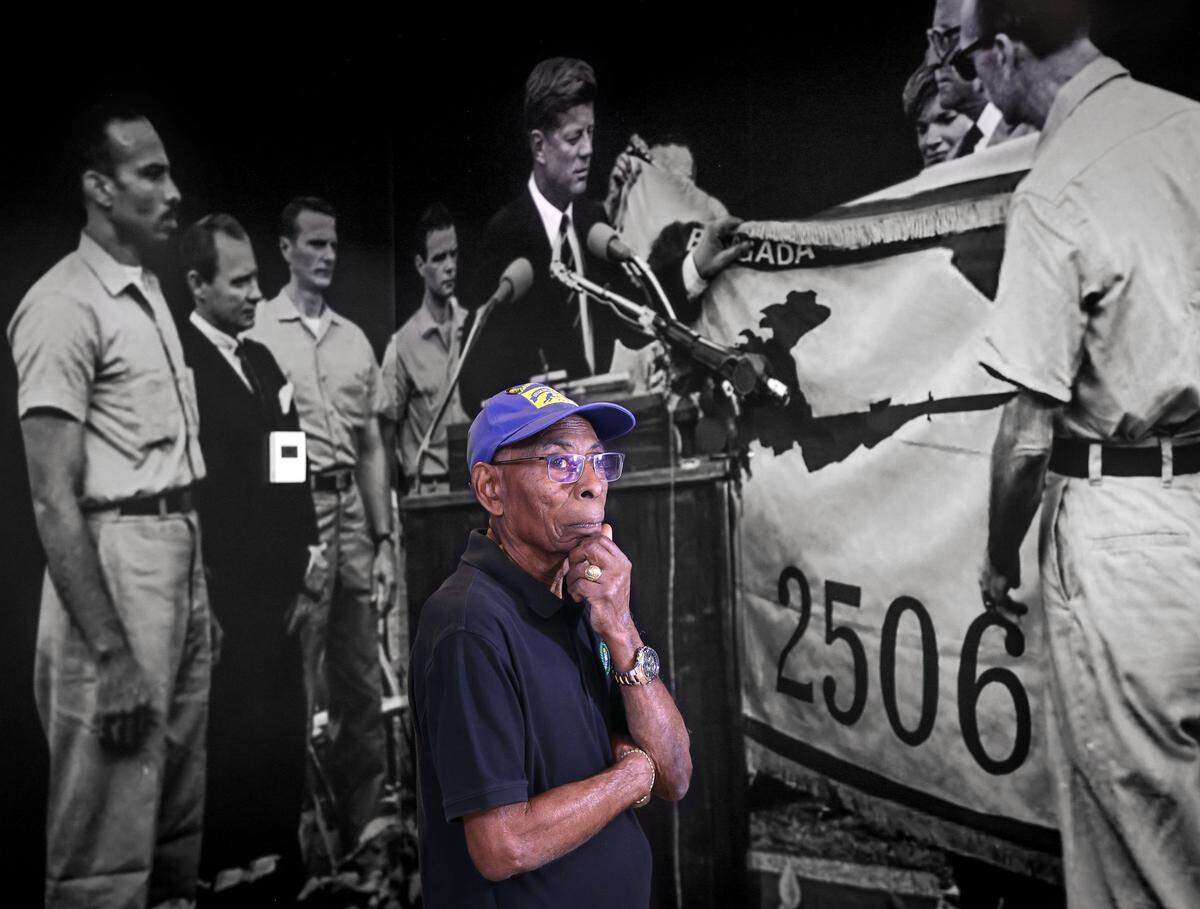
Valdivia reflected on how different the history of Cuba might have been had the Brigade members triumphed. She came to Miami as part of Pedro Pan, the Catholic Church operation that brought thousands of unaccompanied Cuban children to the U.S., and noted that she would not have had to emigrate to the United States alone at the age of 12.
As she spoke, Carlos Luis stood in front of the museum’s most striking wall, where photos of the brigade members who died at the Bay of Pigs are displayed. Luis, and insurance executive and president of the new museum, has the mission of raising the funds needed for the new site’s operations.
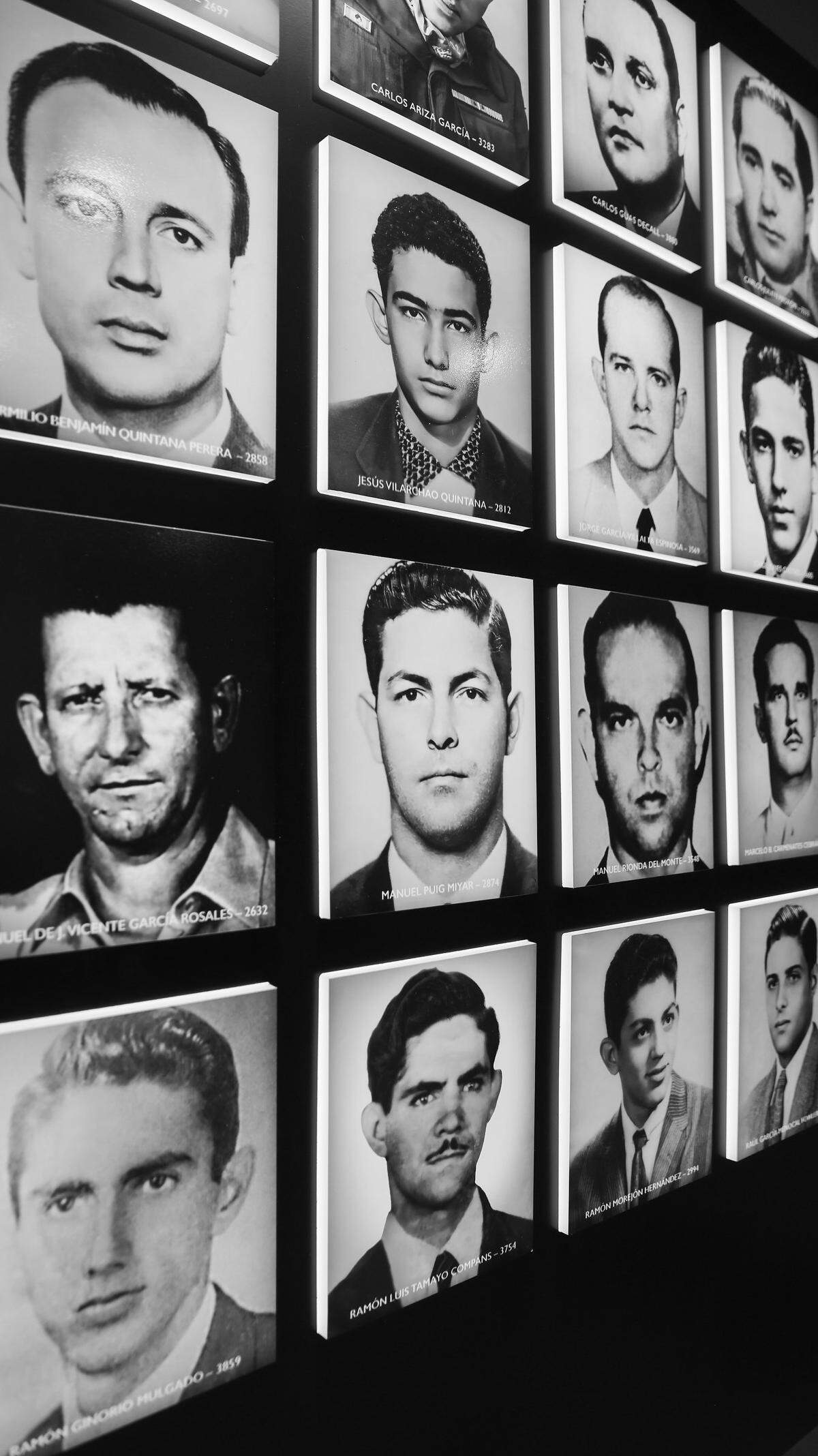
Luis remembers his father, René Luis, who was the mortar chief at the Bay of Pigs. “The veterans still have fire in their blood,” he said. “If my father were alive, he would take up his weapon now.” His father died in 2024.
The wall is illuminated at night, and the hall at the end of the museum can be left in the dark to make the faces stand out even more.
“It’s a space built with the future in mind,” said Dr. Yuleisy Mena, the museum’s executive director. “To educate and to prevent what happened in the past.”
Mena outlined plans to host students to teach them about the evils of communism. “Sometimes there is a lot of discussion about Nazism, but not enough about communism.”
For Sánchez the memories hold a personal tone. He always remembers a Brigade comrade, Fernando Casanova, who died during the assault. He had arrived for training two weeks before the invasion, Sánchez said, “and hardly knew how to handle a weapon.”
Humberto Cortina said he would like the brigadistas to be remembered in a simple way: as people who fought for their country.
“I want to see Cubans on the island free again, so that they have the ability to develop themselves to the best of their potential,” he said. “I hope to be here when that happens.”
The Museo de la Brigada 2506 de Bahía de Cochinos is located at 1821 SW 9th Street. (305) 649-4719.
This story was originally published April 18, 2026 at 5:30 AM.
