‘They’re not alone’: Faith leaders rally to help Venezuelan mother stranded in Miami
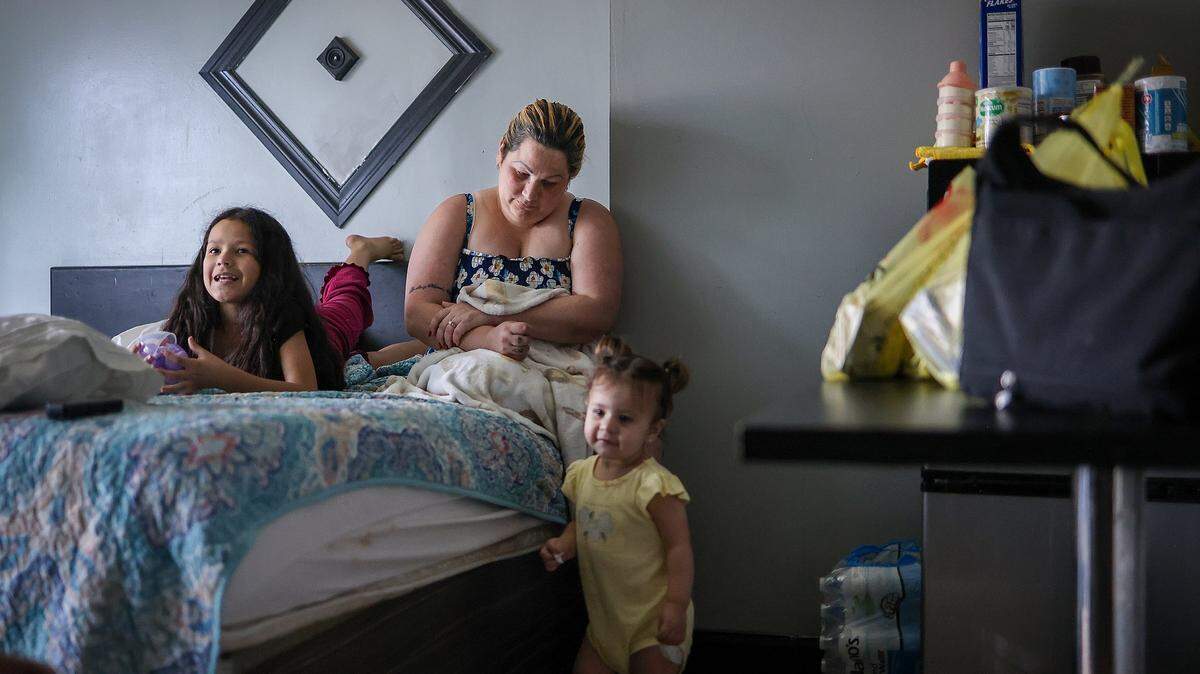
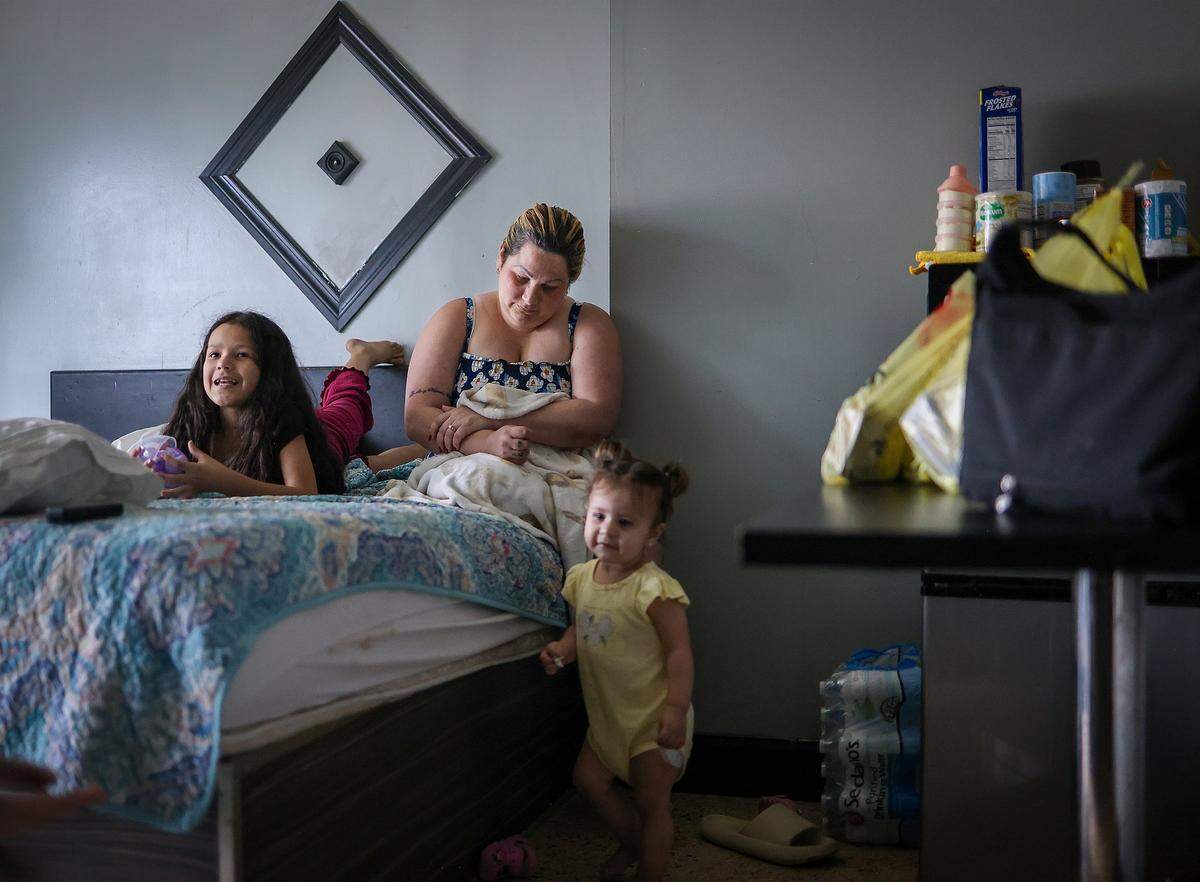
When Yelitza Perez arrived at the Miami International Airport earlier this month she thought she had done everything right.
The 29-year-old mother of two was trying to return to Venezuela from St. Louis, Missouri, with her children after her husband was deported, but was blocked from boarding her flight after the airline couldn’t verify her travel documentation, she said. Perez had obtained a salvoconducto or “safe pass” which authorizes one-time travel to the country for those without a passport. She ended up stranded at the airport for three days with little money and nowhere to go.
The Perez family came to the U.S. nearly five years ago seeking asylum and had started building new lives while seeking a pathway to legal citizenship. After seeing the aggressive crackdown on immigrants, Perez said she was planning on leaving voluntarily even before her husband got deported.
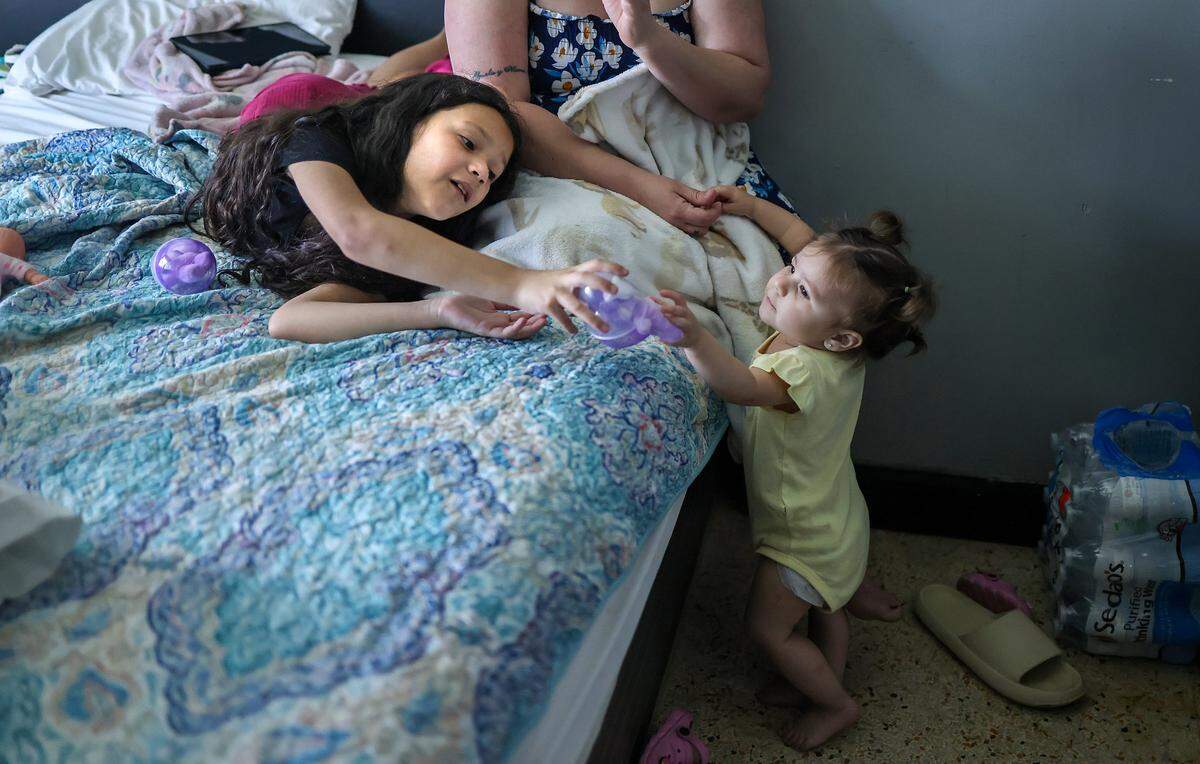
Perez and her two young daughters — Paola, 9, and Itchel, 1, — are now left in a vulnerable state, stuck in limbo as they try to navigate how to get back home. With no family nearby, Perez and her kids found assistance from a loose coalition of nonprofits, many of which are faith-based, that have helped cover a motel room near the airport, as well as food, diapers and other essentials for over three weeks as she waits for her document to get verified.
“I had my dream to return to Venezuela to see my family,” Perez said in Spanish. “It’s not easy being here with no one, no family, nothing. Without support.” Perez said she’s thankful for those who have helped her.
“I don’t know where I’d be without them,” she said.
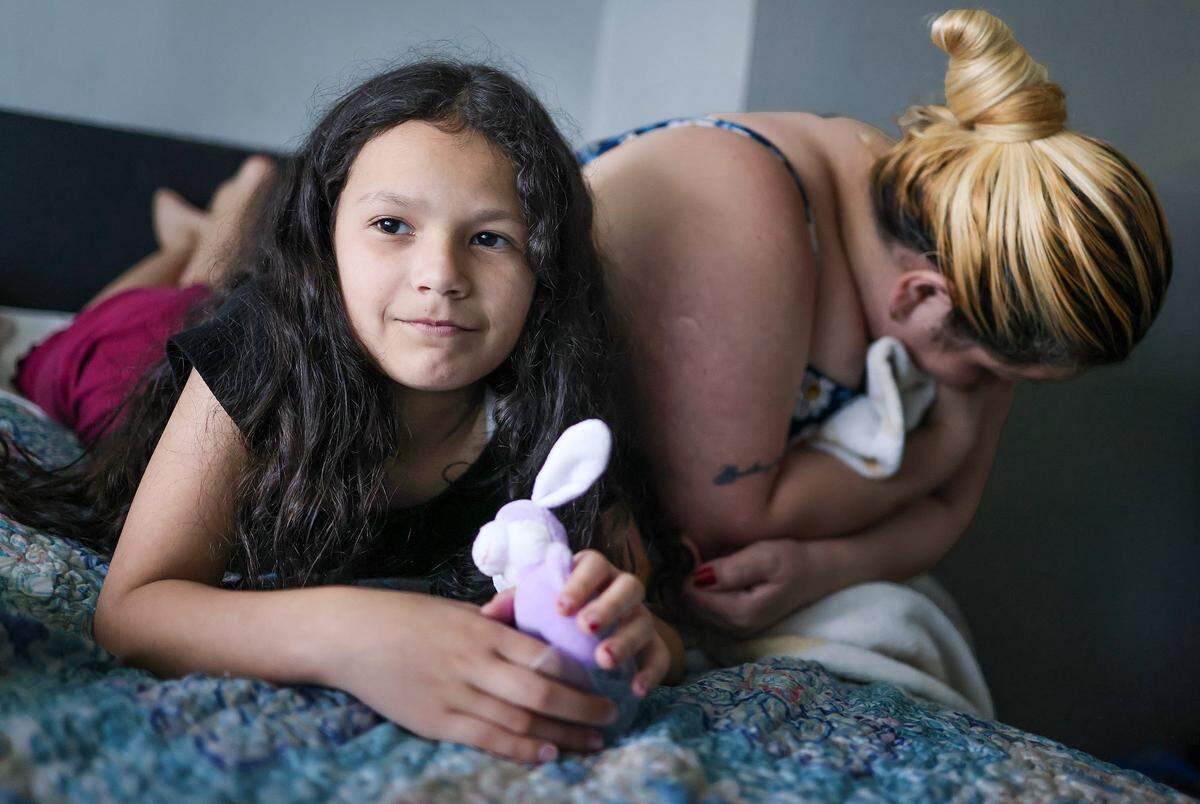
Perez’s situation highlights a growing, largely informal safety net of faith-based organizations that’s emerging across the country to support immigrants as the Trump administration enacted far-reaching immigration reform and deportation enforcement. And in South Florida groups have stepped in to support migrants navigating complicated immigration processes, from deportation to self-deportation, often filling gaps left by government systems.
“They just want to go home,” said Narciso Muñoz, founder and president of Hermanos de la Calle, or Brothers of the Street, one of the organizations helping Perez. Muñoz said he has been contacting local officials to help sort out the self-deportation issue with Venezuela.
“Everybody says they are going to do something but nothing happens,” he said. “We can’t leave them on the streets.”
Holy Week sparks faith-based activism
As Christians prepare to celebrate Easter on Sunday, some have developed a heightened awareness around helping those living in the margins of society.
Ellie Hidalgo of the organization Discerning Deacons — one of the groups that’s been helping Perez’s family since her husband’s deportation — said Holy Week is a fitting time to “renew her faith.” For her, that means finding the courage to stand with immigrant groups in need.
“For me, it’s very clear that [Perez] and her daughters are loved by God, and we want her to know and feel in a tangible way that she’s not alone in this ordeal,” Hidalgo said.
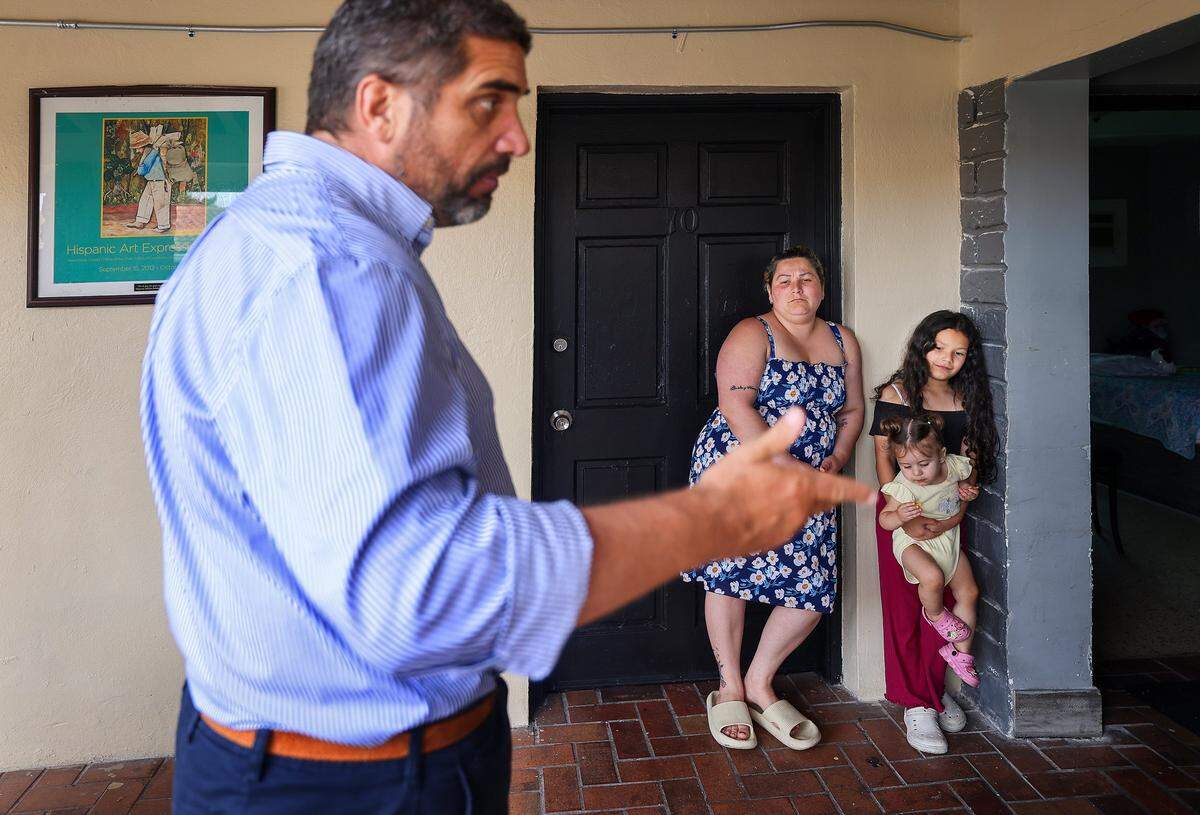
Discerning Deacons has been working with Hermanos de la Calle, a nonprofit that started out of Muñoz’s desire to show his children that being a Christian means more than just attending weekly mass. The group typically helps connect Miami’s homeless population with affordable housing and employment, but lately it has been turning its attention to migrant families.
Hermanos has rented 26 rooms at a motel by the airport to help homeless and migrant families; several, like Perez, were turned away at the airport after trying to self-deport.
“When you’re in this situation, it’s super tough, especially when you are with small kids and a single mom,” Muñoz said.
For Christians, Easter marks the end of Lent, a season meant for deepening one’s faith through prayer, fasting and helping those in need. On Holy Thursday, Christians commemorate the Last Supper of Jesus Christ where he infamously washed his disciples’ feet and gave a commandment to love and serve one another. Hidalgo said many Christians are feeling that call when it comes to the issue of immigration.
“We’re called to always see the face of Jesus in the marginalized because of Jesus’s own experience of being treated so horribly,” Hidalgo said. “This is a time when people of faith stand for the human dignity of all people, and try to alleviate suffering ... and let our immigrant brothers and sisters know that they’re not alone.”
Helping the stranger
For many Christian groups, immigration has become a focus of faith-based activism, often invoking the words of Jesus: “I was a stranger and you welcomed me.”
In the Catholic Church, Pope Leo XIV, who is the first American-born pope in history, has been a vocal supporter of immigrants’ rights and has openly condemned the treatment of migrants in the United States.
President Trump’s crackdown on the country’s migrant population and aggressive deportation tactics have led to protests, prayer gatherings and community events held outside immigration detention centers and churches in solidarity with immigrants.
Locally, Latino Pentecostal and Evangelical faith leaders led a prayer gathering on Saturday at the Krome North Service Processing Center in Miami as a part of a national campaign to “to pray for immigrant families impacted by detention and separation,” during Holy Week.
And for eight months, faith leaders and various immigrant rights groups have been gathering for a prayer vigil outside the gates of Alligator Alcatraz to demand the detention camp be shut down, drawing attention to what organizers call a “cruel and inhumane immigration crackdown.”
But for Perez and others at the motel, the organizations have assembled a spontaneous network of like-minded people that have created a village of care. The organizations have different goals but have figured out how to work together, pulling resources to help one mother in need.
In St. Louis, for example, a lay Catholic organization called St. Vincent de Paul helped Perez pay her rent after her husband was deported.
When Perez got to Miami, volunteers from Discerning Deacons, a national group that advocates for women’s roles in the Catholic Church, pooled money to help Perez buy groceries, diapers, milk for her one-year-old daughter and the costs of obtaining the document she needed to travel. The group then alerted Hermanos de la Calle to help with housing.
In addition, volunteers from Catholic Legal Services brought the girls toys donated from the Miramar Circle of Protection — an interfaith organization anchored by AFSC/Quakers — and drove them to the library one day. Volunteers from Instituto Jesuita Pedro Arrupe provided Perez with more money for her food costs and helped with her phone bill.
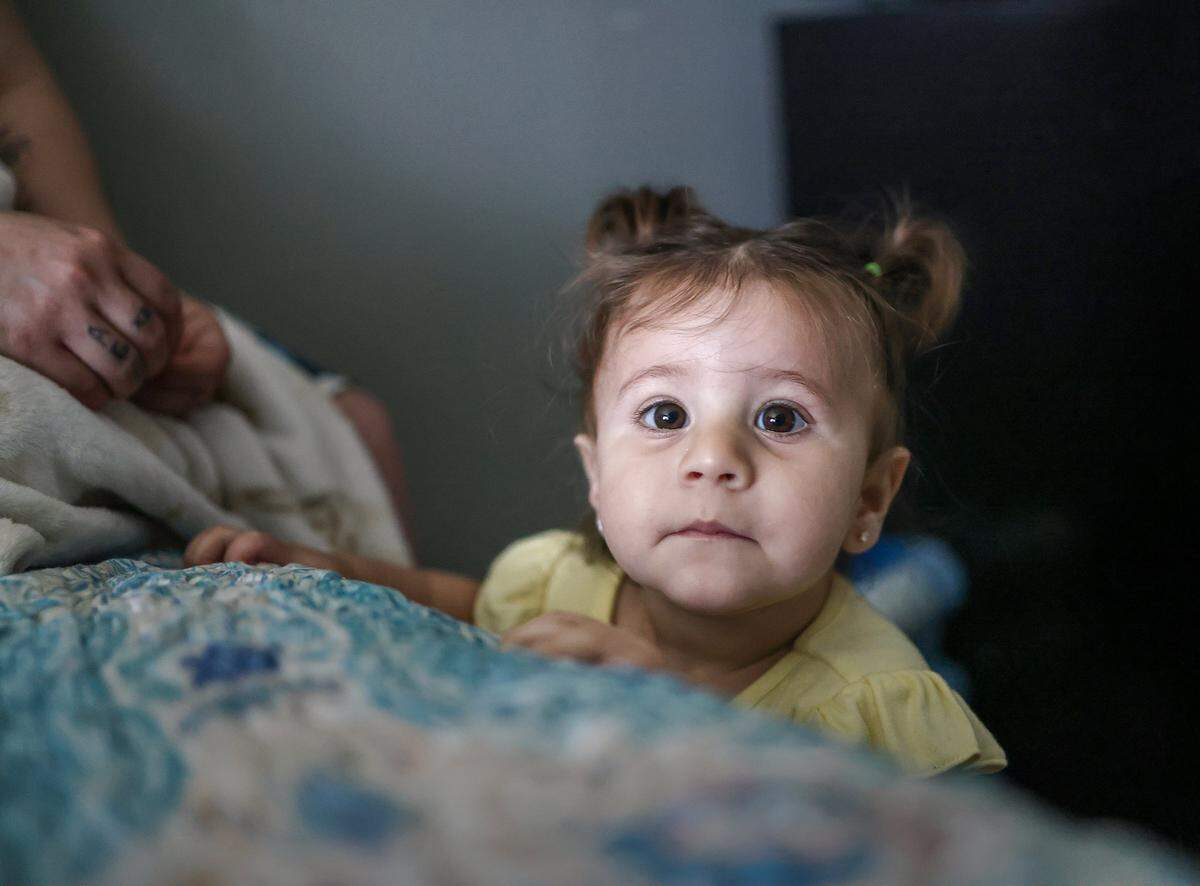
The groups have given Perez the much-needed boost to keep pushing to get her family home, but it still hasn’t been easy.
“The thing is, even though you feel very frustrated and very alone, you have to try to stay calm, because if I despair, what am I going to do? It won’t solve anything,” Perez said in Spanish.
Perez hopes to resolve the issue with her document by April 10, when she has re-booked her flight. Due to Holy Week, people in Venezuela are not working, and many places are closed, according to Perez.
In the meantime, Perez is praying for an Easter miracle.
This story was produced with financial support from Trish and Dan Bell and donors in South Florida’s Jewish and Muslim communities, including Khalid and Diana Mirza and the Mohsin and Fauzia Jaffer Foundation, in partnership with Journalism Funding Partners. The Miami Herald maintains full editorial control of this work.
This story was originally published April 4, 2026 at 4:30 AM.