
Miami-Dade’s school-zone cameras have led to nearly 34,000 license suspensions
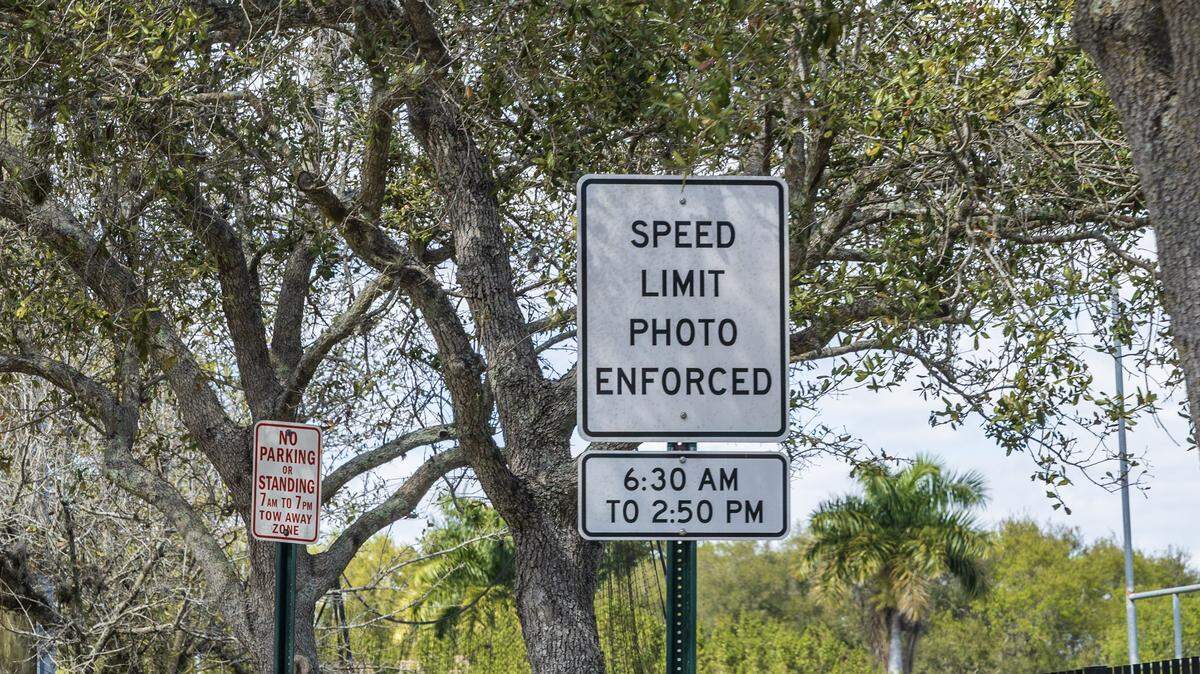
Since the first speed camera went up outside a Miami-Dade school in late 2024, vehicle owners across the county have received hundreds of thousands of automated speeding violations.
For many, those mailed notices also delivered problems much more severe than the $100 fine — tens of thousands of drivers saw their licenses suspended after they didn’t pay the fee.
After fewer than two years in operation, the cameras are tied to nearly 34,000 license suspensions, according to data from the county clerk’s office obtained by the Miami Herald.
Because the private operators of the lucrative camera systems rely on the postal system to notify vehicle owners that they owe $100, hiccups with the mail are putting people on track for a license suspension without knowing they were accused of doing anything wrong. The cameras also can’t confirm whether it was the vehicle owner driving in a school zone, leaving some people vulnerable to a license suspension due to somebody else being behind the wheel.
The flood of suspensions tied to the cameras illustrate the new financial hazards facing drivers from the growing network of privately operated speed cameras that were legalized by the Florida Legislature in 2024. They’re allowed to operate outside schools throughout the school day, regardless of whether it’s drop off or pick up time, or whether the yellow school zone lights are flashing.
“It’s a huge volume of cases that are coming through,” said Leo Guerra, a Miami lawyer who said the school-zone cameras now represent his top category of traffic-violation cases. “The camera tickets are coming in by the boatload.”
Fines paid by drivers are fueling substantial new revenue for governments, police and the for-profit camera operators, with Miami-Dade’s network of speed detectors generating at least $2 million a month last year — and that doesn’t include the camera networks operated by individual cities.
Guerra acknowledges that vehicle owners are generally at fault for the suspensions. To get to that point, someone had to not act on the original $100 violation sent by regular mail to the car owner’s address, but also not take action on a suspension warning the court sends by certified mail to the address on the car owner’s license. “Whether people react timely is really the biggest driver of this,” Guerra said.
William Villalba, who lives in Hialeah, said he was unknowingly photographed speeding by a school without ever receiving violation notices in the mail. His partner’s name is on the car registration, meaning his partner was the one who learned during a traffic stop that his license was suspended for unpaid speeding violations caused by Villalba.
“I was the one driving,” Villalba, 49, told the Herald. “He was the one who had his license suspended.”
In Miami Gardens, 900 speed-camera violations per school day
Maria Sparacino said she was alarmed last fall to find out she was at risk of a suspended license. The Coral Gables resident said she never saw the original $100 speeding violation, which she assumes went to an old address after she failed to update her car registration after leaving her old place in Kendall. “When you’re in an apartment, you tend to move around a lot,” said Sparacino, 28.
Thankfully, a court notice did make it to the right place.
“At first, I thought it was a scam,” she said. But an online search at the Florida Division of Highway Safety and Motor Vehicles confirmed the citation existed. “I paid it right away,” she said. Now Sparacino says she’s checking the website every few months to see if she’s unknowingly been flagged again for speeding.
The more than 120 cameras that Chicago-based RedSpeed operates for Miami-Dade outside schools in unincorporated parts of the county generated about $17 million in fine revenue over an eight-month period that ended last summer, according to the latest county tally.
The 34 cities and towns in Miami-Dade can also authorize speed-camera systems at schools within their city limits, and many have. In Miami Gardens, the third largest city in the county, 20 cameras generated more than 80,000 violations in four months last spring. That’s an average of more than 900 per school day.
The pace of the violations has meant a new stream of license suspensions for the court system, too.
At the start of March, more than 18,000 licenses were still suspended from speeding citations that started with a school-zone camera in Miami-Dade, according to data from the Clerk of the Court and Comptroller’s Office. That’s about 7% of the more than 275,000 suspended licenses in Miami-Dade overall.
After 30 days, an unpaid $100 speed-camera violation can be escalated into an actual speeding citation, which can mean a higher fee and even points on a driver’s license. Once the violation morphs into a citation, a license is at risk of suspension if that ticket continues to go unpaid or uncontested. In Miami-Dade, the Clerk and Comptroller’s Office app available on Apple and Android devices offers a “My Driver’s Vault” option that will send push notifications when a citation is issued against the user’s license and up to three registered vehicles.
Lillian Pardo, who lives in the Fontainebleau neighborhood, near Westchester, says she’s dealt with a suspended license multiple times — not only from a violation from a school-zone camera, but from red-light cameras as well. Pardo said she frequently moves and is not always diligent about updating her address, leading to her not knowing about the kind of speeding violation she’d prefer to get in person.
“If a cop stops me, I know a cop has stopped me,” she said.
Backers of the speed cameras say they’re an efficient way to discourage excessive speeding around schools. Under Florida law, the school-zone camera violations can only be issued when a vehicle is going more than 10 mph over the speed limit.
The Pinecrest Police Department says speeding violations from the devices within village limits are down 35% compared to a year ago. “And the repeat violators are way down,” Police Chief Jason Cohen said.
Critics, meanwhile, call Florida’s speed-camera law a money grab made possible through lobbying by camera operators that share the violation revenue with local governments and the state.
“If it’s a safety issue, put some speed bumps down,” said Darrell Guilford, deputy director at the Florida Justice Center, which provides legal help to people in South Florida.
Sgt. Eduardo Pares oversees the school-zone camera program for the Miami-Dade Sheriff’s Office. He noted that not only are speeding violators getting certified notices from a court about a suspension risk, but that law firms specializing in traffic infractions also will typically mail business solicitations to people who show up in public records as facing violations.
“I think this stems from a lot of people ignoring things,” he said. “Or not updating their information. We see that a lot.”
This story was originally published March 25, 2026 at 6:22 AM.
CORRECTION: This article was updated with the correct name of Miami-Dade Sheriff’s Office Sgt. Eduardo Pares.