‘Holding pattern’: Here’s what Friday’s weak jobs report means for South Florida
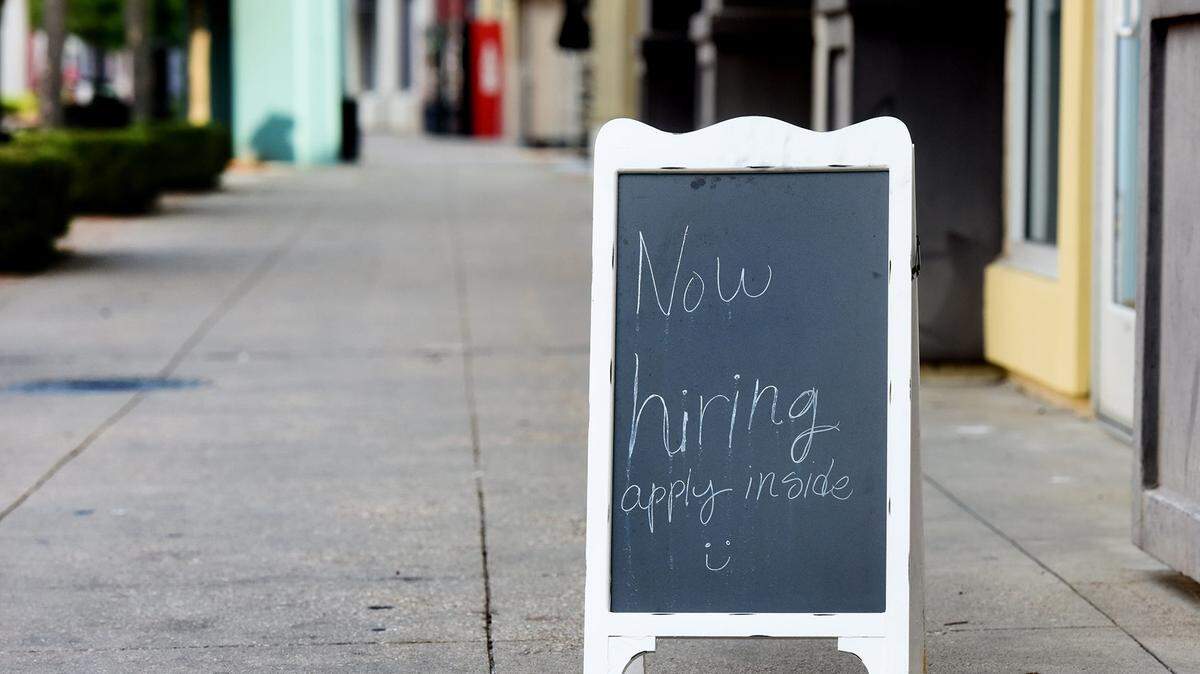
In what could be a sign of budding economic malaise, employers shed 92,000 jobs in February, while the unemployment rate held steady at 4.4 percent, according to the latest Bureau of Labor Statistics report.
Economists had expected the economy to add roughly 59,000 nonfarm payroll jobs, so the actual tally from February’s report, released Friday, came in about 151,000 short of the forecast.
While not necessarily indicative of a fractured labor market, the weaker-than-expected numbers offer little comfort. The U.S. economy has been navigating tariff, trade and geopolitical uncertainty for roughly a year.
“My initial reaction [to the jobs report] was ‘not great,’” said Bryan Cutsinger, a professor of economics at Florida Atlantic University’s College of Business. “But I think we want to get a little bit more data before we immediately say, ‘Wow, things look bad.’”
That’s especially the case for South Florida, said Cutsinger, who emphasized that the region’s unemployment rate has, at least in recent years, been much lower than that of the rest of the country. Miami-Dade County’s unemployment rate was 2.5 percent in December, nearly two points lower than the national average and the lowest of any county in Florida.
The numbers paint a muddled picture. Healthcare, recently the principal engine of American job growth, sputtered, shedding 28,000 jobs. Some of that loss was due to worker strikes at physician offices across California and Hawaii that sidelined more than 30,000 workers during the BLS survey week, while hospitals added 12,000 positions.
Federal government employment, which has been declining since its Oct. 2024 peak, slid by another 10,000 jobs — a cumulative drop of 330,000, or 11 percent, in those 16 months.
But average hourly earnings ticked up in February by 15 cents to $37.32 — a 3.8 percent bump over the past year.
Overall, Cutsinger said, “it seems like the labor market is in somewhat of a holding pattern.” Due to uncertainty surrounding tariffs and AI developments, employers, while not necessarily firing en masse, appear hesitant to hire.
That’s reflected in the long-term unemployment figure — people who have been unemployed for at least 27 weeks despite actively looking for work — which has grown by more than 25 percent since last year to 1.9 million people, according to the Bureau of Labor Statistics.
Workers, meanwhile, are wary of leaving their jobs, fearful that it could take a while to find new ones.
In a separate survey from the Federal Reserve Bank of New York, the share of people who believe they could find a new job within three months if they lost their current one fell to 44 percent in February — the lowest level since 2013, when the NY Fed started that survey. And the share of people who expected to voluntarily leave their job dropped to a 13-year low of 15.9 percent.
“Onboarding a new person is a pretty large investment — not just in terms of what you pay them, but in terms of going through the process of finding somebody, training,” Cutsinger explained. “As long as there’s a lot of uncertainty, businesses will hire to replace critical personnel, but that seems to be about it.”
Cutsinger cautioned that should this jobs slump persist, certain critical local industries, like tourism, could be among the hardest hit. “[Tourism] is very sensitive to income changes,” he said.
If people feel gloomy about their future earning prospects — either because they’ve been laid off or their incomes aren’t rising with prices — they could cut back on travel, which could directly impact South Florida.
This story was produced with financial support from supporters including The Green Family Foundation Trust and Ken O’Keefe, in partnership with Journalism Funding Partners. The Miami Herald maintains full editorial control of this work.