The newest church scam: AI deepfakes. Here’s how to spot them
Synthetic videos generated by artificial intelligence, widely known as deepfakes, are becoming increasingly prevalent on the internet. Recently, deepfakes have found their way into the world of online ministry, using the likeness of trusted faith leaders to prey on congregants for financial gain or spread false messages.
Deepfakes can be created for harmless entertainment or creative projects, but they can also be used to generate propaganda, spread misinformation and for fraudulent activities, such as impersonating someone for financial gain or committing identity theft.
Last year, a pastor in Fort Lauderdale took to the internet to warn about a deepfake that was shared with one of her Facebook followers. Believing the deepfake to be real, a man paid money to the scammer in exchange for what he thought was one-on-one spiritual counseling, she said. The pastor, Jennifer LeClaire, said the biggest tell in the deepfake video was the poor grammar and unusual inflection of her voice.
Read more: Scamming the faithful: South Florida pastors impersonated in AI deepfakes
“It wasn’t too sophisticated, and most people would have known by the bad English that it wasn’t me,” LeClaire told the Miami Herald. But because the congregant was desperate for help and the video imitated LeClaire’s face, voice and backdrop, he fell for it, she said.
As deepfakes become more and more sophisticated, there’s no single tell-tale sign of a fake, according to the University of Miami’s Department of Information Technology. But, there are some things to look out for.
- Look for unnatural facial expressions or movements. AI-generated videos may cause a facial profile to look distorted, blurred or generally unsettling. Look for signs like inconsistent eye blinking, subtle glitches, or features that may lack definition. Deepfakes often fail to represent the natural physics of a scene, according to guidance from UM. Pay attention to facial features such as the cheeks and forehead (is the skin too smooth, too wrinkly?), the eye and eyebrows (do shadows appear in weird places?) the glasses (too much glare?), and the facial hair or lack thereof.
- Look for inconsistent audiovisual cues. Sometimes the audio may not sync up perfectly with the lip movements, or there may be discrepancies between an AI-generated voice and actions. Look for choppy sentences, unusual inflections, abnormal phrasing, or incongruent background noise. Audio deepfakes might include unnatural pauses or generate delays.
- Look for poor video and audio quality. Deepfakes tend to have unnatural shadows, colors, and lighting patterns. Synthetic audio can sound unnatural or inconsistent.
- Look for contextual clues. Does the content seem out of character for the individual depicted? If so, it could be a deepfake.
Congregants should learn to have discernment around who to trust, regardless of their role in the church, said Rev. Christopher Benek, pastor at First Miami Presbyterian Church in Miami and an expert in the field of religion and technology.
“We have to tell people, ‘just because someone’s in the church, if they ask you for money, don’t give it to them’” Benek said.
“People shouldn’t necessarily just trust pastors. They should build relationships, and we need to get people past the naivety of that... building that trust and having integrity, I think, is really important,” Benek said.
In LeClaire’s case, the scammer used the deepfake video to gain trust with Sergio, her online follower. LeClaire, who has built a robust digital ministry, said she believes that faith leaders need to keep their physical doors open to helping people in need, so that congregants are not tempted to seek help from strangers online.
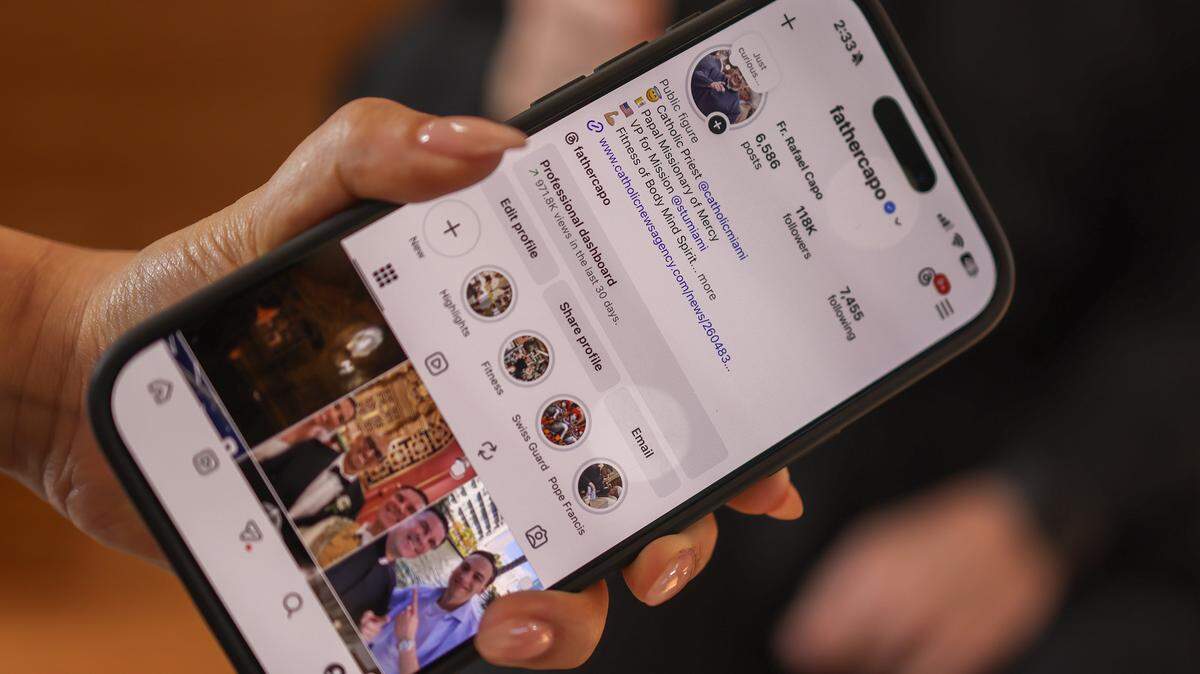
Father Rafael Capó, a Catholic priest in Miami with a growing social media following, said it is up to the church to educate people on the current situation with AI and the scams that are occurring.
“Churches need to put this message out there to their congregations, especially with the older generations,” said Capó, who has dealt with hundreds of identity theft scams in the past couple of years. “Pastors and the church needs to explain this and have information for the community ... so people are aware that these scams are happening.”
This story was produced with financial support from Trish and Dan Bell and donors in South Florida’s Jewish and Muslim communities, including Khalid and Diana Mirza and the Mohsin and Fauzia Jaffer Foundation, in partnership with Journalism Funding Partners. The Miami Herald maintains full editorial control of this work.
This story was originally published February 28, 2026 at 4:30 AM.