
Miami-Dade County seeks residents’ input on development master plan
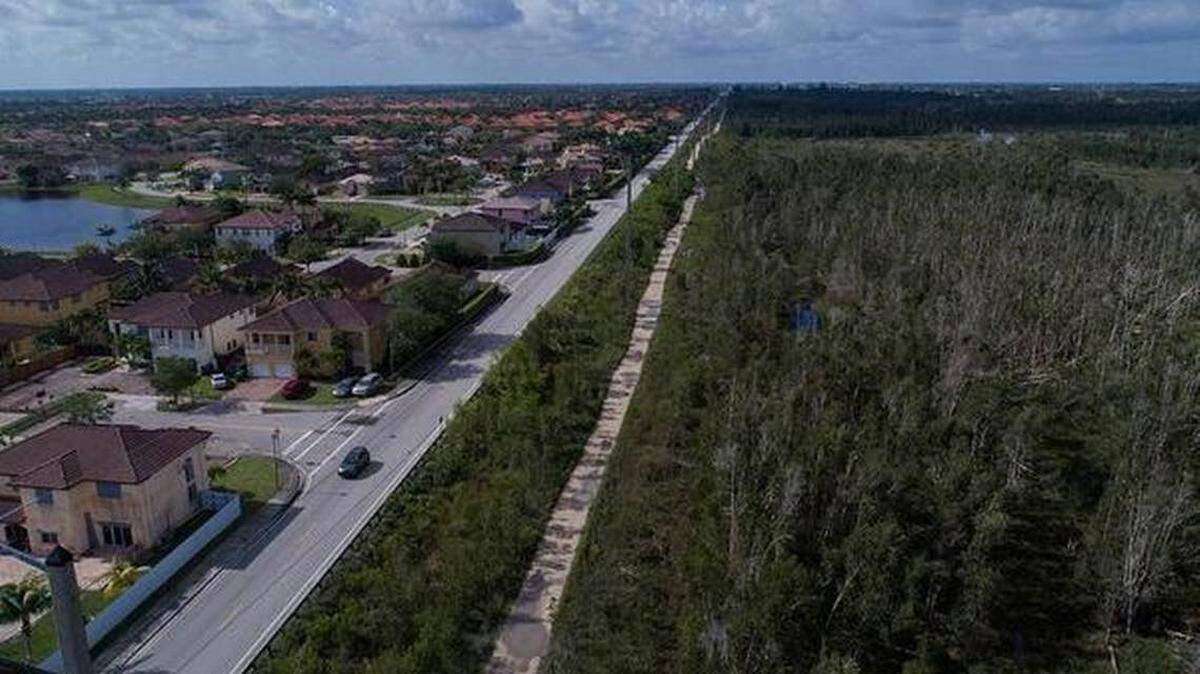
Growing pressure from the Florida Legislature seeks to push more development in Miami-Dade County beyond environmental limits that the county has placed on itself — and in the midst of this fight, the county is asking residents how they want to see Miami-Dade develop during the next 25 years.
Development is one of the biggest topics in Miami-Dade as the region remains in the grips of a historic housing crisis and local governments look for new ways to develop affordable housing to meet the growing needs of the community.
One of the ways the county can try to address these needs is by amending its Comprehensive Development Master Plan, or CDMP.
The CDMP serves as a blueprint for what kind of development can occur in Miami-Dade. As the county reviews the plan, it wants to make sure residents’ concerns are baked into it.
“The Comprehensive Development Master Plan really is the plan of the county, so it needs to be reflective of the community’s priorities,” said Kim Brown, Miami-Dade’s chief for long-range and neighborhood planning.
The CDMP review is part of a state-required process done every seven years called the Evaluation and Appraisal Report or EAR. The county must ensure that the CDMP matches the priorities of the community and the realities of population needs as it projects development out to 2050. After the EAR process, the county will submit a report to the state for review and approval.
To do this, the county is hosting four workshops in February and March at libraries to solicit residents’ input on what the CDMP should look like. Residents can also fill out an online survey to tell county officials what they believe are Miami-Dade’s biggest obstacles going into the next 10-20 years.
Jerry Bell, Miami-Dade assistant director for planning, said the main priorities that the county sees going into the next few decades are affordable housing, better public transit and climate resilience.
Careful consideration of these factors is important as the population grows within a limited space, he contends.
“We’re very land-challenged for a major metropolitan area. We’re surrounded by two national parks so [we] don’t have a lot of space to expand into,” Bell told WLRN in an interview. “So we have to be very careful in with how we are stewards of our very limited remaining land resources and make sure that we’re addressing the various issues the community’s facing.”
Part of what confines development in the county is the Urban Development Boundary (UDB). The UDB is an imaginary line that marks the endpoint where Miami-Dade allows development as a way to protect agricultural land and environmentally sensitive areas beyond it.
“The UDB is really our primary tool to protect our natural resources. It allows our agriculture as well as our rock-mining industry to remain,” Bell said.
That tool might be under attack, however, as efforts in the Florida Legislature seek to weaken or get rid of its protections.
Florida House Bill 399, filed by state Rep. David Borrero, R-Hialeah, would make it easier for the county government to make changes to the UDB and would require an analysis of whether a development boundary is even needed to protect the environment. Its companion bill in the Senate, SB 208, does not take specific aim at urban development boundaries.
Miami-Dade Mayor Daniella Levine Cava argues this legislation is a step in the wrong direction.
“ The UDB was created for a purpose. We have very fragile ecosystem. We have limited land. We have competition for the use of that land, including agriculture, which is still our number two industry. And we have the protection of the Everglades, which is our drinking-water supply,” Levine Cava told WLRN.
Levine Cava recently vetoed a controversial application to build a 160-acre tractor dealership and transportation support area near the Everglades and beyond the UDB. She contends this effort was done without the adequate environmental analysis.
As pressures mount in Tallahassee and at home to expand Miami-Dade’s development into environmentally sensitive wetlands, Levine Cava said the county must be more vigilant to protect its natural resources and look for other ways to create density and support the growing population.
“ We do not need to pave over paradise to achieve our housing goals,” she said.
Dates and locations for public workshops where residents can give input for the Comprehensive Development Master Plan are:
- 6 p.m. Tuesday, Feb. 17: Naranja Branch Library, 14850 SW 280th St.
- 6 p.m. Thursday, Feb. 26: North Central Branch Library,9590 NW 27th Ave.
- 6 p.m. Monday, March 23: Ruben Dario Park & Community Center, 9825 West. Flagler Street.
- 6 p.m. Monday, March 30: West Kendall Regional Library,10201 Hammocks Boulevard.
This report was produced by Miami Herald news partner WLRN Public Media.