
A decade later, plan to slow traffic and improve walkability on Calle Ocho remains in limbo
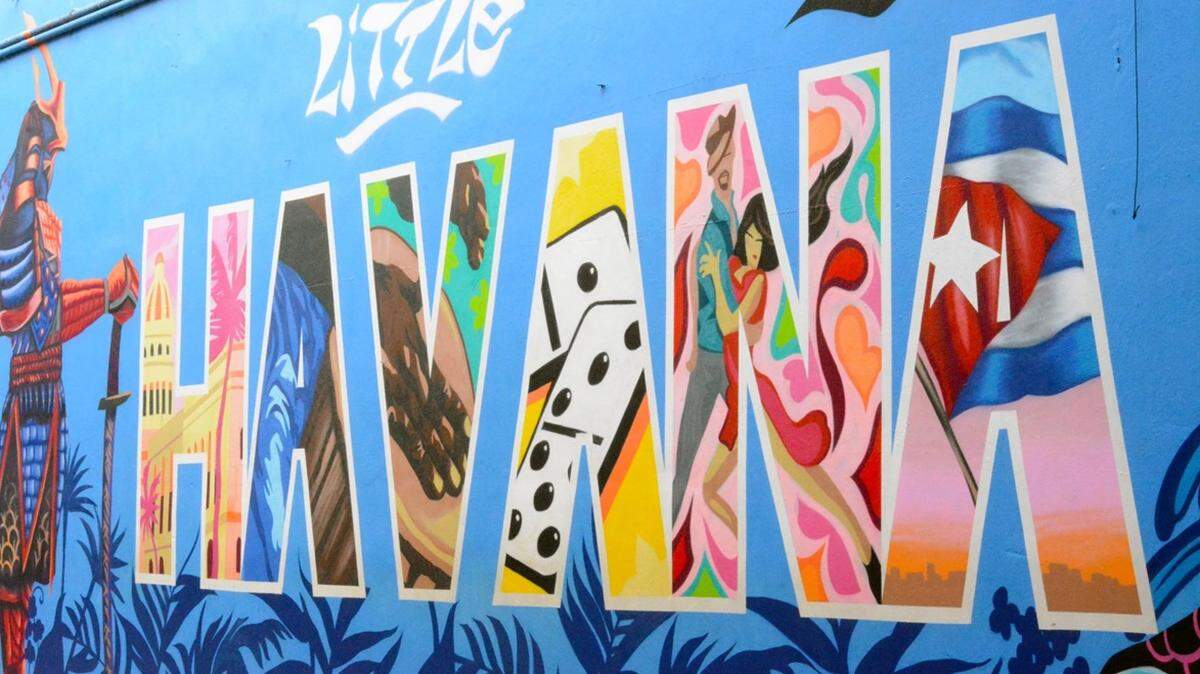
City leaders once lauded it as a bold vision for the future of one of Miami’s most famous streets and tourist destinations.
When urban planning and design firm PlusUrbia unveiled its Calle Ocho Revitalization Plan in 2015, Miami city commissioners even went so far as to declare a day for the firm on Nov. 19 of that year.
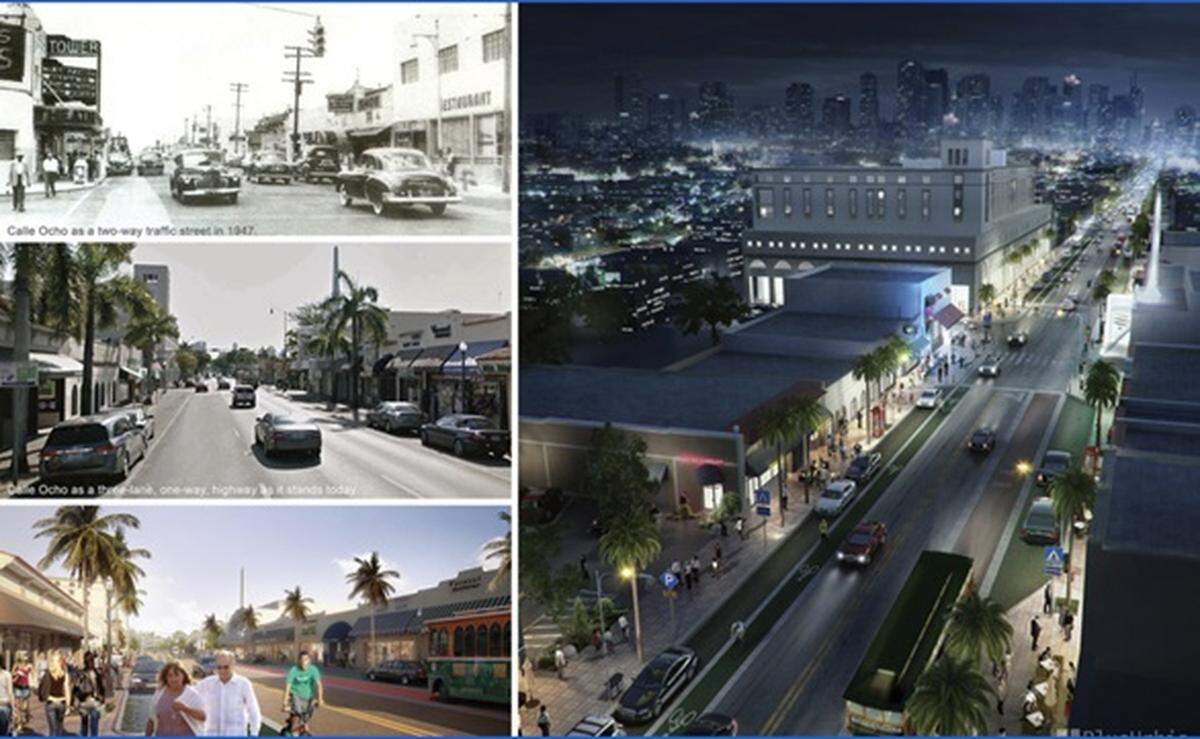
The plan laid out a reimagining of Little Havana’s SW Eighth St — commonly known as Eighth Street or Calle Ocho — to bring a more pedestrian-friendly atmosphere.
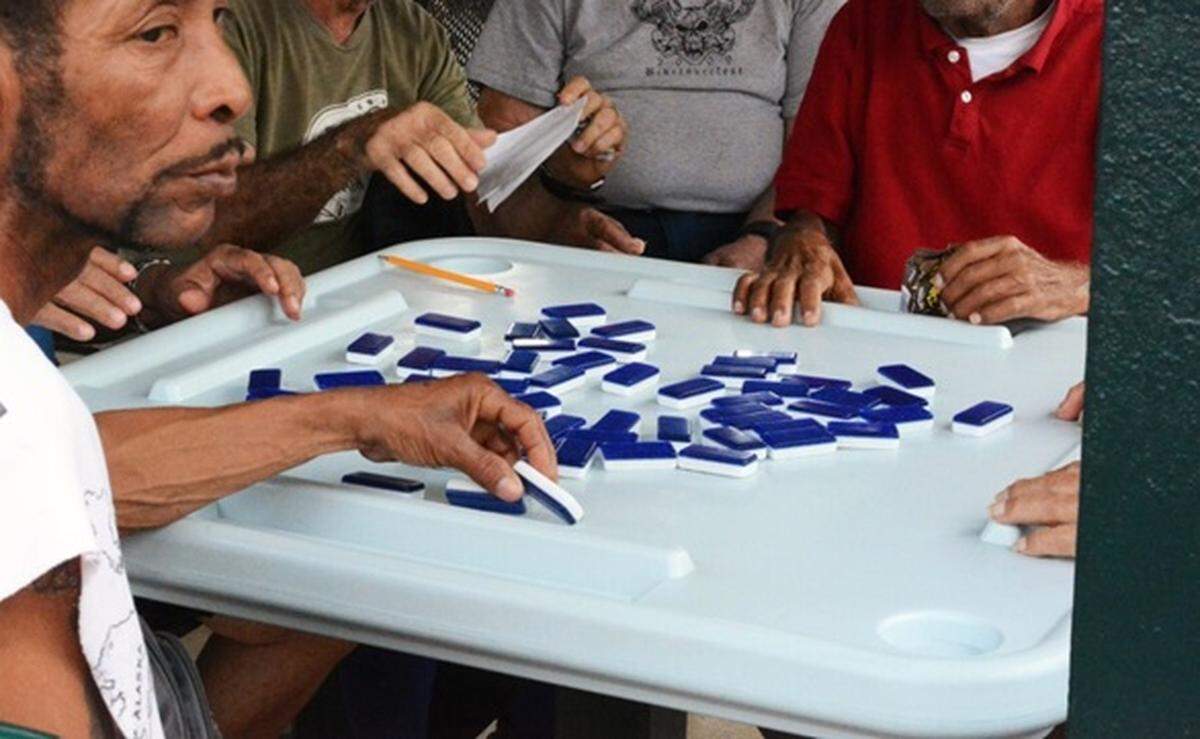
The vibrant cultural hub has been a bustling thoroughfare for decades, lined with shops, bars and restaurants. It’s also home to renowned establishments like the historic Ball & Chain, the Tower Theater and the famous Domino Park — where mostly older Cuban residents gather to play dominoes while tourists watch.
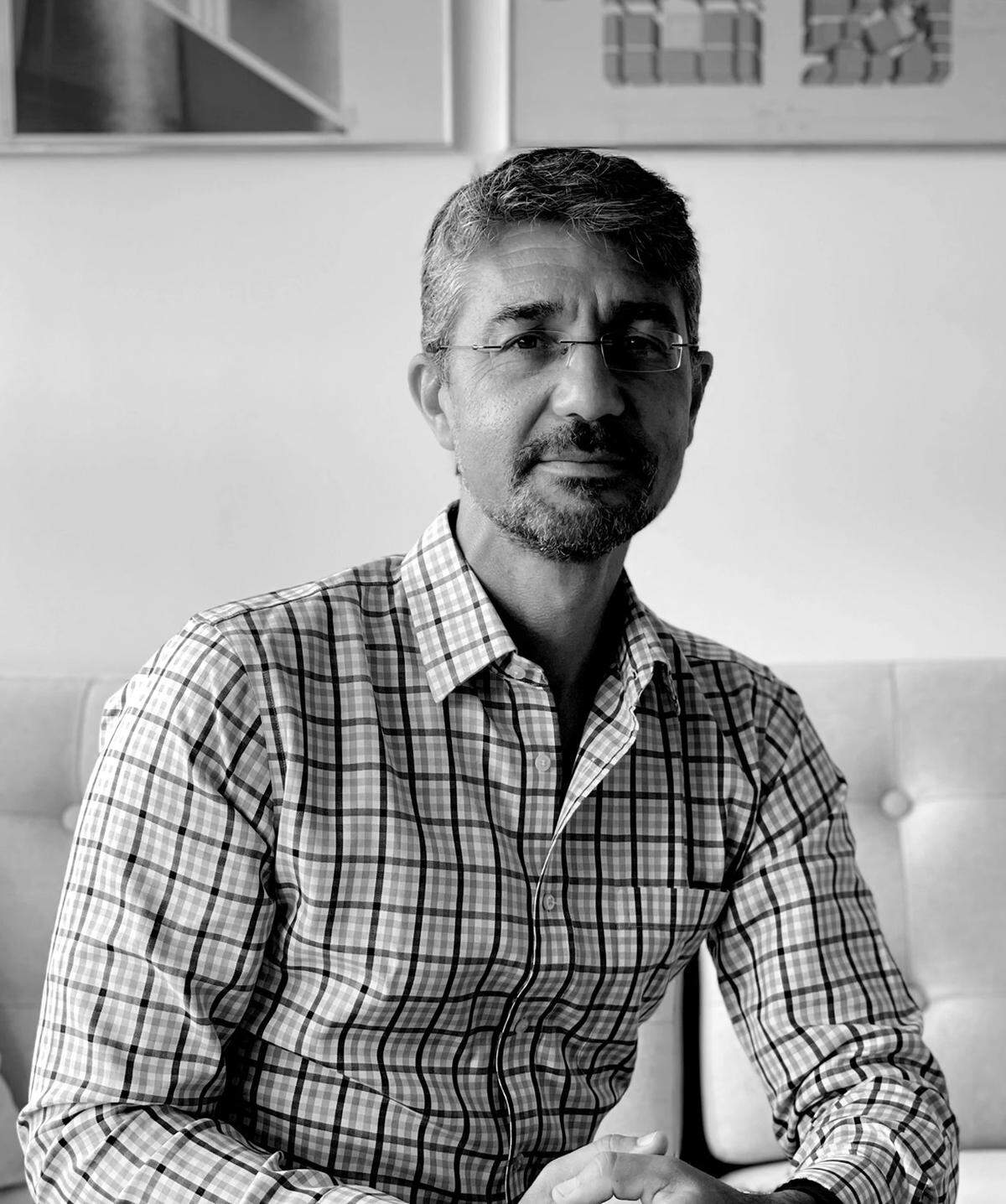
“Calle Ocho and Little Havana are the heart of Miami,” said Juan Mullerat, principal of PlusUrbia.
The firm’s plan sought to build on that identity with a plan that visualized what Calle Ocho could look like — if cars did not dominate the wide, three-lane, one-way street.
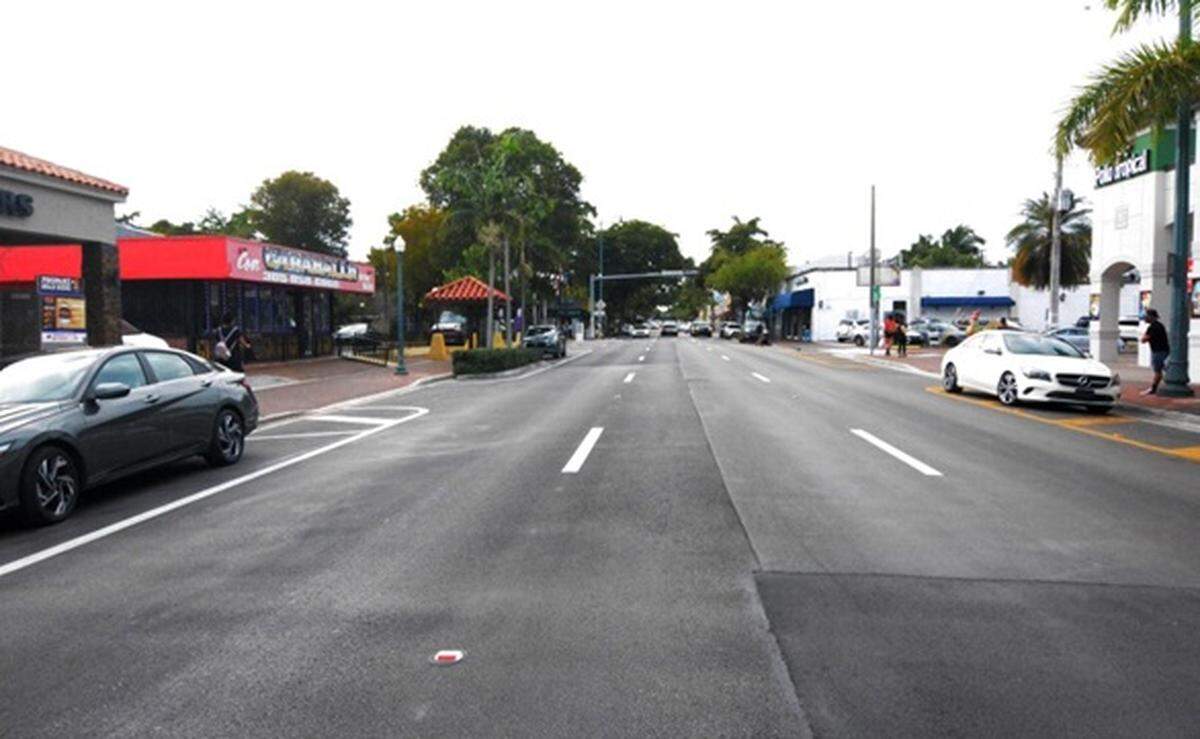
Instead, it would return the vibrant strip back into the two-way, two-lane road that it was before the late 1960s.
The plan asks for expanded sidewalks, dedicated bike and bus lanes and wider crosswalks that would be hard to miss. Instead of painted stripes on the road, a mural of giant dominoes would symbolize the crosswalks.
“ By no means do we want to imply that Calle Ocho should be entirely pedestrian,” said Mullerat. “But if we’re honest with ourselves … you experience great streets on foot. You don’t experience them by car.”
The plan got community input, too. Mullerat, along with Megan McLaughlin, PlusUrbia’s office director, spoke with residents and business owners about what they thought Calle Ocho needed.
“All of our projects begin with community outreach, but also a lot of research into the culture and history of a community,” said McLaughlin. “What creates its DNA, what gives its identity?”
“[The community is] continuing to advocate for greater walkability, safety,” she said. The firm also found that residents want to preserve the strip’s historic architecture.
![Megan McLaughlin, PlusUrbia’s office director, says: ‘[The community is] continuing to advocate for greater walkability, safety’ on Calle Ocho.](https://www.miamiherald.com/public/latest-news/o7m2gm/picture314349281/alternates/FREE_1200/Megan%20McLaughlin.jpg "Megan McLaughlin.jpg")
But since the introduction of the master plan a decade ago, the city has not picked up or signed off on any major changes to Little Havana’s Eighth Street.
“ You always need a champion and you need that champion to stick with you for the longest possible period of time,” said Mullerat.
Master plans for neighborhoods and cities, from idea to execution, take time, even decades. Meanwhile, politics tends to run in a four-year cycle. Urban planning and politics, Mullerat said, “are always at odds with each other.”
Calle Ocho plan began with walks for cafecito
Mullerat and McLaughlin, who are married, lived three blocks away from Eighth Street when they conceived the idea for the Calle Ocho plan. The couple were enjoying Little Havana’s urban life, which included regular morning walks for cafecito and an empanada.
But with two young children and a double stroller, they had some concerns about the narrow sidewalks and lack of safe crosswalks.
“No matter how young or old you are, walking along Calle Ocho, we really could see that there were improvements needed,” said McLaughlin.
PlusUrbia had worked on projects all around the world, including China, the Middle East and Latin America, but it hadn’t worked on many projects locally.
Around the same time, the Florida Department of Transportation (FDOT) launched its own study looking at mobility along Little Havana’s Eighth Street and Seventh Street.
“Because it was in our backyard, we thought, this is something we really do care about,” said Mullerat. “It was very important that we got it right.”
It was the longest project the firm has ever embarked on, kicking off in 2014. Although PlusUrbia first released the plan to the public in 2015, it would not be finalized until five “very intense” years later.
The firm even presented the plan to then-Miami Mayor Francis Suarez when he had just taken office in 2017.
FDOT’s Project Development and Environment (PD&E) Study was completed in 2022, but the agency told WLRN it did not move forward with some of the findings “due to input from the public and stakeholders.”
To address some of the safety and operational needs that were identified in the study, FDOT installed pedestrian curb ramps and pedestrian detectors and pushbuttons along SW 8th Street, from Beacom Blvd. to SW 4th Avenue. Pedestrian signals and signage were also upgraded.
“It would be worthwhile now, 10 years after, to revisit those plans and understand where we are today compared to back then,” said Mullerat. “See if those plans and that implementation has worked, and whether or not it needs additional improvement, additional studies. Demographics change. Mobility choices change.”
How Calle Ocho has changed and what it still needs
Even in the last 10 years, Calle Ocho has changed drastically. New condominiums have been constructed, Miami’s population has grown and new restaurants and bars continue to open up.
“The street has become alive,” said Mullerat. “It’s incredible, the variety of people that are on the street almost 24/7.”
Even though most people think of Calle Ocho as solely a tourist destination, it is also Little Havana’s commercial core.
“As much as we love Calle Ocho for its name recognition, the economic value that it brings to the city, it needs to continue to service those that are residents of Miami and Little Havana,” said Mullerat.
For Mullerat and McLaughlin, that means access to open, gathering spaces and wider sidewalks where outdoor restaurant seating and pedestrians aren’t fighting for space. The goal is to enhance the neighborhood, rather than taking it in a new direction.
The couple have hope for Little Havana’s future — they just need to find that champion.
“Federal, state and local [government], they’re beginning to realize that we have a real gem in Calle Ocho,” said Mullerat. “It’s just a matter of polishing that gem to really make it not just the heart, but the most important … thoroughfare in the city of Miami.”
This report was produced by Miami Herald news partner WLRN Public Media.
This story was originally published January 16, 2026 at 2:54 PM.