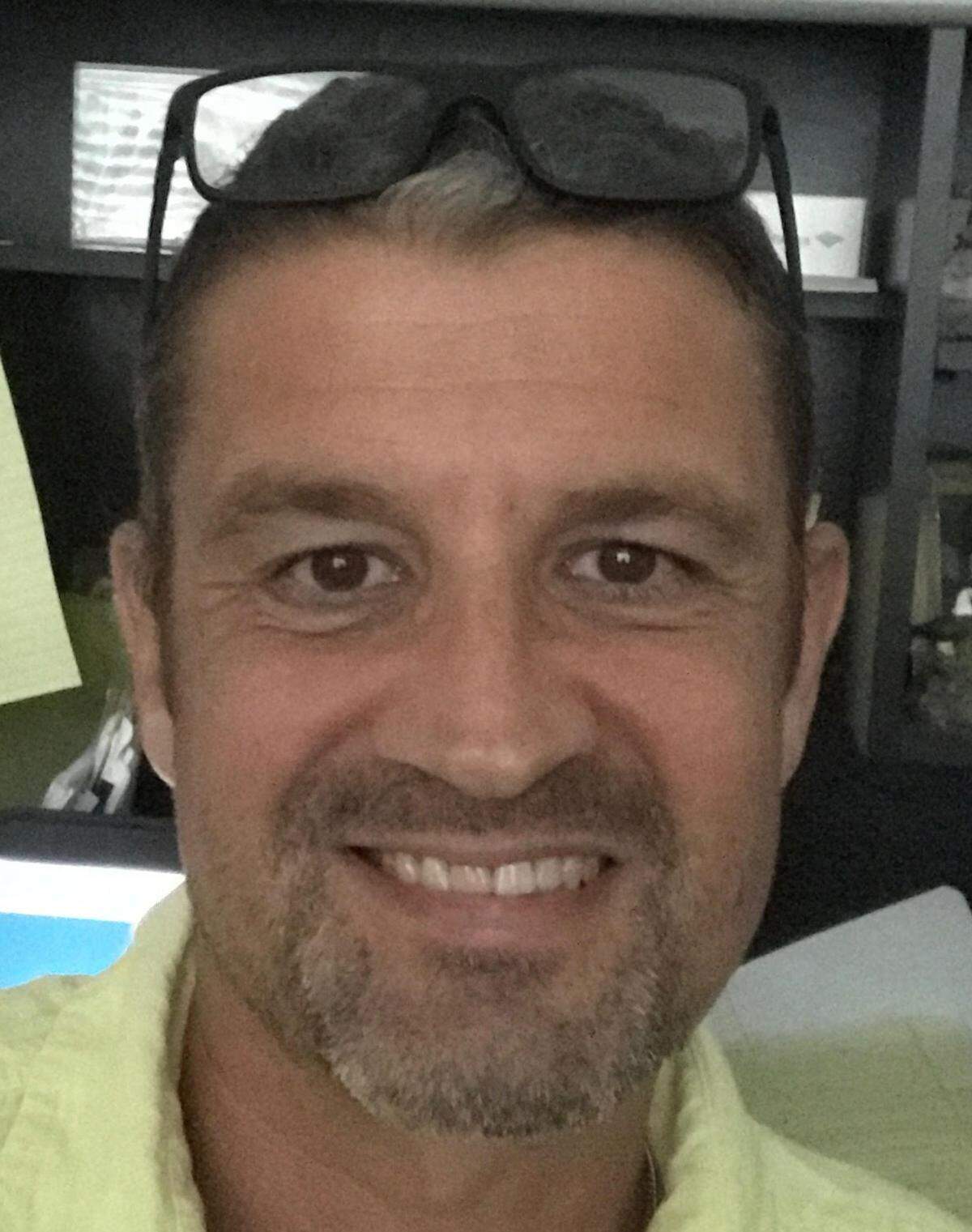
He guided the Coast Guard through some of ‘the toughest moments’ for 47 years
.jpg "Michael Mullen poses for a photo with his compass and Weems plotter in the Coast Guard Southeast District command center in Miami on Tuesday, Dec. 9, 2025. Mullen retired Dec. 31, 2025, after serving a combined 47 years with the Coast Guard.")
Michael Mullen’s career shows that sometimes after you leave the active-duty military, you still have plenty of service left in you.
For the past 15 years, Mullen, 66, has served as the command duty officer for the U.S. Coast Guard’s Southeast District, directing those who oversee communications for missions like searching for missing mariners and divers, hurricane preparation and law-enforcement operations throughout South Florida.
In this civilian role, Mullen made the final call on search patterns and also, “in the toughest moments,” had to deliver news to families that their loved ones were either found safe or they were deceased or lost at sea, said Petty Officer 1st Class Diana Sherbs.
It’s a job that he had 32 years to prepare for as an active-duty member of the Coast Guard. His job was quartermaster, where he became an expert at navigating with paper charts, a compass and other traditional maritime plotting tools.
“While today’s rescue operations are guided by electronics, his foundational skills have made him an invaluable asset in worst-case scenarios,” Sherbs said.
He left active duty with the rank of chief warrant officer, but stayed on as a civilian.
He retired on Dec. 31 after 47 years of combined service, reflecting as he rolled up his charts that there are no constants for members of the Coast Guard assigned to South Florida.
“This district is different. Every day I see something that I’ve never seen before.,” Mullen said in a statement. “No question is a silly question. Ask it. If I don’t have an answer, we might have to make half a dozen calls, but we’ll find the answer. It’s good work, and I have always found it satisfying.”
Those who served with Mullen recall him not only for his expertise in navigation but also as a mentor.
Master Chief Petty Officer Kirstin MacLean served under Mullen aboard the Cutter Morgantheau soon after the 9/11 terrorist attacks when the Coast Guard transitioned from being under the umbrella of the Treasury Department to the then newly formed Department of Homeland Security.
“He made me feel like I had a place in the organization, that I could be myself and still succeed,” MacLean said in a statement. “Yes, the job got done, but he left a better legacy than that. He impacted every single person he worked with. The ripples from those interactions are so much bigger than you feel in the moment.”
Master Chief Petty Officer Omar Colon, who recently worked alongside Mullen, called his colleague “resourceful, reliant and persistent.”
Mullen said the difference between serving in the Coast Guard as a civilian is that the “second go-around has given me energy and an outlook in good people and humanitarianism.”
“I am a humanitarian. I like helping people. I like saving people. It’s been an absolute fun job,” he said.
The part of the job that he’ll never forget, Mullen said, is “the pucker factor” that happens when a dangerous situation comes to an end, especially when the outcome is good.
“You hang up the phone, done with the report, and the aircraft is flying back to base with the survivor. The moment you can breathe easy,” he said. “That’s what I’m going to miss.”
Mullen recently bought a house in St. Lucie. His immediate plans are to travel with his wife, Clara.
“We’ve seen a lot of Europe already, but we want to see more. We want to see the Great Wall of China, and I want to see Japan,” he said.