
Frank Carollo can stay on Miami runoff ballot despite new term limits, judge rules
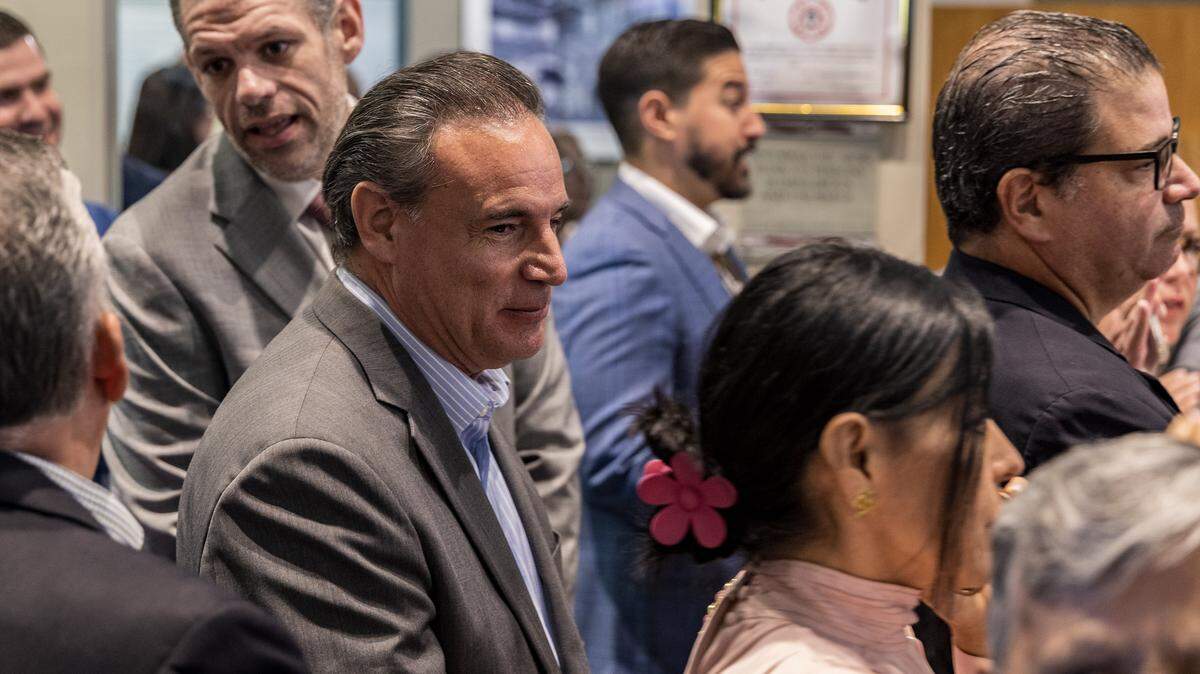
A Miami-Dade Circuit Court judge has ruled that Frank Carollo can stay on Miami’s Dec. 9 runoff ballot, a victory for the former city commissioner as he tries to win back his old District 3 seat.
The ruling from Judge Peter R. Lopez follows a ballot referendum that Miami voters overwhelmingly passed last week that limits elected officials in the city to two terms as mayor and two terms as commissioner in their lifetime. Carollo previously served two terms as the District 3 commissioner, from 2009 to 2017.
Three residents — including one of Carollo’s challengers — sued last week, arguing that the passage of the referendum disqualifies Carollo from office. Carollo, who appeared on the same ballot as the term limits referendum, secured nearly 38% of the vote in the District 3 race, falling short of the more than 50% needed to avoid a runoff.
The plaintiffs, including third-place finisher Oscar Alejandro, argued that Alejandro should replace Carollo on the ballot and face off against second-place finisher Rolando Escalona on Dec. 9.
The term limits referendum passed 79% to 21%, with nearly 28,000 Miamians voting in favor. The ballot question stated explicitly that the change was retroactive and would go into effect “immediately.”
Juan-Carlos Planas, an attorney for the plaintiffs, argued in court Wednesday that Carollo “may have been an eligible candidate on Nov. 3” but that after the polls closed on Nov. 4, “he was no longer eligible to take office.”
Robert Fernandez, an attorney for Carollo, called that a “flawed and unconstitutional argument.”
Fernandez said there were likely people who voted both for Carollo and the lifetime term limits referendum and that it “defies logic” to suggest that those voters “knowingly, intelligently voted for Mr. Carollo and the [referendum] and knew that they immediately would be basically throwing their vote down the toilet.”
“I do believe the more rational explanation is that there was some voter confusion,” Fernandez said.
Planas disagreed, saying “the voters were not confused. And that is signified by the majority that voted both for the measure and against Frank Carollo in District 3.”
“The plain fact is, Mr. Carollo is ineligible to hold office ever again,” Planas later argued.
In his ruling Wednesday, Lopez noted that Carollo qualified for office before the term limits referendum went into effect on Nov. 4. Carollo first filed candidate paperwork in March and officially qualified for the race on Sept. 20.
“This court will not interfere with it or with the orderly process of the election,” Lopez said, noting that his ruling might have been different if Carollo was required to re-qualify between the general and the runoff.
“This court is sure that all of the voters will be made aware of this issue between now and Dec. 9,” Lopez said. “Whether the voters wish to vote him into office or not is the ultimate will of the people and their decision on this matter.”
In a statement after the ruling, the plaintiffs called the judge’s decision “deeply disappointing.”
“By failing to uphold the measure exactly as written, the court has undermined the will of the voters and weakened the mandate for reform that Miami residents so clearly demanded at the ballot box,” the plaintiffs said in a statement. “This decision does not just impact one election — it undermines confidence in our city’s democratic process and the principle that the people’s voice should be final.”
While Lopez said his ruling will likely be appealed, the plaintiffs didn’t say definitively whether they plan to do so. The clock is ticking, with the Elections Department saying it plans to send out vote-by-mail ballots on Monday.
The plaintiffs also have the option of challenging the runoff results after the fact — a move that Carollo’s attorney argued would be the only “appropriate mechanism” to attempt to enforce the term limits referendum against his client.
Carollo and his legal team celebrated the judge’s ruling Wednesday.
“As Judge Lopez said: The people will decide,” they said in a statement. “That is what our constitutional system requires. The court saw that there are no legal grounds to interfere with the runoff election scheduled for December 9. Frank Carollo looks forward to spending the rest of the campaign focused on the voters in District 3 and the issues that matter to them.”
This story was originally published November 12, 2025 at 10:47 AM.
.jpg)