
Emails show Miami airport’s fight over ‘mystery’ $100K budgeted for county rodeo

In the summer of 2024, a senior administrator at Miami International Airport discovered a surprise addition to the Miami-Dade Aviation Department’s promotional budget: a $100,000 allocation to a county rodeo that didn’t seem eligible for airport funding under federal aviation rules.
“We did not budget any funds for CountryFest,” Arlyn Rull Valenciaga, the Aviation Department’s chief of staff, wrote in a July 2024 email to the agency’s finance director. “I do not have an explanation as to how that made it to our budget, but do ask that it be removed.”
But county emails obtained through a Miami Herald records request show that removing CountryFest from the Aviation Department’s budget proved impossible for the airport staff last year.
Rull and other senior MIA administrators were raising objections at a time when there was a high-level push in county government to send money to the annual rodeo festival that County Commission Chair Anthony Rodriguez hosts each year in his district at Tropical Park.
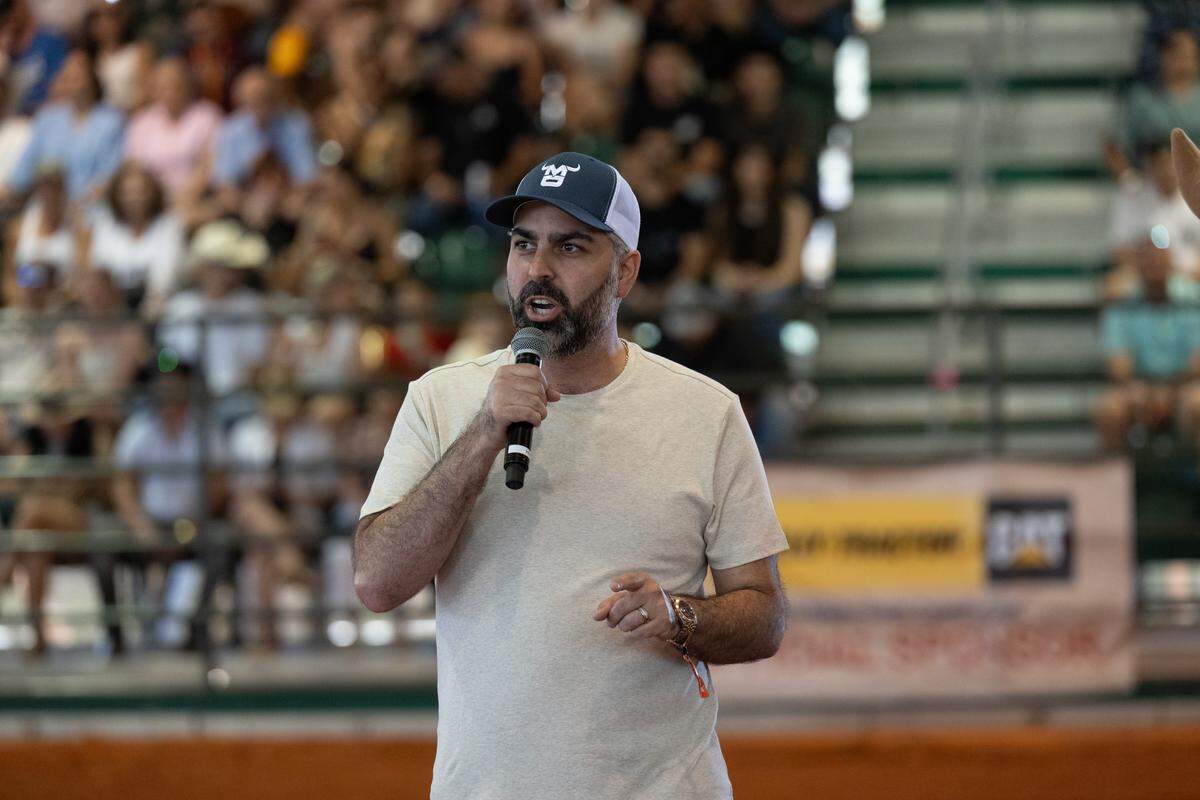
Most of Miami-Dade’s $1.3 million in CountyFest funding during 2024 and 2025 went to the A3 Foundation, a politically connected charity launched two years ago out of a West Miami townhouse with no public track record of philanthropy.
The foundation also secured nearly $1 million in Florida’s budget this year with the help of House Speaker Danny Perez, a Miami Republican who is friends with both Rodriguez and A3’s president, Francisco Petrirena. Petrirena also works as the chief of staff to Miami’s city manager, Art Noriega.
A series of Miami Herald articles this year showed how Rodriguez’s office used the A3 Foundation as a clearinghouse for CountryFest funds, with county dollars sent first to the charity before being used to pay event expenses.
The budget office under Mayor Daniella Levine Cava approved requests from Rodriguez’s office to issue checks to A3 for CountryFest, despite sparse paperwork showing where the tax dollars would ultimately go once the foundation received the money.
After the first Herald stories on the A3 Foundation published in July, Levine Cava moved to block future funding of the charity in a county contract and called for an audit of the organization.
But in the summer of 2024, her budget office wanted the Aviation Department to keep the $100,000 for CountryFest in the $740 million operating budget that funds MIA and smaller county-owned airports. While the airports are run by the county government, their funding comes from fuel sales, retail revenue and the fees airlines pay to run flights in and out of Miami.
No tax dollars go into the Aviation budget, and federal rules on money earned from air travel restrict local governments from diverting airport revenue to pay for general government expenses. Airports that “divert” aviation dollars to ineligible expenses risk losing millions of dollars in federal grants related to air travel.
Rull, the Aviation chief of staff under Director Ralph Cutié, cited those federal rules in objecting to the $100,000 CountryFest expense in the department’s $480,000 promotional budget last year.
“CountryFest would be considered revenue diversion,” Rull wrote in her July 14 email to Oscar Aguirre, finance director for the Aviation Department.
Federal Aviation Administration rules allow airport dollars to cover promotional expenses as long as they promote the airport, air travel or cargo shipped on planes. Miami-Dade’s 2025 budget included funds for aviation-related events, like $9,000 for a conference by the Florida Airports Council and $5,000 for an African trade symposium.
In the emails, Rull flagged two additions to the promotional budget that weren’t requested by the department. Along with CountryFest, Rull wrote that she was surprised to find $50,000 for the InterAmerican Conference of Mayors, a September event in Doral put on by an international trade office run by the County Commission.
Rull said her boss, Cutié, also didn’t know how the $150,000 for the rodeo and the mayors’ symposium was added to Aviation’s budget. “I spoke to Ralph as well and he was unaware of these amounts,” Rull wrote Aguirre, the finance director, in an Aug. 15, 2024, email. “Total mystery.”
The emails show the county’s Office of Management and Budget added the extra $150,000 to the airports’ promotional budget after Aviation submitted its spending plan for inclusion in the full $12.8 billion budget that Levine Cava unveiled earlier that summer. That rankled Aviation administrators, who saw a potential problem with FAA rules if the money ever made it to CountryFest or the mayors’ conference.
“In doing further due diligence related to potential funding for CountryFest, MIA staff had concerns about whether providing funding for this event was allowed under FAA guidelines,” Aviation spokesperson Greg Chin said in a recent email to the Herald. “FAA rules strictly govern permitted uses of airport funding and aviation staff works hard to ensure all allocations remain in compliance with federal guidelines.”
County commissioners approve the budget each September, and the emails show Aviation administrators trying to get the promotional dollars removed before those commission votes last year.
“Thank you Oscar. Hopefully it gets resolved prior to the budget hearings,” Cutié wrote to Aguirre in an Aug. 16, 2024, email explaining the effort to remove the $150,000. “I certainly don’t want to jeopardize our grant assurances or put us in a revenue diversion situation over this.”
The emails don’t show why Aviation administrators couldn’t get the promotional expenses removed, but the pushback came at a time when CountryFest and A3 were in the midst of receiving county dollars from multiple sources.
That includes $750,000 from the county Parks Department and more than $260,000 from county commissioners’ district budgets, according to budget documents, meeting minutes and payment records.
While county records show the A3 Foundation was allocated about $1.2 million from Miami-Dade during the last two years, Herald reporting has so far been able to account for $880,000 of the public money either being spent on CountryFest expenses or returned to Miami-Dade. That leaves roughly $310,000 in public money allocated to the A3 Foundation but unaccounted for in the Herald’s reporting.
Following the Herald stories, county leaders have pulled back funding from the A3 Foundation.
In September, the County Commission voted to cancel part of a contract that required a Tropical Park contractor to make a $250,000 yearly payment to A3 and instead shifted the required donation to the county’s Parks Foundation. On Oct. 9, Commissioner Keon Hardemon won approval of legislation to rescind a $5,000 A3 allocation from his District 3 grant budget that had been approved earlier in the year. He said the money hadn’t been claimed and that he wanted it redirected.
Petrirena, A3’s president, has not responded to inquiries about how the foundation spent its public dollars.
In July, A3 lawyer John Priovolos issued a statement calling the foundation’s use of county funds “an overwhelming success” and that the charity focused on “increasing awareness of agricultural principles and promoting educational initiatives, particularly with our youth.”
Voided A3 Foundation check ties back to a disputed airport CountryFest allocation
Miami-Dade’s final check to the A3 Foundation for $200,000 was issued three months ago after multiple requests from Commission Chair Rodriguez’s office that the charity be reimbursed for expenses from April’s CountryFest.
As the Herald reported, county accountants questioned the reimbursement request because of a lack of invoices and other back-up material. But Budget Director David Clodfelter authorized the check, citing clearance from Rodriguez’s office.
While the $200,000 check was issued before the Herald’s first A3 Foundation story, it hadn’t been cashed when the article was published on July 19. Weeks later, the check wound up back at Clodfelter’s County Hall office, unsigned and uncashed. At the time, it wasn’t known who gave back the check.
Now, newly released records show it was Rodriguez’s District 10 office that returned the check unsigned.
“Aldo, I am sending this email to confirm that, per our conversation this morning, this check was returned by District 10 to be cancelled? Thanks,” Clodfelter wrote in a July 31 email to Rodriguez’s top aide, Aldo Gonzalez. Clodfelter said there was no written response from Gonzalez.

Rodriguez has not answered questions from the Herald about why the check wasn’t cashed — or why it was requested at all if the county money wasn’t ultimately needed.
When the Herald was first reporting on the returned check in August, Clodfelter said the Miami-Dade Aviation Department (MDAD) promotional budget would have covered part of the planned $200,000 payment to the A3 Foundation. The rest was expected to come from a similar promotional budget maintained by the county-owned PortMiami. Port allocations aren’t governed by the kind of federal rules that regulate airport dollars.
In an Aug. 8 email to the Herald, Clodfelter wrote that CountryFest dollars came from multiple sources in 2025, including Aviation and PortMiami “funding allocated for community and global outreach programs within MDAD and Seaport promotional budgets.”
However, the newly released Aviation emails show airport administrators were told their promotional dollars would have never been released to CountryFest. Instead, they were told the $100,000 allocation to the rodeo in their 2024-25 promotional budget was just a placeholder and that Clodfelter had pledged to find the funds elsewhere if CountryFest ever needed the money.
In a Sept. 11, 2024, email, a week before the commission cast a final vote on Levine Cava’s proposed 2024-25 budget, Aguirre — Aviation’s finance director — described a verbal agreement between Clodfelter and Cutié, director of Aviation.

The agreement called for Aviation to keep the $150,000 for the mayors’ conference and CountryFest in the Aviation budget but use dollars elsewhere in the county budget to pay out the subsidies if they were actually requested in 2025.
“Good afternoon Ralph, We were informed by our budget analyst, Nicole Miller, that David Clodfelter and you spoke, and the promotional item memo will remain as is,” Aguirre wrote Cutié. “Should either or both of those two events in question materialize, the County would fund them as to not jeopardize our grant assurances.”
Cutié responded: “Confirmed. That’s what David and I discussed.”
In a recent statement, Clodfelter said the email from Aguirre to Cutié didn’t match his understanding of the agreement. Instead, Clodfelter said he told Cutié that money would be found elsewhere for CountryFest if Aviation made a final determination that funding the rodeo would in fact violate FAA rules.
Clodfelter said Aviation would have reviewed the $100,000 expenditure after the fact if the A3 Foundation had cashed the check, and he would have asked the County Commission to use other county dollars to reimburse Aviation if the concerns raised by Rull, Aguirre and others were deemed valid.
The county’s Office of Management and Budget “never received anything that said this allocation was an FAA grant violation,” Clodfelter said in an Oct. 9 email.
This story was originally published October 17, 2025 at 5:00 AM.