This Miami nonprofit’s helped thousands avoid eviction. It’s facing steep cuts
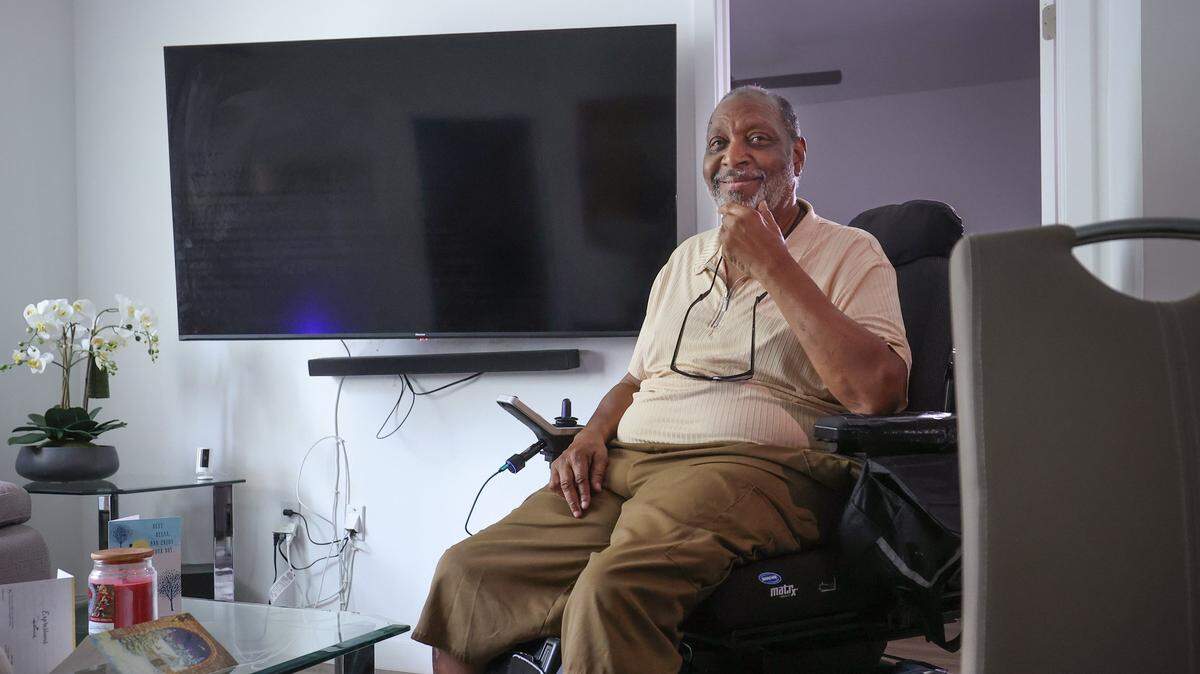
In Overtown, a few blocks south of Northwest 20th Street, where public housing complexes abruptly give way to artfully graffitied walls, Pilates studios and coffee shops peddling $7 lattes, Michael Harley presides as tribune of his senior low-income housing complex.
“Everybody that needs something, they come to me,” Harley chuckled as a neighbor shuffled out of his living room, freshly schooled on how to navigate some Byzantine process involving a health insurance claim.
Harley has lived in the complex for four years. His adopted duties include fundraising for holiday and birthday parties, organizing game nights, and advocating for accessibility changes to his building, like automatic doors for wheelchair-bound residents like himself. The more involved he gets, the more attached the 72-year-old feels to his community.
That made the eviction notice he received in 2022 — and the effort to terminate his lease that followed soon after — so devastating.
Harley suspected both efforts to remove him were wrongful. Legal Services of Greater Miami agreed. The VA referred Harley, an Army veteran, to the organization. At no cost, it took his case, represented him in court and won, staving off his displacement.
“I can’t give them enough praise, to be honest,” Harley said. “Any time anybody has an eviction notice or something like that, I tell them ‘just call Legal Services.’”
How Legal Services of Greater Miami helps tenants
Founded in 1966, during President Lyndon Johnson’s War on Poverty, Legal Services of Greater Miami provides no-cost legal assistance to low-income residents of Monroe and Miami-Dade counties. There are 130 such organizations nationwide, spread across every state and territory. They’re all funded at least in part by the Legal Services Corporation, a nonprofit created by Congress in 1974.
In 2024 alone, Legal Services of Greater Miami’s dozens of attorneys and paralegals and hundreds of volunteers served 25,000 people across more than 5,000 cases. The bulk of those cases involved tenants’ rights, but Legal Services also helped clients with issues ranging from government benefits and consumer protections to health, family, education and small business matters.
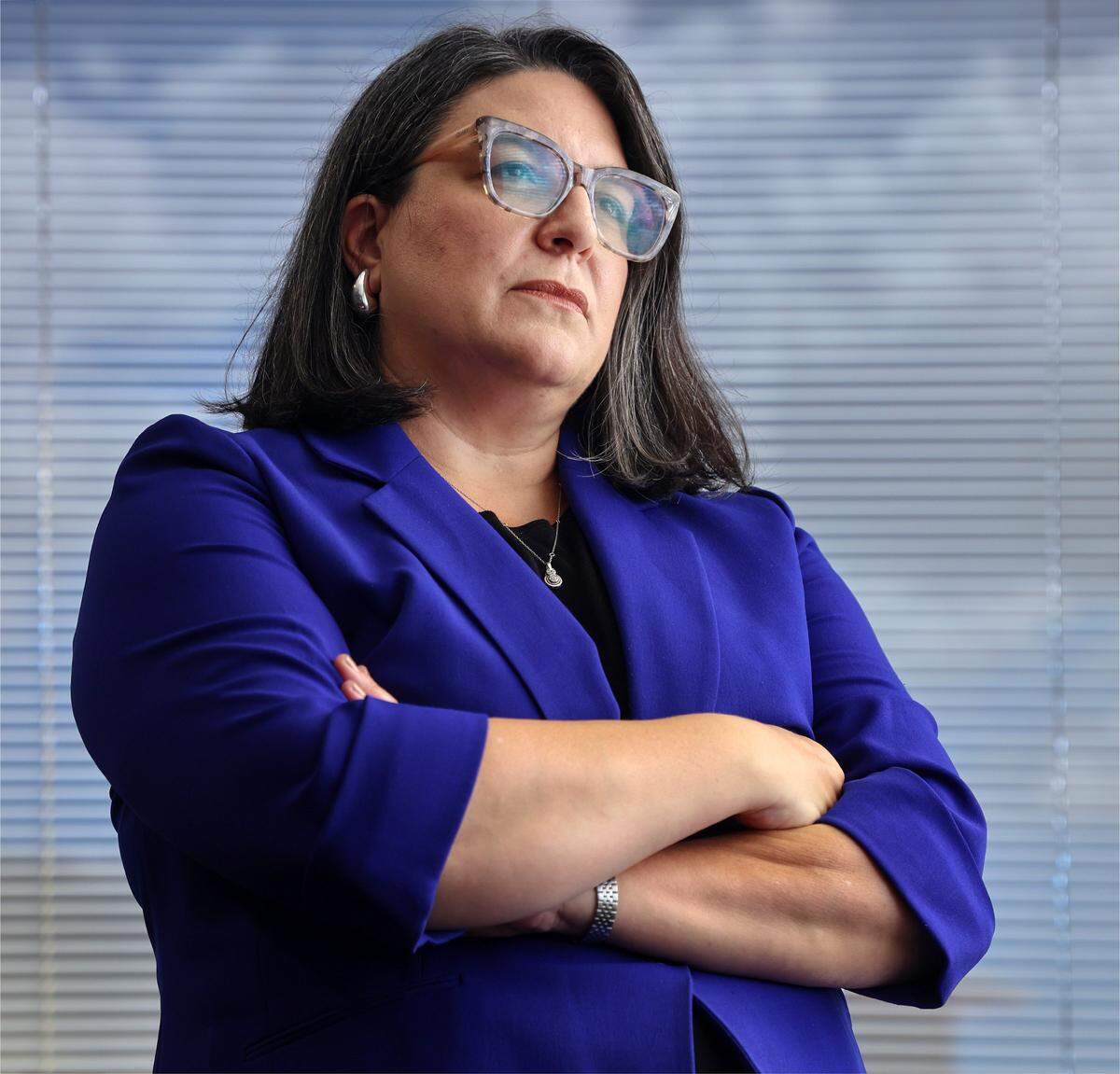
Keeping a family in their home, a kid in school or someone on government benefits prevents people from falling through the cracks — and into destitution or homelessness, said Monica Vigues-Pitan, CEO of Legal Services of Greater Miami. From a societal perspective, she remarked, “that’s an incredible return on investment.”
Indeed. The Legal Services Corporation — the federal umbrella group that accounts for a third of Legal Services of Greater Miami’s $12 million operating budget — estimates that every dollar spent on free legal aid services yields a $7 return. That’s economic activity from families that are able to stay above water and spend. It’s savings from local services, like hospitals, shelters and police, that don’t have to assume an extra burden.
But mounting local costs, particularly for housing, have pushed more and more residents into financial vulnerability. Struggling to save, more than half of Miami residents now live paycheck to paycheck. They’re often one or two emergencies away from not being able to make rent or a mortgage payment. And they’re certainly unlikely to be able to afford a lawyer on their own.
Between 2019 and 2024, as housing costs in Miami-Dade boomed, the number of tenants’ cases Legal Services of Greater Miami handled increased 35%, to more than 2,400 last year. Many of those clients, said Vigues-Pitan, are “working people, professional people that, with the cost of rent, just aren’t able to keep up.”
Assuming they have a case, Legal Services will work with them to either combat a wrongful eviction or negotiate with the landlord to delay an order to vacate, keeping clients’ records clean and credit scores intact.
But the organization is facing severe budget cuts. As Congress hashes out its 2026 spending plan, proposed changes to the Legal Services Corporation’s $566 million budget include the White House’s motion to zero it, the House of Representatives’ proposition to nearly halve it and the Senate’s push to increase funding by 1%.
According to the Corporation’s calculations, the House’s proposal would see 130,500 fewer Floridians receive services from local partner organizations like Legal Services of Greater Miami, which also depend on private donations to weather government funding shakeups.
Trump’s proposed elimination of the Legal Services Corporation’s budget would cost nearly 284,000 Floridians legal assistance, the Corporation’s estimates show.
“Representing the poor in court keeps people employed. It keeps veterans on their benefits” and families in their homes, said former Florida Supreme Court Justice and Legal Services of Greater Miami board member Raoul Cantero. Without legal aid, “there’s going to be more homeless on the streets, there’s going to be more unemployment, and there could be more crime as a result,” he predicted.
“You never know when one of your relatives is going to need [a lawyer] and not be able to afford them,” he added.
Such has been the case for Harley — and the reality for many of his neighbors.
“Without a doubt in my mind, without that service, we would be lost,” Harley said, grimacing at the thought.
“Totally up the creek without a paddle.”
Other legal aid services in South Florida
- Legal Aid of Broward County, browardlegalaid.org, 954-765-8950.
- Coast to Coast Legal Aid (Broward and Collier Counties), coasttocoastlegalaid.org, 954-736-2400.
- Legal Aid Society of Palm Beach County, legalaidpbc.org, 561-655-8944.
- Dade Legal Aid/Put Something Back (Miami-Dade County), dadelegalaid.org, 305-579-5733.
- Florida Rural Legal Services (Lee, Polk, Palm Beach, St. Lucie, Martin, Okeechobee, Indian River, Highlands, Hardee, Hendry, Charlotte, DeSoto, and Glades Counties), frls.org, 1-888-582-3410.
This story was produced with financial support from supporters including The Green Family Foundation Trust and Ken O’Keefe, in partnership with Journalism Funding Partners. The Miami Herald maintains full editorial control of this work.