
Street homelessness down in Miami, Miami Beach, but up countywide: 5 takeaways
The recent Miami-Dade County Homeless Census highlighted notable changes in homelessness within Miami and Miami Beach. Both cities have seen declines in their street homeless populations, yet challenges persist in addressing the broader issue across the county.
FULL STORY: Street homelessness is up in Miami-Dade, despite state’s public sleeping ban
Here are the highlights:
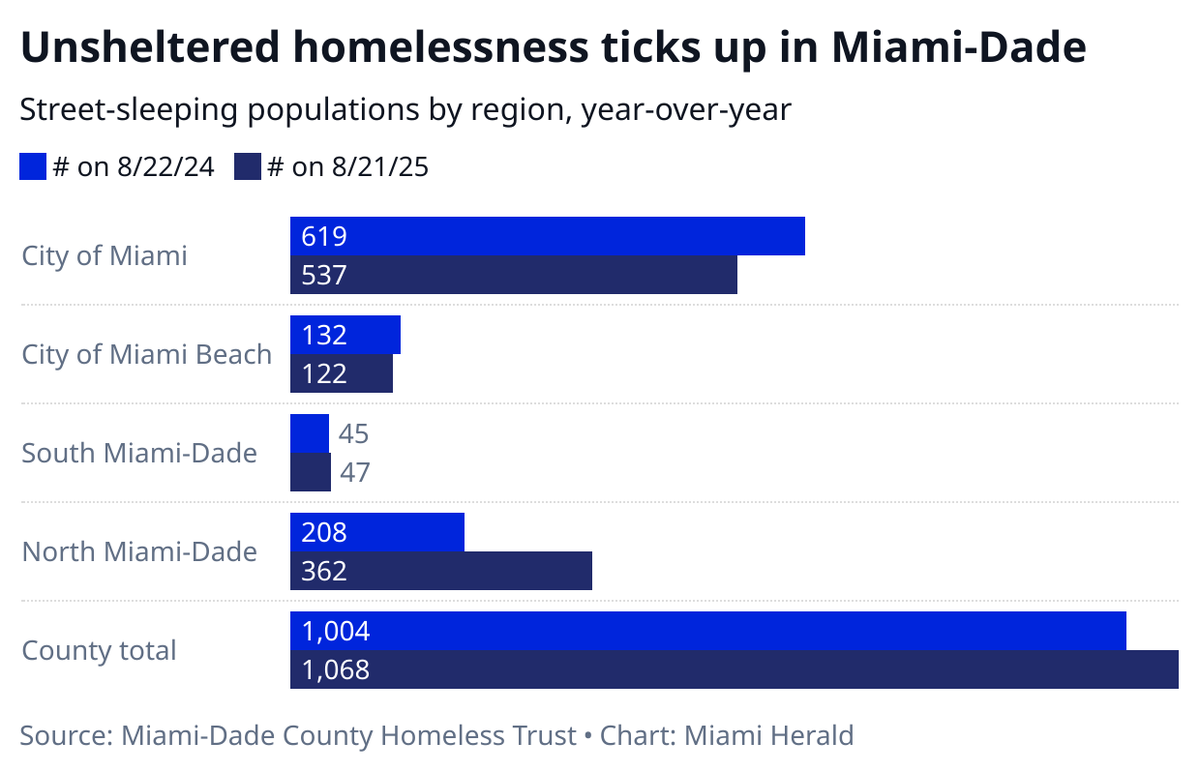
- There were 1,068 people counted on the streets during the August Homeless Census. That represents a 6% increase from last year, despite a state law banning public sleeping.
- Overall homelessness, including those in shelters, decreased by 7% to 3,570 people. However, the geographic distribution of the homeless population has shifted, with North Miami-Dade experiencing a 74% spike.
- The cities of Miami and Miami Beach saw declines in their street homeless populations, something in Miami that was attributed at least in part to partnerships with local government and law enforcement. However, the county’s shelter network remains nearly full, limiting options for those seeking refuge.
- The number of people in shelters dropped by 12%, partly due to a reduction in capacity at facilities like Camillus House. Some individuals have moved into new permanent supportive housing projects, but the whereabouts of many remain unknown.
- Efforts to increase shelter capacity are underway, with plans for an 80-bed navigation center and additional beds at Chapman Partnership. However, federal funding uncertainties pose challenges to sustaining and expanding these initiatives.