
Florida’s rainbow crosswalks are being painted over. Miami Beach could be next
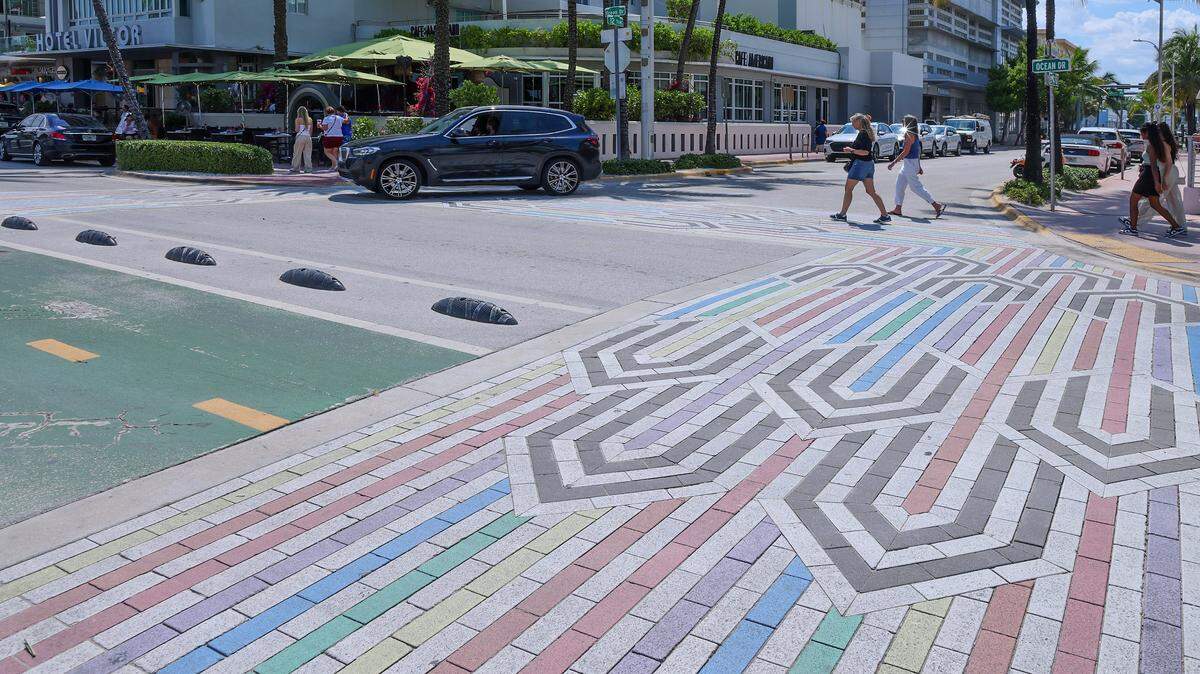
A battle over rainbow crosswalks is going down in the Sunshine State. Now, it’s Miami Beach’s turn in the ring.
In one corner: the Florida Department of Transportation, which ordered municipalities to remove pavement art “associated with social, political, or ideological messages” or risk losing state funding. In the other corner: the cities that have shown support for the LGBTQ community with colorful Pride-flag inspired crosswalks and refuse to give them up.
Overnight in Orlando, FDOT painted over the rainbow crosswalk that was a memorial to the 49 victims killed in the Pulse Nightclub shooting in 2016 without alerting the city in advance, the Orlando Sentinel reported Thursday.
Later that day, FDOT sent a letter to the City of Miami Beach demanding the removal of the LGBTQ-inspired crosswalks on Ocean Drive and 12th Street by Sept. 4. If the city doesn’t comply, FDOT will remove the crosswalk artwork itself and send the bill to the city. The letter, which was shared with the Miami Herald, states that the city can file a request for an administrative proceeding within 14 days, though the hearing will not result in an exception to keep the crosswalks intact.
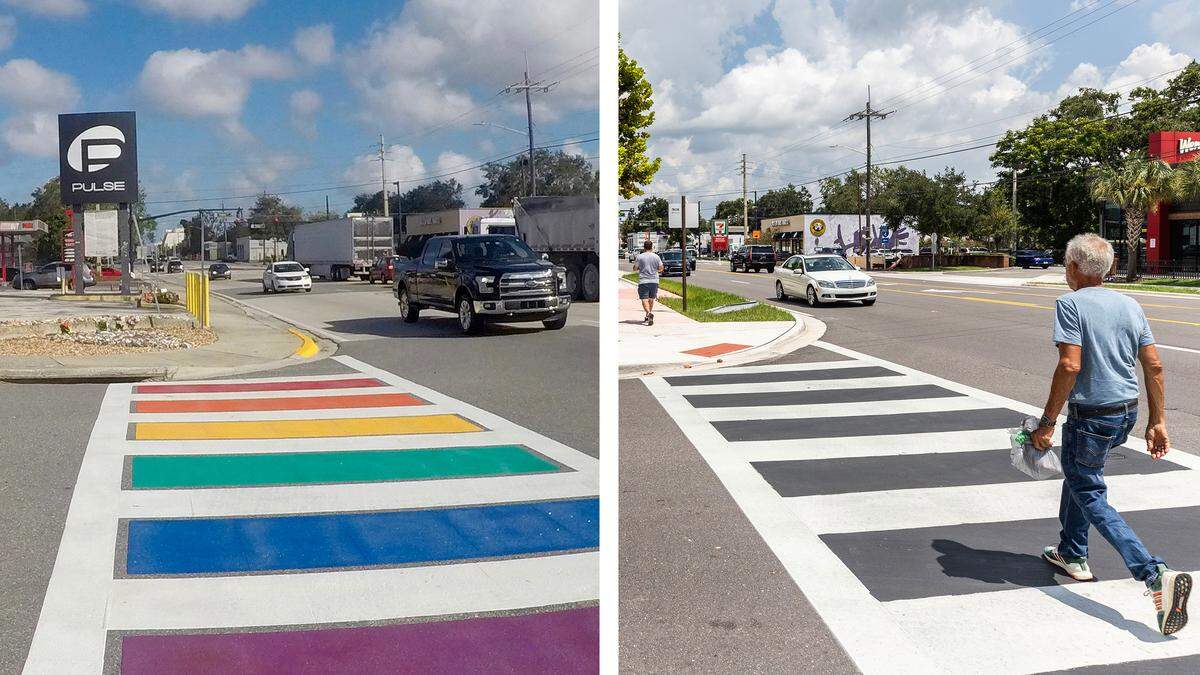
Miami Beach officials had been expecting the FDOT letter as a city staff member received a phone call from FDOT on Tuesday that said a letter about the crosswalks was imminent.
“This is complete and utter bulls--- that the state has no business getting involved in,” Joe Magazine, a Miami Beach city commissioner, wrote in a Miami Beach resident Facebook group earlier this week. “I am unequivocal in my support and championing of our LGBT community and that crosswalk was a welcome symbol for everyone. It bothered no one.”
The incident in Orlando escalated what was already a fierce political fight over the authority of local governments and their support for the LGBTQ community. After city commissioners in Delray Beach and Key West decided not to remove their rainbow pavement markings themselves, FDOT sent nearly identical letters to the cities last week demanding the removal of the rainbow-painted intersection and crosswalks by Sept. 3. If not, the letters said, the state will remove the rainbows itself and bill the cities for the cost.
The City of Fort Lauderdale does not have a rainbow crosswalk, but it does have a block on Sebastian Street painted as a Pride flag. Fort Lauderdale received their letter from the state on Thursday with the same demand to remove the Pride flag as well as several other crosswalks that displayed designs that were not LGBTQ-related, the Sun Sentinel reported.
The letters sent to Miami Beach, Fort Lauderdale, Delray Beach and Key West warned that the state may withhold funding from cities that don’t comply.
In response to a video on X of Florida State Sen. Carlos Guillermo Smith of Orlando criticizing the state’s removal of the rainbow crosswalk, Gov. Ron DeSantis posted, “We will not allow our state roads to be commandeered for political purposes.”
Other decorated crosswalks are facing erasure, including crosswalks in Tallahassee that were painted by students, the Tallahassee Democrat reported. FDOT sent a letter to Tallahassee city officials with the same Sept. 3 deadline to paint over the artwork.
The state’s demands and the overnight removal of the Orlando crosswalk have outraged South Florida’s LGBTQ community, many of whom made their voices heard at the Delray Beach commission meeting on Tuesday. During the meeting, Vice Mayor Rob Long gave an impassioned speech against what he called “one of the most extreme abuses of power I’ve ever faced.”
“I understand why some might say we should just comply and avoid the risk to our funding. It’s a fair point,” Long said. “But how much are we willing to be pushed to stray away from our city’s values?”
‘Safe streets, not rainbow crosswalks’
The Trump administration took aim at rainbow crosswalks July 1 when U.S. Department of Transportation Secretary Sean Duffy sent a letter to governors urging them to eliminate “distractions” from roads. Duffy didn’t directly reference rainbow crosswalks in his letter, but he did in his post on X.
“Taxpayers expect their dollars to fund safe streets, not rainbow crosswalks,” Duffy posted. “Political banners have no place on public roads. I’m reminding recipients of USDOT roadway funding that it’s limited to features advancing safety, and nothing else. It’s that simple.”
FDOT issued a memo dated June 30 that says the 2025 FDOT Design Manual “prohibits the application of pavement or surface art on travel lanes, paved shoulders, intersections, crosswalks or sidewalks” besides traffic markings. “Non-standard surface markings, signage, and signals that do not directly contribute to traffic safety or control can lead to distractions or misunderstandings, jeopardizing both driver and pedestrian safety,” the memo says.
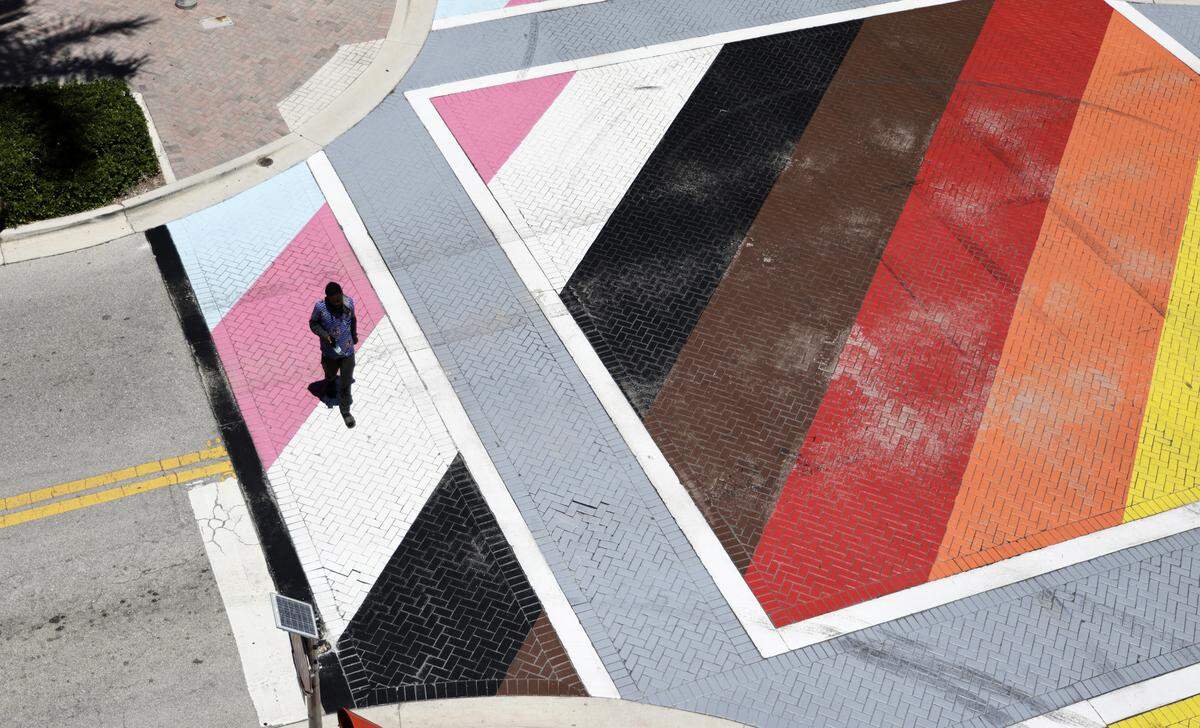
Though FDOT’s order did not explicitly mention rainbow pavement art, LGBTQ elected officials say its clear that the state is targeting Pride-related installations.
“This is an effort to censor and erase the LGBTQ community and the broader message of inclusivity of all communities,” said Alex Fernandez, a Miami Beach city commissioner who is openly gay.
Crosswalks and intersections decorated with the colors of the rainbow Pride flag have brightened up city streets across the country for years, often in areas home to prominent LGBTQ communities. But the Trump administration’s policies against diversity, equity and inclusion initiatives have made local governments’ support for the LGBTQ community risky.
Boynton Beach and West Palm Beach complied quickly with FDOT’s mandate. Delray Beach City Manager Terrence Moore had ordered the removal of the intersection weeks ago, but a majority of city commissioners decided to save it and defy the state. Key West did the same.
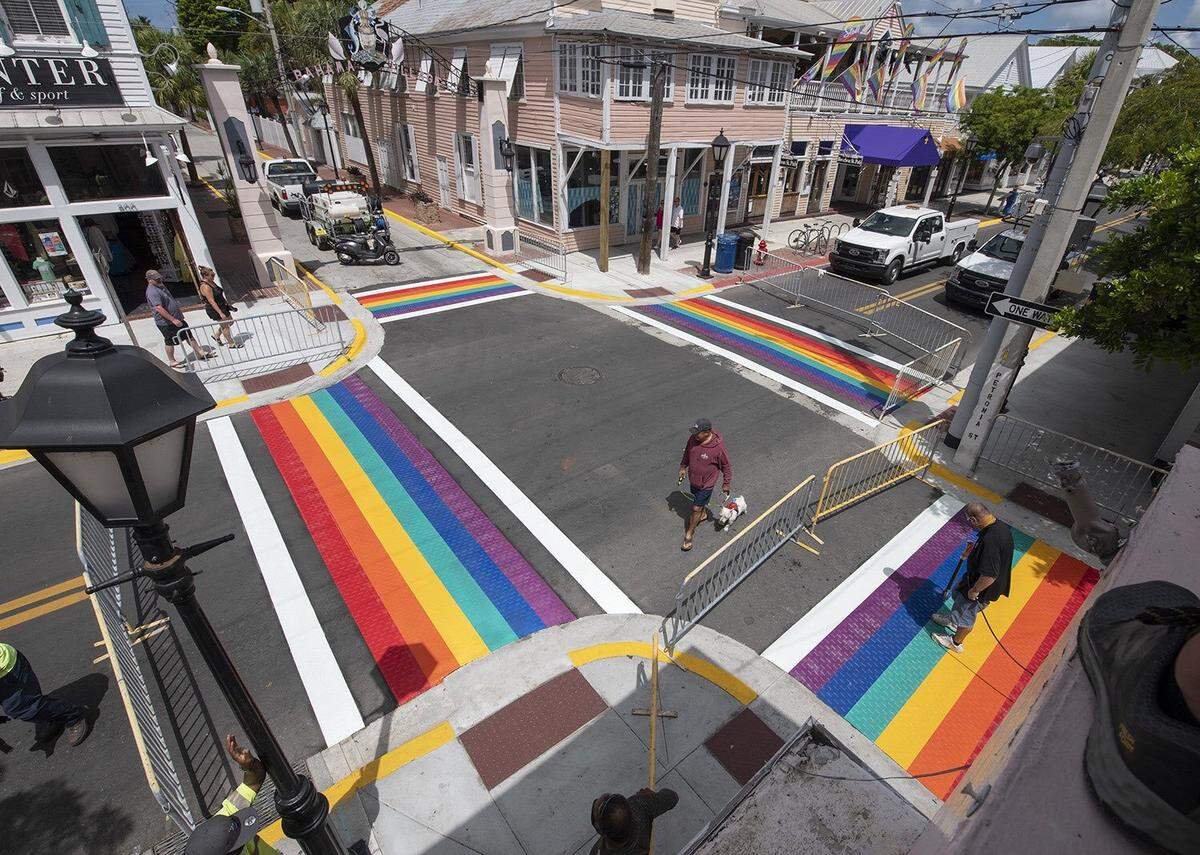
Like Miami Beach, Delray Beach and Key West were told in their letters that they can request a hearing on the matter at the Florida Turnpike Enterprise’s offices in Orlando. But the hearings will not grant an exception or waiver to allow the rainbow pavement markings to remain.
“The Department has already reviewed the pavement markings at the location mentioned above and determined that the pavement markings will not be allowed,” the letters say.
Key West Mayor Danise Henriquez told the Herald that the city will have representation at the hearing. Henriquez was surprised to see Orlando’s crosswalk painted overnight, especially since Orlando did not receive a letter from FDOT like Key West did. Now she’s concerned that FDOT can do the same in Key West.
The rainbow crosswalks “represent our one human family,” Henriquez said.
At Tuesday’s Delray Beach meeting, the city commission decided to attend the hearing in Orlando despite the apparently predetermined outcome. Long, the vice mayor, argued that the intersection is legally compliant and that FDOT “simply decided to reinterpret the rules.”
“This is exactly why we need to pursue an administrative hearing. FDOT’s own letter outlines that right, though it also makes very clear it won’t allow exceptions or waivers, stacking the deck against cities,” Long said. “That makes it all the more important we take this challenge as far as it can go.”
The stakes are higher than just one intersection, Long argued. “It’s about whether Delray governs itself or whether Tallahassee can invade our streets, erase our culture and dictate our future,” he said.
After some debate about challenging FDOT, Delray Beach Mayor Tom Carney was cautiously optimistic: “Maybe we’ll win. Who knows?”
South Florida in the crosshairs
The future of rainbow-painted pavement in South Florida cities looks bleak, especially after FDOT’s removal of the Orlando crosswalk.
In Miami Beach, the Art Deco-inspired rainbow crosswalks on Ocean Drive and 12 Street, which were installed in 2018 and designed by Savino & Miller Design Studio, appear to have their days numbered. Adriana Savino, principal of the design firm, said she was surprised to learn that the state would want to destroy her studio’s work along with other decorated crosswalks.
“It’s a reflection of the city, the city’s creativity and commitment to welcoming people,” Savino said. “We understand that the state can have their position, but we think that [the crosswalk] should remain as a placemaking element.”
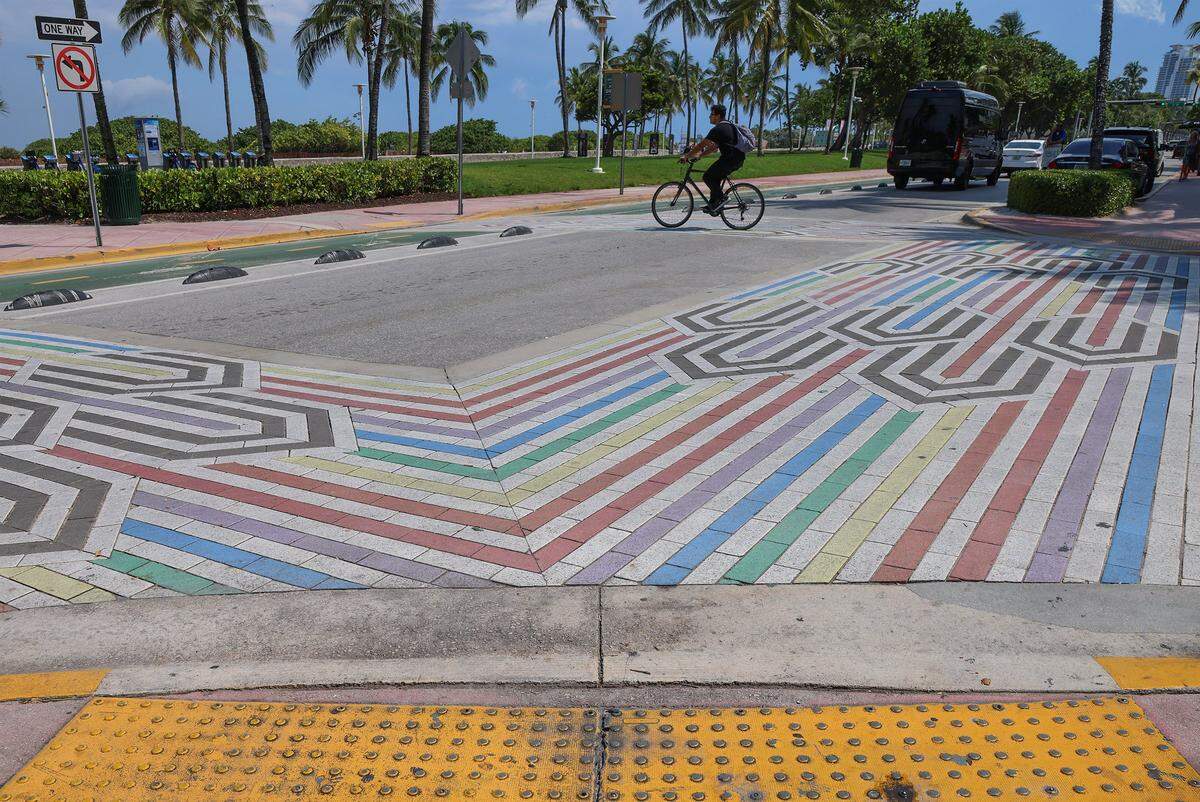
Miami Beach commissioners were quick to make their positions known, even before the formal letter from FDOT. Commissioner Laura Dominguez said in a statement that she plans to sponsor an item at the next commission meeting to “designate the sidewalks in rainbow colors — ensuring our message of love and equality remains clear.”
“I am deeply disappointed by the State’s directive — stifling both free speech and local governance by requiring the removal of our public art,” Dominguez said. “Miami Beach has always been a city that welcomes everyone, and this crosswalk stands as a visible reminder of that commitment. Our community is stronger because of our LGBTQ residents, neighbors, and visitors.”
Commissioner Magazine said on Facebook that he told the city manager and city attorney that he believes Miami Beach should not comply with the state without attending an administrative hearing first. He also wrote that he plans to purchase park benches himself to offer to the city as a donation for the community to paint rainbow colors.
On X, Commissioner Fernandez compared FDOT’s paint job in Orlando to the Soviet Union, which “stripped color from its people” as a means of control.
“We must resist,” he wrote. “What feels small today is already growing into something dangerous and we must stand firm before it’s too late.”
This story was updated to note that Fort Lauderdale received a letter dated Thursday from the Florida Department of Transportation to remove a Pride flag painted on a city street.
This story was originally published August 21, 2025 at 5:47 PM.