Overtown came together to restore a vandalized mural. Now it has bigger plans
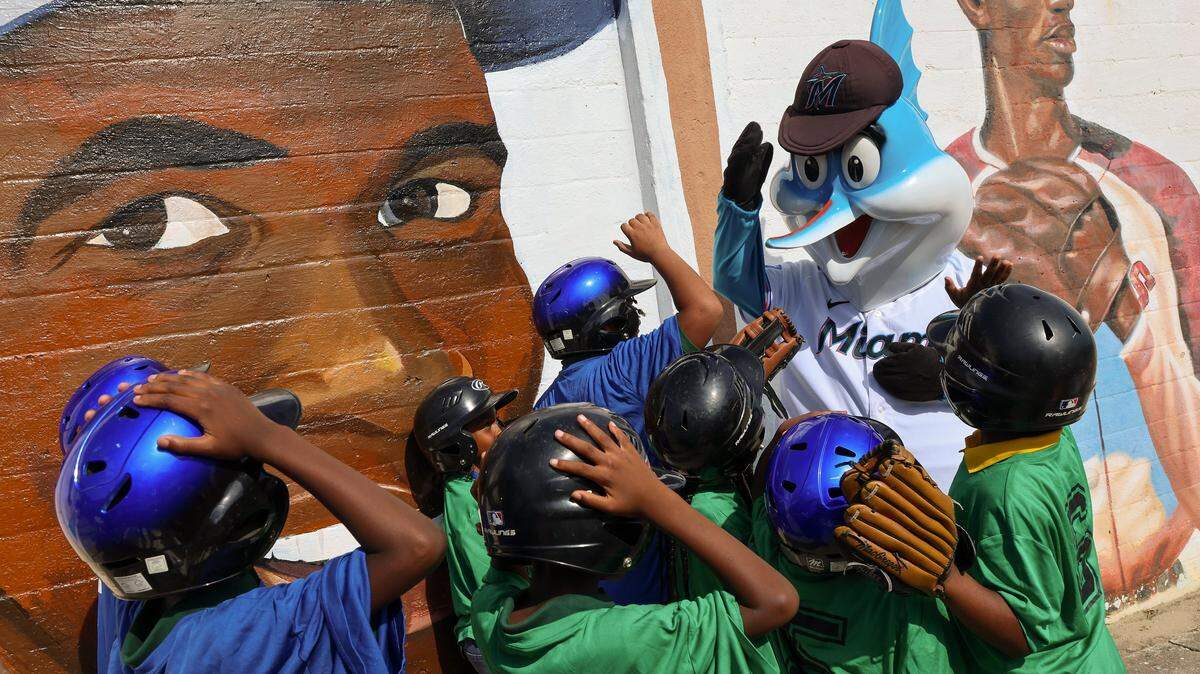
In early June, a swastika and the n-word were spray-painted over a mural featuring the faces of Black baseball legends Jackie Robinson and Minnie Miñoso at Historic Dorsey Park in Overtown. At the time, Overtown residents and leaders held a press conference denouncing the graffiti, determined to forge ahead.
Since then, artist Alex Douyon has repaired the mural, which was part of a series celebrating the Negro Baseball League painted in partnership with the MLK Mural Project founder Kyle Holbrook and Urgent, Inc. in 2011.
On Wednesday, Douyon, city officials, community members and members of the Miami Marlins unveiled the restored murals and announced a much larger plan for the park — the Historic Dorsey Park Mural Restoration & Renewal Project.
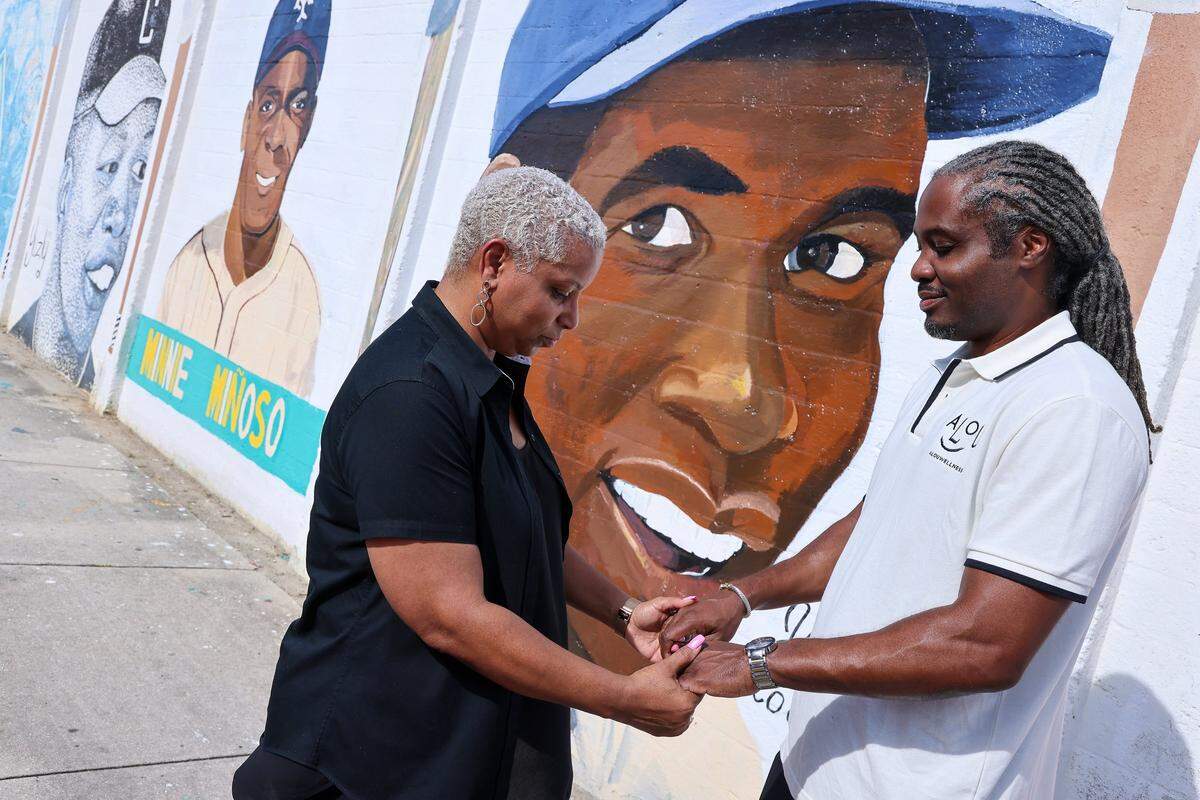
Last month, the Miami commissioners approved $217,500 in funding from the Omni CRA to restore and reimagine the murals. Urgent, Inc., a youth nonprofit in Overtown, is spearheading the effort, which will include a community arts residency for local artists to restore and contribute new murals.
Urgent, Inc. co-founder Saliha Nelson said the effort comes 10 years after the park received a historic designation and will include new murals that reflect the history of Overtown and the park, including its namesake D.A Dorsey, Miami’s first Black millionaire.
RELATED: Jackie Robinson mural defaced at Overtown park where Negro Leagues once played
Nelson said the groundswell of support to restore the murals was born out of the community. “That incident, as significant —and insignificant — as it was, really helped bring into focus what we celebrate in our community,” she said. “So what started out as a real blow has now turned into a celebration.”
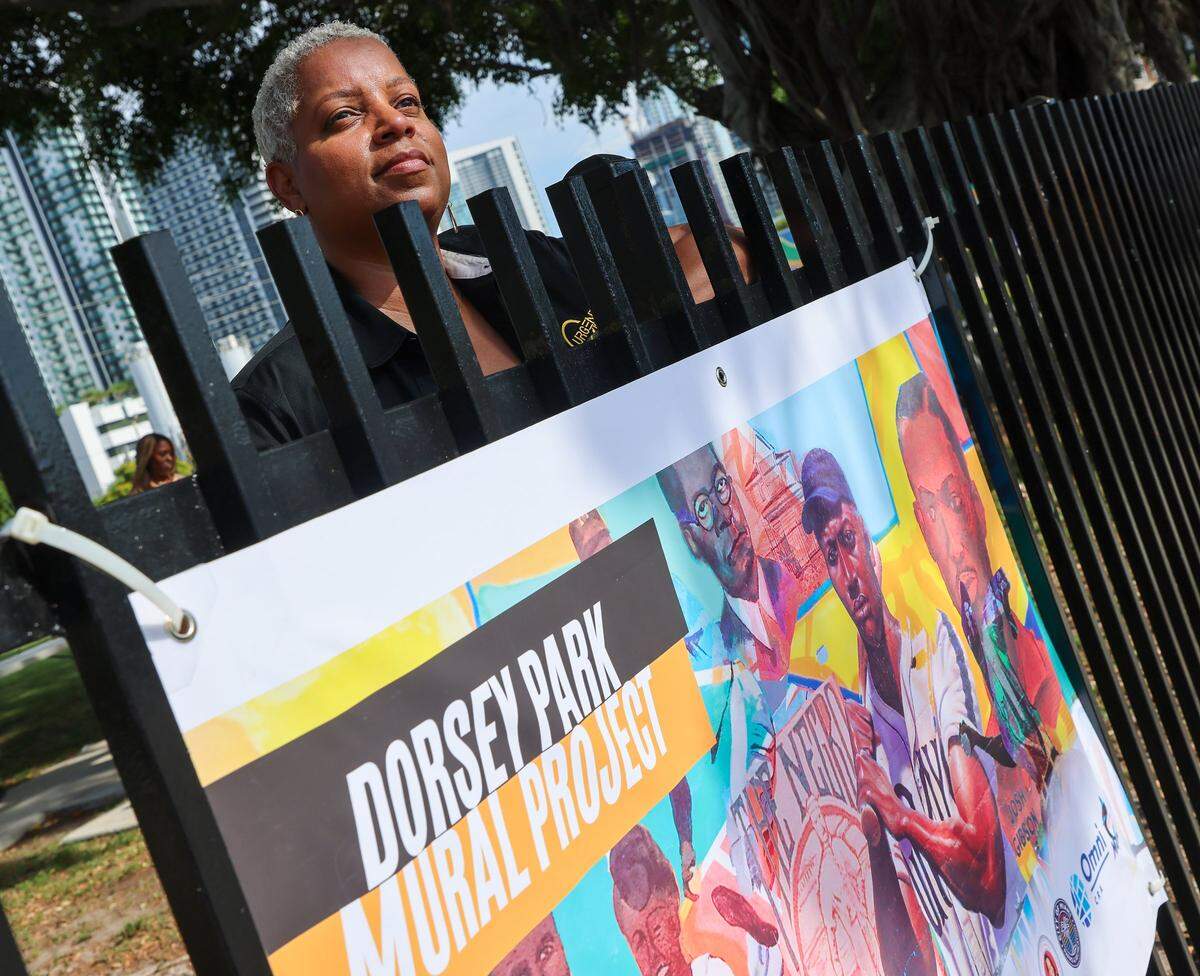
Miami City Commission Chairwoman Christine King said the project shows how resilient the Overtown neighborhood is. “In this day and age, we shouldn’t be fighting hatred and intolerance, but we still are. Thankfully, the community rallied around this issue and came together so that we could restore the murals and make a statement that hate crime. Bigotry is not allowed and will not stand,” she said ahead of a ceremony announcing the restoration.
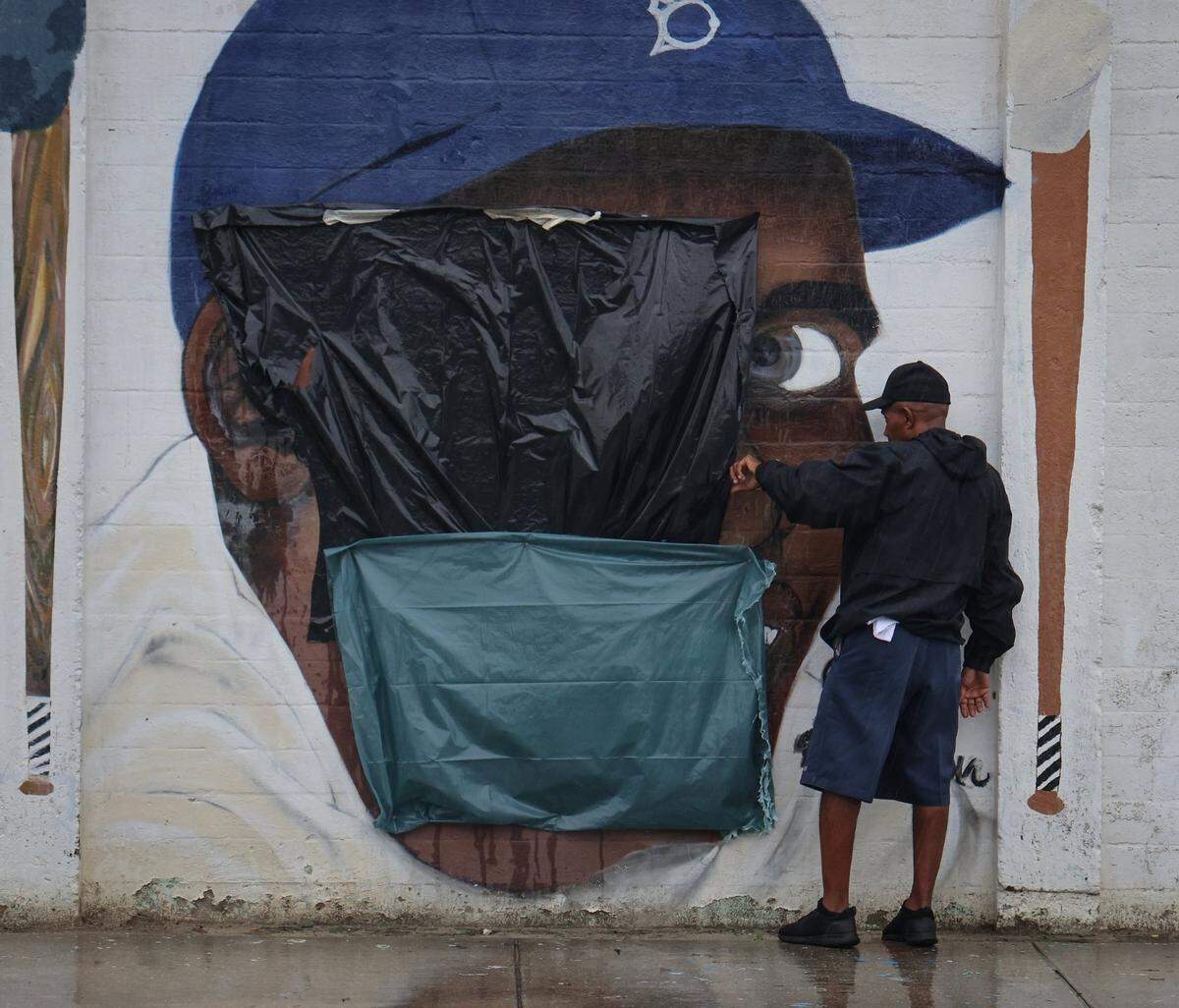
The park’s origins date back to 1917 when Miami businessman Dana Albert Dorsey donated a parcel of his land to the city of Miami to be used as a park for Black people. Dorsey Park, located at Northwest 17th Street and Northwest First Avenue, would host Negro League games during the Jim Crow era.
Nelson said a book her brother Kadir Nelson, the famed illustrator and muralist, wrote called “We Are the Ship: The Story of Negro League Baseball,” sparked interest in highlighting the park’s connection to the Negro Leagues. Kadir painted some of the murals currently on display, including those of Satchel Paige, James “Biz” Mackey and Josh Gibson.
Prior to that, Nelson said the park had little life to it. “If you drove by Dorsey Park, it was looking pretty crazy,” she said. “You wouldn’t know that it was so significant.”
“It’s come full circle, actually, and so out of the craziness, came such a wonderful groundswell of community pride around the park, which is significant,” Nelson said, adding that a few of the murals have experienced wear and tear.
But this reimagining will be a bit different, Nelson said, adding that there were several conversations with Overtown residents and community leaders about what they envisioned, including centering health and wellness through community paint days to foster a sense of community at the park.
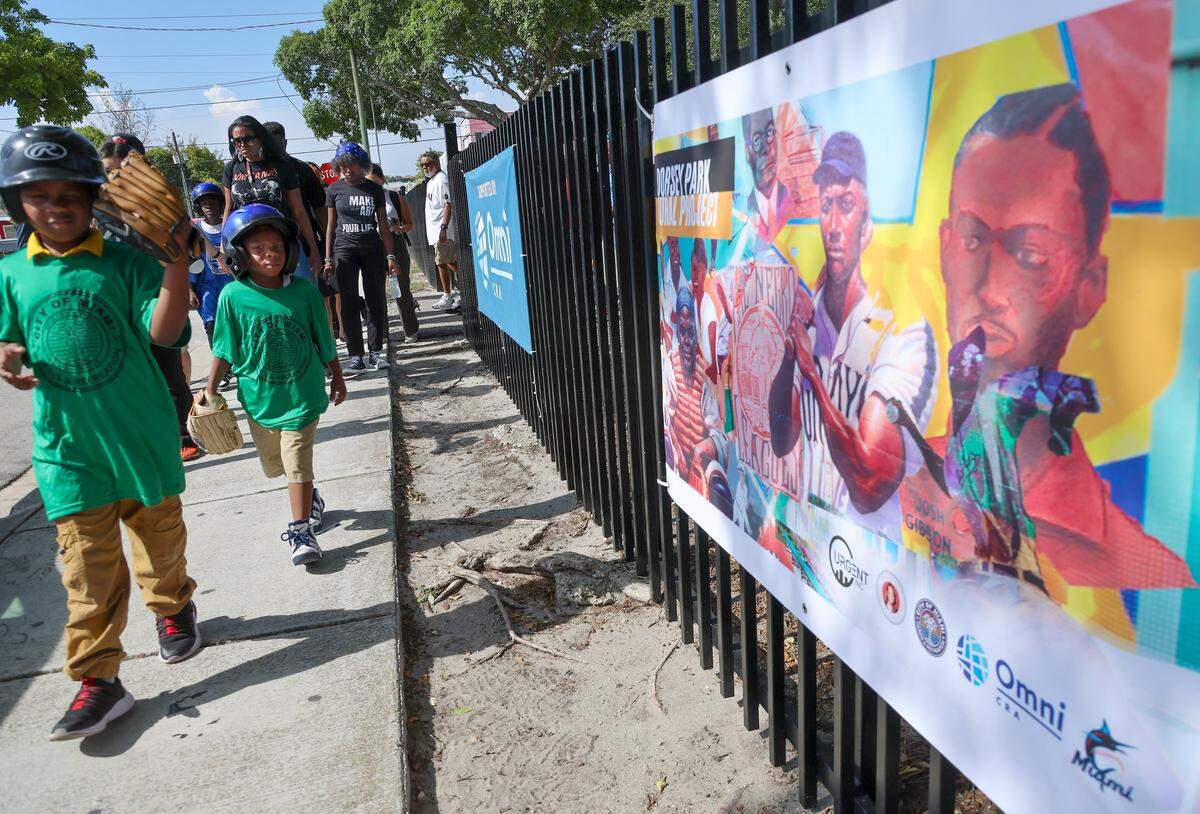
Douyon will serve as lead artist for the project, and will help lead the artists in residency through the process of creating murals that showcase the history of Dorsey and his wife, as well as the Battle of the Bands performances at to the park, and nearby Booker T. Washington High School, which held games at the park.
He also hopes this sends a message of resilience to the vandals. “What the community did was take something that was hateful or painful and kind of repurposed it in a sense,” Douyon said. “The conversation was no longer what somebody did now. It’s become an opportunity to kind of reclaim what’s important and what’s meaningful.”
Douyon said part of the project will include installing QR codes so people walking in the neighborhood can scan and learn about the people featured in the murals. There are also plans to adorn the walls of a building near the park with murals. Ultimately, he hopes that the murals spark conversations about Overtown’s history.
“I hope that this story that is being illustrated on the walls is something that people are inspired by, and maybe look into wanting to know more about the history of their neighborhood or community,” he said.
This story was originally published August 20, 2025 at 7:46 PM.