
Miami-Dade’s World Cup tab would bring three-week fan party downtown
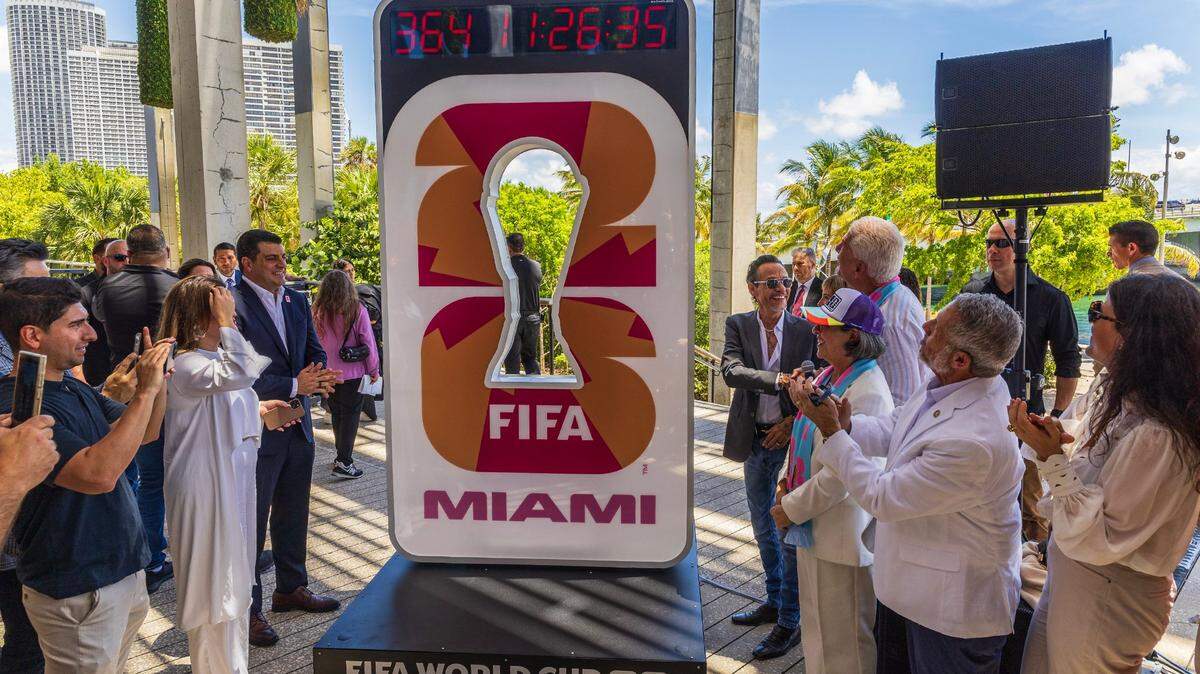
Aside from police officers and paramedics, one of Miami-Dade County’s largest FIFA World Cup expenses may be the nearly monthlong viewing party the global soccer tournament plans to bring to downtown Miami.
The FIFA Fan Festival would last three weeks in Miami’s Bayfront Park and be free to the public. It would feature jumbo televisions showing telecasts of the seven World Cup matches held at Hard Rock Stadium next summer and offer concerts and other entertainment in between as a way to draw visiting fans and locals into the downtown events.
Miami-Dade County has pledged $46 million in subsidies and free services for the World Cup games next year. Of that, $21 million is cash for events and services provided by local organizers. The organizers won’t say how much of the $21 million will go to the Fan Festival, but it’s the main event mentioned in planning documents that have become public.
Miami-Dade’s planned funding of World Cup — $25 million paid in the form of public safety services and $21 million in cash — has emerged as a top punching bag for critics of Mayor Daniella Levine Cava’s proposed 2026 budget plan, which cuts $40 million in county grants for local nonprofits. State Sen. Ileana Garcia, a Republican from Miami, is citing the sports subsidy as a reason Miami-Dade shouldn’t be cutting grants that go to senior meals, adult day care and other social services.
“If they have millions for FIFA, they can find the funding,” Garcia told the Herald.
Yet even with all the attention given to Miami-Dade’s planned World Cup funding, it has been a challenge for the public to figure out how those World Cup dollars would be spent.
Now, a series of World Cup documents obtained by the Miami Herald offer new details on what Miami-Dade would subsidize when the world’s most popular sporting event comes to North America next year.
Those expenses include:
- Transportation for World Cup game days. While not laid out in detail, the county’s unsigned contract with the local host committee says part of the $21 million will be spent on “last mile” transportation options on game day — a term used for shuttles or other short-hop options for getting people to the stadium from main transit routes. The contract also mentions FIFA will have its own buses for the games to transport both fans and players. Security concerns will mean there is much less stadium parking than is available at Dolphins games, so many ticket holders will need to arrive by bus.
- Logistics and supplies related to volunteers FIFA wants greeting and assisting fans visiting host cities. Organizers expect to deploy volunteers in uniforms at Miami and Fort Lauderdale’s airports to greet people arriving for the World Cup games.
- A local-preference contracting organization. The contract calls for Miami-Dade’s cash contribution to fund an operation helping local companies bid on providing World Cup goods and services.
The only World Cup event identified by name that would receive county funds is the FIFA Fan Festival, and that’s expected to be a major local expense.
A summary of the local host committee’s planned $110 million World Cup budget shows Fan Fest and other unnamed events costing $24 million. The host committee declined Friday to say how much they expect the festival to cost because the budget is not final. Fan Fest was a central element of Miami-Dade’s original 2017 bid documents when it entered the competition to be a host venue for the 2026 games under then-Mayor Carlos Gimenez, according to a copy recently released to the Herald through a records request.
Fan Fest is also the only event listed by name in a breakdown of county requirements in a pending contract with the host committee governing how the $21 million cash contribution will be spent, which the Herald also obtained through a records request to Miami-Dade.
Those documents do not have a dollar amount attached to the Fan Fest expense, but they describe what would likely be one of the largest events ever held in downtown Miami.
The event will be open 10 hours a day for as long as three weeks in Bayfront Park, according to a description included in a host committee request for bids on private insurance services.
People attending the free festival “will enjoy large-scale match viewings on oversized screens, multiple stages with live entertainment and special Miami-centric programming and a diverse selection of food and beverage offerings,” according to the bid document obtained by the Herald.
Rodney Barreto, volunteer chair of the host committee, said Fan Fest is important to give fans without tickets an alternative to gathering outside Hard Rock. That’s in part to discourage the kind of situation seen during last summer’s Copa soccer matches, when thousands of unticketed fans arrived and caused chaos at the gates.
“It gives us a venue for visitors and locals who don’t have a ticket to go celebrate and be a part of FIFA — but not at the stadium,” Barreto said.
He also said Fan Fest is a key event for recruiting private sponsor dollars for local World Cup expenses — a budget separate from FIFA’s tournament spending and raised on top of the government dollars the host committee is lining up for the games.
“When people write you checks for private-dollar sponsorships, they expect things in return,” he said. “We’ll allow those companies to activate inside Bayfront Park. That’s exposure for their brand.”
World Cup dollars may be the most contentious spending decisions heading into the county’s September budget hearings.
Levine Cava has said multiple times that county commissioners may revisit their May 6 decision to approve the mayor’s midyear spending package that included the final $10.5 million approved for the overall $46 million contribution to World Cup.
While Levine Cava included the $10.5 million in a broader spending adjustment plan for 2025, she said the inclusion came at the insistence of the sponsor of the legislation needed to implement the broader changes, Commissioner Oliver Gilbert.
“I think it would be an overstatement to say I supported that increase,” Levine Cava said at a July 31 budget town hall.
At a budget town hall in Miami Gardens two days later, Gilbert noted that Miami-Dade had competed to host World Cup games and now is obligated to fund the expenses that come with being a host government.
“The World Cup didn’t just say they were coming here,” he said. “We actually invited them, and we bid for it.”
This story was originally published August 16, 2025 at 5:00 AM.