
Amid budget squeeze, a Miami-Dade commissioner wants to cancel World Cup subsidy
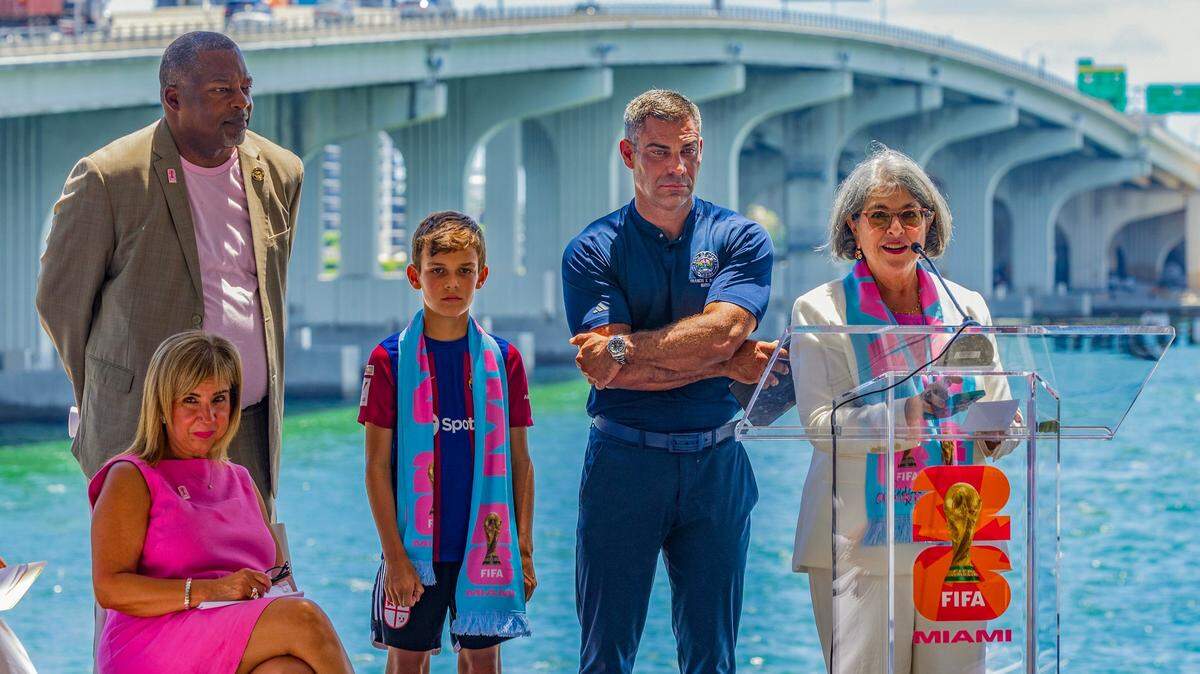
In the face of looming cuts to charity grants in the county budget, a Miami-Dade commissioner wants to claw back the $46 million the county plans to spend subsidizing a global sports event: the 2026 World Cup games.
Commissioner Kionne McGhee, who represents a suburban district in South Miami-Dade that has some of the county’s highest concentrations of poverty, said Friday he’ll ask for a special meeting to undo past funding votes to cover local expenses for the seven soccer matches scheduled for Hard Rock Stadium next summer.
“Until they find us the money to fully fund the nonprofits that provide services to the community, I think we are obligated as elected officials to get this money back and give it to the nonprofits,” McGhee said in an interview Friday.
His demand highlights the bad timing for Miami-Dade’s elected officials as the approved $46 million in free police and paramedic overtime and cash payouts for World Cup overlap with what’s likely to be the leanest budget year for the county since the aftermath of the 2008 housing crash.
Mayor Daniella Levine Cava has proposed a 2026 budget that slashes about $40 million in funding for county charity grants. The budget also has cuts for the Parks Department, including less money for athletic fields and lifeguards. The mayor recommended spending legislation earlier this year that doubled the commission’s prior approval of a $10.5 million cash subsidy for World Cup. The legislation boosted the county’s planned cash payments for the games to $21 million. Add in an estimated $25 million worth of free police, paramedic services and other county staff that Miami-Dade would pay for, and the subsidy total would hit $46 million.
In a May 6 memo, Levine Cava said contributing the sports funding may result in reductions in county services — weeks before her budget proposal revealed proposed cuts to the charity grants, the loss of some lifeguards at county parks and scattered rollbacks of spending on senior services. Nevertheless, commissioners approved the legislation with the planned $21 million World Cup subsidies on May 6 — legislation that was seconded by McGhee. Three commissioners voted against the budget adjustment: Marleine Bastien, Juan Carlos Bermudez and Roberto Gonzalez.
In her memo, Levine Cava recommended commissioners adopt the extra $10.5 million for World Cup as part of a larger midyear spending package. She said the request for extra World Cup dollars came from the spending legislation’s sponsor, Commissioner Oliver Gilbert, whose district includes Hard Rock Stadium.
On Friday, her office released a statement expressing concerns about World Cup funding.
“The Mayor expressed concerns when this funding request was first brought to the administration,” the statement read. “Those concerns remain as we balance critical needs in our community.”
In a press release, McGhee noted that he was a past supporter of the plan to bring soccer’s premiere event to Miami and offer financial support from the county. But he said Levine Cava’s budget proposal “changes everything.”
To secure a special meeting revisiting a politically fraught issue that’s already gone through a commission vote, McGhee needs a signed request from at least six other commissioners on the 13-member board.
County funding for World Cup goes to the nonprofit host committee, which is independent of FIFA.
Rodney Barreto, the chair of the local World Cup host committee, has been spearheading the push for government funding for the games at Hard Rock Stadium. On Friday, he pointed out that Miami-Dade had competed to be a World Cup host city for the 2026 games and that such a position comes with expenses.
“I know it’s a tough time,” said Barreto, a partner in a lobbying firm that represents the Miami Dolphins, owner of Hard Rock. “I know tough decisions have to be made. I think the county can make them and still fully support FIFA World Cup 2026 in Miami-Dade.”