
Miami City Commission to vote next week on proposal to skip November election
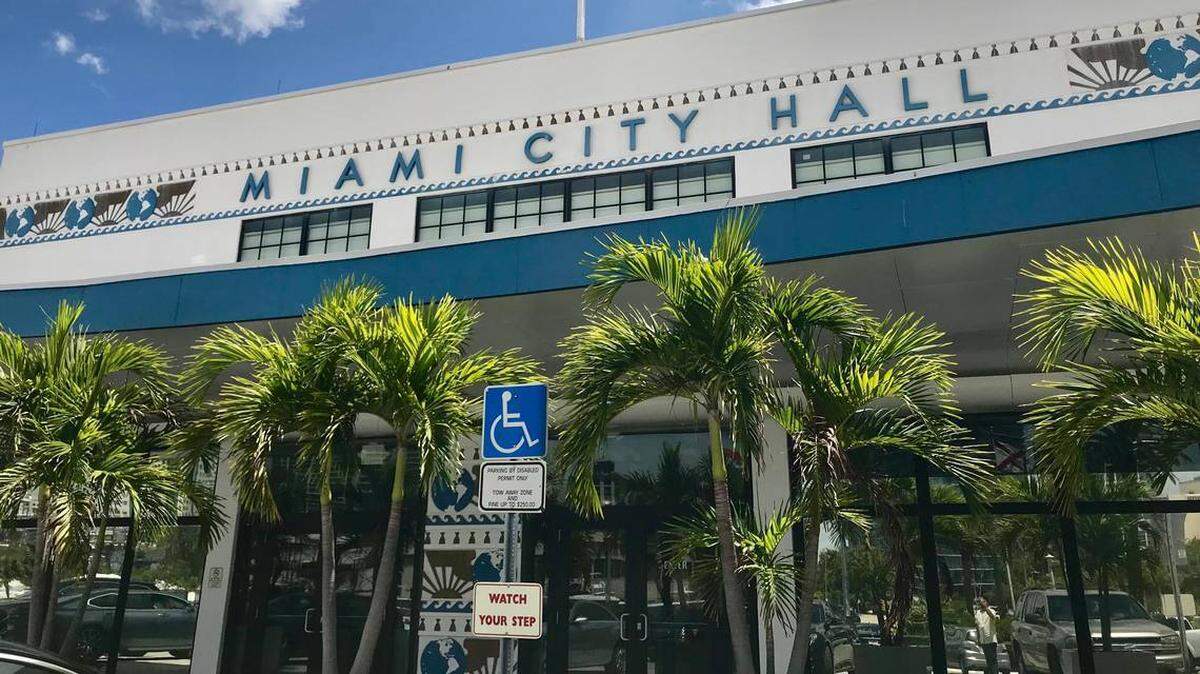
The Miami City Commission is slated to vote on a proposal that would push the upcoming November election to 2026, giving the current commissioners and Mayor Francis Suarez an extra year in office.
At next week’s June 12 meeting, the commission is set to take up an item spearheaded by Commissioner Damian Pardo. The goal of the item, according to Pardo, is to move the city to even-year elections, aligning with national elections, where voter turnout tends to be higher.
Under Pardo’s proposal, the upcoming November election would be pushed back one year to 2026. But the change comes with fine print: That means the current elected officials would stay in office for an extra year — including Suarez and Commissioner Joe Carollo, who are termed out.
If approved next week, the legislation would still need to pass a second vote at a future meeting. City Attorney George Wysong said the issue does not need to go to voters and can be passed by the commission via ordinance. In explaining his reasoning, Wysong cited a Florida statute that says municipalities can move an election date via ordinance in order to be “concurrent with any statewide or countywide election.”
If approved, Suarez — a former city commissioner — would get a ninth consecutive year as mayor and a 17th consecutive year in elected office, while Carollo would get nine consecutive years as the District 3 commissioner. First elected in 1979, Carollo has spent more than two decades as a Miami elected official.
Pardo and Commissioner Miguel Angel Gabela would also get an extra year, meaning their terms would extend to 2028, rather than 2027. The same would be true for newly elected Commissioner Ralph Rosado, who on Tuesday was elected to serve out the remainder of the late Commissioner Manolo Reyes’ term. Commissioner Christine King, who is up for reelection in the fall, would also get an extra year.
In Miami, the city’s five commissioners and the mayor are all elected to four-year terms.
Gabela previously told the Miami Herald that he is opposed to delaying the upcoming election and moving to the even-year cycle, saying, “I don’t want the extra year, nor will I be voting for this.” While he and Carollo have been in an increasingly heated feud in recent weeks, the pair might find common ground on that issue, as Carollo said he is also opposed to the change.
“Even if it’s beneficial towards me, it’s wrong,” Carollo said Tuesday. “Voters voted for us for a four-year term, and I believe only the voters of the city have the right to change that.”
At his election night watch party, Rosado — who was backed by Carollo in the special election — said that while he supports moving to even-year elections, he hasn’t fully decided where he stands on the issue of skipping the November election.
“That’s a fundamental change to the way that the city of Miami government functions that should probably go out to voters,” Rosado said Tuesday night shortly after his win.
Rosado’s first meeting on the Miami City Commission is June 12 — the meeting where Pardo’s proposal is scheduled to be discussed.
“I’m looking forward to a debate on that,” Rosado added.
King has not responded to requests for comment from the Herald about her stance on changing the election date. King has filed to run for reelection to her District 5 seat in the November election.
If approved, the proposal could spell trouble for the spate of candidates who have already to filed to run in the November election. Former City Manager Emilio Gonzalez and former City Commissioner Ken Russell, who are both candidates for mayor, strongly oppose the proposal to move the election back.
Former City Commissioner Frank Carollo, the younger brother of Joe Carollo, has filed to run for the District 3 seat he previously held from 2009 to 2017. He said in a text message that “it is too late for the city to be making drastic changes” before the November election and that it would “confuse the electorates.”
Ties to lifetime term limits proposal
The proposal to delay the upcoming election is connected to another proposal from Pardo that would create lifetime term limits for elected officials, limiting them to two terms as mayor and two terms as commissioner for their lifetime. As it stands now, elected officials in the city are limited to two consecutive four-year terms in each position, but they are allowed to return to office again a few years later.
While the two proposals aren’t technically a package, Pardo said that “you could view them as two trains on two different tracks that intersect at one point.”
The reason they’re connected: The term limits proposal would need to go to Miami voters for final approval, meaning that question would likely be on the November ballot. But that timing could create legal roadblocks, according to Pardo, because the term limits proposal would be on the same ballot as candidates who would be affected by it.
For example, the term limits proposal — in its current form — would prohibit Frank Carollo from becoming a city commissioner again. But if Frank Carollo wins in the November election and the term limits proposal also passes, that could set the city up for a legal challenge.
“I will push both as hard as I can,” Pardo said of the two proposals, adding that it’s ideal to pass both, “because one cures a complication in the other.”
This story was originally published June 4, 2025 at 8:55 AM.
.jpg)