Little Haiti Cultural Complex’s new leader must tackle old challenges
On a breezy Tuesday evening in mid-April, Dasha Saintremy holds court inside the Caribbean Marketplace in Little Haiti: In a room of about 20 people she discusses events at the Little Haiti Cultural Complex for Haitian Heritage Month, which is sure to be a hot spot for celebrating Haitians in South Florida throughout the month of May. Festivities include an opening reception, a comedy show, a book fair, a fashion show.
She asks a few people about their needs for their respective events, she shakes a few hands and introduces herself.
“Who is she?” one person asked.
“She’s the new Little Haiti Cultural Complex manager,” another replied.
Saintremy has quietly held the title since February, with little fanfare made about her stepping into the role outside of an introduction at a Little Haiti Revitalization Trust meeting. She is the fourth director in six years. Little Haiti Cultural Complex, which includes the Little Haiti Cultural Center and adjoining Caribbean Marketplace, features an art gallery, theater, studios and classrooms, plus vendors and an outdoor space where they hold monthly parties.
Saintremy has inherited a lengthy inventory of problems that her predecessors also complained of, including mold in the dance room and art gallery, a leaky roof, and a dated air-conditioning unit.
And in her nearly three months in the role, few have been addressed, she said.
“It’s like buying a house,” she told the Miami Herald, “Before you sign on to enter it into that home the previous owner, the people who are selling it to you, they’re supposed to do their due diligence to give it to you in the best condition possible. And that’s not the case.”
In an email to the Miami Herald, the City of Miami Parks Department, which has jurisdiction over the cultural center, said they’ve done substantial improvements to the property including bathroom and wifi upgrades, sealing the marketplace roof to prevent leaks until it can be replaced, new HVAC systems in the community and theater buildings, updated drainage systems and other exterior maintenance. They also admitted they have a ways to go. The marketplace still needs a new roof and they have yet to tackle the mold issue. But they insist they remain committed to the complex’s upkeep.
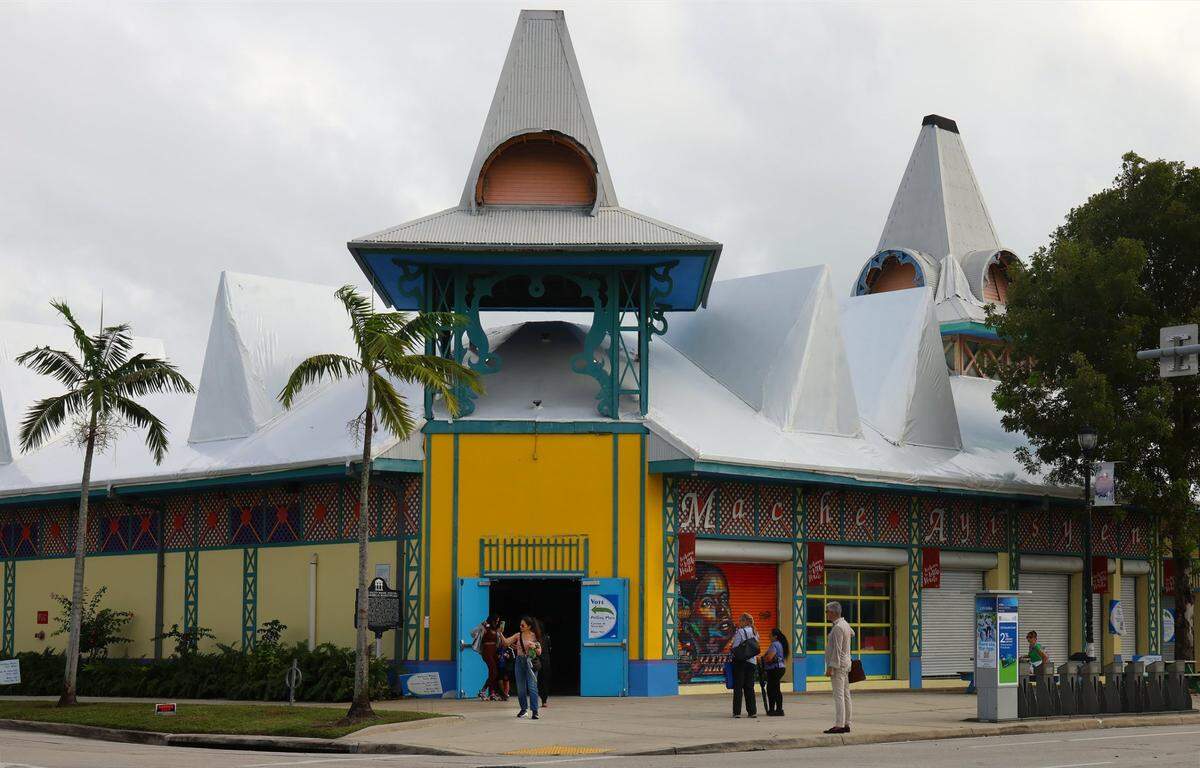
Saintremy’s arrival comes at a time when the neighborhood is at a crossroads of maintaining its cultural identity amid a changing landscape. The complex and its marketplace are among the last remaining institutions that define Little Haiti. And the neglect of the property over the years begs the question if the city has any interest in helping the area maintain its flavor as gentrification becomes hypercharged. And it also invites the speculation that perhaps the city might see more benefit in selling the property than actually maintaining it or passing it on to the county’s Department of Cultural Affairs, which manages many of the county’s cultural centers.
“The City treasures the jewel that the Little Haiti Cultural Complex is and all that it represents for the local Little Haiti community and the Caribbean Diaspora, local and abroad,” officials said in an emailed statement. “We are working diligently to restore the center to its full capability, whether it be through repairs or program expansion. We have not considered selling this property or transferring the ownership to Miami-Dade County.”
Still, Saintremy remains undeterred and even welcomes the challenge of maintaining Little Haiti’s mystique. “I came into this position knowing that there was a great task at hand, and I was willing to take on that task,” she said. “I’m still willing to take on that task.”
A daughter of Little Haiti
Born in Little Haiti, Saintremy lived in North Miami and Miami Gardens, eventually graduating from Miami Norland Senior High in 2000. She went on to get her degree from the University of South Florida in Africana studies and creative writing. She attended Barry University where she got a master’s degree in social work before moving to Atlanta to get a master’s of divinity from Morehouse School of Religion at the Interdenominational Theological Center in 2015.
Following a short stint at the Children’s Hospital of Atlanta as a chaplain, she then moved to Philadelphia where she worked at the University of Pennsylvania also as a chaplain.
She’s also worked as an artist, a therapist and on a few film productions in Philadelphia. Prior to joining the Little Haiti Cultural Complex, she managed the Colored Girls Museum, a cultural institution in Philadelphia with the mission of championing “the ‘ordinary’ colored girl of African descent.”
But for Saintemy, the chance to work at the cultural center was a homecoming. “It’s great to be in a space that you can identify with and you can bring all of who you are into the space,” she said.
Saintremy recalled the Caribbean Marketplace’s presence when she was growing up in Miami, just before the Little Haiti Cultural Complex was established. “I remember the market being this place where people would go and buy their fresh goods and farmers and just people would just sell all of their produce,” she said.
“It was just very communal, very cultural, very prideful in a good way,” she said. “Even with the difficulties during the ‘80s, when it was hard to be Haitian in Miami because of all the stigmas surrounding the people at that time, when you were home. There’s a saying, Lakay Se Lakay. Home is home. That’s what it felt like, no matter where you were, in Little Haiti, it felt like home.”
But that’s since changed. The neighborhood Saintremy once knew as welcoming isn’t so much anymore. In fact, she said, now neighbors often complain about the noise when there is a celebration or music played from the complex.
“They’re not as welcoming to how we live out our existence as Caribbean folks,” she said. “There’s always some issue.”
‘Little Haiti stays Little Haiti’
Though Saintremy has walked into a complicated situation, she envisions a vibrant, thriving Caribbean marketplace for local artisans and business owners and a community that feels seen and heard.
Saintremy is developing a 10-year plan for the center that focuses on consistency and reciprocity, she said. She wants the community to rely on the cultural center’s calendar of events and to feel like stakeholders in the center.
“It’s important for it to be not only visible, but that we can see it, we can hear it, we can feel it like it’s living,” she said. “I believe the Little Haiti Cultural Complex is a living space, and we need to revive it again.”
She’s considering ideas such as transforming the space into a speakeasy on weekends and using parts of the space as a workhub for residents and people who work in Little Haiti.
She’s already implemented one event, Communal Conversations, a monthly discussion about important issues in the Haitian community. She kicked it off April 5 with a conversation with Bertrhude Albert, Angie Bell, and Kareen Ulysse that focused on millennial women who travel back and forth to Haiti with the hopes of creating change.
“It was important for me to have that conversation,” Saintremy said. She said that event was enlightening because she realized that these women in leadership roles faced similar struggles as her own, and that patience and consistency was key to progress.
The event series will run weekly during Haitian Heritage Month but will be held monthly following that. Saintremy also held her first artist-in-residence meeting April 28 with the hopes of gathering feedback from the community about what they want to see in the space.
“It’s important that Little Haiti stays Little Haiti,” she said. “So many people visit Little Haiti to get that Caribbean cultural experience.”
‘We need her to win’
Former Little Haiti Cultural Complex directors are hopeful Saintremy can get the work done if she is given the support necessary to run the complex. But they all agree that she doesn’t have the help she needs.
Abraham Metellus, a former Little Haiti Cultural Center interim manager, said he’s already seen signs that she was put in a challenging position.
“I’m witnessing some of the same patterns when I was there,” Metellus said, citing staffing and budgeting issues. There are 15 staffers total between the cultural center and the marketplace, the Miami parks department said. Saintremy is also working with a tight budget: She has a $1,392,000 budget for the center and $194,000 for the marketplace.
“I’m here to support Dasha with whatever she needs in order for her to be successful,” he said. “We need her to win. We need her to be successful.”
Qunyatta Warren resigned as manager in 2024 after a year in the role, citing what he called systemic issues and a disconnect between the city, the parks department and the center.
Warren said prior to his resignation, he sent a list of improvements needed for the cultural center and marketplace and for the manager to properly run both facilities. He consistently requested additional funding for events and to hire more staff, including an assistant manager.
After learning that Saintremy is still working with a similar budget, he’s concerned she may not be in a position to thrive.
“She does not have the tools to be successful at this point in time,” he said. “She needs support...She cannot sustain the center operations with the current staff that she has [with] the budget and the conditions. The conditions are literally deplorable.”
Warren added it will take support from the community and partnership-building to hold the city accountable and ensure they see improvements at the complex. “I think that getting buy-in from the community will be a major part of that uphill battle, because there’s things that the community can do and say that as a city employee, we can’t do and say,” he said.
Saintremy said she was assured the issues with the complex would be resolved. And she’s planning on holding city officials to their word. “I stepped out on faith, believing that the people who are positioned will do what is necessary not just for me [but] for the people, the community.”