The latest phase of the newly redeveloped Liberty Square is move-in ready
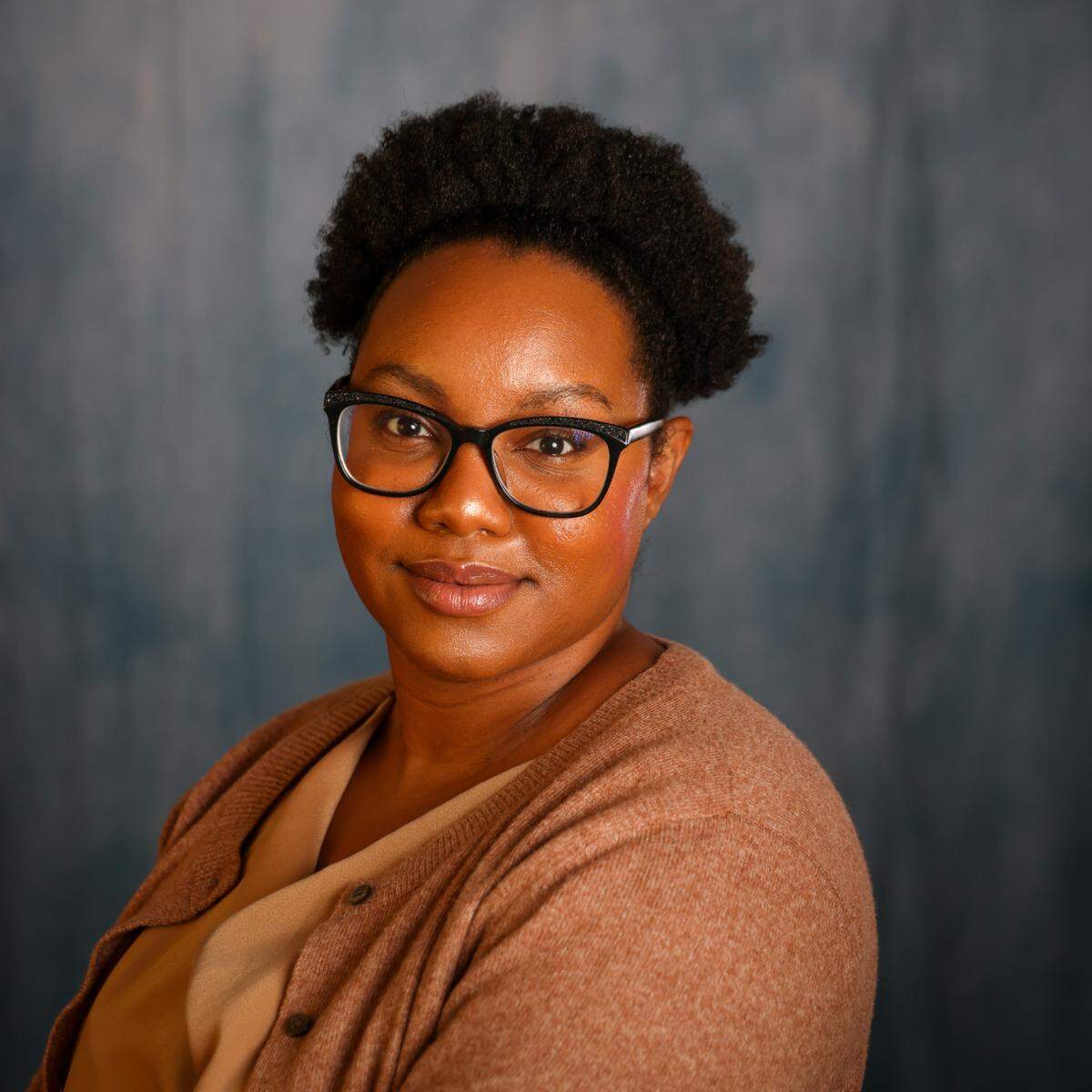
The smile on Minnie Davis’s face widened as she talked about what it felt like to be in her new apartment in Liberty City.
“In my old building, I didn’t have a big stove, so I couldn’t cook turkey for Thanksgiving,” she told the Herald. “Now, my oven is…” she trails off as she motions her hands with how wide her oven is.
There were many adjectives Davis landed on to describe the feeling, but the one she kept coming back to was “comfort.” Davis, donning black sneakers, a gray dress to her ankles and a mauve top, sat on her brown leather sofa in her one-bedroom apartment at Serenity at Liberty Square as she mused about what she had to look forward to in it.
Davis is one of the legacy residents at the former Liberty Square housing development moving into the new apartment complex. All told, 27 families who lived in the development moved into the newer apartment complex, which officials said was a promise kept to those who wanted to return.
The newly opened mixed-use development is the fourth in a nine-phase redevelopment project aimed to revitalize the former Liberty Square public housing complex, also known as the Pork and Beans. Developers Related Group, Miami-Dade County officials, and the Housing and Urban Development secretary Scott Turner held a ribbon cutting ceremony to commemorate the opening.
READ MORE: Affordable homes hang in the balance as Miami-Dade commissioner, nonprofits squabble
Turner said he’s encouraged by what he’s seen so far with the former Liberty Square and sees it as a model for what could happen to other public housing developments. “I came here from day one, when it was just a concept, an idea at the very beginning, and so to come five years later, and to see this is truly a blessing,” he said.
The latest development has 193 units, which include 27 public housing units and 50 project-based voucher units, subsidized units that will be offered first to former Liberty City residents who chose to move off site during construction, Related Urban President Albert Milo Jr. said. If those residents chose not to move in, it will be open to those that are on the Miami-Dade County Section 8waiting list.
The remaining units are affordable and workforce housing units for residents whose income is 60% to 80% of the area median income. This building will also include a Jessie Trice Community Healthcare clinic set to open later in the year.
Related Urban President Albert Milo Jr. said it was important for there to be a clinic embedded in the community for residents who face economic challenges and may at times neglect their health.
“Many times residents within certain lower income communities, because they have other economic challenges, neglect their health care,” he said. “And then, instead of getting preventive care earlier that can make a big difference in the results, they push that back and then the outcomes are worse. With having a facility on site, they can just walk there and have access to medical services.”
“It’s important for us to stay in the community, making it easier to access your health is of the utmost importance,” Jessie Trice CEO Ryan Hawkins Jr. said. “People always put their health on the back burner until it’s too late. We make it a point to try to prioritize and empower our patients to prioritize their health.
Serenity at Liberty Square will also be home to the Miami-Dade Chamber of Commerce, where it first had its office 50 years ago. Milo said having the chamber of commerce there will allow residents with an entrepreneurial spirit to have resources at their disposal.
“We’ll be able to start an incubator program that will allow residents who have that entrepreneur ability to start a small business,” Milo said. “Creating a multiplier effect by igniting these neighborhood businesses and having the services right there on site is going to make it much easier for anyone that’s interested in starting their own business.”
Built in 1937, Liberty Square was the first public housing development for Black people in the southeastern United States. In 2016, Miami-Dade County and Related Urban, the affordable housing arm of Related Group, forged a partnership that would change the property, which had seen high crime rates. At least 226 residents of the former Liberty Square public housing project have moved into the new properties in the first three phases, the Miami Herald reported last year.
RELATED: Is the new Liberty Square delivering on its promises to public housing residents?
But the development had been marred by complaints from those who’d moved into the earlier phases. Last year, residents complained of mold, ripped flooring, noise and safety.
Related Urban’s president Alberto Milo, Jr. said crime issues residents raised had diminished, and with the fourth phase complete, developers can now begin work on phases 5 and 9 of the project, the latter of which will be for seniors.
Milo told the Herald ahead of Thursday’s ribbon cutting ceremony he rarely hears complaints about crime in the area. He recalled how Liberty Square would be frequently featured in crime shows such as the First 48. “So the redevelopment has had a tremendous impact on quality of life of residents.”
Miami-Dade County Commissioner Keon Hardemon grew up in Liberty City and said the progress at the former Liberty City Square is a testament to the community.
“There’s such a cross section of this community in this space today, because I really, truly believe that the heart of Miami is in Liberty City,” Hardemon said at the ceremony. “There’s so much faith that the people who live here, who were raised here, have and what this community is going to become, and it doesn’t become that without us, you cannot rebuild Liberty City, without the inhabitants that were here — impossible. The community wouldn’t allow it to happen.”
Davis, who lived in the development since 2009, said she feels a sense of comfort living in her new apartment and plans to visit some of the amenities she hadn’t had before such as the gym. She also feels a sense of security in her new home. “I feel much better here and more comfortable because of the security,” she said. “We need that so we can feel safe.”