
Jewelry for Good turns gold and silver into donations for worthy causes
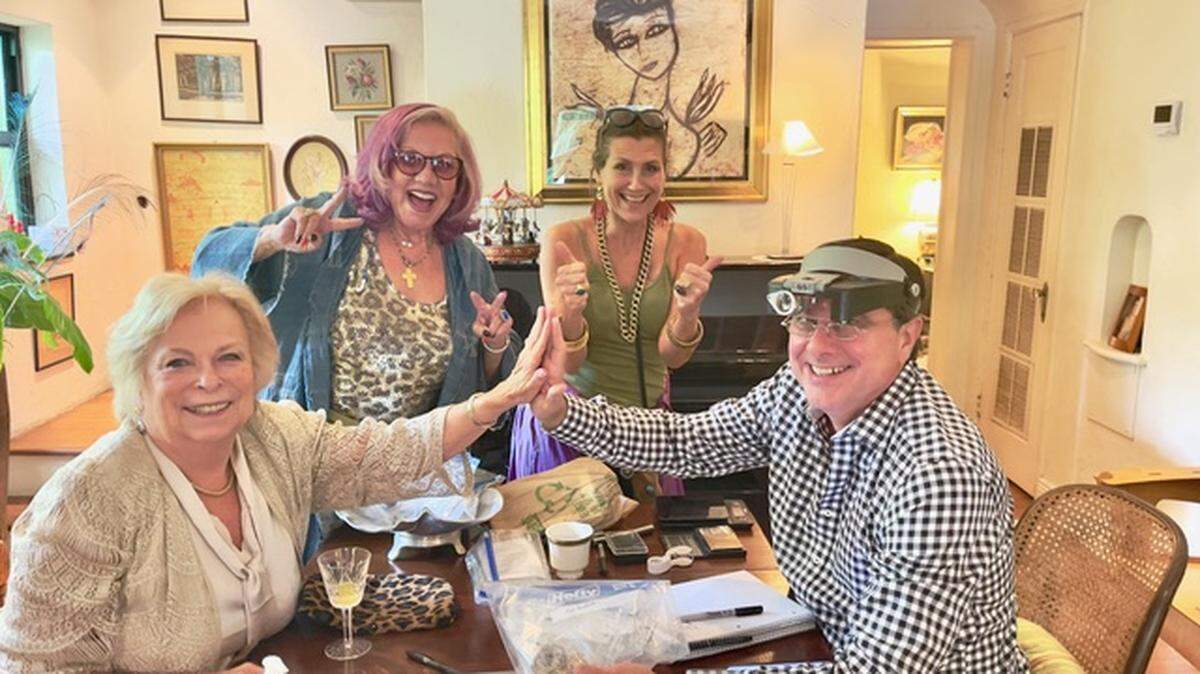
When Key Biscayne residents Michael Caggiano and Laine Shakerdge decided to start a nonprofit, they wanted to raise funds for essential causes.
They settled on Jewelry for Good and in 2019 started to grow their passion for turning gold and sterling silver flatware, bowls and trays into charitable donations.
“When we found out how little people received from jewelry stores when they tried to sell unwanted gold, we thought, ‘Why not get the full value in a tax deduction while donating the items to charity?’” Shakerdge said.
“Jewelry for Good was born out of a simple yet powerful idea: to enable people to support non-profits without ever having to write a check.
“There are over $500 billion of gold and silver items held by households in the U.S. We estimate that approximately 20% of these items are broken, unwanted and unused. That’s millions of dollars in ‘found’ money for nonprofits,” she said.
“Jewelry for Good accepts donated gold jewelry, even broken, and sterling silver items, such as bowls and serving pieces children don’t want to inherit and carefully evaluates each item. That becomes a tax-deductible cash donation for the full value of the items, after processing, to the non-profit charity of the donor’s choice.
“We’re an all-volunteer organization, and we are proud to have raised more than $100,000 for critical initiatives, including Alzheimer’s research, ovarian cancer research, food banks and animal welfare. Jewelry for Good offers an easy, tangible way for anyone to make a real difference. It’s not about the size of the items, but the impact of the contribution.
“Our philosophy is if you don’t wear it or use it then donate it!” Shakerdge said.
In January, they set their sights on helping groups on the frontlines of the California wildfires, including the World Central Kitchen and the Los Angeles Regional Food Bank.
“We are devastated by the destruction caused by these wildfires, and our hearts go out to those affected by this tragedy,” Shakerdge said. “While many want to help, not everyone has the financial means to contribute. Jewelry for Good provides a simple, tangible way for anyone to make a difference.”
Here’s how it works. Supporters fill out a simple form requesting a prepaid FedEx label and send in their unwanted jewelry and sterling items. Jewelry for Good evaluates the items, sends them to a refinery and donates 100% of the net proceeds after processing.
Donors receive a tax receipt for the full value of their contribution, while nonprofits, like those assisting in California, directly benefit from the cash donation.
They also help with Jewelry for Good fundraisers, called “Bring Your Bling” events, that turn social gatherings into impactful fundraising drives. Their website says a 40-person Bring Your Bling event can raise $18,000 or more for charity.
“We found Jewelry for Good to be a brilliant, unique and effective way to raise funds for our mission,” said Marya Meyer, executive director of The Women’s Fund Miami-Dade. “We partnered with Jewelry for Good on two Bring Your Bling events, which were easy to produce and terrific fun.
“Our organization raised thousands of dollars for transformative initiatives supporting women and girls across our community. Jewelry for Good is a wonderful partner for any local nonprofit looking for innovative fundraising strategies and in-person opportunities for donors to network in an especially bonding way.”
Jewelry for Good will host a “Bring Your Bling” event April 27 to benefit The Women’s Fund Miami-Dade and LEAP. More at www.jewelryforgood.org
GIRL SCOUTS VISIT CAPITOL
Girl Scouts Founder Juliette Gordon Low organized the first Girl Scout troop on March 12, 1912, to help girls discover the fun, friendship, and power of girls together.
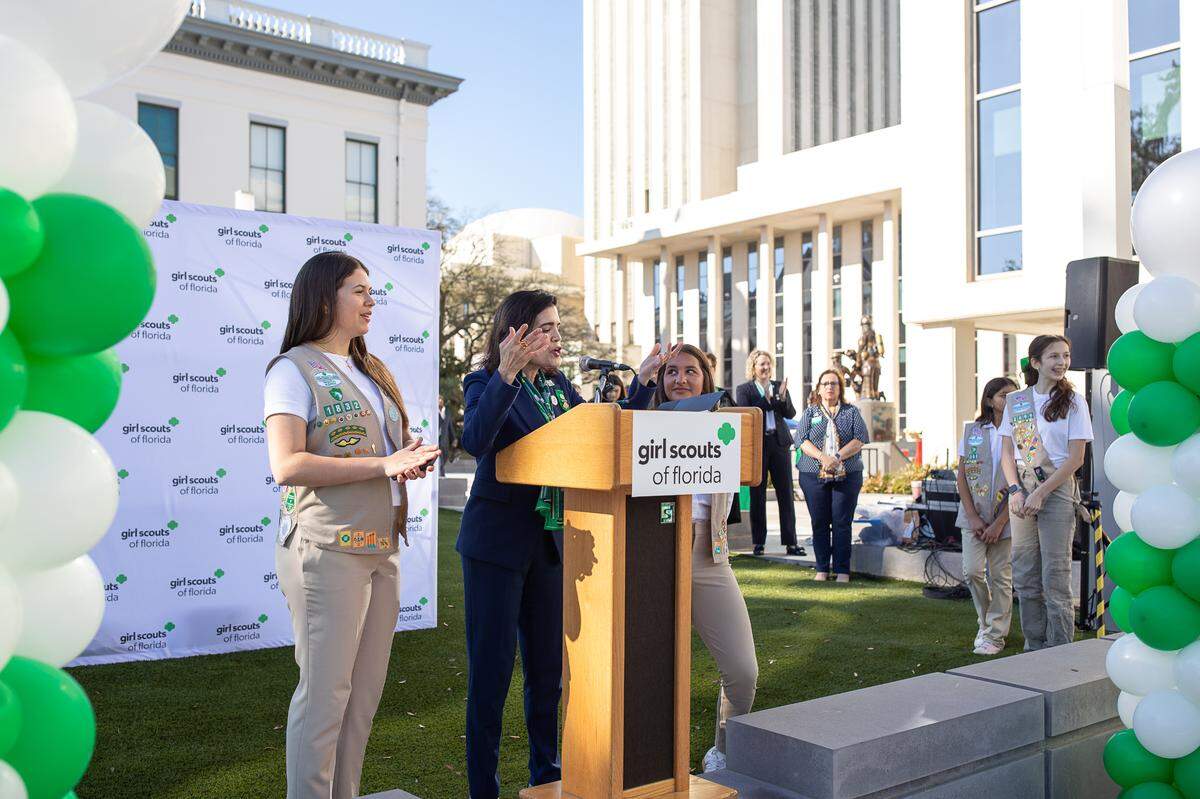
This year, on the eve of National Girl Scout Day, the Girl Scouts of Florida Association gathered at the Florida Capitol for a day of advocacy, leadership and recognition.
Girl Scouts Capitol Day brought together Girl Scouts, volunteers and leaders from all six Florida councils to meet with lawmakers, share their experiences and champion policies that support the well-being and success of Florida’s girls.
One inspiring highlight was the Girl Scout Pinning Ceremony, at which legislators and state officials were honored for their commitment to uplifting and empowering girls.
The event followed the release of the State of the Florida Girl Report, which reveals critical insights into the experiences of girls growing up in Florida today. Findings highlight stark differences in challenges faced by girls compared to boys, and how those challenges differ from those faced by previous generations.
Key findings are that one in eight female students in Florida miss school because they feel unsafe. Girl Scouts provides a safe environment through troop meetings, events and programs.
The report also revealed that girls experience mental health challenges at twice the rate of boys, with half of high school girls reporting feeling sad or hopeless. Girl Scouts builds resilience through peer support, mentorship and activities that promote confidence and self-esteem.
“The Girl Scouts State of the Florida Girl Report underscores the urgent need for support, but it also reinforces why Girl Scouts matters. We are committed to ensuring every girl has a safe, nurturing place to learn, lead and grow into the changemakers of tomorrow,” said Chelsea Wilkerson, Girl Scouts of Florida Association President and CEO of Girl Scouts of Tropical Florida. Visit floridagirlscouts.org
CLIMATE FORUM MARCH 24
Storms, wildfires, extreme heat, abnormal cold, flooding and long dry spells are a normal part of today’s news coverage, and The Villagers have planned a forum to address how to prepare.
“Saving Places from the Risks of Climate Change” will feature leading Miami-Dade experts including Deborah Tackett, Chief Historic Preservation and Architecture Officer, City of Miami Beach; Richard Heisenbottle, FAIA, President, RJ Heisenbottle Architects; Christine Rupp, Executive Director, Dade Heritage Trust; Deena Bell, landscape architect and arborist, Asst. Public Works Director for Green Space Management, City of Coral Gables; and Samantha Barquin, Chief of Staff, Miami Waterkeeper.
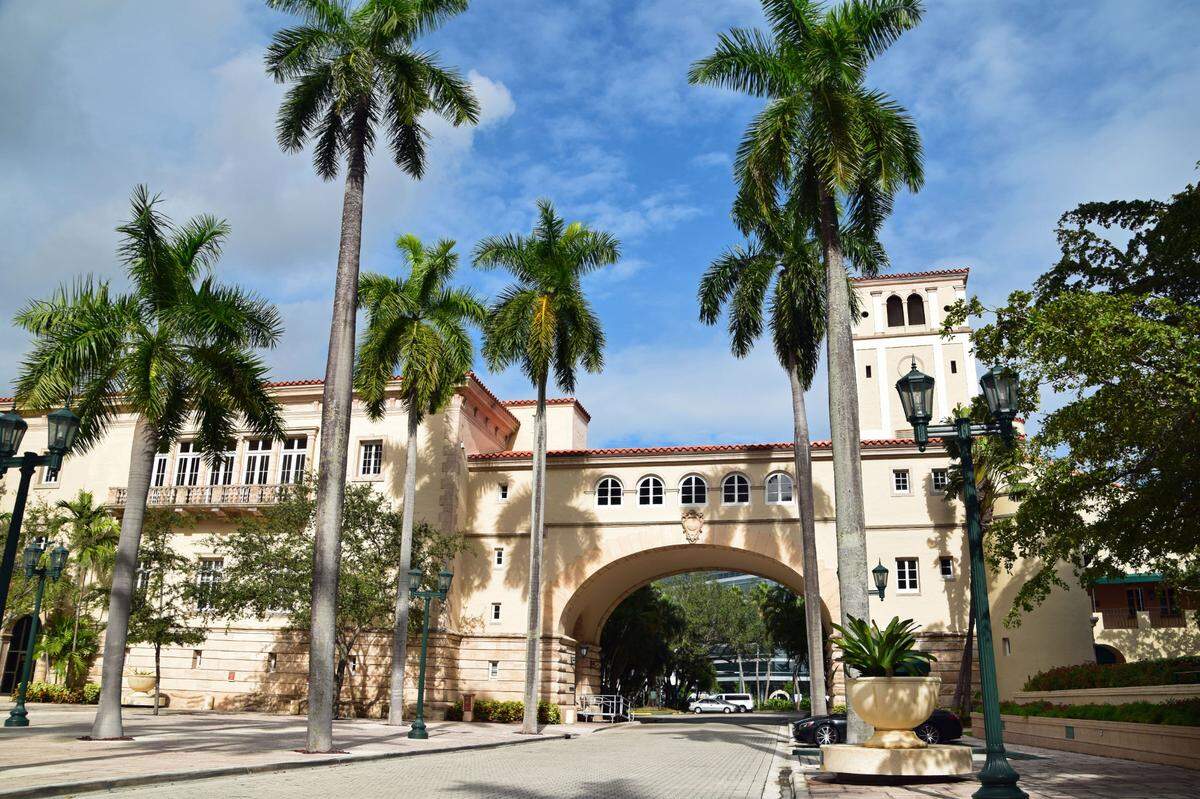
The event is 4:30-7 p.m., March 24 at Coral Gables Museum. Admission is $10. Make reservations at Eventbrite bit.ly/4kDbIyg
Write to ChristinaMMayo@gmail.com with news for this column.