Christianity comeback? Major survey shows flight from faith has slowed — at least for now
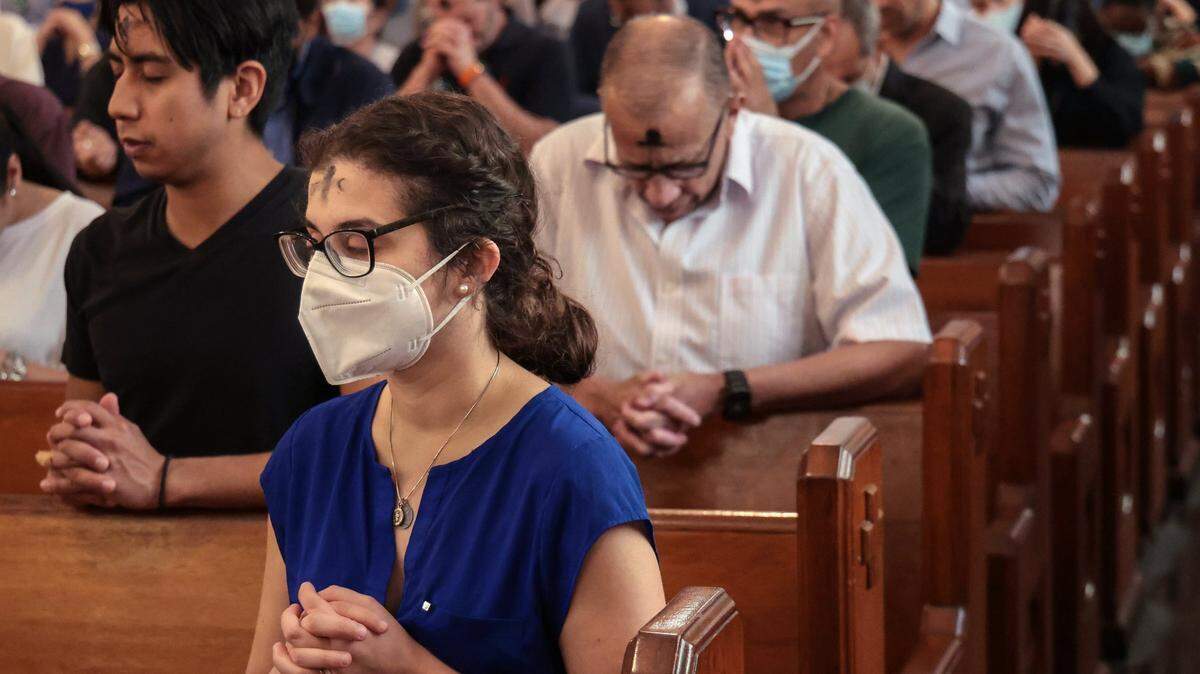
The percentage of people who call themselves Christians has been in free fall for over a decade but appears to have leveled off — at least for now, according to a major new study of religious beliefs in America.
The results don’t necessarily suggest a resurgence of Christianity but signal that a significant shift toward a more secular society in recent years has at the very least slowed, according to a new survey of nearly 37,000 Americans by the Pew Research Center.
The 2023-2024 survey — the most comprehensive temperature check on religious attitudes in the United States — found that 62 percent of adults identify as Christians. That’s a 9-percentage-point decline since 2014, and a 16-point drop since 2007, across all regions and demographics.
“The big picture is that the long term decline ... is really across the board,” said Alan Cooperman, director of religion research at Pew Research Center. “This is a broad-based social change.”
But the survey also found that the movement away from Christianity has lost momentum. Since 2020, the number of people identifying as Christian has hovered between 60 and 64 percent.
“That is very stable,” said Gregory Smith, senior associate director of research at Pew Research Center.
Miami falls in line with most of the Pew findings nationally but stood out in a few ways from national averages. The survey found Miami had triple the number of respondents identifying themselves as Jewish and 50 percent more people identifying as Catholic.
The results of the Religious Landscape Study, conducted mostly online in a change from past years that relied on phone interviews, painted a broad portrait of religious America. The report, the third of its kind since 2007, is the largest single survey the Pew Research Center conducts. It provides authoritative data points on the size of religious groups in the U.S. since the U.S. Census Bureau does not collect information on religion.
The largest subgroups of Christians are Protestants — now 40 percent of U.S. adults — and Catholics, now 19 percent. Both groups are down significantly since 2007, but the number of Protestants has remained fairly level since 2019 and the Catholic share has been stable since 2014.
Other Christian groups (including the Greek and Russian Orthodox Churches, the Church of Jesus Christ of Latter-day Saints, Jehovah’s Witnesses and many others) make up about 3 percent of U.S. adults.
The study’s researchers offered some theories on the stabilization in the Christian faith. One reason could be the timing of the COVID pandemic, and heightened existential insecurity. Some researchers found that, in general, religion withers in good and steady times and prospers in hard times. If that theory is correct than one could expect that many people turned toward religion, if they already had a practice, during 2020.
“Not so much that COVID either took people who are not religious and made them religious, or took people who were religious and drove them out of religion. But that it sort of cemented — possibly, this is a theory — the level of religion that they had,” Cooperman said during a press conference.
At the same time, the religiously unaffiliated population (people who are “atheist, agnostic or nothing in particular” when it comes to religion) has plateaued after sustained growth in the last decade. They account for about 29 percent of the population.
“I am fascinated by the reported pause in the recent ‘secular surge,’ with the level of religious affiliation stabilizing after decades of decline,” said John Green, a professor of political science at the University of Akron. “This pattern is especially surprising given the disruptions of the pandemic.”
Green explains that politics could have played a role in the pause.
“A common explanation for the secular surge is that political controversies within religious communities contributed to disaffiliation,” he said. “If so, this pause may have come from shifts in politics, shifts in religion, or a bit of both.”
Other big takeaways include a widening of the political gulf and recent jump in the number of people who identify with a religion other than Christianity — though the number is still in single digits at 7 percent. Today, 1.7 percent of U.S. adults say they are Jewish when asked about their religion, while 1.2 percent of respondents are Muslim, 1.1 percent are Buddhist, and 0.9 percent are Hindu.
The survey found clear trends in political and religious beliefs. Generally speaking, Republicans called themselves highly religious. Democrats reported lower levels of engagement and belief. For example, 51 percent of liberals say they are religiously unaffiliated, compared to 13 percent of conservatives. And 37 percent of liberals call themselves Christians compared to a whopping 82 percent of conservatives.
However, Black Americans are an exception: At all levels of religiousness, most identify as Democrats or lean toward the Democratic Party.
There’s also a continued growth of non-denominational Christians. The study also shows that there are many people who are religiously observant but don’t necessarily identify with a particular denomination.
Researchers say that this could be in part because of the fact that people often choose their local congregation based on convenience rather than staying true to a strict religious doctrine. For example, someone might choose their church based on the daycare offerings or youth group.
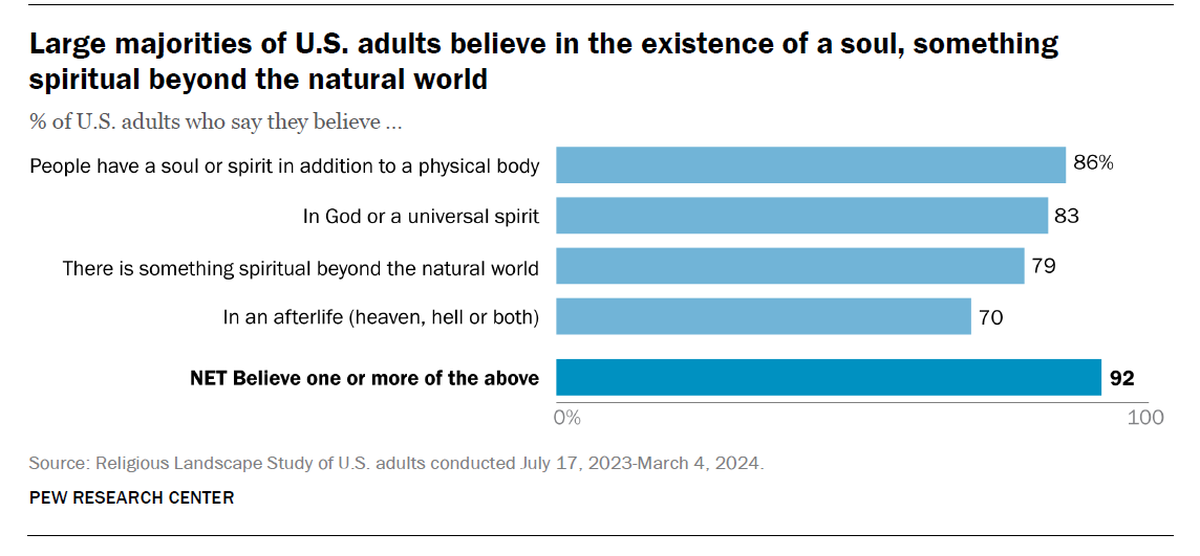
Meanwhile, the survey found that the majority of Americans have some sort of spiritual outlook, even if they might not associated with a particular organized faith. For example, 86 percent of respondents agreed that people have a soul or a spirit that exists beyond their body.
“I think this is remarkable. Spirituality is not declining,” said Penny Edgell, professor of sociology at the University of Minnesota. “In fact, it’s high, it’s stable and in fact quite a few Americans have reported that their spirituality is becoming more important to them.”
Miami’s different make-up
While the report focused more on broader trends in religion data, there were some findings specific to the Miami metro area — though the findings come from a much smaller sample size of 553 people interviewed.
Miami falls in line with most of the Pew findings nationally, except when it comes to the Catholic and Jewish faiths. According to the survey, 19 percent of U.S. adults in America describe themselves as Catholic, but in Miami that number is 30 percent, up from 27 percent in 2014. For context, the number of Christians overall in Miami dropped from 68 percent in 2014 to 59 percent in 2024.
The percentage of respondents who called themselves Jewish decreased from 9 to 6 percent, according to the Pew survey — but remained much larger than the nationwide average of 2 percent.
The next larger change in the survey came from those who are considered religiously unaffiliated, which grew from 21 to 28 percent over the ten year period.
In addition to the Catholic growth, adults who are a part of the historically Black protestant faith has also grown — from 8 to 11 percent over the ten year period.
The number of people who identify as non-Christian faiths is also growing. The population numbers went from 10 percent in 2014 to 11 percent in 2024. Buddhists, Unitarians and other liberal faiths could have accounted for that growth. Since both groups, which made up less than 1 percent in 2014, are now at a solid 2 and 3 percent.
Researchers in the report emphasized that the factors that have driven longer term declines of religion are still in place. Namely, the fact that young people are far less religious than older people. Researchers pointed out that as older cohorts of highly religious people pass away, they will be replaced with those who are less religious than those before them.
This story was produced with financial support from Trish and Dan Bell and from donors comprising the South Florida Jewish and Muslim Communities, in partnership with Journalism Funding Partners. The Miami Herald maintains full editorial control of this work.
This story was originally published February 26, 2025 at 1:41 PM.