
When does daylight saving time begin in Florida? Sunrise and sunset? Take note of change
The time is changing soon. That means soon you’ll need to turn your clocks ahead one hour.
Think about the clock in your car. And on your microwave oven. Your smartphone and computer will likely move the hands of time automatically. But our bodies might not adjust automatically.
In the early morning of March 9, 2025, we’ll be returning to daylight saving time.
So, take note to spring ahead.
Here are a few things to know:
When is daylight saving time?
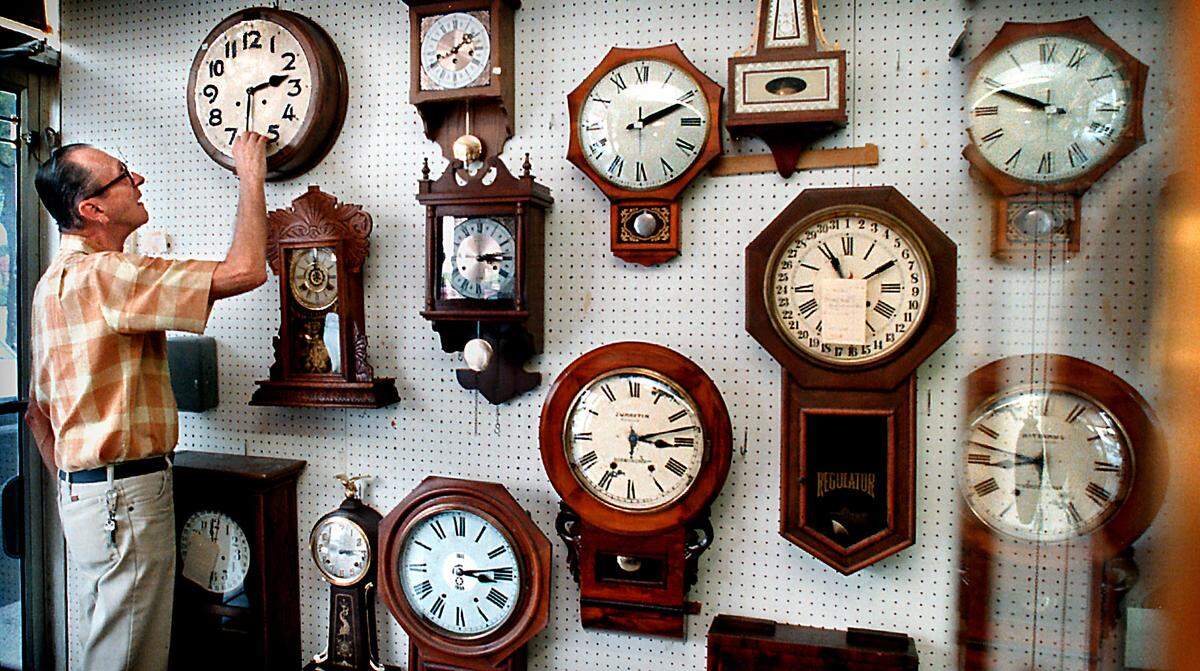
Time change: Daylight saving time starts at 2 a.m. Sunday, March 9.
Sleep: Springing ahead means you’ll lose an hour of sleep when the time changes. You can make it up in November when we fall back in changing the time again.
Pro tip: Move your manually controlled clocks ahead an hour before going to sleep on Saturday night, March 8.
What does the time change do to morning and evening?
Commuting: When the clocks move ahead an hour, it’ll stay lighter into the evening.
Sunrise and sunset: When we move the clocks forward at 2 a.m. Sunday, March 9, sunrise in Miami will be at 7:36 a.m. and sunset will be at 7:27 p.m.
Good and bad: Daylight saving time might be good and bad for college spring breakers. On one hand, the extra daylight hours gives them a little more time to soak up the sun on the beach. On the other hand, it delays nightfall, when partying gets started.
A plan to ‘lock the clock’

Lawmaker action: Weren’t we supposed to see the back-and-forth of time go away? The issue has come up in the state Legislature and Congress.
Florida flavor: Two Florida members of Congress have tried to “lock the clock,” on the twice-a-year time change in the Sunshine State. Through the “Sunshine State Protection Act,” which U.S. Rep. Vern Buchanan, R-Longboat Key, and former Sen. Marco Rubio, now secretary of state, introduced. Under the change, daylight saving time would be the permanent, unchanging time — not just for Florida, but for the country.
Reaction: “There are enormous health and economic benefits to making daylight saving time permanent,” Buchanan has said. “Florida lawmakers have already voted to make daylight saving time permanent in my home state and Congress should pass the Sunshine Protection Act to move Florida and the rest of the country to year-round daylight saving time.”
Background: Buchanan first introduced the legislation in 2018 and has, along with Rubio, has reintroduced it to their respective chambers of Congress. In 2018, Florida lawmakers agreed with Buchanan. The Florida Legislature passed the “Sunshine Protection Act,” but the permanent change to daylight saving time hasn’t happened. Why? Because the Uniform Time Act of 1966 dictates U.S. Congress must approve of the change for it to be enacted.
Why have we tinkered with the clock?

Saving energy: Daylight saving time is all about a desire to save energy by extending sunlight later in the day during spring and summer. A study conducted by the U.S. Department of Energy found that the four-week extension of daylight saving time in 2008 saved about 0.5% of the nation’s electricity per day, or 1.3 trillion watt-hours — which is enough to power 100,000 households for an entire year.
Safety: Studies have also shown that the extra hour of daylight has resulted in safer roads, lower crime rates and economic benefits.
Disruptions: Other concerns about daylight saving time have included disruptions to harvesting schedules for farmers, interference with religious observances based on solar and lunar time, and potential delays in reworking computer systems programmed to switch twice a year.
What are the origins and opposition to the time change?
.JPG "Clock17 FIND TROP JWR (1).JPG")
The start: One of America’s founding fathers, Benjamin Franklin, is often credited with the daylight saving time idea. Franklin wrote a 1784 essay about it as a way to conserve the need for lamp oil, while New Zealand entomologist George Hudson came up with the modern-day concept in 1895, so he had more daylight to look for bugs.
Wartime: But the idea didn’t gain traction among U.S. lawmakers until World War I, and then in World War II as a wartime measure. The Uniform Time Act in 1966 made the change in time an annual passage throughout the country.

This story was originally published February 6, 2025 at 6:02 AM.