How prosecutors’ bribery case against a former Miami city commissioner fell apart
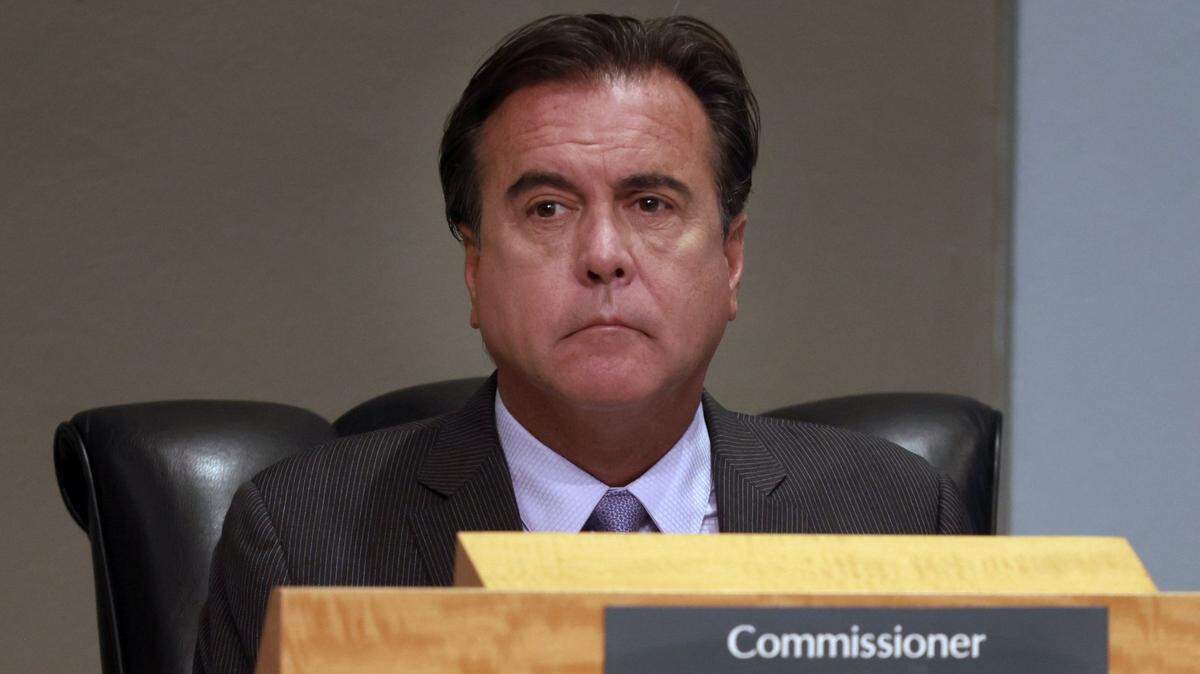
For months, prosecutors with the Broward State Attorney’s Office appeared to be moving full speed ahead before a planned December trial against former Miami City Commissioner Alex Díaz de la Portilla and lobbyist Bill Riley Jr. on corruption charges.
But prosecutors suddenly slammed on the brakes after defense attorneys on Monday moved to dismiss the case, claiming they lacked critical evidence to prove the alleged bribery scheme.
In particular, defense lawyers accused a key investigator of misrepresenting information used to charge the politician and lobbyist with crimes that allegedly involved securing the commissioner’s support for a land deal.
On Wednesday — before a Miami-Dade circuit judge even considered the dismissal motion — state prosecutors announced they were dropping all of the charges, echoing several of the claims made by the defendants’ lawyers in a closeout memo dated Tuesday.
The Broward state attorney’s announcement was an about-face development in a case that had been filed with much fanfare when Díaz de la Portilla and Riley were arrested last year. Broward prosecutors had been assigned to the matter because Miami-Dade State Attorney Katherine Fernandez Rundle reported a conflict of interest, though the case was overseen by a Miami-Dade judge.
In the Nov. 19 closeout memo explaining why the charges were being dismissed, Assistant State Attorney Kayla Bramnick — who took over the case in June — and Assistant State Attorney in Charge Julio Gonzalez Jr. called into question the viability of the case. Prosecutors had originally accused Riley of routing $245,000 in campaign contributions from his lobbying clients, private school operators David and Leila Centner, into a pair of political committees controlled by Díaz de la Portilla in exchange for the commissioner’s support for a sports complex the Centners wanted to build on city-owned land.
“The evidence does not demonstrate corrupt intent, unlawful benefits, or falsification of records. Witness testimony is unreliable, and lawful actions have been misconstrued as criminal,” Bramnick and Gonzalez wrote. They added that “substantial follow-up investigation and depositions have occurred that revealed the foundation of this entire investigation was misguided and buttressed by unverified information.”
In the memo, Broward prosecutors agreed with defense attorneys that there had been discrepancies about who founded a Delaware corporation at the center of the case, concurred that a plan for a competing project on that city-owned parcel was no longer viable, and criticized three “key witnesses.”
In response to news of the dropped charges, some of those witnesses took umbrage with how they’re portrayed in the closeout memo and with prosecutors’ characterization of the facts of the case.
“It’s unfortunate that the State Attorney’s Office is using witnesses as scapegoats,” said Jason Walker, the former executive director of a city redevelopment agency who was deposed in the case.
Miami defense attorney David Weinstein, who previously served as both a Miami-Dade state and federal prosecutor but is not connected to this case, said Florida is among a few states that allow the defense to conduct depositions of the prosecution’s witnesses before trial and that Broward prosecutors appear to have discovered holes in the evidence that would have undermined their case for a jury.
“That process allows the state to weigh the strengths and weaknesses of its case, as this decision shows,” Weinstein said.
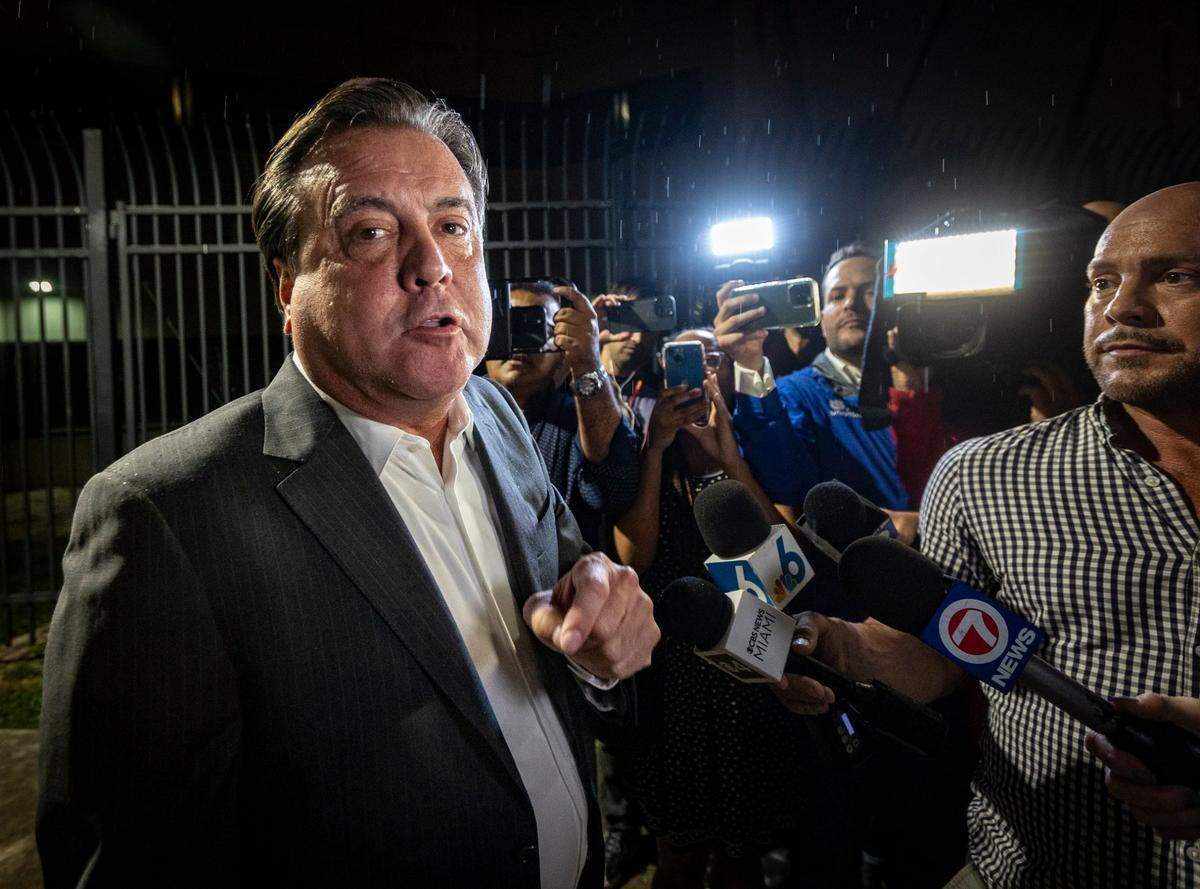
Lead investigator falls under scrutiny
In court papers, Riley’s attorney Jared Whaley accused two investigators in the case — Karl Ross of the Miami-Dade Ethics Commission, the lead investigator, and Gaylon White, a special agent with the Florida Department of Law Enforcement — of collaborating to ensure their depositions were synchronized in an attempt to strengthen the corruption case.
Whaley said that after Ross sat for a deposition with the defense team on Aug. 14, the county ethics investigator spoke with White, who was sick at the time, to advise him to postpone his own deposition the following day. The FDLE agent did postpone it.
When Ross was deposed for a second time on Sept. 3, Ross told defense attorneys he had no recollection of discussing his first deposition with White. But when White eventually gave a deposition on Sept. 11, he said that he had spoken about the case with Ross for an hour on Aug. 27, according to a motion filed by Whaley.
In October, a Miami-Dade circuit judge handling the case ordered Ross to stop communicating with other state witnesses and the Broward prosecutor’s office to turn over Ross’ electronic communications with other investigators.
Ross and his office have declined to comment on the defense accusations.
During a brief hearing on Friday, Whaley asked Circuit Judge Miguel de la O for further review of Ross’s activity as an investigator, alleging that Ross made misrepresentations in the case. De la O told Whaley to put the request in writing for him to assess.
“You said some things here today that I think put everything in a different light for me. I think that there is more smoke, and possibly fire, than I realized,” de la O told Whaley.
Contradictory information about a Delaware LLC
The alleged bribery scheme involved $245,000 that prosecutors had said Riley directed to two political committees connected to Díaz de la Portilla.
The arrest affidavit accused Riley of routing campaign contributions from private school operators David and Leila Centner through a Delaware LLC and then into two political committees that Díaz de la Portilla controlled, something that happened around the time the couple was seeking approval from the city to build a sports complex on an undeveloped tract of city-owned land near their school. Riley was a lawyer working for the Centners, who were not charged with any crime.
The affidavit alleged that Riley “established” the Delaware corporation, Pristine DE LLC, “to conceal the source of funds.”
However, in the defense motion to dismiss the case, Riley’s attorney, Whaley, argued that his client did not commit money laundering or any other unlawful act, as the Broward State Attorney’s Office initially charged.
The motion argued that sworn testimony and documents show that while Riley was president and treasurer of the corporation, Pristine was owned and controlled at all times by Riley’s clients, the Centners, and that the Centners’ in-house attorney Jamie Mandel had established the Delaware company to allow the couple to make political contributions and hold real estate.
“There is no evidence to support the state’s contention that Mr. Riley established Pristine; that he did so to conceal the source of its funds; or that the political contributions by Pristine and reported by the Florida political action committees were improper,” the motion said.
The motion also stated that Mandel had allowed Riley to open a Space Coast Credit Union account for Pristine and provided him with documents showing that Mandel was the “authorized person” who formed the company under the control of the Centners. The defense said that Ross had obtained those documents through a subpoena before signing the arrest affidavit but argued that he mischaracterized the nature of Riley’s involvement with the corporation in the affidavit anyway.
White, the FDLE agent who co-signed the affidavit, told the defense during his September deposition that he had no recollection of Ross sharing that information with him and said that if he had known, he would not have signed off on that part of the affidavit.
An FDLE investigative report shows that Ross consulted and reviewed evidence with prosecutors and the FDLE on multiple occasions before finalizing the arrest affidavit. After the affidavit was completed by Ross, co-signed by White and a second FDLE agent, and approved by Judge de la O on Sept. 13, 2023, Díaz de la Portilla and Riley were arrested on a host of corruption charges, including conspiracy, bribery, official misconduct and money laundering.
As early as October 2022, a Broward prosecutor handling the case at the time, Catherine Maus, “expressed that she felt that probable cause existed to charge Comm. Diaz De La Portilla” and possibly Riley, according to the FDLE investigative report.
In the recent motion, Riley’s lawyer noted that because Riley “disclosed” the LLC incorporation documents and the source of funding to the bank, prosecutors could not prove that Riley “concealed” the origins of the Centners’ campaign donations supporting the Díaz de la Portilla-connected committees or show that they were “the proceeds of some form of unlawful activity.”
To combat prosecutors’ allegation that Riley laundered money, his attorney wrote in the motion to dismiss that David Centner “testified unequivocally that Mr. Riley had no say in the recipients or amounts of political contributions the Centners made,” and Leila Centner said in a deposition that Mr. Riley had no discretion or control over the funds in Pristine’s account “whatsoever.”
In their memo dismissing the corruption case, prosecutors with the Broward State Attorney’s Office seemed to agree with the defense argument.
“The state’s theory relied on the assumption that the funds were proceeds of bribery or unlawful compensation — charges that are now unsupported by the evidence,” Bramnick and Gonzalez wrote.
“Bank records showed transparent transfers between the Centners, Pristine DE, and PACs [political action committees],” the prosecutors added. “The use of Pristine DE was solely for logistical purposes and did not involve efforts to conceal the transactions.”
Questions about a competing plan for city-owned land
The Centners were interested in building a sports complex that could be used by students at their namesake school, as well as by members of the public, on a piece of city-owned land called Biscayne Park that is across the street from one of the Centner Academy locations.
Miami-Dade County Public Schools had initially been interested in the land and had been working on a plan for years in collaboration with the city of Miami and the taxpayer-funded Omni Community Redevelopment Agency (CRA), which Díaz de la Portilla chaired. The plan to relocate a public school called iPrep Academy onto Biscayne Park would have doubled the number of student seats and created workforce housing on the site.
The City Commission instead approved the Centner plan in April of 2022, with Díaz de la Portilla and the four other commissioners all voting in favor. Díaz de la Portilla’s alleged sidelining of the iPrep plan, while receiving the Centners’ financial support through the political committees, was a central point in the initial arrest affidavit.
But in what they characterized as a significant finding, prosecutors Bramnick and Gonzalez wrote that the Miami-Dade County Public Schools plan was “abandoned years before” Díaz de la Portilla’s election to the commission in 2019. (The closeout memo later states that the project was abandoned “months” beforehand. A spokeswoman for the Broward State Attorney’s Office did not respond directly to a question about the discrepancy, saying only, “We have to refer you to the closeout memo and the depositions.”)
The closeout memo states that discussions for the Miami-Dade County Public Schools plan “never advanced beyond a draft memorandum of understanding (‘MOU’), which was never executed” and noted that the Centners’ proposal was “independently supported by other city officials” in 2022.
The prosecutors concluded that the proposal for iPrep Academy was therefore never in direct competition with the Centners’ plan and that Díaz de la Portilla could not have “sidelined” the iPrep plan while leading the way for the Centners’ proposal.
However, their assertion stands in contradiction to statements by the school district itself, which told the Herald earlier this year that it had a briefing with Díaz de la Portilla on the public school plan in January of 2021 and that “efforts to communicate on the matter continued” until the Centner agreement was ultimately approved at a City Commission meeting in April 2022. A school district spokesperson reconfirmed those facts on Friday.
In response to the release of the closeout memo, former City Commissioner Ken Russell told the Herald that the School Board plan “was still in play” years after Díaz de la Portilla’s election — including at the time of that critical 2022 meeting.
“The closeout memo is inaccurate if it implies that the School Board deal was dead,” Russell said. Russell was chairman of the Omni CRA immediately before Díaz de la Portilla took over the agency and was on the City Commission at the time of the April 2022 vote.
Regardless, Russell said, the status of the School Board project was “irrelevant to the true case of what motivated Commissioner Díaz la Portilla’s votes in support of the Centner deal.”
And documents included in the state’s own discovery file for the case show that the iPrep proposal was indeed still ongoing after Díaz de la Portilla’s 2019 election. For example, an area redevelopment plan dated April 27, 2020 — after Díaz de la Portilla had been appointed Omni CRA chairman — references a proposed “relocation and expansion of iPrep” on the Biscayne Park site.
The Broward State Attorney’s Office did not directly respond to a question about how it deemed the school district’s plan to have been “abandoned” before Díaz de la Portilla’s election, instead referring the Herald back to the closeout memo.
Issues with key witnesses
As part of the rationale for tossing the case, Broward prosecutors referred to “issues with witness credibility,” listing three people whose earlier testimony they said was “undermined” during depositions by the defense: Ross, Russell and Walker, the former executive director of the Omni CRA, a city agency that was working with the School Board on the iPrep expansion plan.
Prosecutors wrote that “Ross admitted to limited familiarity with relevant laws and failed to independently verify key allegations, such as the existence of the [public school’s iPrep] proposal.”
They also said that Walker “recanted his initial statements, acknowledging that the [School Board] project was stalled due to unrelated priorities and not because of [Díaz de la Portilla’s] actions.”
Reached by phone, Walker disagreed with that characterization.
“I didn’t recant anything,” Walker said.
Walker said the State Attorney’s Office was using witnesses as “scapegoats.”
For Russell, the former city commissioner, prosecutors wrote in the closeout memo that he “made contradictory statements, later admitting he had no firsthand knowledge of the Centner proposal’s progression after he left office” in late 2022.
In a written statement, Russell said: “Stating that I had no firsthand knowledge of how the issues progressed after I left office is not contradictory. It makes perfect sense. Once I left office I was no longer involved. That is consistent with my earlier testimony, but irrelevant to the case.”
In a subsequent phone call, Russell said that for the prosecutors to “hang the witnesses out to dry because of [trivial] inconsistencies is a red herring.”
Two former prosecutors weigh in
Michael R. Band, a veteran defense attorney who served as the chief assistant in the Miami-Dade State Attorney’s Office in the 1990s, said he is of two minds about Broward prosecutors’ decision to dismiss the corruption charges against Díaz de la Portilla and Riley.
“I would compliment them that they would make such a valued judgment about not having enough evidence to make their case,” Band said. “But I would temper that position and fault them for not having properly vetted the case before they filed the charges in the first place.”
In this case, the decision to charge was not based on a law enforcement officer’s finding of probable cause at the scene of a crime, he said. It was at the discretion of the Broward prosecutors, who had the time and presumably the experience to review the evidence, vet the witnesses, and appreciate and apply the law before the decision to move forward was made, he said.
“The power of the state to bring charges is an awesome responsibility,” Band said. “There are no ‘do overs.’ Lives will be upended.”
It is not unusual for state prosecutors to change their minds about the viability of a case before trial, opting to dismiss the charges. What’s striking about the Broward state attorney’s decision is that prosecutors chose to do so one day after the defense filed a motion to dismiss the case without any judicial review of their claims.
“It’s rare, but not unheard of, to drop the charges,” said Weinstein, the defense attorney who previously served as a Miami-Dade state and federal prosecutor. “With the state, it happens more often than you think, but it doesn’t usually get the same attention as when the charges are first filed.”
Weinstein said it is apparent from prosecutors’ closeout memo that they had serious doubts about the “corrupt intent” behind the initial charges after reevaluating certain witness statements — including those by investigators and officials.
But Band said the belated decision to change course and drop the charges comes at a great cost to the two defendants.
Band said that since the arrests of Díaz de la Portilla and Riley, their reputations have been tarnished, as one lost his elected position and the other lost his livelihood. They have also endured substantial financial expenses to hire lawyers and defend themselves.
“When you file charges against public officials or anyone, you ruin reputations,” Band said. “They live with a cloud over their head because of the state’s action.”
This story was originally published November 23, 2024 at 5:30 AM.
.jpg)