Drinking coincided with Miami city commissioner’s downfall, documents and sources say
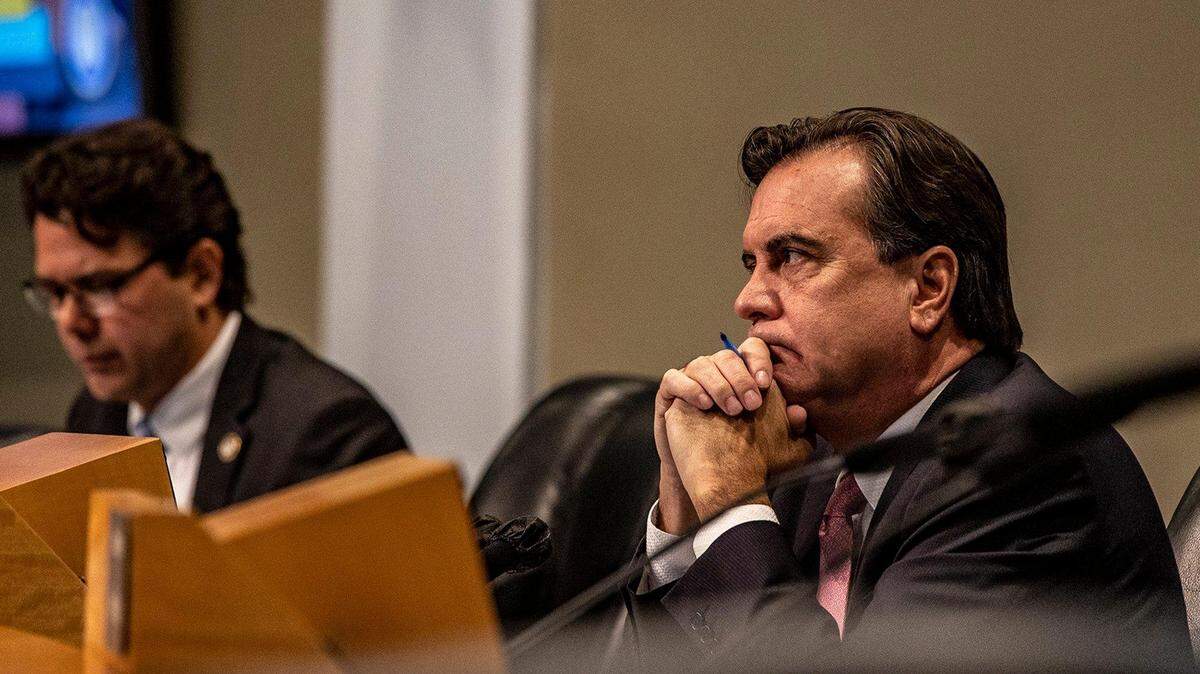
Having earned the reputation early in his career as the “bad boy” of the Florida Legislature, former state senator Alex Díaz de la Portilla rebranded himself during the 2019 Miami City Commission race as a politician ready to solve everyday resident issues, from potholes to trash pickup. He appeared sharp and sober during his run for City Hall, according to people in his orbit.
But those around him say that in the year after he was elected, the commissioner was heavily drinking, was intoxicated during City Commission meetings and drank at the office of a city agency he oversaw as chairman — a habit that preceded his eventual downfall and arrest on public corruption charges last year, according to sources who have spoken with investigators in the criminal case and with the Miami Herald.
The new revelations about the commissioner’s alleged alcohol consumption, including drinking on the job, appear in court records as both sides prepare for a December trial related to an alleged bribery scheme that involved securing the commissioner’s vote for a land deal.
One witness told law enforcement, and additional sources told the Miami Herald, that Díaz de la Portilla, who is now 60, sometimes drank during city meetings. Former City Commissioner Ken Russell, who sat beside Díaz de la Portilla on the dais between 2019 and 2022, told investigatorshe remembered Díaz de la Portilla “being drunk at commission meetings and smelling the alcohol off him as he would explode with rants and yell at our residents, our staff.” Former City Hall staffers who spoke with the Herald said Díaz de la Portilla would sometimes fill a mug with liquor before a meeting and tape a tea bag string to the side as a decoy.
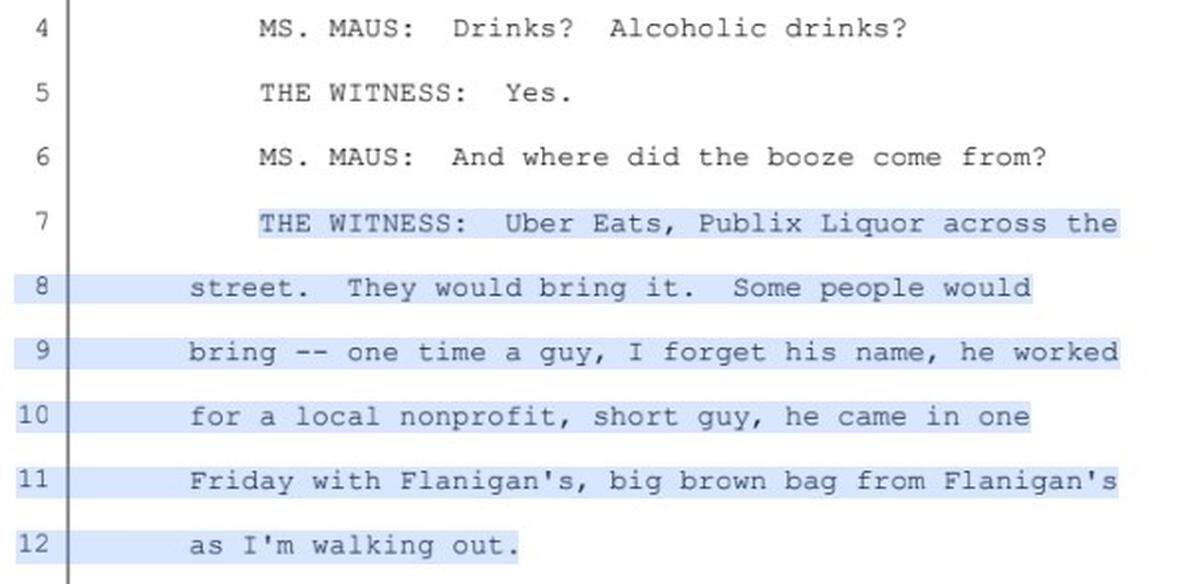
Another witness told prosecutors that Díaz de la Portilla’s staffers and associates would bring bags of liquor from Publix and Flanigan’s into the conference room at the downtown office of the Omni Community Redevelopment Agency, where the commissioner presided as chairman. The commissioner’s associates would begin drinking as the agency’s rank-and-file employees were packing up to leave the office at the end of the day, the agency’s then-executive director, Jason Walker, said in his own sworn statement to prosecutors.
The new accounts about how the commissioner’s drinking affected his performance in office come as Díaz de la Portilla seems to be positioning himself for yet another political comeback. In September, he told the Herald he is considering running for mayor or an open commission seat in 2025, saying he’s unconcerned the pending criminal case would have any effect on his chances.
“I like to serve the public,” he texted a reporter.
Díaz de la Portilla has denied the allegations by prosecutors and pleaded not guilty to the criminal charges, which he has claimed are politically motivated. In response to a request for an interview about his drinking, Benedict Kuehne, an attorney for Díaz de la Portilla, declined andsent a cease-and-desist letter to the Herald, calling the assertions “false claims by known political enemies and persons with admitted biases against him.”
Shortly before publication, Kuehne changed course and asked for written questions. In a lengthy response on behalf of Díaz de la Portilla, the attorney said the claims about the former commissioner’s drinking are “the defamatory statements of a handful of political enemies, disgruntled former employees, and corrupt individuals.” Kuehne attacked the credibility of witnesses who talked about his drinking, as well as one former friend interviewed by the Herald.
Kuehne added that Díaz de la Portilla is “a former elected official who is not running for office and has no campaign account opened.” That stands in contrast to Díaz de la Portilla’s statement to the Herald in September — after a political committee he controls twice purchased voter data — that he was considering running for office next year, saying the polling “looks good.”
The Herald’s review of witness statements and court recordsandinterviews with sources in and around City Hall paint a picture of Díaz de la Portilla as a longtime politician who emerged sober after a years-long hiatus only to fall from grace as he returned to drinking.
Former political ally Manuel Prieguez, who has known Díaz de la Portilla since childhood and led the fundraising operation for the politician’s 2019 race, told the Herald that he chose to support his old friend’s election five years ago when he saw that Díaz de la Portilla had gotten sober.
But “things sort of went south pretty soon after” the election, Prieguez said. “There were times when I spoke to him on the phone where it sounded like he was drunk.”
Prieguez sued Díaz de la Portilla last year over allegations of corruption; the litigation is ongoing.

During an inquiry that preceded the criminal probe into Díaz de la Portilla, investigators also interviewed Jenny Nillo, a former Díaz de la Portilla aide who has struggled with alcoholism, who said she had been tasked by the commissioner to buy him alcohol during working hours. In May 2021, she told them that Díaz de la Portilla had stopped drinking heavily for years but that he had resumed drinking “once in a while.”
Díaz de la Portilla’s former chief of staff put it in more stark terms this summer as she sought a restraining order against her former boss.
“In my opinion, he … is an alcoholic. He frightens me,” Karla Fortuny wrote in a petition that attracted the attention of prosecutors, who included the document in a motion that said Díaz de la Portilla was being investigated for possible witness tampering as a result.
Fortuny, who held various positions in the commissioner’s office from 2020 to early 2023, alleged that her former boss was harassing and stalking her after he sent her a series of text messages ahead of her scheduled deposition in the criminal case. She blamed his behavior, in part, on his drinking.
“I believe him to be a relentless and dangerous individual,” she wrote.
A family court judge formally denied Fortuny’s petition but advised her to contact prosecutors. The criminal court judge on Díaz de la Portilla’s case later ordered him not to contact Fortuny or her family at all.
Those around him have said that while Díaz de la Portilla can be an effective elected official, alcohol hampered his first term as a city commissioner.
“When he’s not drinking, he is a very thoughtful, smart guy,” said one City Hall lobbyist, who spoke on the condition of anonymity. “He’s talented, but the drinking definitely got the better of him.”
‘At times, smelling of alcohol’
Russell, a former Miami city commissioner who served alongside Díaz de la Portilla, voluntarily gave a sworn statement in March of 2023 to investigators in the criminal case. That’s when he told authorities he remembered Díaz de la Portilla smelling like alcohol during City Commission meetings.
Russell made those comments in response to being asked if he believed Díaz de la Portilla had been “an honest public servant.”
“No, and I don’t believe it’s just my opinion,” Russell said. “It’s from what I’ve witnessed as a fellow elected official sitting next to him on the dais. Even the simple violations of the civility oath, being drunk at commission meetings and smelling the alcohol off him as he would explode with rants and yell at our residents, our staff, and of course applicants and fellow commissioners. This is not the example of public leadership.”
Speaking to the Herald, Russell said he never personally witnessed Díaz de la Portilla drinking on the job but that he inferred as much based on his colleague’s behavior, especially as meetings dragged into the evening, when Díaz de la Portilla would return to the dais “a little more belligerent, a little more red in the face and, at times, smelling of alcohol,” Russell said.
Russell said signs that Díaz de la Portilla was intoxicated included the “slurring of words and angered ranting,” but he said he never felt his colleague got to the point of being incapacitated and unable to legislate. For that reason, Russell chose not to address his concerns, either publicly or behind closed doors.
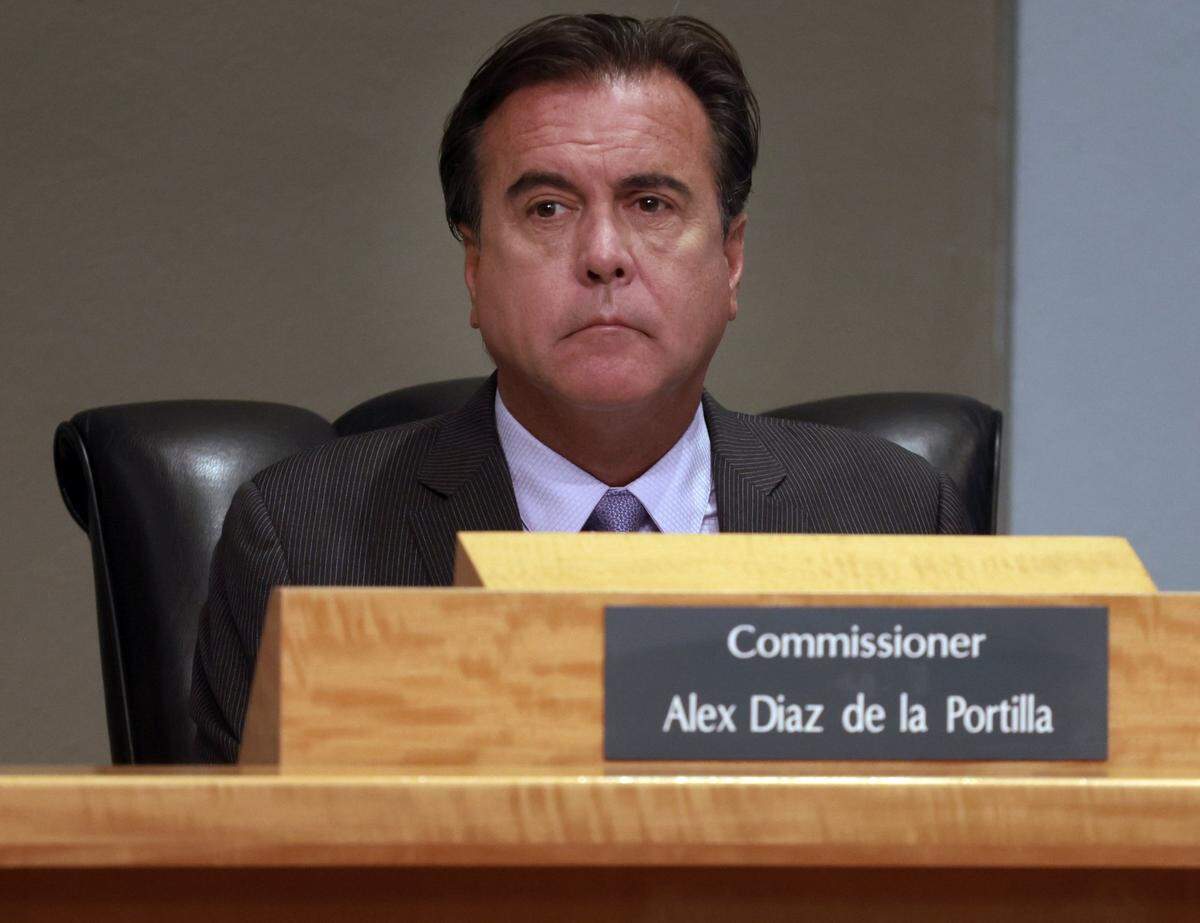
“I don’t know that he was impaired, and so I never felt the need to file a formal complaint about it,” Russell said. He added that, in his view, Díaz de la Portilla had a surly personality regardless.
“It just came to be accepted as part of his M.O.,” Russell said. “He was certainly more belligerent, but that wasn’t abnormal for him. I don’t know what role alcohol played in that.”
During meetings, Díaz de la Portilla would sometimes drink liquor out of a coffee mug or a paper cup, according to former staffers who spoke to the Herald on the condition of anonymity out of fear of retaliation. In some instances, hewould drink from a cup with a tea bag string taped to the side as a decoy, they said.
Díaz de la Portilla’s lawyer boasted about his client’s political skills in his response to those allegations.
“His unmatched effectiveness, ability to build coalitions and accomplishments in serving the public interest both on and off the dais would have been impossible if there was even a shred of truth to Ken Russell’s statements,” Kuehne wrote.
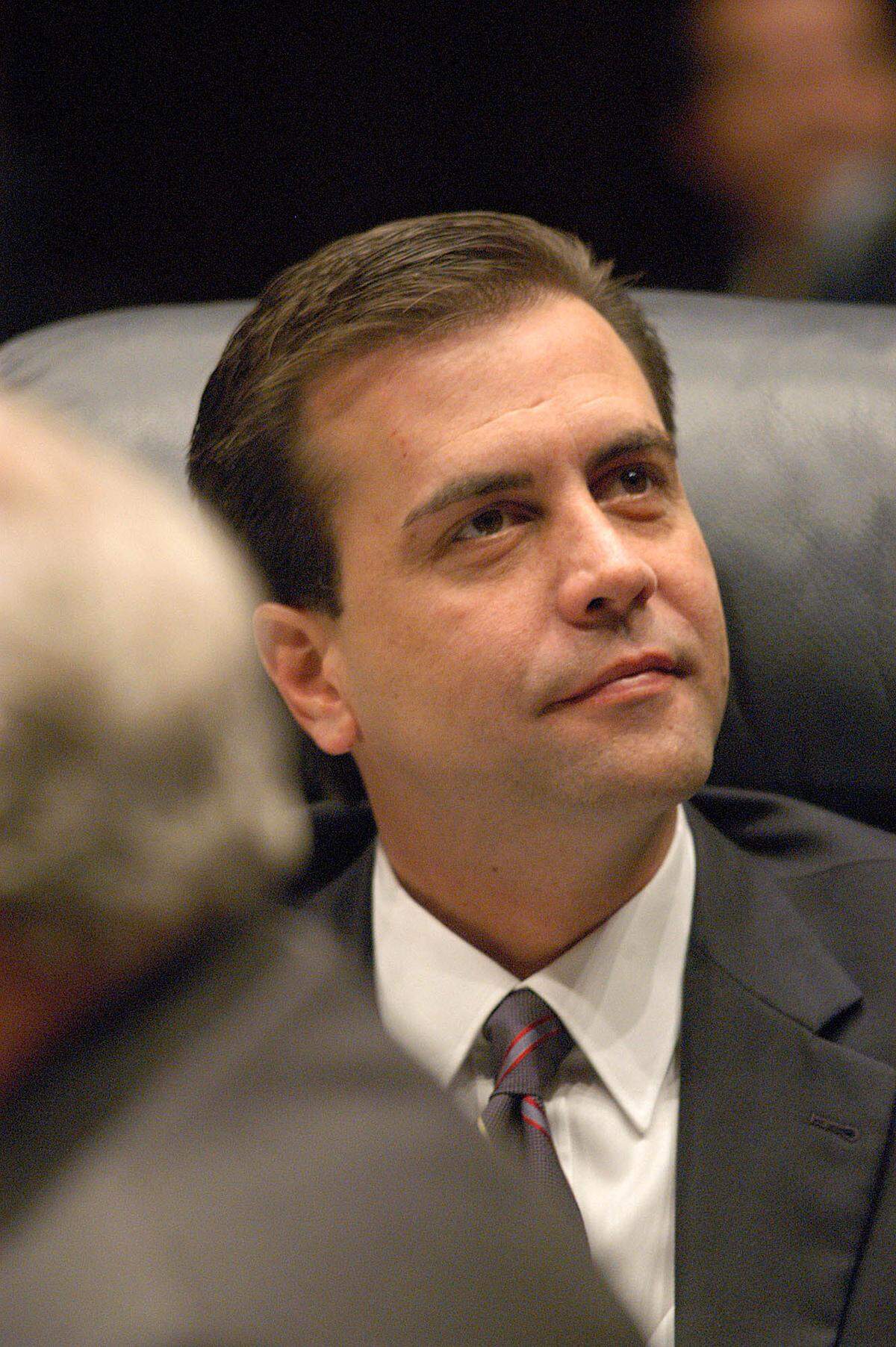
In his younger years, Díaz de la Portilla had been known for his drinking during his days in Tallahassee, according to political insiders, with one lobbyist noting that “he always had a bottle in his drawer.” Throughout his tenure in the state Senate, he was known as much for late-night partying and missing votes as he was for effective politicking.
His childhood friend Prieguez, who also served in the state Legislature in the early 2000s, said he was there when Díaz de la Portilla earned a reputation for his hard partying.
“He would not show up to committee meetings, or he would show up late,” Prieguez said. “There were nights and nights and nights where it was constant drinking and eating.”
By early 2019, the two had not spoken in years. Prieguez said he reached out to Díaz de la Portilla after he heard that the former state senator was going to run for the District 1 seat on the Miami City Commission. He’d heard Díaz de la Portilla had stopped drinking but wanted to see for himself if “he had cleaned himself up” because he thought his former colleague would make a good candidate if he was sober.
Prieguez chose the Yard House in Coral Gables, a sports bar with a large alcohol selection. Prieguez said Díaz de la Portilla ordered Diet Coke and nothing more.
“To my surprise — and I wanted to see this because I wanted him to be better — he did not have a drop of alcohol during that two- to three-hour meeting,” said Prieguez, who agreed to help the campaign with fundraising after that meeting. “From that moment, I was practically tied at the hip to Alex Díaz de la Portilla during the course of that election. In my eyes, he was a different man.”
Things changed after the election, Prieguez said, and the renewed friendship soured after Díaz de la Portilla allegedly pressured one of Prieguez’s lobbying clients to take on one of the commissioner’s associates as a partner in a bid for a lucrative public land deal.
The alleged “shakedown” is the basis of an ongoing civil lawsuit pending in Miami-Dade Circuit Court that Prieguez filed against Díaz de la Portilla last fall, nine days before his arrest. At the time, Prieguez stated he wanted to hurt Díaz de la Portilla — who was up for reelection that November — politically. The commissioner went on to lose in a runoff.
Prieguez told the Herald that now his motivations have changed.
“I’m not making these comments to hurt him politically, because I don’t think he has a future in politics,” he said. “I’m saying this as a former friend. These are my life experiences.”
Kuehne responded by saying that Prieguez was “disgruntled” because the lobbyist could not successfully “sell his purported access to Commissioner Alex Díaz de la Portilla in order to get clients.” The lawyer also called Prieguez’s lawsuit “frivolous.”
Prieguez’s account of Díaz de la Portilla’s sobriety on the campaign trail was echoed by Miami Commissioner Joe Carollo, whom Díaz de la Portilla publicly singled out as a friend and ally the night he won the City Commission seat in November 2019.
“During his campaign, and even before, I did not see any signs whatsoever of alcohol,” Carollo told the Herald.
But by mid-2020, the commissioner appeared to have fallen off the wagon, according to political insiders around him.
That same year, prosecutors say Díaz de la Portilla participated in a bribery scheme that put nearly a quarter-million dollars into two political committees he controlled. He allegedly used the taxpayer-funded Omni CRA headquarters as a de facto campaign office for his brother and accepted stays at a luxury Brickell hotel that were at times paid for by lobbyists with business before the city, according to an arrest affidavit and witness statements in the case.
READ MORE: Centners downplay ties to arrested Miami commissioner, say they ‘sprinkle money around’
Last September, Díaz de la Portilla was arrested on multiple charges, including money laundering and bribery, in connection with that alleged scheme. The governor subsequently suspended him from office.
The arrest became the talk of the town among Miami’s political class, with insiders pointing to one particular vice as a significant factor that may have derailed his once-promising comeback.
“There’s a good Alex and a bad Alex,” one lobbyist said. “Bad Alex comes out when he drinks.”

Over $1,100 in minibar charges
When City Commission meetings went virtual during the pandemic, one source said, Díaz de la Portilla would sometimes be drinking alcohol as he participated in meetings over Zoom from Room 801 of the East Hotel in Brickell, where he spent weeks at a time.
At the time of the commissioner’s arrest last year, Room 801 was described on the hotel’s website as the “ultimate business playground,” complete with a wet bar, full master bathroom, king-sized bed and a conference room. The suite, according to the hotel’s website, can be accessed through a separate, private elevator.
The room doubled as the “base of operations for fundraising and strategizing” for a 2020 political campaign for Díaz de la Portilla’s younger brother, Renier, who was running for a seat on the Miami-Dade County Commission at the time, according to an arrest affidavit in the bribery case. The suite, which was paid for in part by a lobbyist using money from a wealthy couple who later received the commissioner’s support on a land deal, is a focal point in prosecutors’ charges. Renier Díaz de la Portilla was not charged in the case.
READ MORE: Miami commissioner had ‘carte blanche’ over brother’s campaign tied to corruption case
Alex Díaz de la Portilla’s hotel bills, which prosecutors subpoenaed as part of the criminal investigation, show he often tapped the mini bar for drinks during his time at the hotel. A review of charges to rooms rented under the commissioner’s name showed that more than $1,100 in alcohol purchases were made across 17 different days in the fall of 2020, according to records obtained by the Herald.
Charges to 801 and another room under Alex Díaz de la Portilla’s name included mini bottles of top-shelf vodka Belvedere and Tito’s and Don Julio silver tequila, as well as a purchase labeled “breakfast liquor” from one of the hotel restaurants.
The records also show the purchase of two pints of Johnnie Walker Black Label — Díaz de la Portilla’s drink of choice, according to former City Hall staffers. He’d typically mix the scotch with Coca-Cola, sources said.
A ‘big brown bag from Flanigan’s’
Drinking also took place alongside campaign activity at the taxpayer-funded office of theOmni CRA, where Díaz de la Portilla was chairman, according to sworn statements from two employees who were interviewed during the course of the bribery investigation.
During 2020, Díaz de la Portilla used the conference room at the office for fundraising, according to sworn statements from Jason Walker, the Omni CRA’s former executive director, and Anthony Balzebre, the agency’s former assistant director. The Omni CRA is also the agency through which the land deal at the center of the state’s case against Díaz de la Portilla was brokered.

Walker said Díaz de la Portilla would typically arrive at the office with his brother Renier and other associates in the evening. They would go to the conference room, where members of the group would talk and drink while working on Renier’s County Commission campaign, Walker said in his statement.
“And where did the booze come from?” a prosecutor asked Walker.
“Uber Eats, Publix Liquor across the street,” Walker said. One time, he recalled a “short guy” whose name he didn’t remember walking into the office with a “big brown bag from Flanigan’s” as Walker was leaving.
Balzebre, who is now the chief of staff for District 2 Commissioner Damian Pardo, told investigators that an employee named Jenny Nillo, a longtime family friend of Díaz de la Portilla who was hired by the commissioner, would bring food and alcohol to the meetings: “Mostly hard liquor,” Balzebre told investigators.
In his statement on behalf of Díaz de la Portilla, Kuehne blasted Walker and Balzebre as incompetent employees who “routinely came to work late, left early and did not provide value for their salary.”
In response to a question about whether drinking in the office was appropriate, Kuehne said that Walker’s statements were false and that the activity “did not take place.”
Nillo, who was hired as a “community liaison” for the agency but whose job, in practice, mostly entailed running errands for the commissioner, in 2021 found herself at the center of a Florida Department of Law Enforcement investigation into a tip that she was a “no-show” employee.
That investigation revealed deeper layers to the commissioner’s drinking. On the morning of March 18, 2021, a Thursday, investigators followed Nillo and watched her purchase alcohol from a Little Havana liquor store, including a pint of Casamigos Reposado tequila and a bottle of Cabernet, before noon. Investigators then witnessed Nillo drive to Díaz de la Portilla’s apartment, where she stayed for nearly three hours. After witnessing Nillo driving erratically after leaving the commissioner’s apartment building, investigators stopped her and seized the vehicle.

Nillo later told investigators that her boss would ask her to purchase alcohol on his behalf, sometimes wine and “Black Label” scotch, and that he reimbursed her in cash.
Nillo, whom Díaz de la Portilla had hired shortly after she’d finished serving a federal prison sentence for mortgage fraud, had her own issues with drinking, Díaz de la Portilla acknowledged in a statement to investigators. In an interview with FDLE agents after that incident, Díaz de la Portilla said “he was aware that Nillo had a long-standing problem with alcoholism, but claimed he wasn’t aware of her drinking problems at the time he hired her.”
“He acknowledged Nillo had, on occasions, purchased alcoholic beverages for him (i.e., wine for a dinner party),” investigators wrote, “and possibly a bottle of tequila for a friend.”
The FDLE investigation into Nillo’s activity did not result in charges for either Nillo or Díaz de la Portilla.
At the time, Díaz de la Portilla defended his hire of Nillo, saying she was a model employee who was being unfairly criticized for her past conviction.
“She’s being attacked because she made a mistake,” he said. “ … She wanted a second chance, so I gave it to her.”
On Thursday, Díaz de la Portilla’s attorney called her“a convicted felon and a proven fraudster,” adding that “she has no credibility.”
“Mr. Díaz de la Portilla offered her an opportunity to redeem herself at a time when everyone turned their backs on her. Unfortunately, Ms. Nillo squandered that opportunity by her behavior,” Kuehne wrote.
The lawyer said that Díaz de la Portilla “did not ask or direct Nillo to purchase alcohol for him,” contradicting Nillo’s statements to authorities and Díaz de la Portilla’s own statement to ethics investigators, according to a summary of his interview from 2021.
At the conclusion of Kuehne’s response to the Herald’s questions, he quoted Martin Luther King Jr.
“We shall overcome because the arc of the moral universe is long but it bends toward justice.”
This story was originally published November 1, 2024 at 5:00 AM.
.jpg)