Miami’s ‘Sacred Places.’ New photo exhibit explores Vodou and a rich array of beliefs
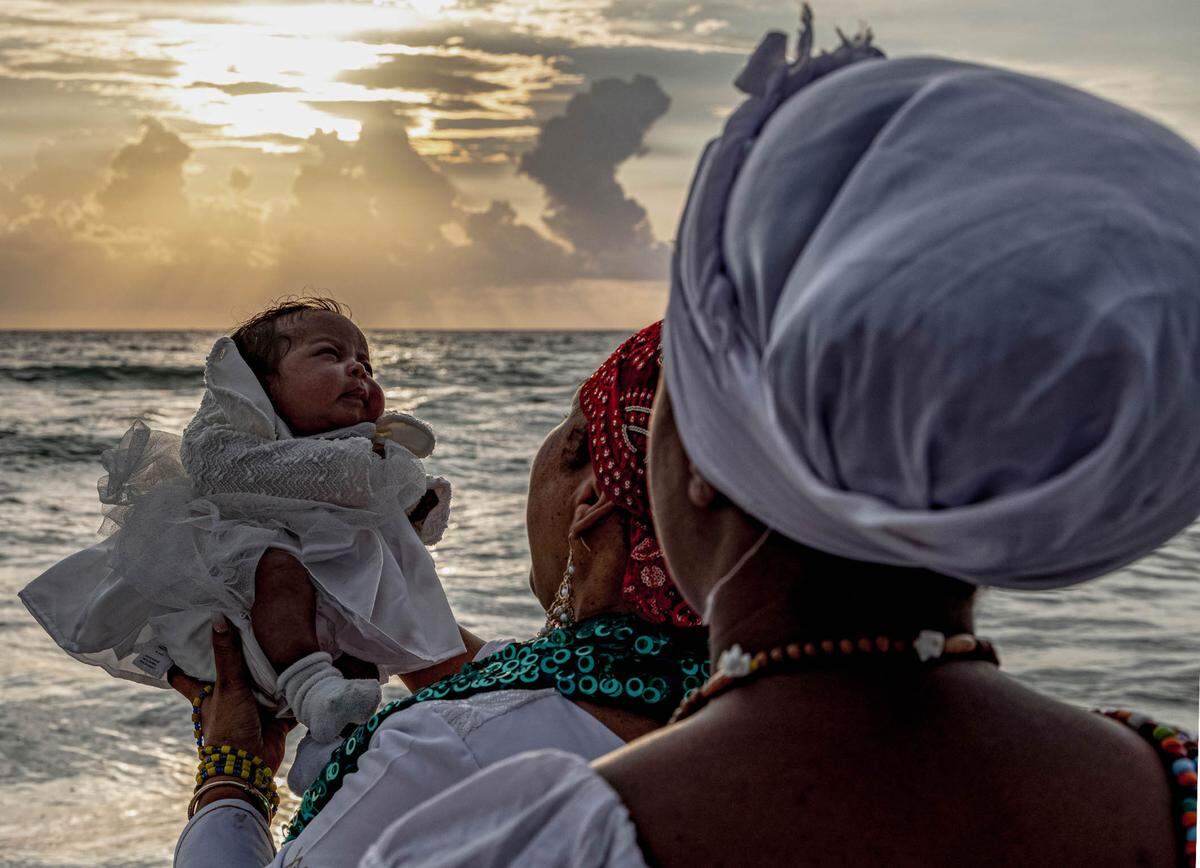
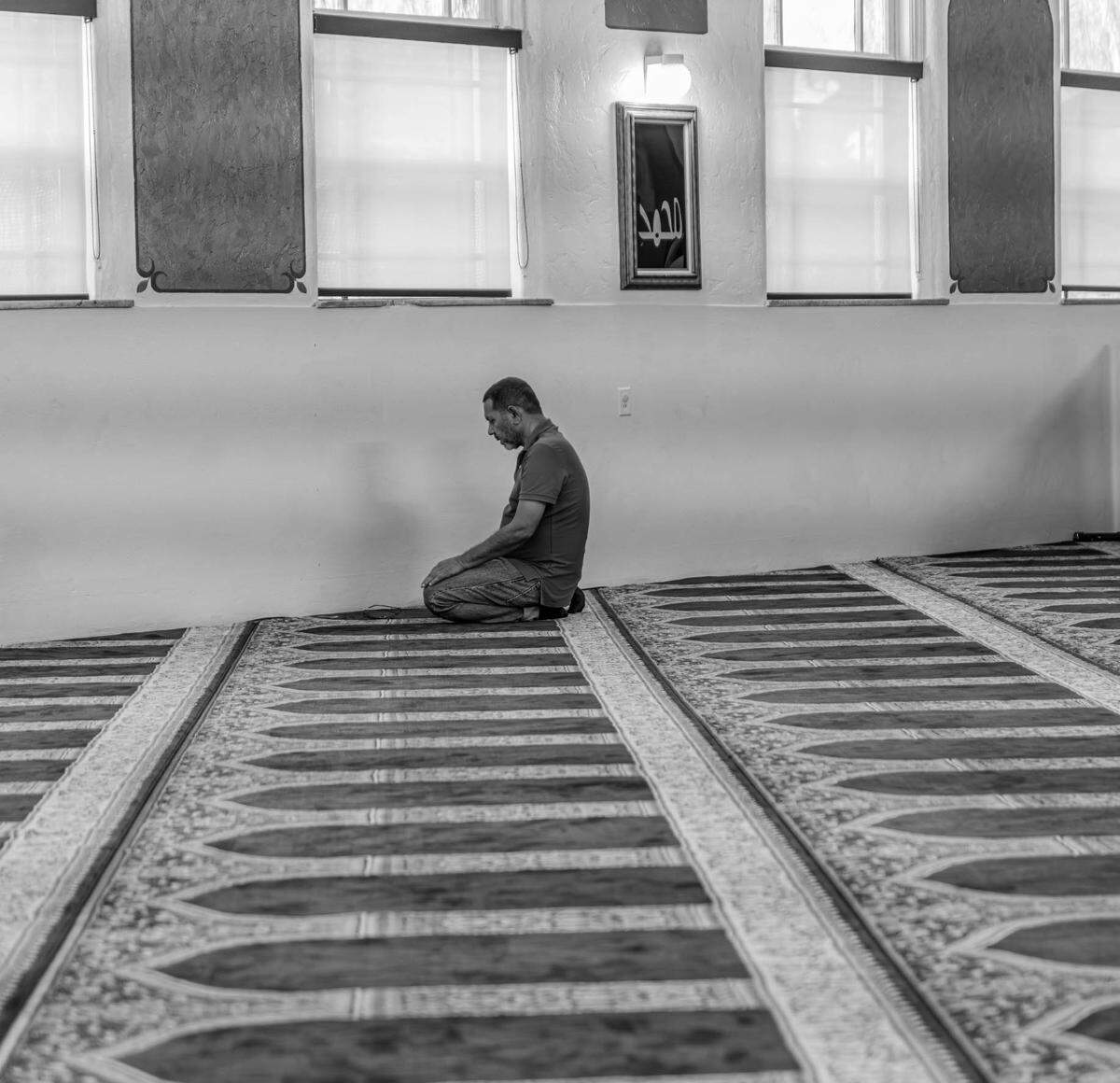
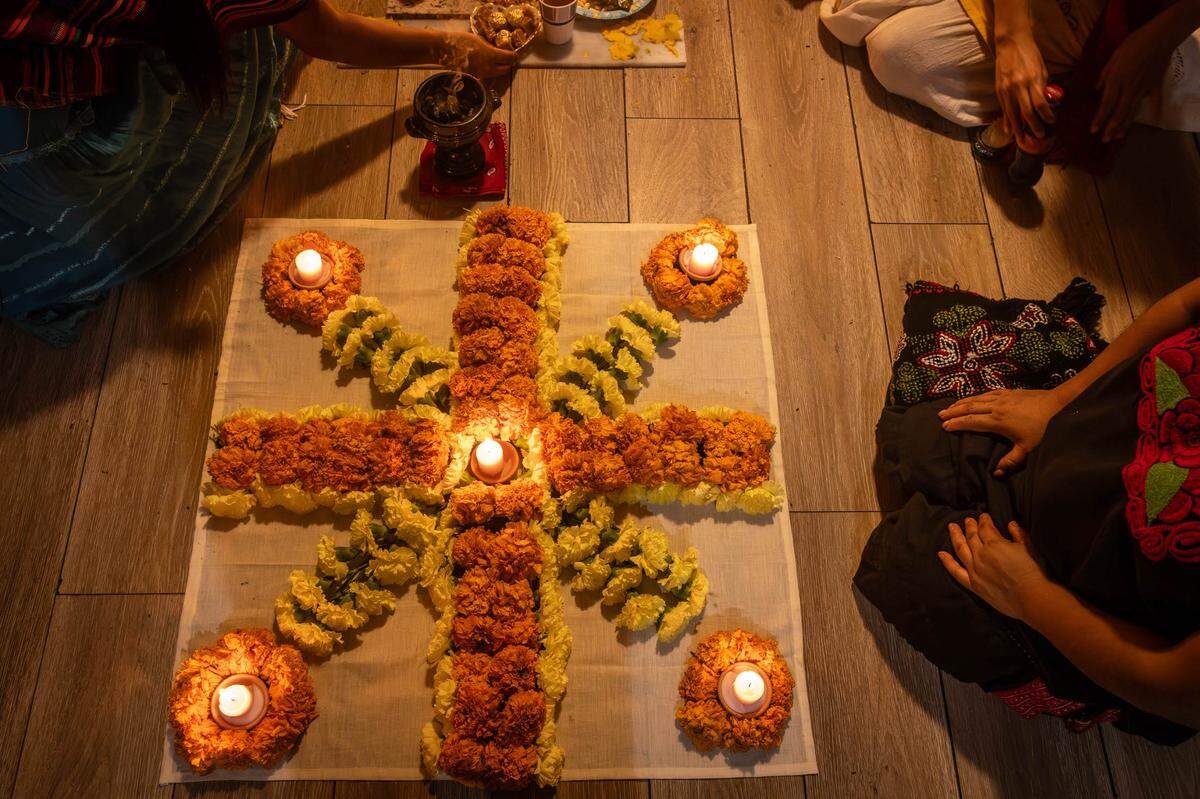
A Haitian Vodou baptism ceremony on Dania Beach. Offerings at a Día de los Muertos, or Day of the Dead, altar in Little Havana. A Muslim man praying inside Miami’s oldest mosque.
These rituals in these places reflect the rich cultural and religious diversity of South Florida yet they are unseen or even unknown to most outsiders.
For the past three years, Little Haiti photographer Woosler Delisfort has traveled to churches, temples, mosques and other sites across Miami-Dade and Broward to document these and many other intimate moments of spiritual connection.
They are scenes that make up a new exhibition, “SANCTUARY: Our Sacred Place,” that explores how South Florida worships, celebrates new life and grieves the death — with a particular focus on African and Caribbean populations. The show, which opens this Thursday at the HistoryMiami Museum, also follows the spiritual journey of Delisfort, a Haitian-American who grew up Catholic but began exploring Afro-Caribbean spirituality later in life.
Through photography, music and religious installations, the more than 100-piece exhibition provides a window into some of the lesser-known practices, including Haitian Vodou and La Regla de Lukumí, colloquially known as Santería. The show aims to remove some of the stigma around Afro-Caribbean spiritual practices that are often misunderstood — even vilified in some circles, said Delisfort.
“For so long, we have always had this negative perception when it comes down to African spirituality, regardless if it’s Haitian Vodou, Ifá, Lucumi, or Santería,” Delisfort said. “When I began to document that, I really wanted to retell or reshape that story.”
The show’s lead curator, Marie Vickles, who has worked with Delisfort since 2018, said “Sanctuary” is meant to share the “living and connected histories of Miami’s Indigenous, African, and Caribbean communities.”
“Through his images, audiences will feel a personal connection intended to remind them of their own stories or introduce them to new ones,” said Vickles, an independent curator and senior director of education at the Pérez Art Museum.
By including a wide array of religions that reflect Miami’s African and Caribbean roots, the exhibition may also spark curiosity for those who may not be familiar, said co-curator Ireọlá Ọláifá.
“This gives an opportunity for us to now begin to be curious. ‘I didn’t know this was here in Miami. And how can I learn more?’”
Demographically, South Florida is a coat of many colors. More than half of the county’s population is foreign-born and almost 70 percent is Hispanic. Miami-Dade is also home to the second-largest population of Black immigrants in the United States, roughly 490,000, according to a recent study from Pew Research Center, with many coming from countries in the Caribbean.
With that diverse population of immigrants comes longstanding religious traditions. “Sanctuary” puts these traditions back on display.
“It’s about pushing back into the light some of the cultural aspects that have been pushed into the dark,” Ọláifá said.
Creating sacred spaces
The first steps of the “Sanctuary” exhibit are through a threshold constructed to look like a church, with faux-stained glass windows that read “welcome.” A large pillar stands in the center of one of the rooms, mirroring what you’d find at a Vodou ceremony, where energies and spirits are believed to pass through the central pillar, or “Poto-mitan” in Creole.
In order to bring the vision of “Sanctuary” to life, Delisfort and the show’s curators, Ọláifá and Vickles, invited religious practitioners to install multiple altars throughout the show. One altar, for example, installed by the Ameyal Mexican Cultural Organization, a group that helps showcase Mexican traditional culture, will contain pictures of real families to represent its significance of honoring ancestors.
“Especially when it comes to the indigenous practices, altars are these centerpieces that help to channel different energies, whether it be ancestral or specific deity or Orisha,” said Ọláifá. “So I think for [Delisfort] it was important to incorporate that visually, so that people could get a sense of the spaces that he was entering.”
The exhibition kicks off Thursday night with an indigenous ceremony led by the Ameyal Institute, and will run until January 2025.
The details are what make the show feel immersive, recreating the feeling of going to church or stepping into a holy place. The show also uses music, playlists of everything from Gospel choir music to African drumming, to help people feel like they are walking into a sanctuary.
“There is not a single spiritual system that doesn’t use music to invoke the kind of energy that that spiritual practice is tethered to,” Ọláifá said.
To add historical context, the exhibition also features a small selection of photos from the HistoryMiami museum’s Center for Photography collection, depicting spiritual practices from Miami’s Black communities in the 19th and 20th centuries.
Delisfort was the first recipient of a fellowship with the museum that was created to “support emerging photographers whose work documents Miami’s BIPOC communities,” said Christopher Barfield, HistoryMiami Director of Exhibitions.
“What makes Sanctuary truly spectacular is the way Woosler has brought a diverse group of religious traditions together in one project to explore their depth of belief and spirituality,” Barfield said.
“Sanctuary” highlights that fact that many religious traditions, regardless of their origins, have similar elements.
“Some of the photo essays intertwine with each other. And I did that on purpose, because I want them to see that there’s no difference,” Delisfort said.
The idea of water, for example, plays a central part of Delisfort’s show. Whether it’s holy water used during a Catholic baptism ceremony or sacred water used during a Vodou baptism in the ocean, water is a major aspect of many religions.
In the exhibition’s lead image, a Vodou priestess, or manbo, holds a newborn baby dressed in all white garments on the beach. The birth mother and spiritual mother stand together looking down at the child after her baptism, overlooking the ocean and the sunset.
Delisfort said the photo, which may be his favorite of the entire show, encapsulates the theme by depicting one of our very first sanctuaries — nature.
“It tells the story of what sanctuary is, and that’s something I really wanted to push. There’s multiple layers of sanctuary, and that sanctuary is all around us. It’s just not one specific space.”
Delisfort said he wants people to “see themselves” in the exhibition, while taking time to learn about other faith traditions.
“They can remember being in a Haitian church, going by the ocean and doing a baptism, but also seeing a Vodou ceremony doing the exact same thing.”
’Part of my culture’
For Delisfort, a self-taught documentary photographer and filmmaker, the exhibition is also a personal statement on his own spirituality. Delisfort was raised in a Catholic household, and though his family did not practice Vodou, he always understood it as a spiritual system that was central to his Haitian culture. He credits his family’s openness as part of the reason why he was able to begin documenting the religion without judgment over 12 years ago.
“With me, this is part of my tradition, it’s part of my culture,” Delisfort said. “My very first teacher never taught me that this is evil.”
The history of Vodou is closely linked to the Haitian Revolution — one of the largest ever successful slave revolts in history — which gave birth to the independent Haitian nation, according to research by Haitian sociologist Laënnec Hurbon.
It was practiced by the slaves as a way to restore individual identity and challenge European colonialism. The spiritual system, which has a large focus on different domains of nature (water, air, fire etc.), has roots in African religious and cultural traditions. It has been persecuted throughout history for having links to “magic and witchcraft,” a pejorative view that resurged during the American occupation of Haiti in the early 1900s.
There are, according to Delisfort, many people, including some in his extended family, who still view Vodou as an evil practice.
“They might not come to the show, but they never looked down on me,” he said. “I’m not here for debate, I’m not here to push any belief.”
A key part of the creative process, Delisfort said, is taking time to learn about the different religions before showing up to document them.
“Every practice that I document for the very first time, I come in as someone who’s interested in the spirituality. I don’t come in as a documentary photographer, so I don’t even have my camera.”
The process can take more time, maybe weeks of spending time with a subject before filming them, but Delisfort says it’s important to gaining trust.
“By them seeing me like sitting down and participating in ceremony ... it gave them this openness, ‘like okay, maybe he really wants to tell the story.’”
Central to Delisfort’s work is his connection with spiritual guides, specifically to the female leaders in his life. He credits his “spiritual mother,” a Vodou priestess named Mambo Ingrid, as the person who sparked initial interest in photographing Vodou ceremonies. Though he is not initiated, he often attends and participates in ceremonies with his “spiritual sisters” and friends.
“All these women brought me back into spirituality,” he said.
IF YOU GO:
WHAT: “SANCTUARY: Our Sacred Place”
WHERE: HistoryMiami Museum, 101 West Flagler Street Miami, FL 33130
WHEN: August 22, 2024 through January 26, 2025
COST: Opening night is free. For regular rates go to historymiami.org/plan-your-visit/
The Historic Virginia Key Beach Park Trust provided the Miami Herald access to the park for photos.
This story was produced with financial support from Trish and Dan Bell and from donors comprising the South Florida Jewish and Muslim Communities, in partnership with Journalism Funding Partners. The Miami Herald maintains full editorial control of this work.
This story was originally published August 21, 2024 at 5:30 AM.