
Free transit fares in Miami-Dade start Monday. And so do new bus routes. What to know
Metrorail trains and county buses will be free to ride starting Monday as Miami-Dade County rolls out new bus routes that have some passengers getting quicker commutes and others losing their regular rides.
The launch of free fares is expected to cost the transit system $9 million in the short term before the $2.25-per-trip fee returns Jan. 1. Mayor Daniella Levine Cava is hoping to recoup the lost revenue over the long term by attracting new riders to a transit system with a bus network touted as more efficient and more convenient.
That raises the stakes for the launch of the Better Bus network, the redesigned system that drops routes, renames and reworks others and requires riders to walk farther with the elimination of more than 1,000 bus stops to speed arrivals at the 6,000 that remain.
Here are some things to know for today’s big changes in transit:
There’s a planner to tell you what new bus routes mean for you
For regular transit riders, the county’s trip planner will compare the old bus routes available between two locations and how that compares to what now exists under the Better Bus redesign. That includes both the route names and the time required to make the trip under the old and new route system. For an easier look at only what’s available now, users can turn off the results from the prior bus system.
More people will live near busy bus routes with extra arrivals
A central feature of the Better Bus redo is speeding arrivals of buses along more popular routes, while shifting resources away from less popular routes. Routes considered high frequency — with vehicles arriving at least every 15 minutes — increase from 5 to 19 with Monday’s revamp. The main routes also have the higher-frequency arrivals stretching further into the evenings and weekends to reduce the rush-hour and off-peak service.
The Department of Transportation and Public Works said under the old system, fewer than 20% of the county’s low-wage workers could take high-frequency transit to their jobs on Saturdays. With the Better Bus route, that number more than doubles to 42%.

Ian Linder, a part-time teacher and student, lives in the Coral Gables area and said he likes to keep his car at home whenever he can. “If there’s a possibility to take a bus, I’d rather not drive or park,” Linder said. For him, Better Bus means some inconvenience in losing his favorite north-south option in the retirement of the 42 line between Coral Gables and Opa-locka. But he’s happy to see increased arrivals on the bus he takes west to Florida International University and east to Brickell Avenue.
Route 24 moves from 30-minute arrivals on the current schedule during peak times to buses pulling in every 15 minutes under the new one, meaning the average wait would be less than eight minutes. “That’s fantastic,” he said.
Linder said he wishes Miami-Dade was spending more on Better Bus to expand service, rather than shifting resources from low ridership routes to more popular ones. “They had to make big trade-offs,” he said. “I still think it’s a massive improvement.”
To take free transit rides, just arrive
Metrorail stations and county buses will not be swiping any transit cards or smartphones for passengers to board during the seven-week stretch of free fares. That’s a repeat of the emergency free-fare system imposed after the COVID-19 pandemic hit in 2020 and then discontinued a year later.
For some routes, the big change is a new name
A list of route changes shows multiple routes being renamed, as Miami-Dade moves away from using letters to name bus lines and reworks existing numbers. The 33 between Miami Shores and Hialeah Gardens becomes the 103. The A between Miami and Miami Beach becomes the 15. And the 252 Coral Reef Max in the Country Walk area shifts to the 152.
Miami-Dade expects to have hundreds of county staffers and volunteers dispatched at bus stations across the county on Monday to help riders adjust to the new names and route changes.
Miami-Dade hopes shuttles will cover holes left by Better Bus
For riders in areas losing bus routes, Miami-Dade is counting on roving shuttles to make up the difference. On-demand vehicles operated by Freebee and MetroConnect will pick up passengers when summoned by app in multiple zones throughout the county and drop them off where they want to go in that zone.
Areas with the service include suburban Westchester and North Dade, areas around the North and South Dade Metrorail stations and the neighborhood surrounding courthouses and hospitals known as the Civic Center. Some riders are complaining the trade-off isn’t working, with limited shuttle hours and unreliable pick-ups. “I need for the Metroconnect service in the Westchester zone to extend its hours,” an anonymous county employee said in a recent email to the County Commission. “I was requesting a ride home from work but there was nothing available.”
Some Miami-Dade transit riders are losing their bus routes
Nora Howell usually rides the 115 bus from her home off of Hawthorne Avenue on the northern portion Miami Beach to her job as a medical technician at Mount Sinai Medical Center five miles away. On Monday, Route 115 went away, one of more than two dozen routes being retired as the county shifts vehicles and operators to bus lines with higher ridership.
Some of the retired routes have been suspended since Miami-Dade reduced service at the start of the COVID-19 pandemic in 2020.
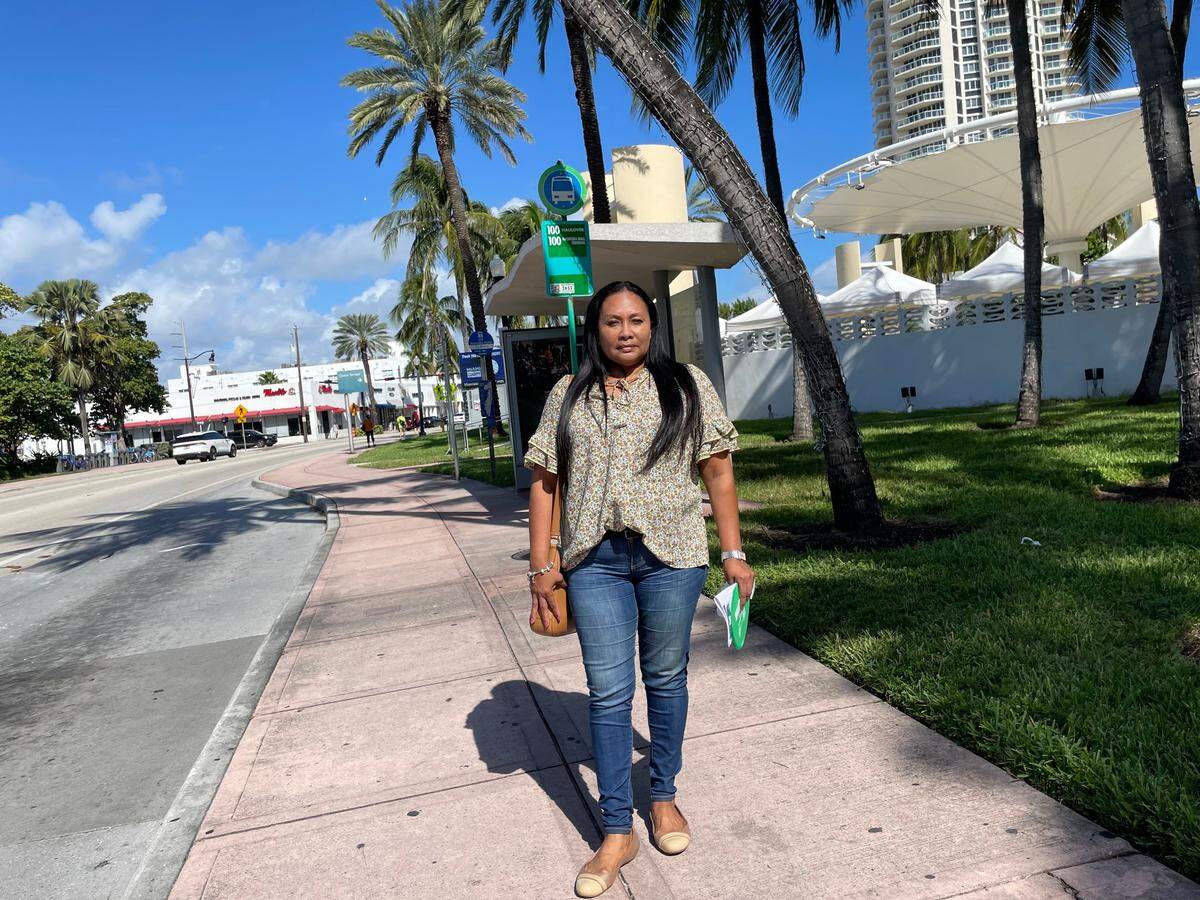
The Better Bus trip planner shows a morning bus trip for Howell goes from 24 minutes to 48 minutes without the 115, including a 14-minute trip to the closest bus stop instead of the three-minute walk she had under the old system. For Howell, the change means she won’t be celebrating the temporary switch to free fares. “We’re willing to pay,” she said. “But give us something.”
Eileen Higgins, the Miami-Dade commissioner who heads the county’s Transportation committee, said Freebee, run by Miami Beach using the city’s share of the county’s half-percent transportation tax, should cover Howell’s lost service from the retired 115. “She can call a Freebie,” Higgins said when told of Howell’s situation. “And it will take her to Mount Sinai.”
Higgins said some riders will be left with much longer walks to transit with the Better Bus changes but that most should see improvement. She urged the public to see the redesign as an improvement for the transit system but not a perfect fix.
“We have a bus system that doesn’t work for everyone today. We’re going to have a bus system that doesn’t work for everyone tomorrow,” she said. “But it’s going to be a bus system that works better for thousands and thousands of more people.”
This story was originally published November 12, 2023 at 5:00 AM.