
Replacing the Venetian Causeway bridges will take years. Here’s how long, and why
Though Miami-Dade County engineers have decided to demolish and replace 11 original bridges along the historic Venetian Causeway, the work — and the inevitable daily disruptions it entails for thousands of users — won’t start for years.
It already took eight years of painstaking analysis and public meetings and debate before the county, acting in consultation with state and federal transportation officials, came to the conclusion it’s not possible to save the historic 1926 bridges, which connect Miami, Miami Beach and the six mostly residential Venetian Isles.
And it will take a few more years of study, design work and consultation with Venetian Isles residents, causeway users and preservationists before Miami-Dade’s department of transportation and public works is ready to take down the first bridge. The county says demolition and construction won’t start until 2026.
That’s because U.S. law governing the use of federal transportation dollars — expected to fund most of the $148 million reconstruction — requires rigorous scrutiny of everything from engineering decisions to the social and environmental effects of major projects. In cases when historically designated landmarks like the Venetian are involved, the law also requires careful consideration of preservation questions.
In December, the Florida Department of Transportation and the Federal Highway Administration approved a 400-page report that lays out alternatives to addressing the advanced deterioration of the causeway’s bridges, as well as the challenges posed by sea level rise and bigger, stronger storm surge.
The report concludes that repair and renovation of the existing historic bridges is impractical, and endorses full replacement by slightly higher bridges as the best alternative to protect them from the effects of climate change, while preserving the causeway’s historic scale and minimizing effects on homes.
Given the Venetian’s historic and architectural importance, and its widely cherished 1920s vintage look and scale, the plan also requires the new bridges replicate the originals as closely as possible, down to the geometric patterns on the concrete bridge railings.
That’s what the county already did when it replaced the crumbling westernmost drawbridge at the Miami end of the causeway in 2016.
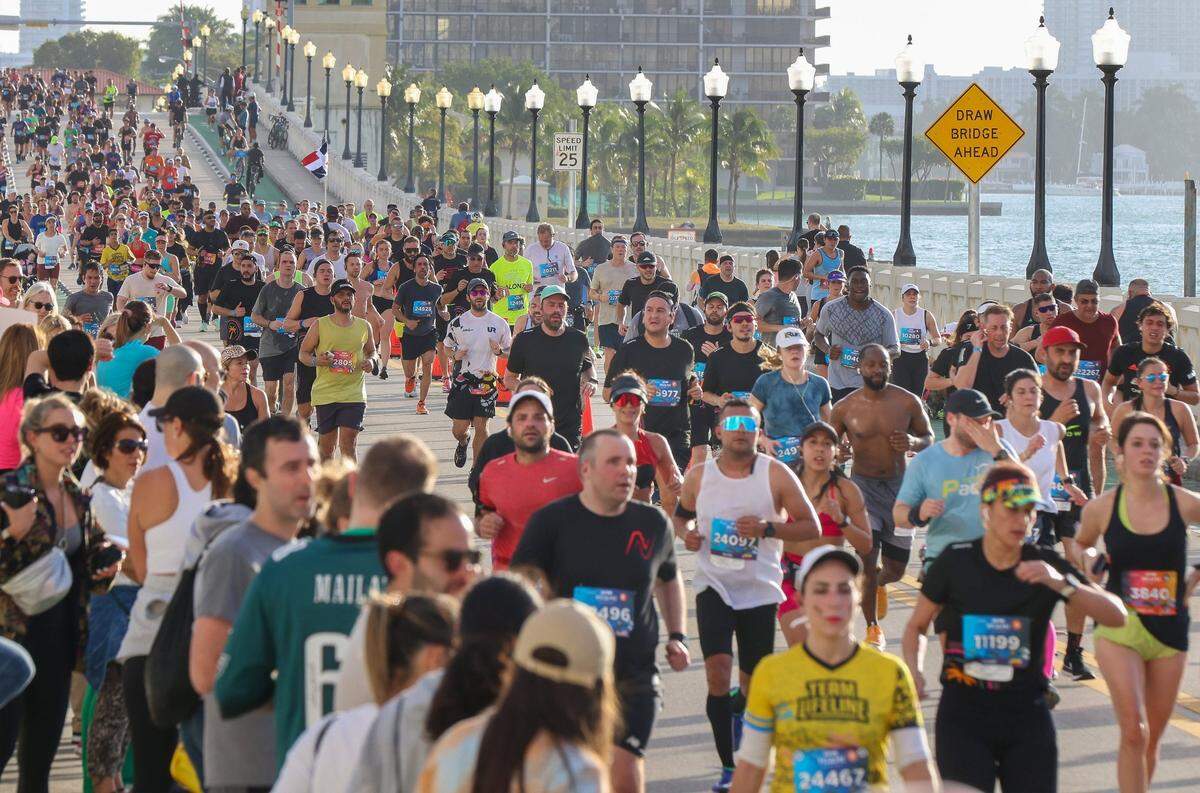
Because hundreds of pedestrians, runners, cyclists and scooter riders cross the causeway every day for commuting and recreation — uses the Venetian’s original designers never contemplated — the plan calls for new bridges to be some 16 feet wider than the old to accommodate expanded sidewalks and bike lanes buffered from motorized traffic.
With the conceptual plan ratified, the next time-consuming steps are to develop formal design and construction blueprints, hire construction contractors and obtain a raft of local, state and federal permits. Because those plans are still at an early phase, there is as yet no precise timeline for the project.
According to the county, this is what comes next:
▪ The conceptual plan’s requirements will be incorporated into formal designs being drawn up by the county’s project consultants, EAC Consulting of Miami. Though already underway, design work is only about 30% done and will take until spring of 2025 to finish.
▪ Proposed designs will be presented for public comment before a final version is approved. The design plans must also be approved by the historic preservation boards of Miami and Miami Beach.
▪ Once final designs are vetted, the county will go out to bid for a contractor to build the project. That can take a year or more.
▪ Permits must be secured from numerous regulatory agencies, including the U.S. Army Corps of Engineers.
▪ Demolition and construction could begin in 2026.
▪ Work would then take four years, putting completion at about 2030.
This story was originally published March 5, 2023 at 5:30 AM.