A day to celebrate, reflect: Liberty City honors Martin Luther King Jr. with annual parade
During breakfast on Monday, Jenny Jongsma, a white woman, told her adopted children of color about a man who despite dying decades ago played a vital role in how their family came to be: Martin Luther King Jr.
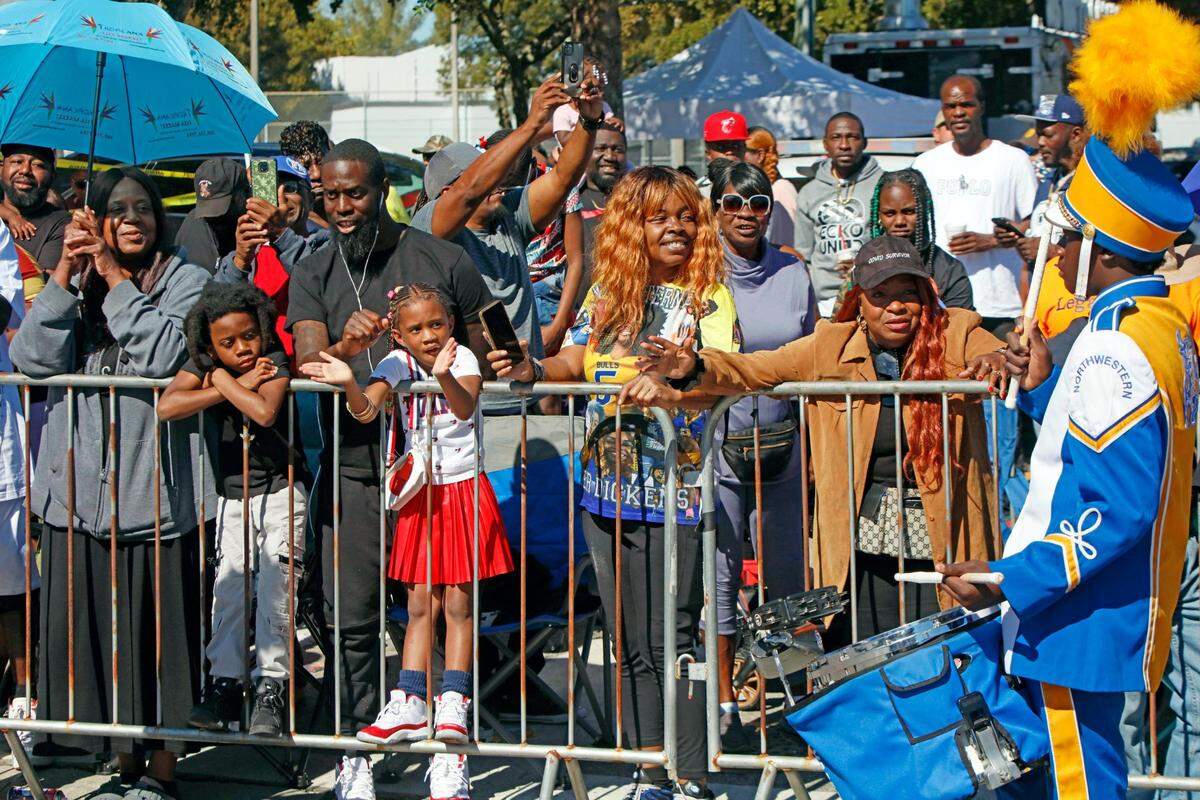
Shortly after, along with hundreds of others, they arrived at Northwest 54th Street in Liberty City and watched Miami-Dade’s 46th annual parade in honor of King, the most prominent leader of the civil rights and social justice movement in the U.S.
“It’s important for them to learn about him, about how we probably wouldn’t have been accepted as a family now if it weren’t for Dr. King,” said Jongsma, who attended the parade with her children Melody, 2, Keira, 7, and Dallas, 9.
Throughout his short life, up until his assassination, King got arrested, threatened, harassed and stabbed. His home was bombed. But despite the violence he faced, the Baptist minister stayed faithful to his nonviolent tactics. For that, he won the Nobel Peace Prize in 1964.
Jongsma lives in Holland, Michigan, with her husband, son and two daughters. They traveled to Miami this week for Martin Luther King Jr. Day, a federal holiday held every third Monday of January, close to his Jan. 15 birthday.
This year, King would’ve turned 94. He was assassinated in 1968 when he was 39.
“We’re a multi-racial family so we felt it was important to experience this with our kids,” said Jongsma, a stay-at-home mom. “As white people raising Black and brown youth, it’s important to really explain this as well as we can, so I do a lot of research. We have to be intentional about seeking racial diversity and finding opportunities for them to be immersed in their culture.”
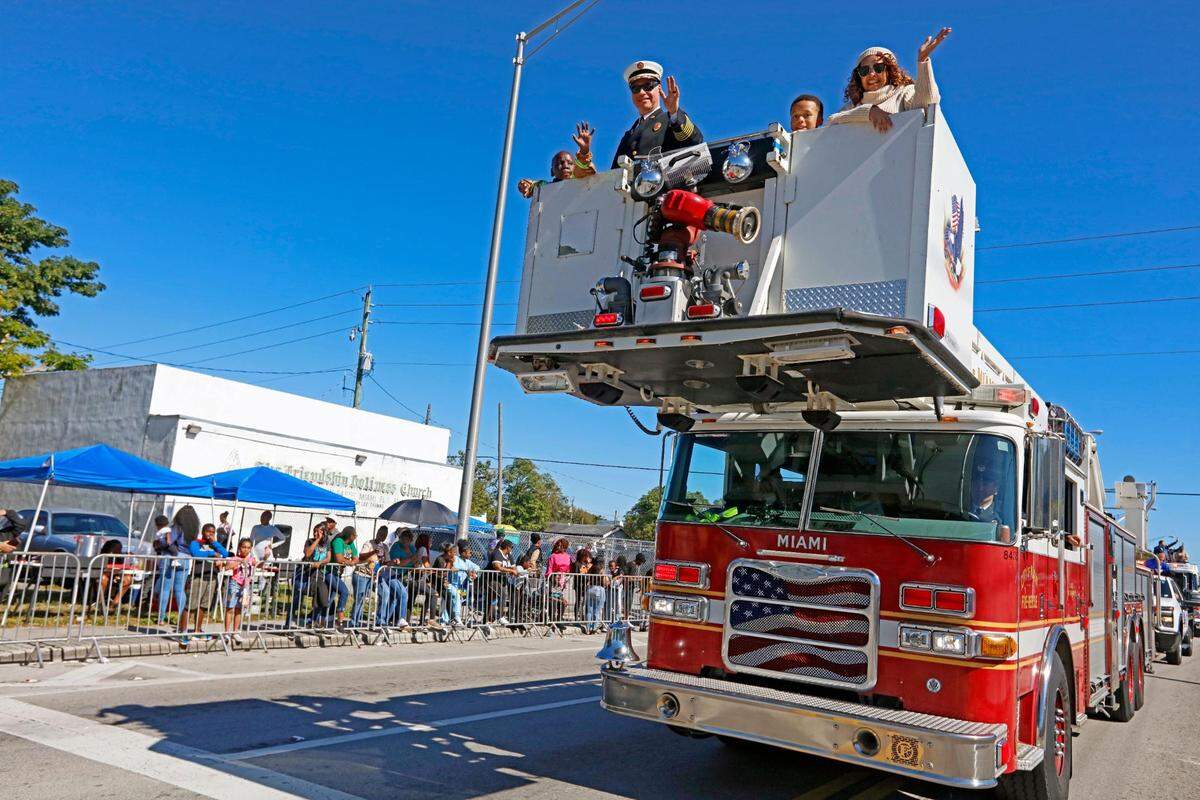
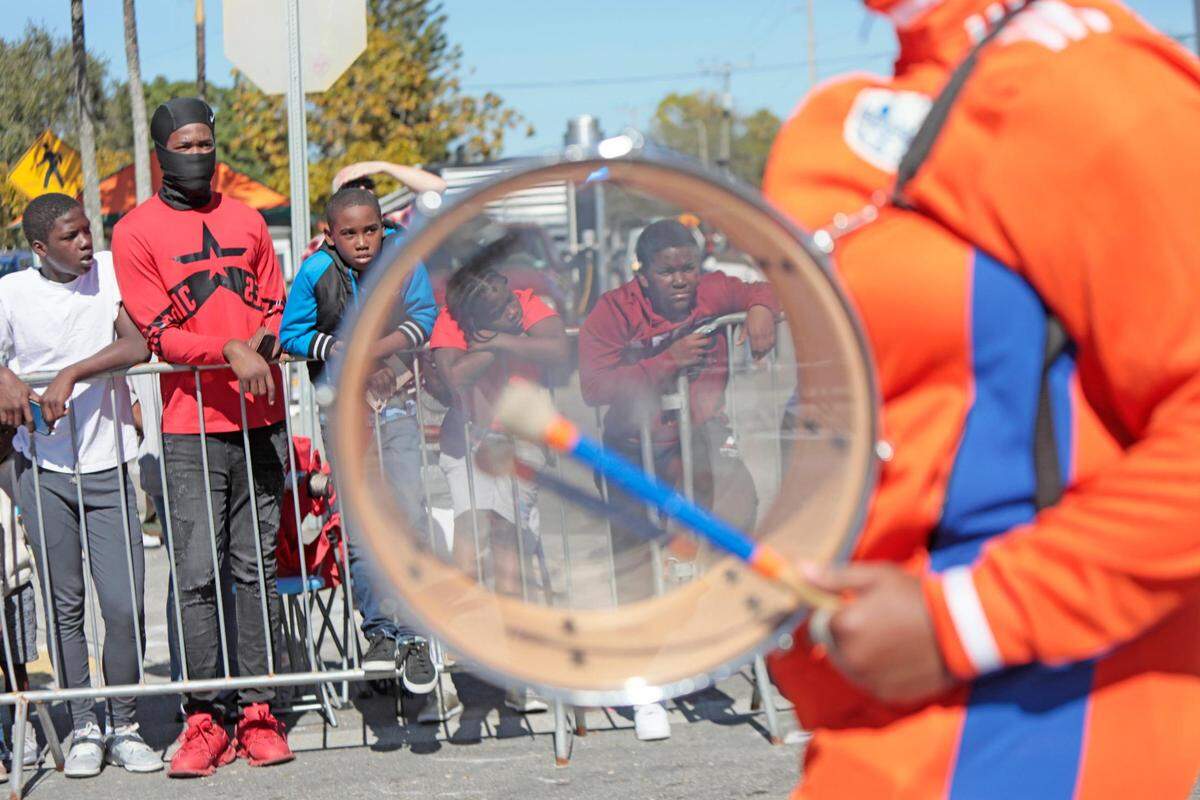
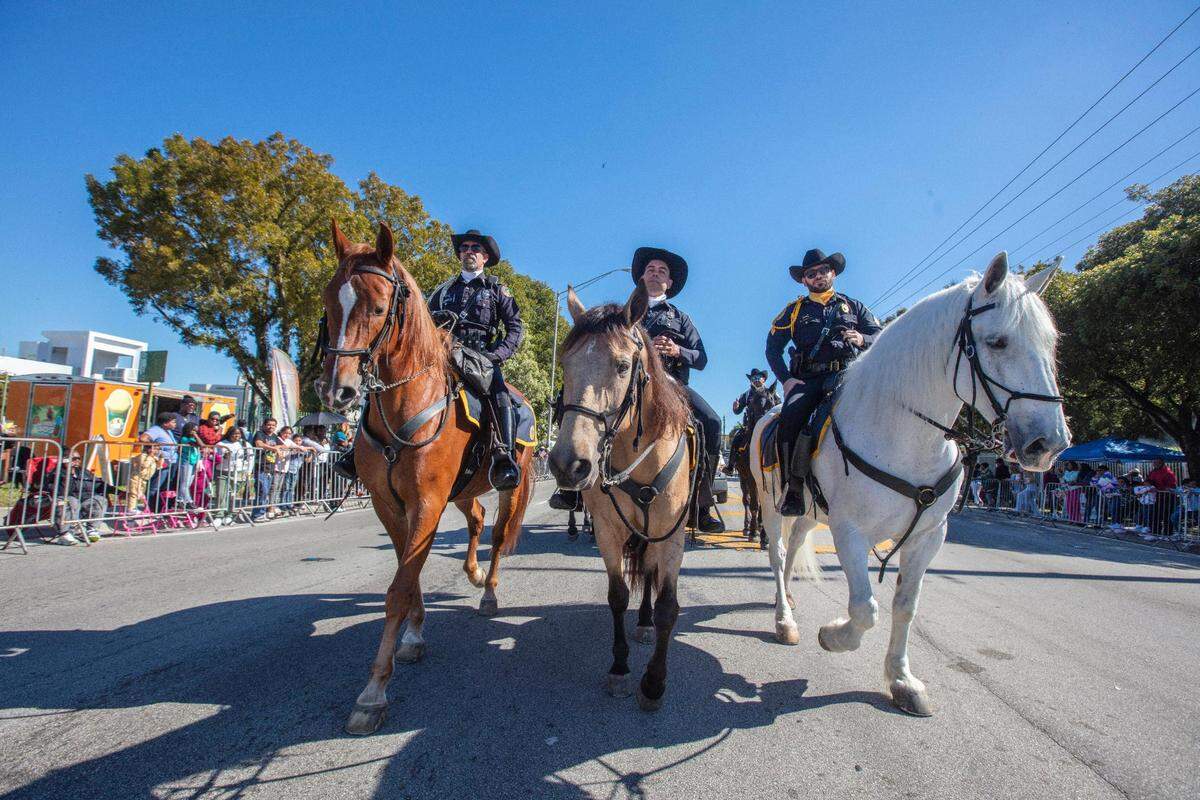
The parade included dozens of floats, cars and fire trucks decorated with balloons, streamers and cardboard silhouettes. Local politicians, business owners, law enforcement officials, church elders and activists waved at the crowds.
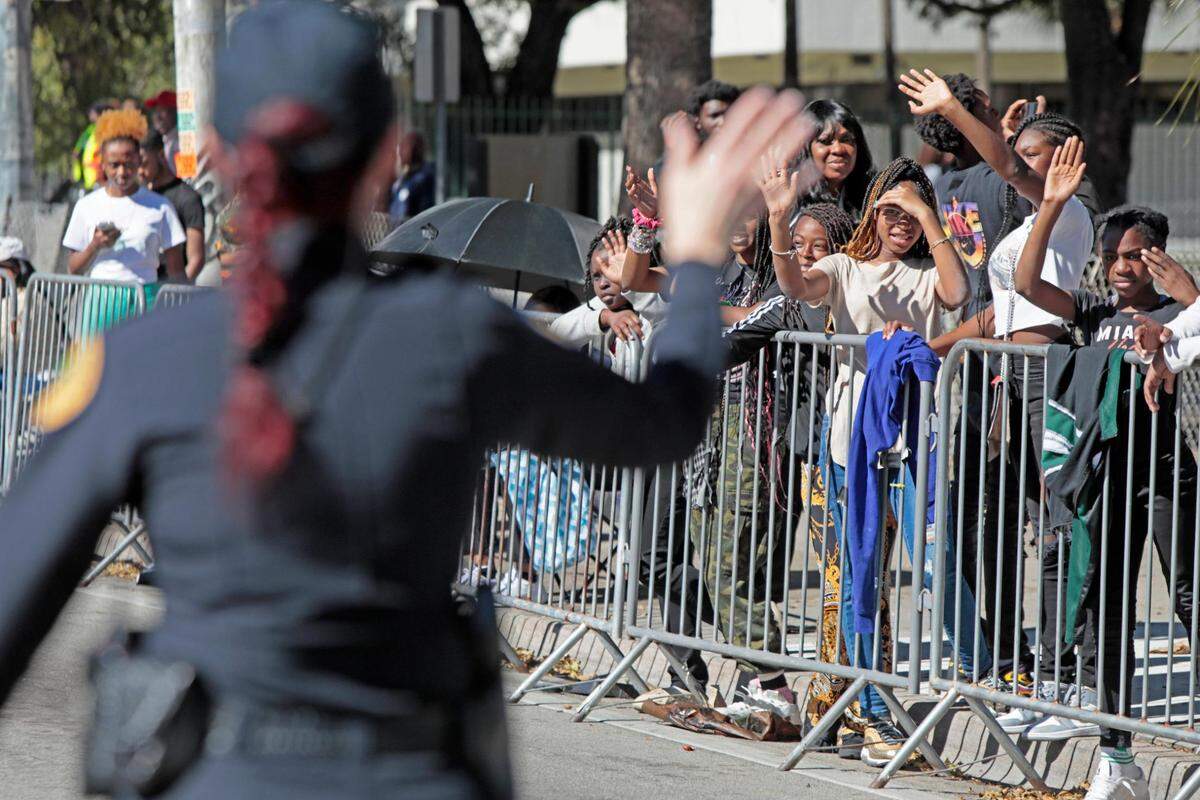
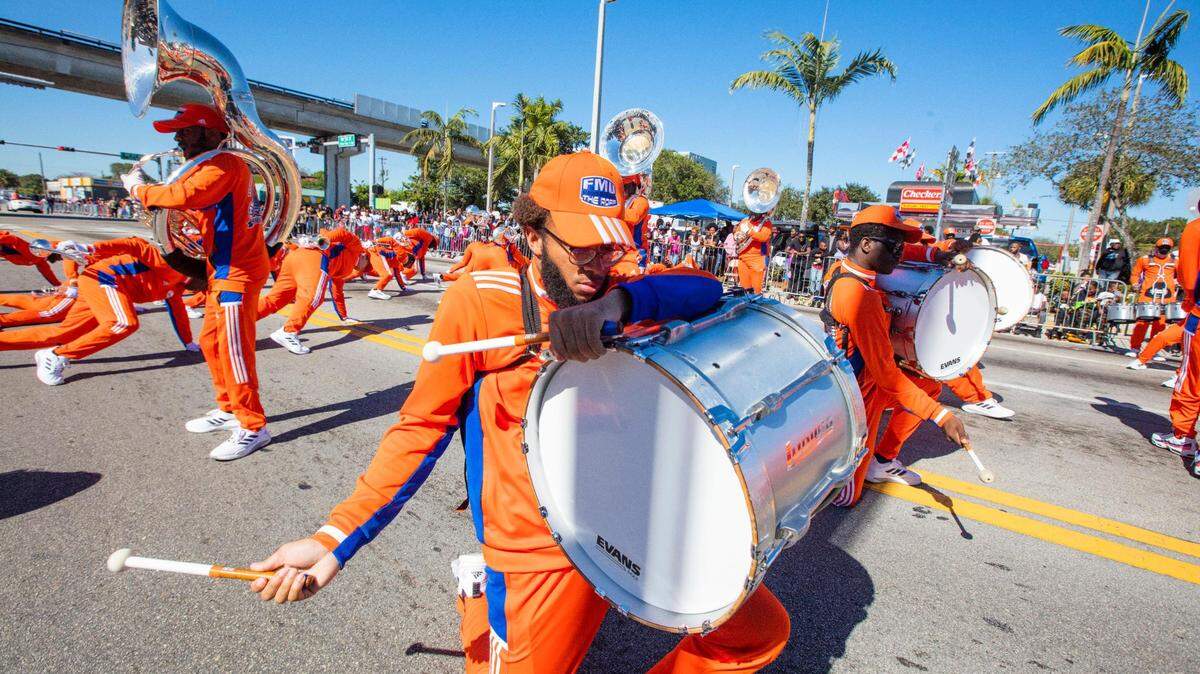
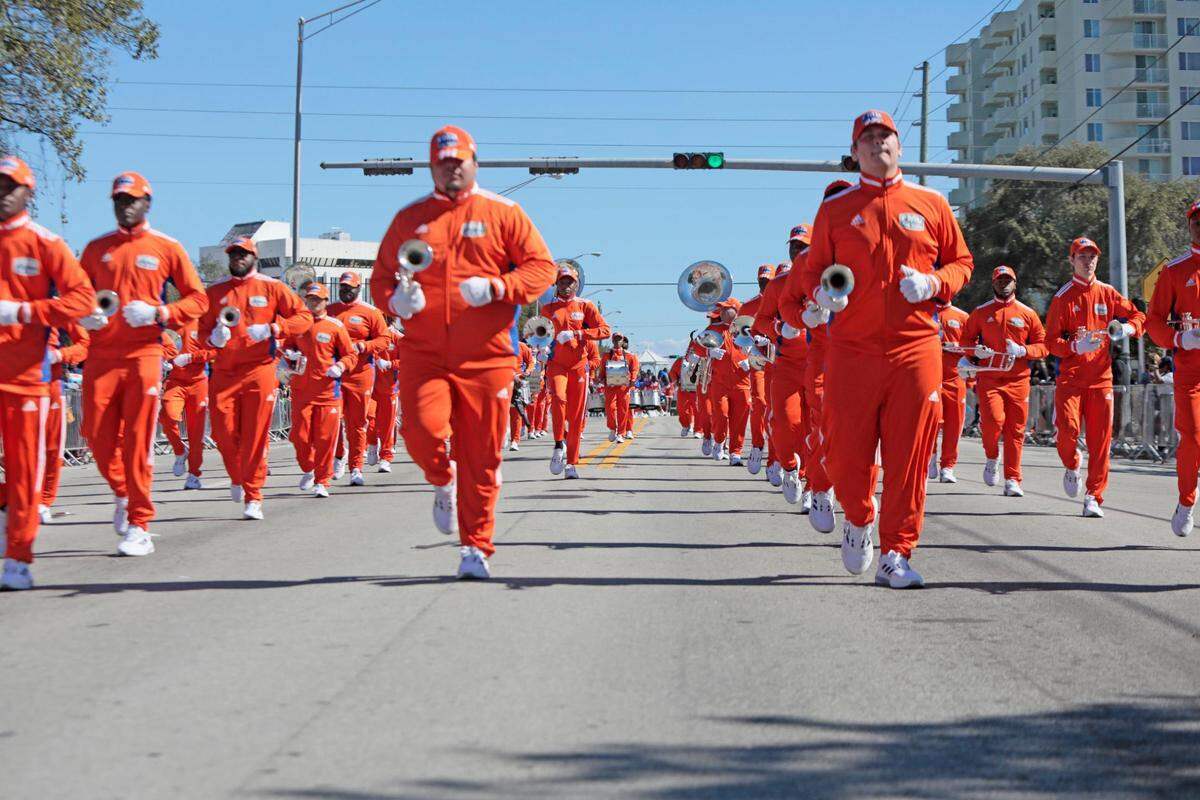
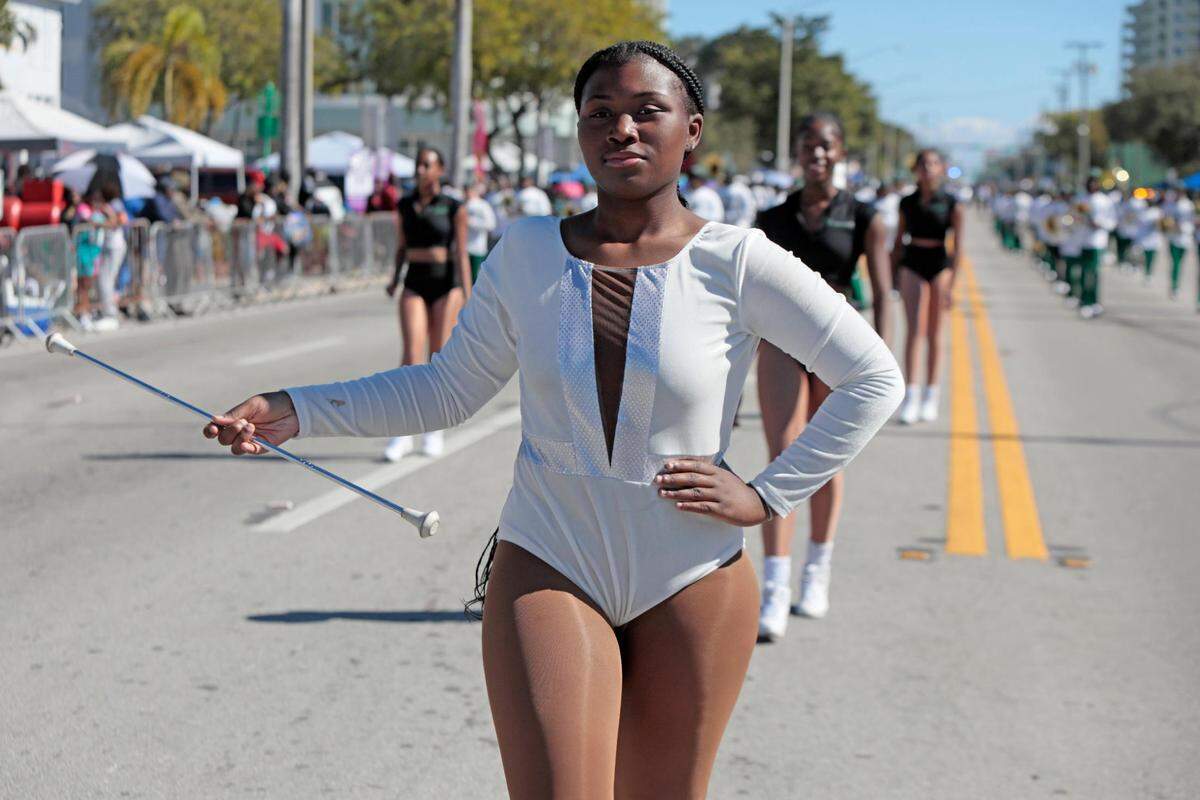
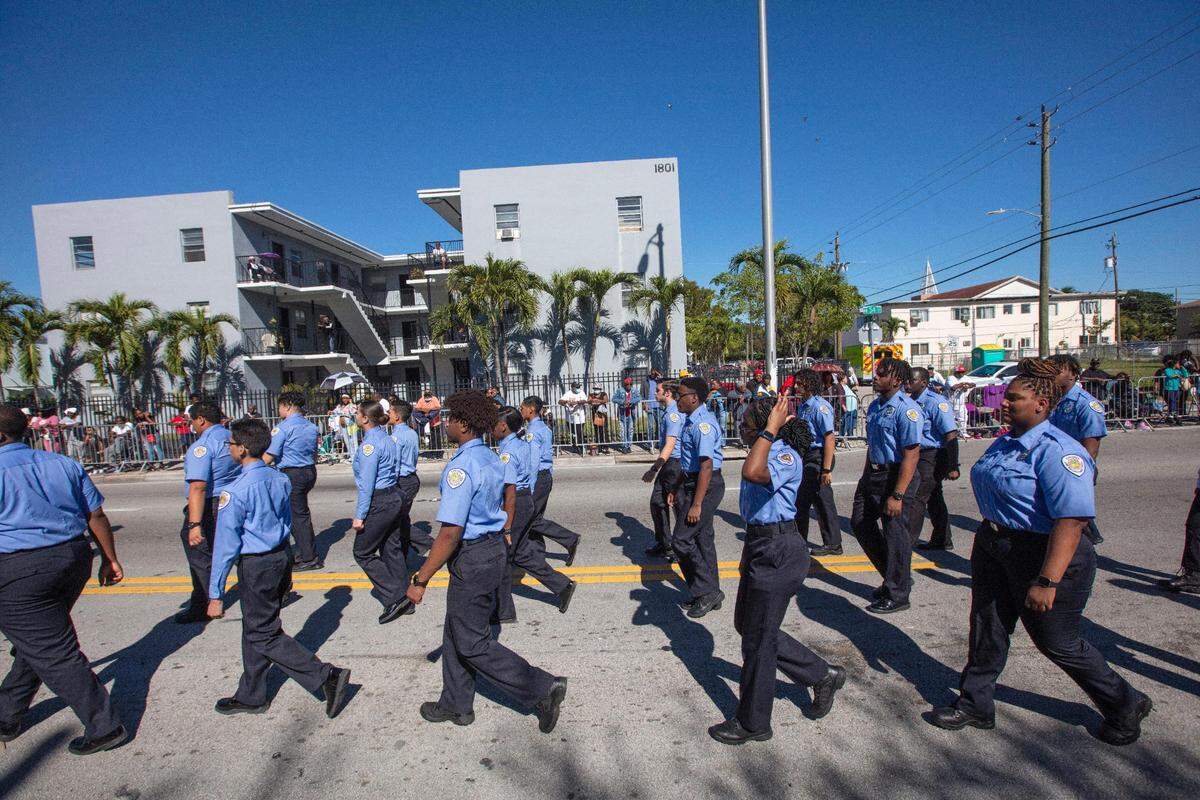
Elementary, middle and high schools participated. Marching bands roared by, and dance teams showed off their choreographed routines.
Wearing a shiny black romper with silver rhinestones, Lamari Wade, a senior at Miami Carol City Senior High in Miami Gardens, spun a silver and black flag in the air.
She said she likes the guard because it has taught her skills like discipline. She especially liked it Monday because she got to pay tribute to King.
“I actually feel like we have an important purpose today,” said Wade, 19.
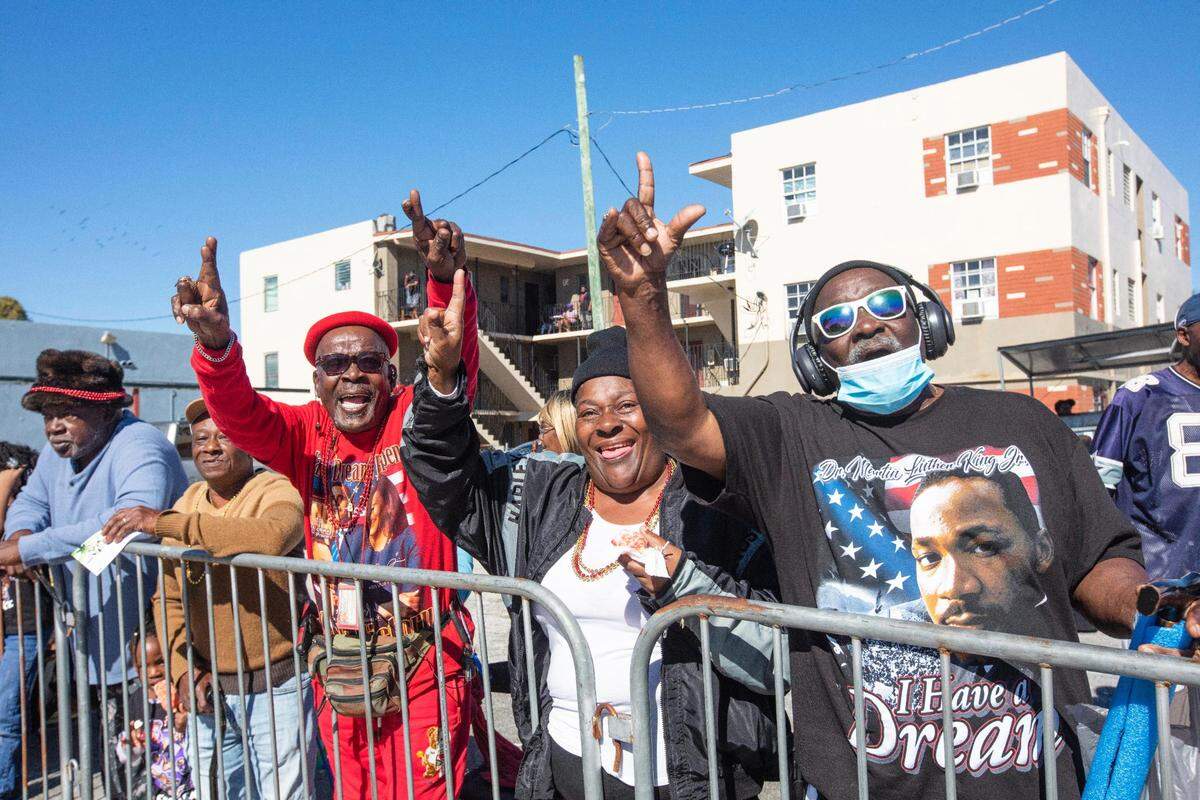
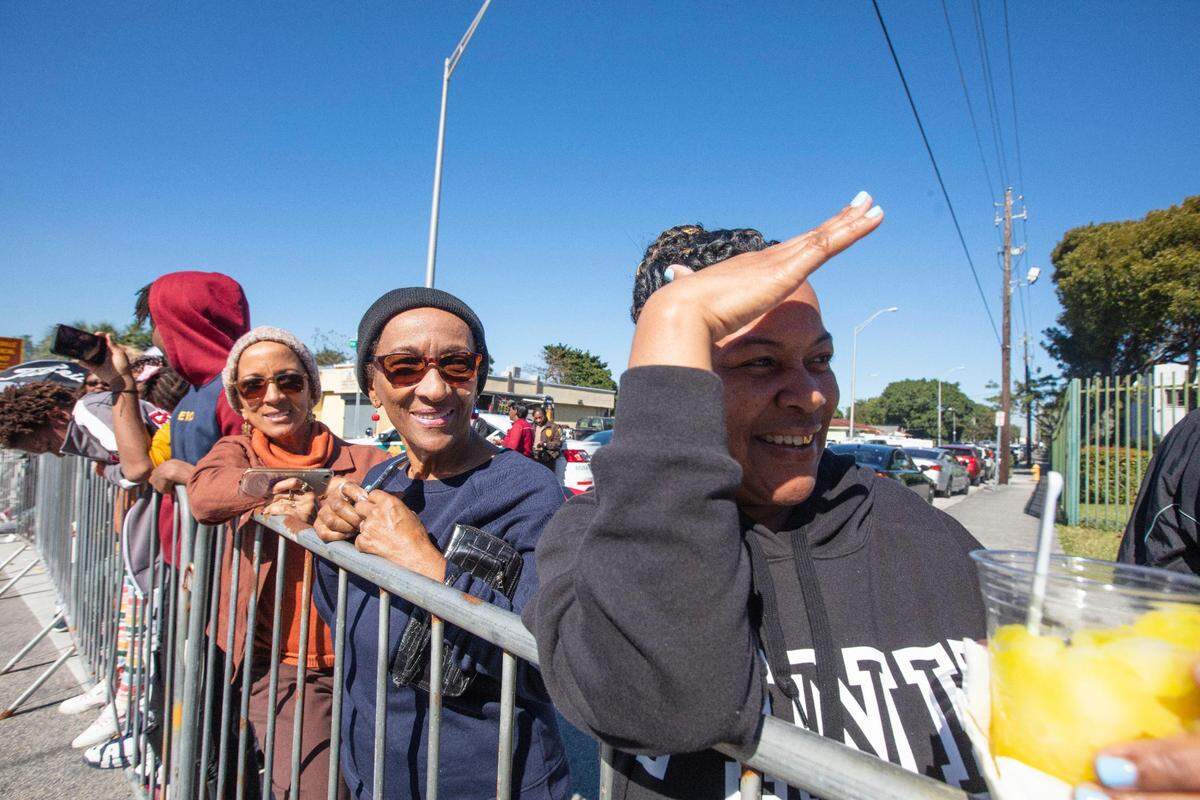
Those watching the parade enjoyed food like Bahamian conch fritters and danced to songs like “Zouk-La-Se Sel Medikaman Nou Ni,” by Kassav’, an Afro-Caribbean band from the French Antilles.
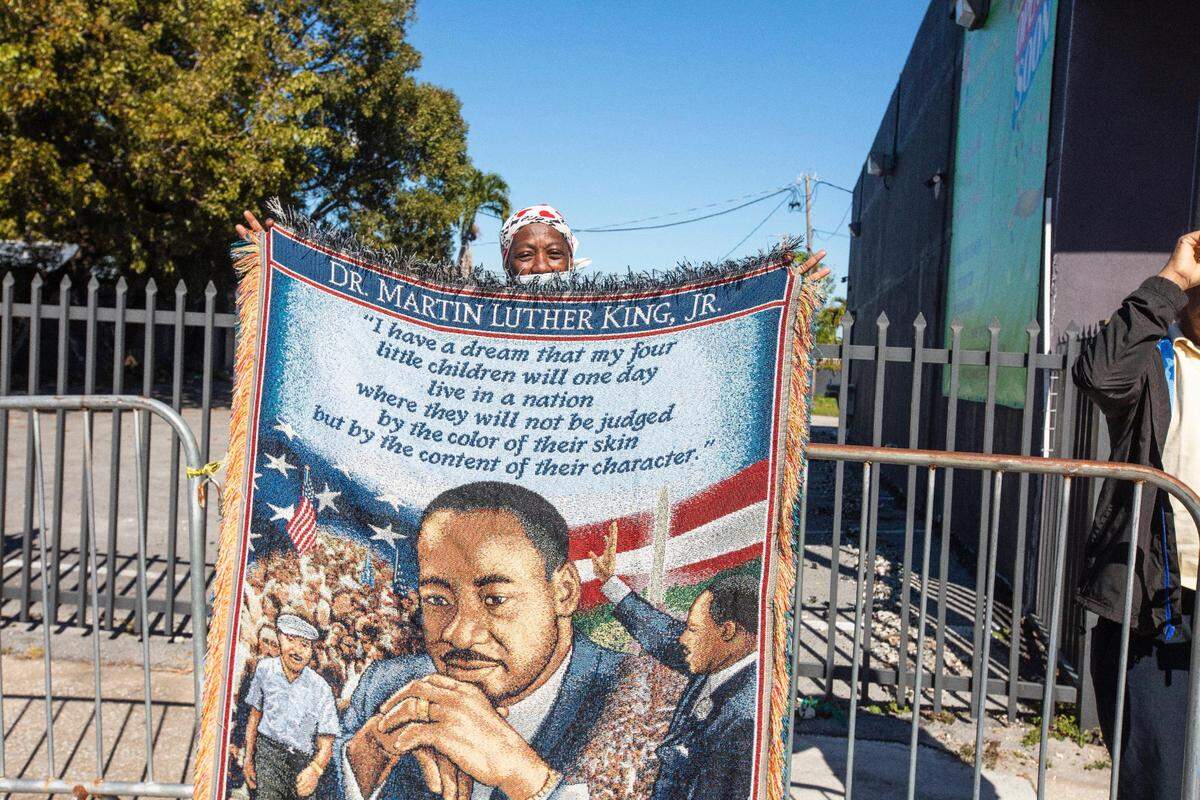
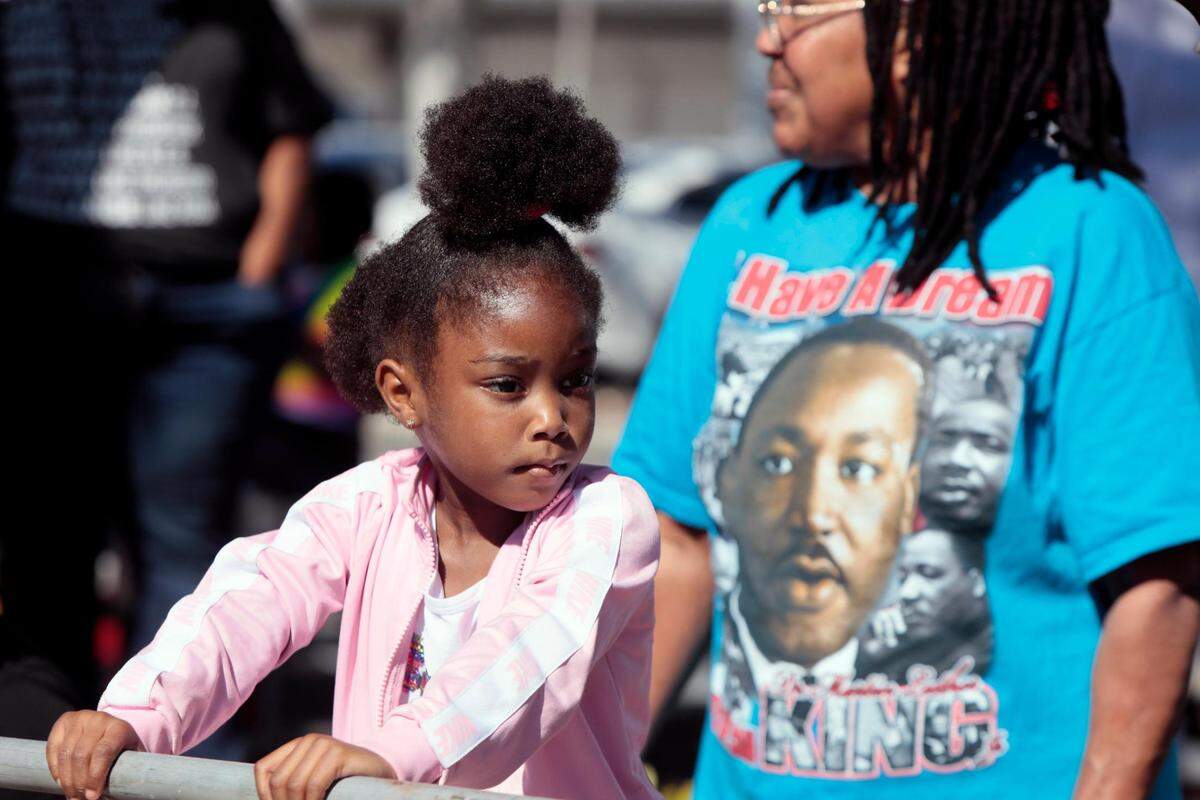
They donned T-shirts and carried signs with the year “1865,” the year the 13th amendment abolished slavery in the U.S., and phrases like “Living the Dream,” as a nod to King’s famous speech “I Have a Dream,” which he delivered at the Lincoln Memorial during the March on Washington in 1963 to call for an end to racism.
Tim Everson, 54, described the occasion as a “way for the community to come together” and said he never misses it. He works as the running back coach at Miami Central High School, so on Monday he celebrated King’s life, as well as the Rockets winning their fourth consecutive state title in December.
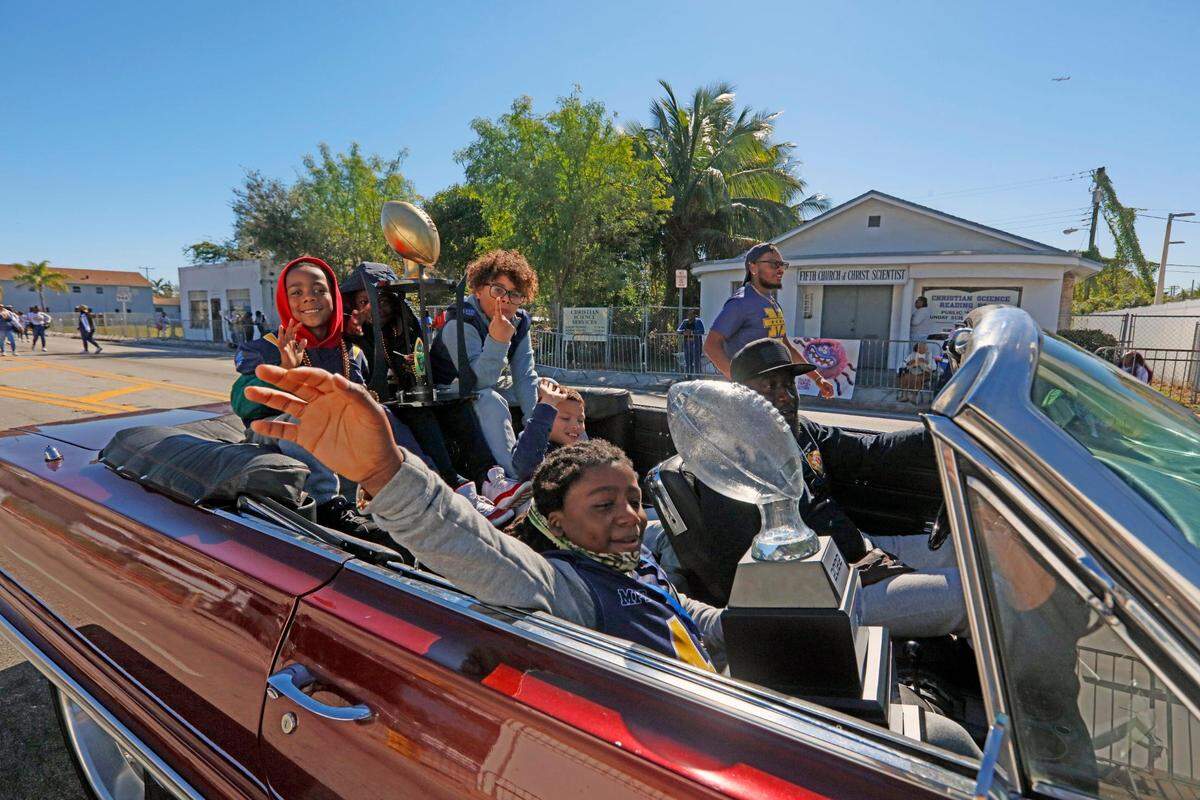
He attended the parade with his wife, Chy’Nita Everson, who owns a creative custom graphics company. The Eversons, both locals of Liberty City, got married on April 4, 1998, 30 years after April 4, 1968, the day King was killed.
“It was kind of on purpose because our parents instilled in us Black history,” said Chy’Nita, 52, whose dad took her to civil rights protests when she was a little girl.
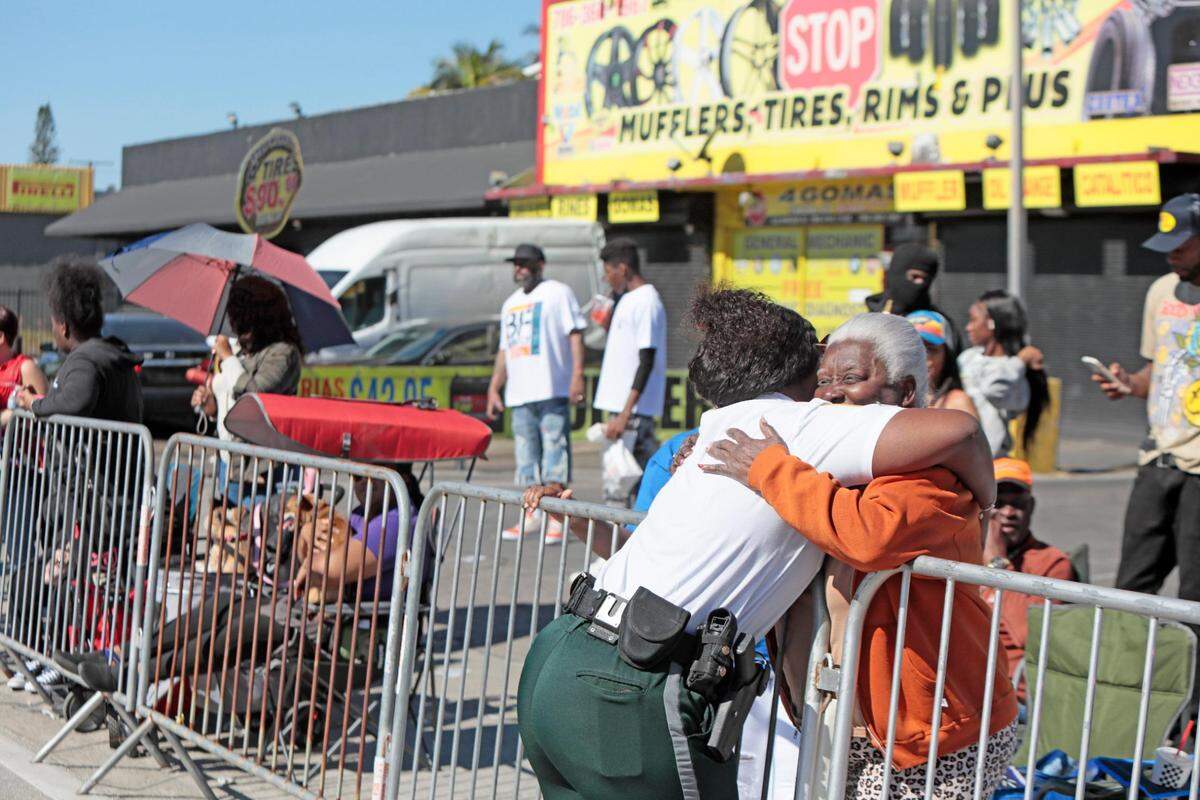
Although the Eversons weren’t alive at the same time as King, some parade-goers were.
Mary Williams, a retired teacher, moved to Liberty City 15 years ago to take care of her mother. After her mother died, Williams stuck around.
She’s now 80, but she still recalls growing up in Georgia under strict, humiliating Jim Crow laws enforcing segregation. Then, Black Americans were forced to drink from separate water fountains than whites and forced to enter restaurants from the back instead of the front door.
As Williams stood on the sidewalk and gazed at photos of King rolling by, she said, “He did a lot for me.”
This story was originally published January 16, 2023 at 6:44 PM.