City of Miami is sued over parking tax. Potential liability could exceed $50 million
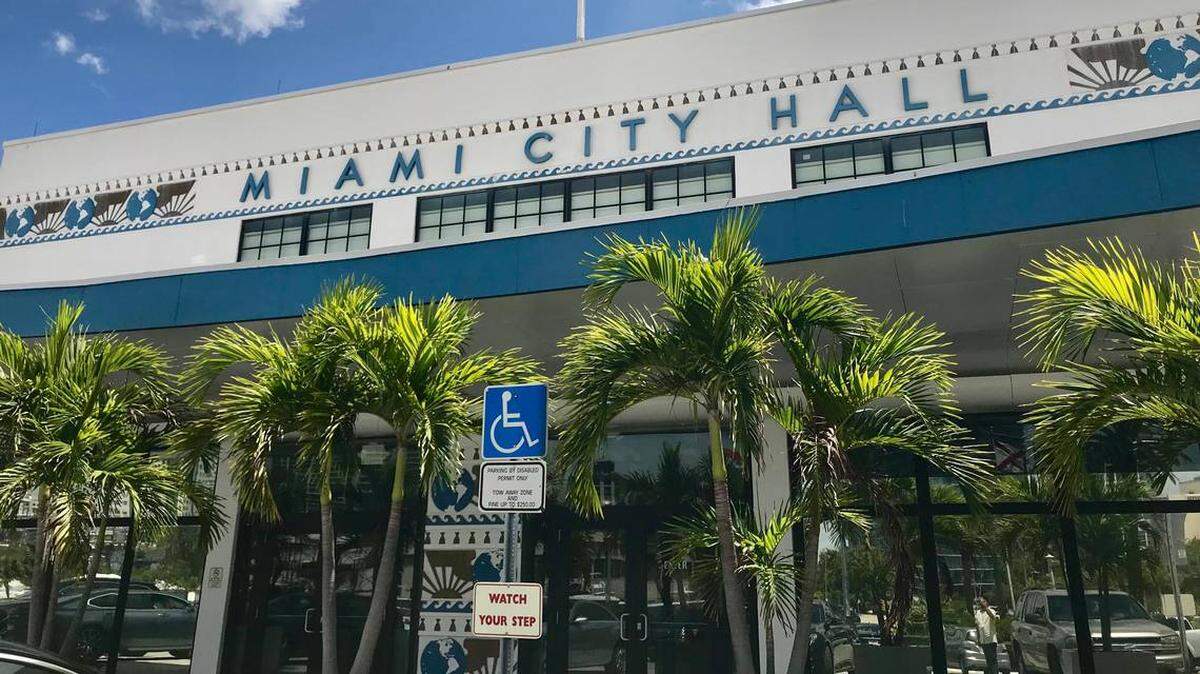
During Miami’s latest real estate boom, the city imposed and collected a parking tax totaling tens of millions of dollars that members of a new class-action case say is “illegal” under state law and should be refunded to them.
The group of class members, representing potentially tens of thousands of workers, residents and visitors in a lawsuit filed Tuesday, are urging a judge to order Miami officials to reimburse them and stop the city’s 15% parking tax altogether. They cite a strict requirement of the law that prohibits the city from imposing the parking surcharge because of the declining level of tax-exempt real estate in Miami.
For years, the city has been allowed to levy the parking tax on all transactions at garages, lots and other facilities to boost its finances, thanks to Florida law and a city referendum dating to 2003 when Miami was rising from a financial crisis. But there’s a catch: Large Florida cities such as Miami can only impose the parking tax to supplement revenue as long as more than 20% of their real property is tax exempt.
The new suit, citing public records filed with the state Department of Revenue, claims Miami officials began violating that critical provision in 2017 when the city’s tax-exempt share of property owned by schools, churches and homesteaded residents fell below that threshold. Since then, due to exploding construction, new taxable properties and rising real estate values, Miami’s tax-exempt status has dropped further.
“Because the 20% threshold ... is not met, the Parking Ordinance and related Parking Tax Regulations are not authorized and are facially unconstitutional,” attorneys Rachel Furst, Alex Arteaga-Gomez and Stuart Grossman wrote in the class-action case filed in Miami-Dade Circuit Court.
“Moreover, it is no longer economically necessary to impose and collect the Parking Tax on folks who park in the City of Miami because the City does not need the money to pay its expenses,” they wrote, seeking certification for the class action.
City officials on Tuesday declined to answer questions about the lawsuit’s allegations. City Attorney Victoria Méndez provided a brief statement to the Miami Herald.
“We look forward to addressing this matter in court,” she wrote in an email.
City’s overall financial position is good
With the help of federal pandemic relief funds and revenues that exceeded grim projections in recent years, the city government has a relatively strong financial position.
In September, the commissioners approved a $1.5 billion operating budget for the current fiscal year, which began Oct. 1. That’s about $200,000 more than the previous year, and with a property tax rate that’s the lowest since the 1960s — a rate cut that is expected to reduce the city’s tax revenue by about $7 million, according to administrators.
Significant increases in property values and federal aid have buttressed the city’s finances. Still, legal settlements stemming from labor disputes and a fight over a major waterfront development are factored into Miami’s spending.
Miami is already on the hook for millions in payments to police and firefighters following a lawsuit over cuts to pay and pensions from the Great Recession. And after years of litigation over a long-stalled waterfront development on city-owned Watson Island, the city agreed in 2019 to a settlement worth about $20 million over the next decade.
The parking tax lawsuit if successful, could put a big dent in the city’s financial outlook.
The class-action case was filed by three representatives — Richard Klugh, Sara Wolfe and Josh Kaiser — who work regularly in Miami and have paid the parking tax at various locations, from Brickell Avenue to Coconut Grove to Wynwood. They claim the city of Miami, using a private contractor, has “illegally imposed and collected” the parking tax for years.
The suit also notes that Miami is the only eligible large city in the state to levy it. Under Florida law, the parking surcharge can be used to lower a property tax rate as well as for street, sidewalk and other roadway improvements.
“Their claims are very typical of citizens who park in the city of Miami every day,” Furst told the Miami Herald, estimating that the size of the class could number in the tens of thousands of people. “It adds a needless expense to the already high cost of working in the city.”
Seeking to recover charges back to 2019
Furst said the class-action case seeks to recover parking taxes collected by public and private facility operators and turned over to the city from October 2019 to October 2022. That is the allowable claw-back period under the statute of limitations. According to the suit’s estimates, the city of Miami has collected about $55 million in parking taxes over the three-year period, but the amount is expected to be higher when complete records are available by the end of 2022.
If the class is certified and prevails against the city of Miami, the vast majority of people who incurred the parking tax would be able to qualify for a refund by showing they paid it with statements of their credit or debit card transactions or possibly receipts. The parking facility operators also keep records showing proof of payment. The minority of people who did pay cash could also qualify for a refund under some plan, including providing a sworn statement, Furst said.
For more than a decade, the city has run the parking tax program through a contract with a private business, Complete Consulting Services Group, which receives $700,000 annually, the suit says. It also notes that the city has adopted “coercive” penalties such as stiff fines to compel facility operators to impose and collect the parking surcharge.
Before filing the class-action case, Furst’s law firm sent Miami’s city manager, Arthur Noriega, and Mendez, the city attorney, a letter dated Sept. 19, asserting that the parking tax was “unconstitutional” and proposing a meeting to discuss the matter.
But Furst said the city responded with delays.
The latest parking tax case is not the first time that the city has been sued over the issue. In 1999, amid a severe financial crisis, the state Legislature allowed Miami to impose a similar parking tax to help boost revenues.
But a resident, as well as Miami-Dade County, challenged the tax, and it was rescinded after the Florida Supreme Court ruled in 2002 that it was unconstitutional because the parking surcharge benefited only one Florida city, Miami. As a result, the city reimbursed funds to people who had paid the tax.
The following year, the state Legislature modified the law allowing Miami and other large Florida cities with a population of 200,000 or more to adopt such a parking tax — but with certain conditions, including meeting the threshold on the tax-exempt provision for real property. In 2003, Miami voters approved the 15 percent parking tax in a referendum.
Lawyers who filed the latest suit said the city imposed the tax legally for more than a decade. The suit says that since 2017, however, Miami officials reported annually to the state that less than 20 percent of the city’s real property has been tax-exempt. Therefore, the suit claims, the city’s parking surcharge is unconstitutional.
This story was originally published October 26, 2022 at 5:30 AM.