
Miami-Dade Commission approves community ID program for undocumented residents, others
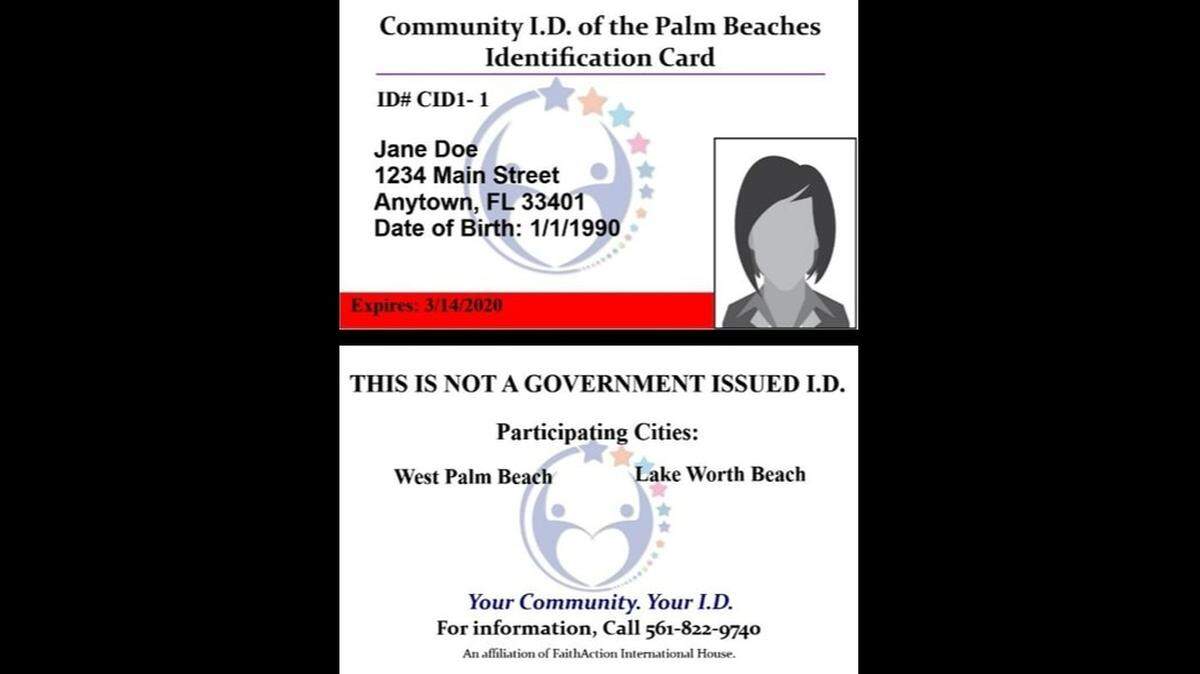
Miami-Dade County’s “community ID” program won approval Tuesday after commissioners endorsed Mayor Daniella Levine Cava’s plan for creating county-approved identification cards for people who don’t have driver’s licenses or state IDs.
The 7 to 2 vote was a victory for activists who have pushed the cards as a way for undocumented residents and people experiencing homelessness or leaving incarceration to have easy, affordable access to photo identification.
“We were hearing stories from members in our congregations across the county. They couldn’t pick up their kids from school because they didn’t have a form of ID to prove who they were,” said Aaron Lauer, pastor of Coral Gables Congregational Church and a leader of PACT, an interfaith group advocating for the IDs. “They couldn’t pick up prescriptions. They couldn’t visit loved ones in the hospital. They were afraid to report crimes to the police.”
Similar programs exist in Broward and Palm Beach counties. Miami-Dade wouldn’t produce the cards, but will contribute $200,000 to Branches, the tax-preparation charity Levine Cava selected to issue them.
The two “No” votes came from commissioners René Garcia and Joe Martinez, who raised concerns about people using the cards to validate false identities. Commissioners Sally Heyman, Kionne McGhee, Rebeca Sosa, and Javier Souto were not present for the vote.
“If we think this isn’t going to lead to fraud, we’re all mistaken,” said Garcia, who sponsored legislation in 2018 while serving as a Republican state senator to make undocumented residents eligible for Florida driver’s licenses. He said he doubted a nonprofit’s ability to properly vet applicants the way a state agency would. “It’s up to us to protect public trust.”
Levine Cava’s November 2020 election revived the prospects for a county community ID program, which stalled for years under her predecessor, Carlos Gimenez, now a Republican member of Congress. First proposed in 2016, the program was eventually sponsored by Levine Cava when she was a commissioner representing South Miami-Dade’s District 8.
Her community ID resolution failed to win commission approval in early 2020 after Gimenez’s police director, Freddy Ramirez, opposed the plan. Ramirez came out for the program after Levine Cava succeeded a term-limited Gimenez as mayor, saying he hadn’t known enough details when the police department objected to the plan.
“This is strictly a services card,” Ramirez told commissioners Tuesday. “We have no concerns.”
While the Miami-Dade program doesn’t mandate that any business or institution accept the IDs, the county government would agree to let community ID holders use the cards to file police reports and access services at places such as libraries, pet shelters, parks and storm shelters.
How do community IDs work?
A Levine Cava memo outlining the plans said the IDs would not be a substitute for when government ID is currently required across the government bureaucracy — including to receive employee badges at Miami-Dade airports, qualify for financial assistance programs, or for registering to vote.
Branches, which has offices in Florida City and outside Miami Shores, offers tax-preparation services that cater to undocumented residents who need to pay income tax. That includes obtaining federal Individual Taxpayer Identification Numbers for people who often rely on passports and other foreign documents to prove identification. The Internal Revenue Service provides “ITINs” to people who cannot obtain Social Security numbers.
Karla Bachman, vice president of financial wellness at Branches, said the ITIN process will form the model for how the nonprofit issues community IDs. “We plan to do it the same way we do for taxes,” she said.
Bachman said Branches will issue the cards at its offices, but predicts most ID holders will get their cards during outreach events across Miami-Dade. “We plan to do them at libraries,” she said.
Who would issue community IDs in Miami-Dade?
Before issuing a community ID, Branches said administrators will require some combination of a passport, pay stub, income-tax return, Social Security card, or voter-registration card, according to the Levine Cava memo.
Elizabeth Mendoza, 37, said she’s planning to get a community ID once they’re available in Miami-Dade. She described herself as an office worker who is also undocumented, relying on a Honduran passport for identification. Mendoza — who said Elizabeth Mendoza represents a portion of her legal name that she doesn’t use professionally — said she’s faced embarrassing moments when trying to pick up a child for a doctor’s appointment with nothing but an expired passport.
“The principal had to personally go to the office to release my daughter,” she said. “The problem was the passport expired. It wasn’t a valid identification.”
Eileen Higgins, the commissioner who took over sponsorship of the community ID program once Levine Cava became mayor, said the vaccination process for COVID-19 highlighted the identification gap in Miami-Dade as many residents couldn’t prove their residency when seeking their shots. “We right here can solve the problem,” she said ahead of the vote. “We can give dignity, and give an ID in a responsible way.”
One of the commissioners voting for the program arrived in the United States as a teenager as an undocumented immigrant from Haiti. Commissioner Jean Monestime recalled the good fortune in being issued a student ID as his first proof that he lived in Miami-Dade County.
“I think it’s going to benefit a lot of people,” he said. “It’s the right thing to do.”
This story was originally published February 1, 2022 at 6:00 AM.