
Five complications facing Miami-Dade from electing sheriff, voting chief, tax collector
Miami-Dade County has two years to get ready for a state-mandated shift to elections for sheriff, elections supervisor and tax collector — and that’s going to mean working out some messy questions.
A new memo from the County Commission’s policy office lays out a number of decisions facing Miami-Dade leaders ahead of establishing the newly elected offices.
The elections are required under an amendment to the Florida Constitution approved by voters in 2018, which mandates all counties elect their sheriffs, elections supervisors, tax collectors, court clerks and property appraisers.
That means a big change in Miami-Dade, where the mayor oversees elections, police and tax collection. Clerk of the court and property appraiser were already elected offices in Miami-Dade when Amendment 10 passed.
With elections, law enforcement and tax collection all part of a single county bureaucracy, some dollars and administrative expenses can be shared or absorbed by other departments.
When those offices get spun off into their own governmental entities run by newly elected officials, the details will get complicated, according to the report by the commission’s Office of Policy and Budgetary Affairs.
“While Amendment 10 addressed the ‘what,’ it did not address ‘how,’ ” the memo reads on the requirement to shift at least portions of three county departments to independent entities. The memo is on the agenda for Wednesday’s meeting of Commission Chairman Jose “Pepe” Diaz’s Council of Policy.
Some of the questions raised by the memo include:
Will Miami-Dade employees still sign up to be poll workers during elections?
The Elections Department employs about 100 people full time, but needs thousands of poll workers to run elections.
Each year, the county recruits employees from various departments to sign up for election duty, anchoring operations with full-time Miami-Dade workers. Would that practice continue when Miami-Dade’s mayor no longer oversees the Elections Department?
“The ability to use County employees for these critical roles is only available because the Mayor is able to provide stipends and/or administrative leave for any hours worked,” the memo reads. “Once the elected Supervisor of Elections is in place, the administration and/or the [County Commission] may decide to discontinue that practice as County employees would no longer be supporting the activities of another County department.”
Who takes over police offices owned by the county?
The sheriff’s office promises to be the most complex issue facing Miami-Dade’s commission and mayor.
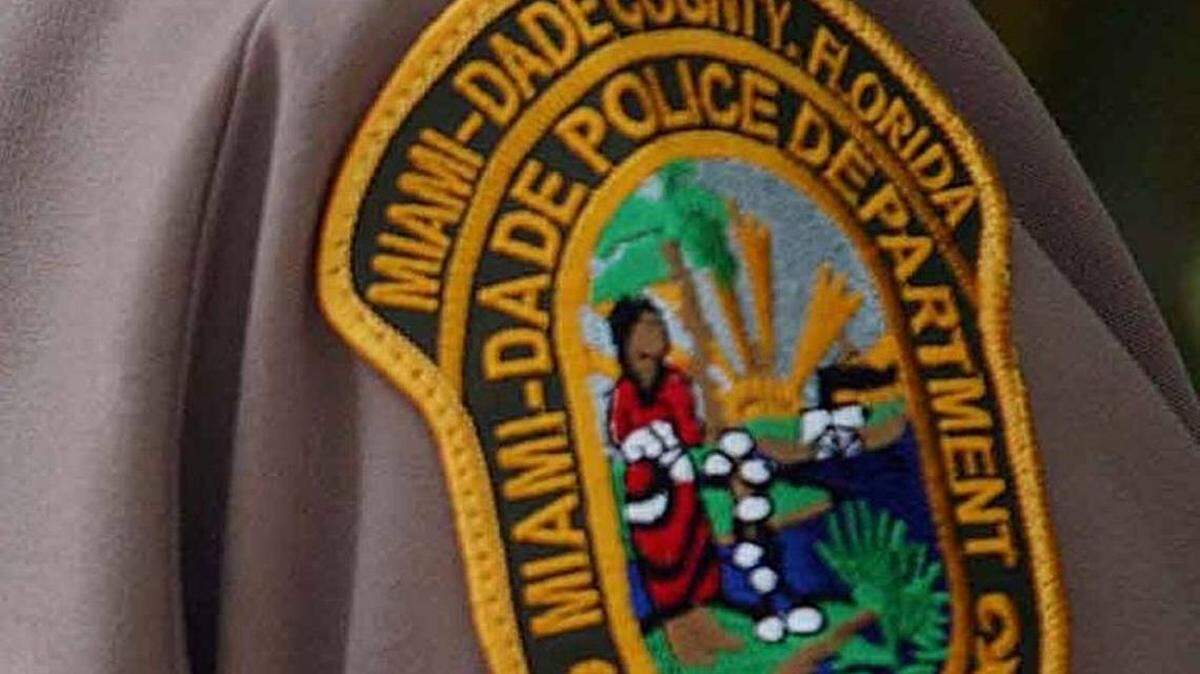
There’s a push to preserve parts of the Miami-Dade Police Department separate from whatever functions fall under the sheriff’s authority in 2025.
Along with keeping the county jail system under the authority of the mayor and commission, Miami-Dade could spin off patrol divisions into a countywide municipal force assigned to areas outside of city limits.
Those decisions will govern the smaller details ahead, the memo said, such as the future of county-owned real estate — like a $23 million dispatch facility set for a $167 million upgrade this year.
Steadman Stahl, president of the county’s police union, said efforts by Miami-Dade to reduce the sheriff’s control of the county’s police operations will likely meet a fight.
“I believe the sheriff — whoever that may be — will say if you want to start a Miami-Dade police department, feel free. But that budget belongs to me,” he said. “It may be something they challenge in court.”
How can the county negotiate new contracts when some workers will be leaving?
The memo points out that of the county’s 10 employee unions, six include members in departments covered by Amendment 10.
While existing labor agreements will expire by 2023, negotiations would likely be under way for the next round of multi-year agreements as voters prepare to elect new bosses for hundreds or thousands of union members.
“The security of the employee matters negotiated in these agreements is uncertain as a determination has not been made as to the validity of the existing agreements when the constitutional officers are implemented,” the memo read.
How much money will the new tax collector turn over to county government?
The tax collector’s 250-person office is an arm of the county’s Finance Department, and is allowed to retain a portion of the tax revenue it collects for administrative expenses.
For now, about $18 million of that revenue flows out to cover other county expenses, the memo said. Will a future tax collector continue those contributions to a newly separate arm of government?
The memo said: “The County may no longer be able to receive those funds and would have to make up the lost revenue with a General Fund subsidy to the Finance Department.”
Should Miami-Dade be making big purchases for the police department?
Raquel Regalado, a county commissioner pressing for Miami-Dade to map out the rules for the constitutional offices, said she plans to ask for a rewrite of county contracts on purchasing $14 million in police vehicles that are up for a committee vote Wednesday.
Regalado said she wants language to protect the county if those cars end up under the authority of a future sheriff.
“We need to have a conversation about the assets,” Regalado said. “Because if we’re purchasing assets that three to four years from now may not belong to us, we need to put in the contract now that if we transfer them over to another office, we get fair market value for them at a minimum.”
The Budgetary Affairs memo pointed out that the county is in the process of seeking bids for $24 million in police helicopters — the kind of procurement that resulted in a multi-year lobbying battle when Miami-Dade’s fire department wanted to purchase helicopters.
“This expense, while deemed necessary under our structure, may be reevaluated in the future by the Sheriff,” the memo said.