Forever bond, Inter Miami soccer complex and voting map on 2022 agenda for city
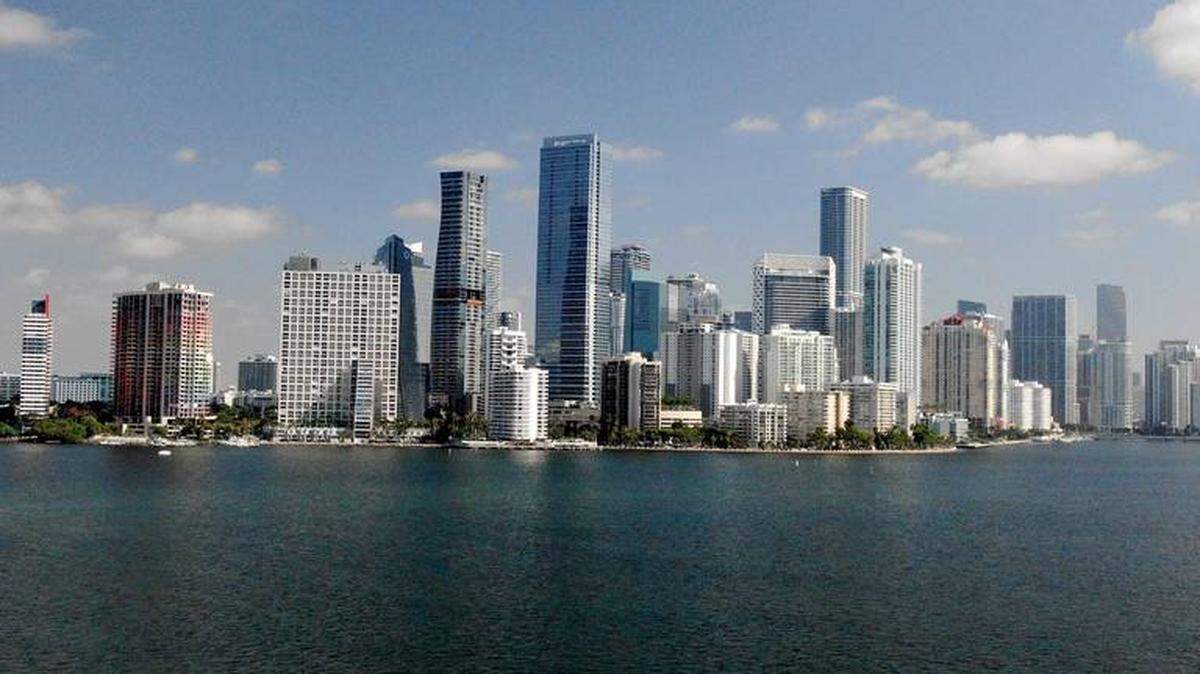
The city of Miami is heading into 2022 with a busy agenda that has stalled during the prolonged COVID-19 pandemic.
With life slowly getting back to a relatively normal rhythm in 2021 — and even while another coronavirus surge disrupts the holiday season — the decision-makers at City Hall are expected to turn more of their attention next year back to long-term, big-ticket projects and everyday issues affecting city residents.
Much attention is directed toward Mayor Francis Suarez’s promotion of Miami as a booming tech hub, a perception rooted in real growth in the tech sector over the past year. There is a range of opinions on whether the city can sustain such growth in 2022, and questions remain about how the city government can embrace the use of cryptocurrency. Some ideas will require legislative reform in Tallahassee.
Beyond the buzz of the tech movement, some significant topics facing the city of Miami are expected to take center stage in 2022. From a stalled bond, to a proposed soccer stadium and commercial complex, to redrawing the city’s voting maps, Mayor Francis Suarez and the City Commission have a lot of work to do.
Miami Forever bond
Four years after Miami voters approved the borrowing of $400 million to fund drainage improvements and affordable housing projects, progress has been slow. More than $300 million remains unallocated.
“We need to finish 2022 with significant traction on the Miami Forever bond,” said City Manager Art Noriega in a recent interview.
A presentation made in December to the Miami Forever Citizens’ Oversight Board shows that of 33 projects funded with the first $58 million from the bond, four are complete, 12 are under construction, two are out to bid, 12 are in design and three more are in the planning stages. The projects include new roofs at parks facilities, stormwater pump stations and anti-flooding valves, and some affordable housing developments.
Commissioners are expected to discuss how to divvy up remaining bond dollars across the city’s districts during the first few months of 2022. The plans to address flooding and improve drainage across the city are expected to be a major part of the discussion. The city’s stormwater master plan prescribes about $3.8 billion in fixes to keep most of Miami dry over the next 40 years, so the Miami Forever bond will only allow the city to tackle part of the problem.
Sonia Succar Ferré, vice chair of the oversight board, said that while the board wants Miami to push more projects forward, some of the progress already made is encouraging. In particular, she said some of the planning work being done for the overhauls of Brickell Bay Drive and Jose Martí Park, two flood-prone areas, is impressive and could be a model for resilience projects across the city.
“The designs for some of the projects are very innovative,” she said.
Miami Freedom Park
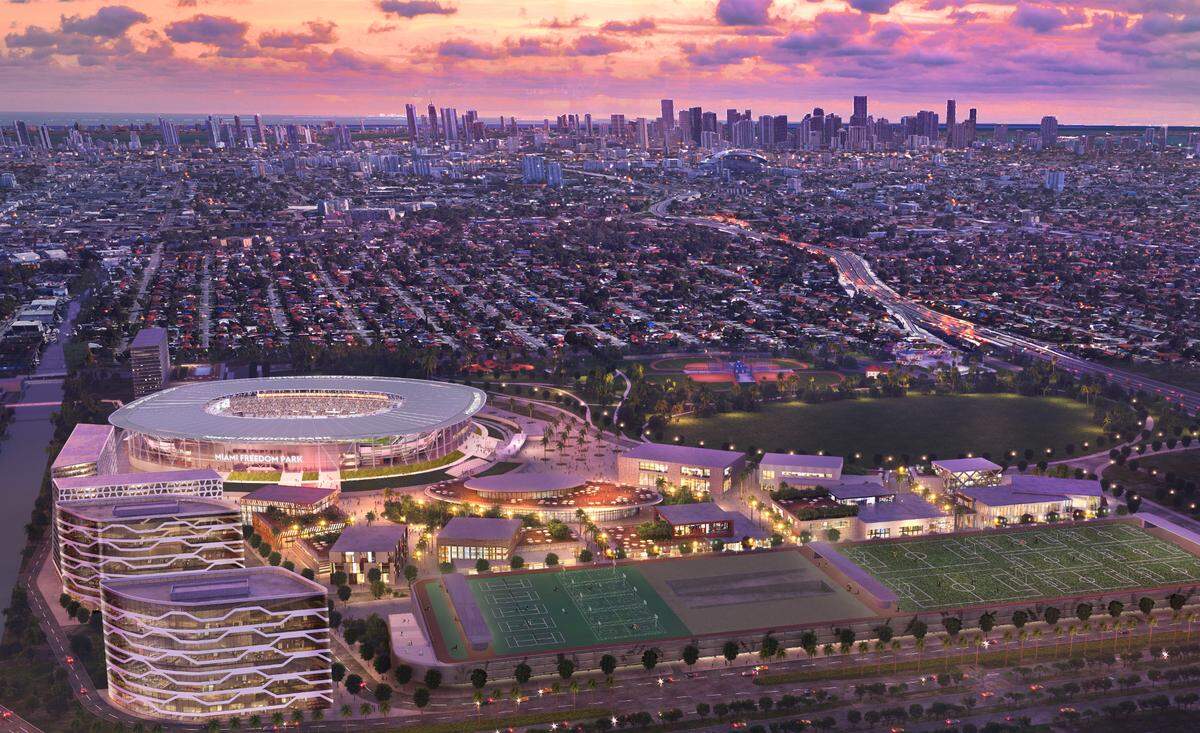
For nearly three years, city officials have been negotiating the terms of four separate, complicated agreements that would pave the way for owners of Inter Miami to redevelop Melreese golf course into a $1 billion retail, hotel, office and soccer stadium complex called Miami Freedom Park.
In November 2018, voters authorized the city to negotiate a no-bid, 99-year lease for what is supposed to be a privately financed development. Inter Miami Managing Owner Jorge Mas, also chairman of infrastructure firm MasTec, campaigned in favor of the deal alongside co-owner and retired footballer David Beckham.
The final deal requires approval from four of five commissioners. City Manager Art Noriega recently told the Miami Herald that he expects the deal to come to a commission vote by the middle of February.
“We’ll first make individual presentations to the commissioners,” Noriega said. He said he and Suarez, a proponent of the project since its inception in 2018, will lead meetings with commissioners.
The mayor has said the public will have at least 10 days to review the hundreds of pages of legal documents that will make up the four-part deal. The vote is a major hurdle for Inter Miami and its supporters who want to see the team play in a new stadium in Miami. The team currently plays in the DRV PNK Stadium in Fort Lauderdale (formerly Lockhart Stadium).
Even if approved by commissioners, the Miami Freedom Park plan would still require more municipal approvals and could face other hurdles. Owners have applied for zoning changes under a controversial mechanism called a “special area plan” that allows developers to trade public benefits for expanded development rights. The site requires some amount of environmental cleanup, which could be costly, and the Miami-Dade County Aviation Department, which runs Miami International Airport, has expressed opposition to the Freedom Park plan due to traffic concerns and light pollution.
In the meantime, the city signed a three-year contract extension with the current operator of the golf course, the De Lucca family, to keep the facility running while Miami Freedom Park planning continues.
Redistricting
The boundaries for Miami’s five municipal districts are expected to change in 2022 as part of a constitutionally required redistricting process based on 2020 U.S. Census data.
Redistricting could change who votes in the next municipal candidate election in 2023. The commission seats for District 1, currently represented by Alex Díaz de la Portilla, District 2, currently represented by Ken Russell, and District 4, currently represented by Manolo Reyes, will be up for election in November 2023.
The city hired Holland & Knight attorney Miguel De Grandy to study the shifts in population and draft a new voting map. De Grandy, working with fellow consultant and Palmetto Bay Councilman Stephen Cody, is expected to present commissioners with a proposal for shifting boundaries during the Jan. 27 commission meeting at City Hall.
In December, De Grandy told commissioners that Miami-Dade County’s Elections Department needs a final plan by the end of February 2022 in order to properly assign precincts before 2022 elections. If Miami commissioners redraw districts after the county deadline, the city would have to pay about $135,000 to cover the costs of reassigning precincts and printing new voter cards.
The data show that District 2, which includes most of the city’s waterfont and urban core, has about 116,700 residents. That is about 28,300 over the number each district would have if the city’s population of 442,241 were divided by five, according to a an initial report by De Grandy. A redrawn voting map would have to boost the population of other districts while reducing the population in District 2.
Cultural facilities
Three aged buildings in dire need of repair have languished amid years of talk, planning and debate: Miami Marine Stadium on Virginia Key, the Olympia Theater at the Gusman Center for the Performing Arts on Flagler Street in downtown and the Coconut Grove Playhouse. One of these buildings could see some much-needed attention in 2022.
Noriega said the city is preparing to solicit proposals for renovating the Olympia, built in 1926 as a movie palace, within the first two months of 2022. His administration aims to attract proposals for a complete restoration, from the theater’s crumbling facade to the old apartments above. Any movement on the Olympia would represent long-awaited progress for a key property on Flagler Street, which is undergoing its own makeover that will continue.
The future of the Playhouse remains mired in litigation and controversy as competing groups hold different visions for how to best bring the shuttered theater back to life. The latest attempt to forge a compromise between opposing camps, presented by Miami-Dade Commissioner Raquel Regalado, does not appear to be gaining traction. In 2022, a long-running lawsuit could be resolved, but it’s unclear if any renovation plans will move forward.
As for the Marine Stadium — another long-stalled renovation project, of a 1963 structure once used to host powerboat races and concerts — Noriega said the city is still in the planning stages before putting a full restoration project out to bid. The city manager told the Herald he’s close to hiring a business consultant who will help tailor the solicitation for construction bids to fit the facility’s operational needs. With $45 million already earmarked for the project, supporters are eager to see more progress on the stadium revival plan. Even a bidding process would be a major step forward.
This story was originally published December 30, 2021 at 6:00 AM.