
Brightline says delays at Miami station come from Tri-Rail train problems, not platform
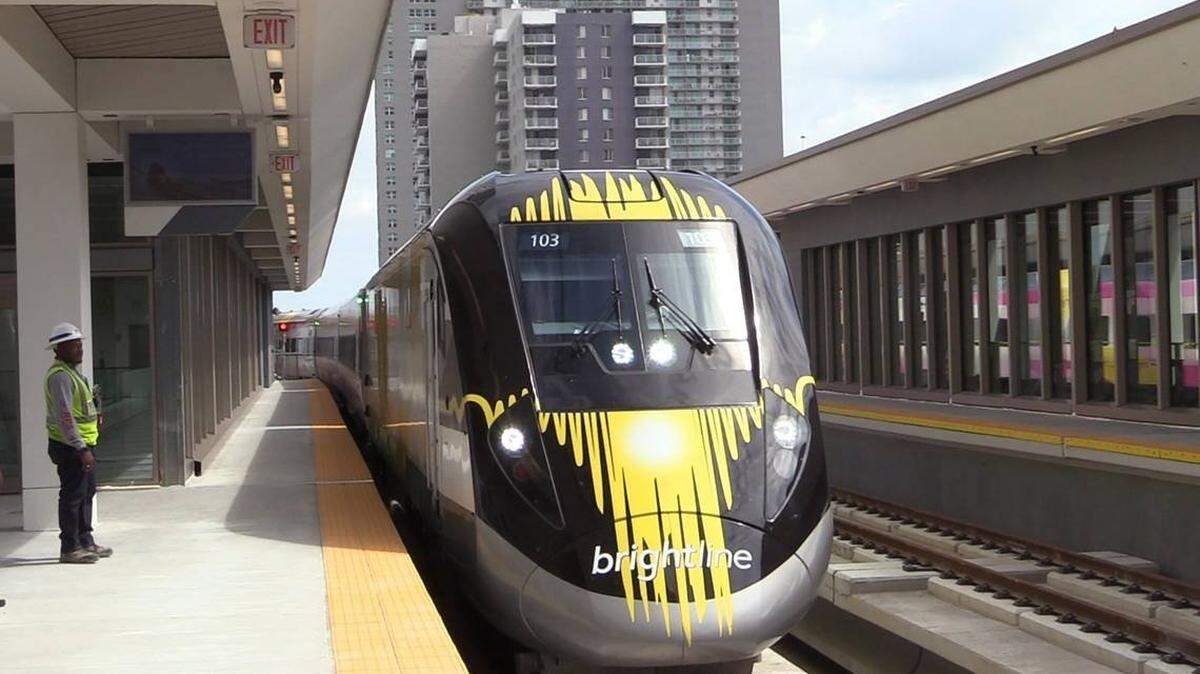
Brightline said Wednesday that construction defects on the platform it built for Tri-Rail could have been solved by now if the tax-funded rail agency wasn’t moving so slowly to address the issue as well as ignoring larger problems with its trains.
With a letter, Patrick Goddard, president of Brightline, offered the for-profit rail operator’s first public response to allegations that the station the company built for Tri-Rail trains in downtown Miami has a platform too narrow for the vehicles and also a ramp that may be too weak to hold the trains safely.
Both sides knew the trains wouldn’t fit in the platform in the spring, and Goddard wrote in his letter that Brightline was waiting for Tri-Rail to implement a fairly simple solution: redesign trains’ boarding stairs to create an inch or so more room to compensate for the construction mistake.
“As you and I discussed last May,” Goddard wrote Tri-Rail Director Steven Abrams, “you and your engineering team concurred that the most logical, expeditious and non-destructive solution to remedy this conflict would be for [Tri-Rail] to make slight modifications to the step structure.”
His letter launched a public fight between the two train operators over who is to blame for delays and addressed construction defects at a $70 million Tri-Rail depot that Brightline built mostly with public dollars.
Those defects include Brightline building the platform with spots too narrow for Tri-Rail trains to pass. A Dec. 2 report by a Tennessee firm hired by Tri-Rail, Railroad Consultants, also accused Brightline of using an improper engineering standard for how much weight needs to be carried by a ramp known as a “viaduct.”
The viaduct connects ground-level tracks with the second-story platforms that Brightline trains already use and where Tri-Rail trains would arrive and depart. In his letter, Goddard said Railroad Consultants certified the viaduct calculations prior to being hired by Tri-Rail. Representatives of the consulting firm could not be reached for comment.
Brightline platform problems: Can Tri-Rail fix them?
In interviews, Abrams said Tri-Rail is working as quickly as possible to address problems and potential defects caused by Brightline’s subpar construction. While adjusting the steps that form the outer edge of Tri-Rail trains might fix the issue at the Brightline station, it could cause more complications for Tri-Rail stations designed for the steps’ original dimensions, he said.
“We did not build this defective platform,” he said this week. “We’re doing our best to resolve the issue.”
The Goddard letter touches on a narrative Brightline executives are saying privately to elected officials and others. The company claims the issue with the platform width is a distraction from larger problems with the agency’s trains that, for now, make it impossible to begin service in downtown Miami even if the platform was constructed perfectly to specifications.
“We believe that the most significant impediments to the start of [Tri-Rail] service into the MiamiCentral station are issues related to the rolling stock,” Goddard wrote, using the industry term for trains, “not the physical plant of the Station.”
Originally billed as opening in 2017, Tri-Rail’s first downtown station has been delayed for years as the $70 million project awaited Brightline — which only recently reopened after shutting down due to the COVID pandemic — completing upgrades to rail-safety controls required for Tri-Rail to use the privately owned tracks that connect with the Miami hub.
More delays for Tri-Rail trains: ATC, not PTC
That issue — known as Positive Train Control — was resolved earlier this year as Brightline wrapped up construction of the Tri-Rail depot funded with $43 million from Miami and Miami-Dade County.
Now a new issue has emerged involving train technology that is holding up Tri-Rail’s readiness to use the Brightline station. Known as Automatic Train Control, it’s a computer system that’s less advanced than PTC but involves speed controls for trains and other safety overrides.
Brightline says ATC is a requirement for Tri-Rail to come into the station, and Goddard’s letter noted there is “no evidence” Tri-Rail has done what’s needed to implement the system, “which is likely to take many months to complete.” Abrams said the ATC requirement was a late demand by Brightline that Tri-Rail disputed but is in the process of purchasing the software needed to comply.
Brightline also says Tri-Rail has failed to prove its trains comply with emission standards the company says are also required for use of the Miami station.
That was an issue in March, according to Abrams’ board-meeting briefing materials Tri-Rail released Wednesday. Under the sub-heading of “locomotive emissions,” the document suggests Brightline is trying to make Tri-Rail comply with a company rule aimed at making Miami’s multi-use stations — with some floors dedicated to office and residential uses — more appealing to buyers.
“Their obligation with condos, not ours,” the briefing sheet said. “Show us where we agreed.”
Abrams, a lawyer and former Palm Beach County commissioner who served as Tri-Rail’s board chairman before being hired to run the agency in 2018, said Brightline was wrong to try and portray his staff as dragging out issues with the Miami station while facing larger problems with the agency’s trains.
No ‘easy fix’ for Tri-Rail Miami station
“I reject that we are sitting on some easy fix,” he said Monday. “We are working diligently on these fixes.”
As Tri-Rail and Brightline point fingers as to why the station’s opening will be delayed into at least 2022, both entities are pushing to have a role in a commuter rail line Miami-Dade wants to build between Miami and Aventura. Brightline already snagged a county contract to build a station in Aventura, and now wants to develop depots between the two cities. Tri-Rail hopes to serve as operator of the line.
On Tuesday, Miami-Dade Mayor Daniella Levine Cava wrote county commissioners that she has “grave concerns” about more delays for the station and wants the county to determine “how these major design and construction flaws originally occurred.” She pledged better oversight of the dollars Miami-Dade paid for the station project, and wants the county to “have a greater say” in how the Tri-Rail system operates.
This story was originally published December 15, 2021 at 6:39 PM.