The Lemon City drug store at 6045 NE Second Ave. was founded in 1898.
Doug Kennedy
Miami Herald / 1958
Lemon City is an ancient neighborhood by Miami standards.
Named after the unusually sweet lemon trees that grew in the area, it was home to one of the county’s oldest schools, the Lemon City School, and first library. One of its early markets, Rockmoor Grocery, would go on to become the first Winn-Dixie Store.
A year before Miami’s incorporation, the 1895 population of Lemon City was 300. Its exact boundaries are unclear because the area was never incorporated, but its core is the same as today’s Little Haiti.
Lemon City had a couple of hotels, three general stores, a barrbershop, a real estate office, a sawmill, a photo studio. As a 15-building metropolis in 1895, the area attracted fmous visitors incuding Henry Flagler, and became a commercial trading center.
Let’s go into our time capsule and travel back to Lemon City by way of the Miami Herald archives:
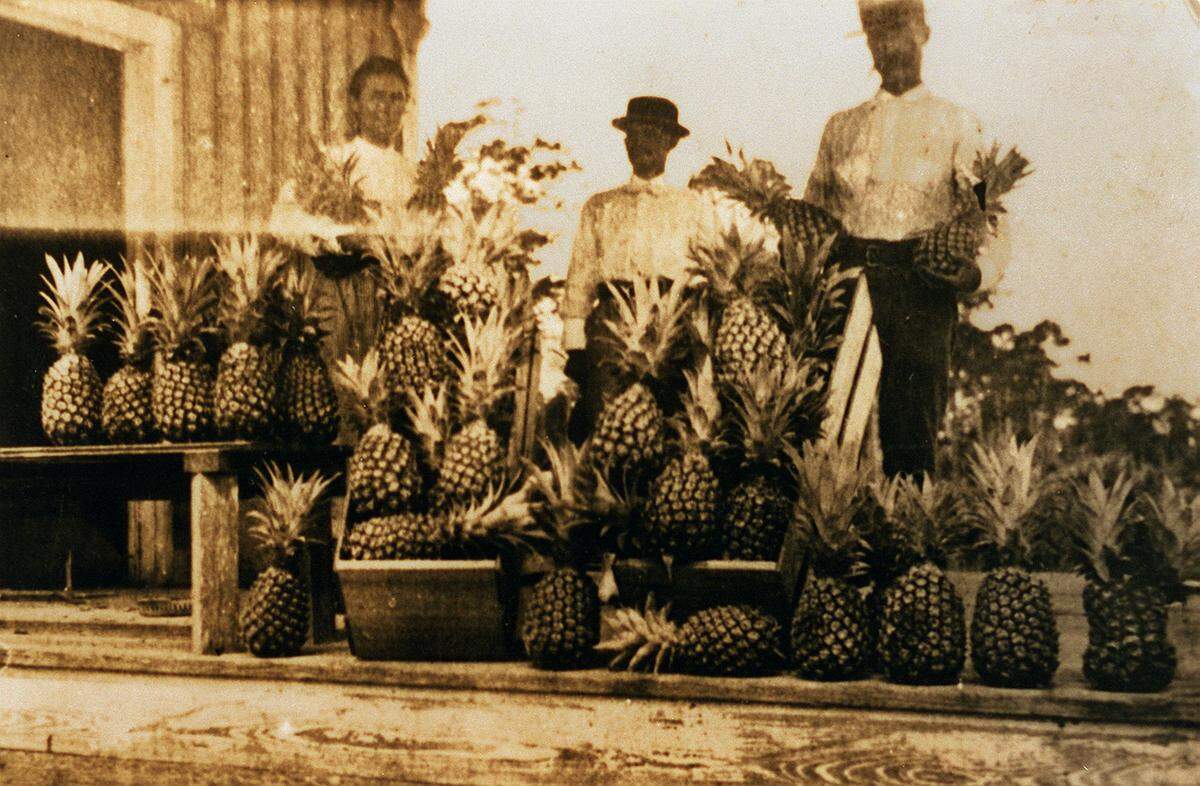
Harvest of pineapples in Lemon City. Miami Herald HistoryMiami
From Lemon City to Little Haiti
Published May 27, 2016
By David Smiley
What’s in a name?
In Lemon City - make that Little Haiti - the answer, for those who live and work in the community, is everything.
And so cheers erupted and brows furrowed Thursday in jam-packed Miami City Hall when commissioners voted unanimously to designate Little Haiti as an official city neighborhood. The creation of legal boundaries for the community in northeast Miami has been pushed for years, but always unsuccessfully due largely to overlapping boundaries with Lemon City, a historic neighborhood that predated the incorporation of Miami.
For proponents and opponents of the proposal, who debated for hours Thursday, the at times racially tinged conflict came down to preserving history and heritage. Lemon City advocates worried that the city would wipe out the story of the place where Miami’s first school and library were founded. Haitian activists argued that developers are already buying up property and gentrifying the neighborhood, clearing out their community.
“We are elated. Now no one can come and erase the name of Little Haiti,” Marleine Bastien, executive director of Fanm Ayisyen nan Miyami, said after the vote. “If this decision was not made today, in a few years Little Haiti would disappear.”
Bastien, whose organization helped bring people in three school buses and two jitneys to City Hall, said she and others have been fighting for 16 years to have the city recognize Little Haiti, a haven for immigrants and refugees fleeing the political and economic turmoil of Haiti. She called the city’s new Little Haiti boundaries, roughly between 54th Street and 79th Street, and Northwest Sixth Avenue and Northeast Second Avenue, a compromise that recognizes the encroachment of the Design District.
But critics of the neighborhood designation - the first in the city to be done by a resolution of the City Commission - said the boundaries were insensitive, if not insulting, to the founders of Lemon City, built with the sweat of Bahamians before Miami was even recognized as a city. Historians, business people and activists said commission chairman Keon Hardemon never included them in a discussion that apparently reignited months ago, and said the proposal needed more discussion and tweaking.
One area property owner said the proposal was “nothing more than the theft of documented history.” And while dismissing sentiments that the debate had pitted African Americans against Haitians, Alma Brown, a former Lemon City librarian, argued that Haitian activists demanding respect were “standing on the shoulders of African Americans.”
“The Haitians didn’t start Miami. Miami was here when they got here,” said preservationist Enid Pinkney, who years ago helped save the Lemon City Cemetery from an affordable housing project. “This resolution you’re proposing here today is discriminatory and insulting to the history of Lemon City and the pioneers who laid the foundation for you to be here. When you change the name of the community, you also do something to the history of that community.”
Designating legal boundaries for Little Haiti was also opposed by the Dade Heritage Trust. It asked the city to continue to honor Lemon City with an addendum recognizing Little Haiti. Developer Avra Jain and others noted that Little Haiti is already a widely recognized community.
But Hardemon, who represents the neighborhood and proposed the boundaries, said informal recognition isn’t enough for a community that has often felt like second-class citizens in Miami.
“Everything that we do we say Little Haiti. But we won’t pay the homage to actually identify this community,” he said. “I think it’s all talked out.”
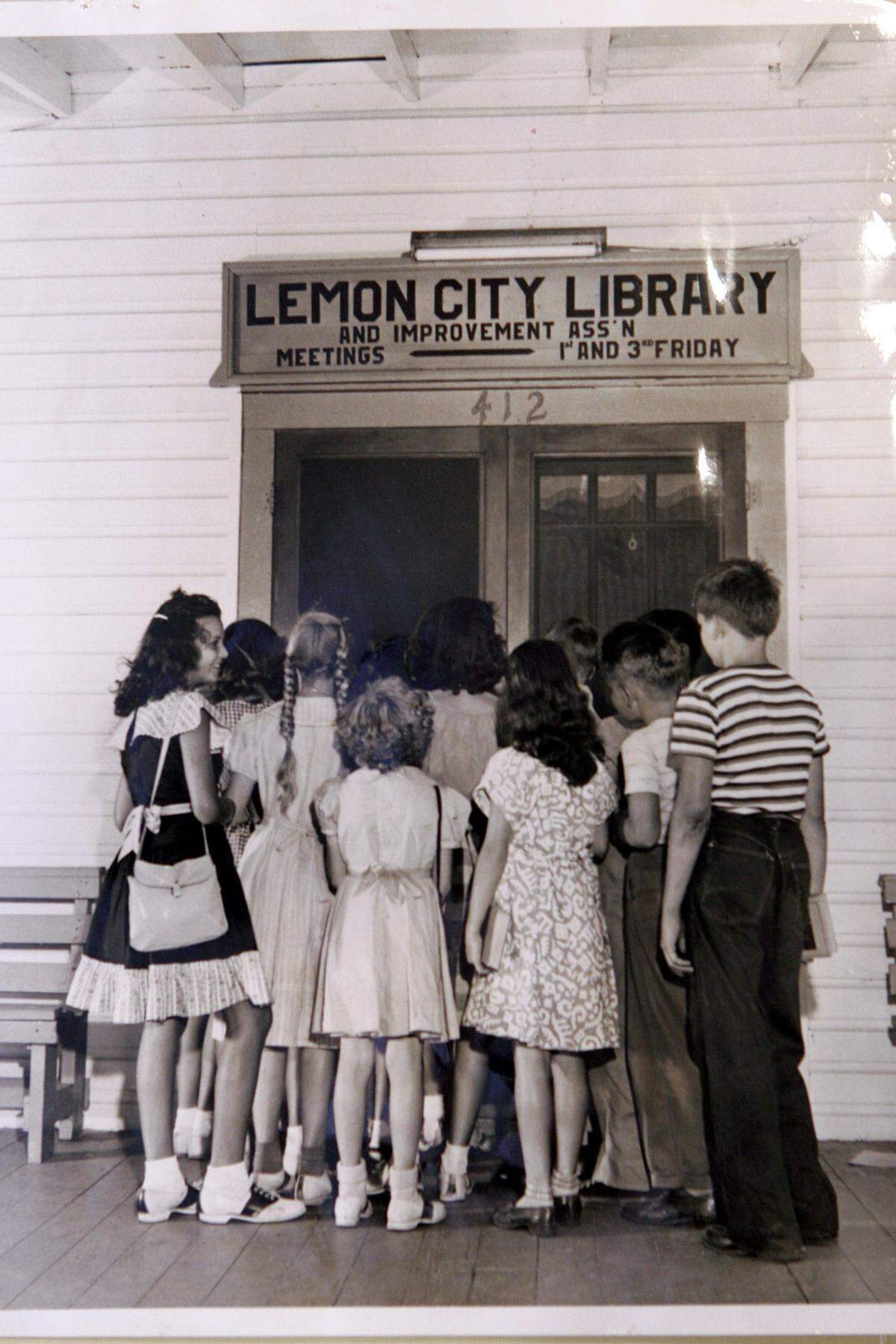
Children in Lemon City. Miami Herald File
Changes in Lemon City
Published Aug. 4, 1991
Doris Musloe remembers when fruit trees and foliage covered most of what is now Northeast Miami. When there were no sidewalks, only gravel roads. When Seminole Indians walked into town to trade with merchants.
Musloe remembers Miami before it was Miami, when its largest community was Lemon City.
“Everybody talked to each other,” said Musloe, 82, who lives in one of the remaining relics of the old neighborhood, Magic City Trailer Park, 6005 NE Second Ave. “Everybody helped each other.”
“And we had those big lemon trees,” she said. “You could make 10 pies out of one lemon, they were so big.”
Musloe, who settled in Lemon City 59 years ago, is among a handful of longtime residents who still call the neighborhood by its old name. While the exact boundaries of Lemon City are unclear because the area was never incorporated, its core is the same as today’s Little Haiti: Northeast 54th Street to Northeast 79th Street between the Florida East Coast Railway and North Miami Avenue.
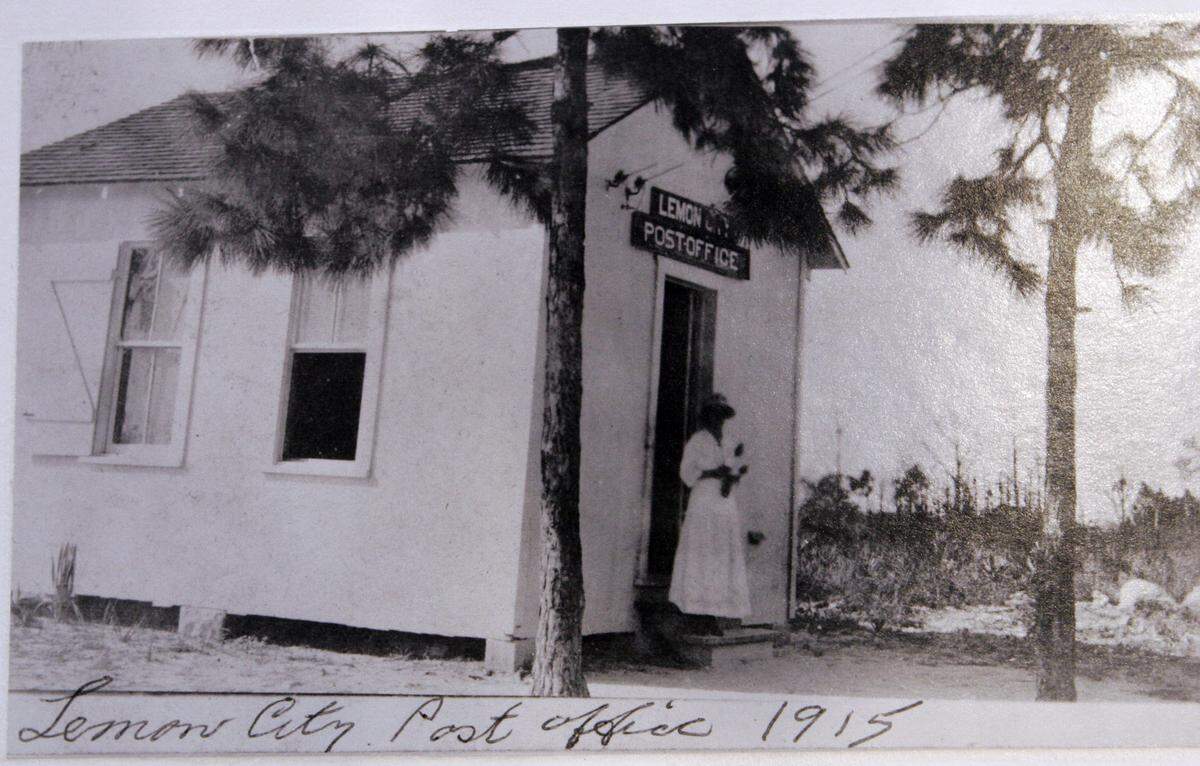
Lemon City post office. Miami Herald File
Lemon City was founded in 1869 as the town of Motto, on Biscayne Bay at what is now Northeast 61st Street. Motto expanded, becoming a stopover for ships traveling to Jacksonville, Charleston, Tampa, Key West and Nassau.
A school, church and library were built between 1885 and 1894, when settlers changed the name of the village to Lemon City because of wild lemon trees growing there. Paved roads came a year later, when the community was the largest in Dade, with 300 residents.
Henry Flagler brought the railroad through Lemon City in 1896, and the area continued to grow. It became part of the city of Miami in 1925.
But little now remains of the old neighborhood.
There is the Lemon City library, Miami’s first; Lemon City Supermarket, once an open-air fruit stand; Lemon City Oasis, a neighborhood bar; and a sign on Northeast Second Avenue that identifies the area as the Lemon City Pioneer Settlement.
Those, too, are disappearing.
Annette Rychel, owner of Lemon City Oasis Inc., 5911 NE Second Ave., is negotiating to sell the bar to the Haitian Task Force. The task force, which owns the Caribbean Marketplace two doors away, wants to include the bar in an expansion of the marketplace.
Rychel doesn’t know how long the bar has been there. It was already operating when her father-in-law, Albert Rychel, purchased the building 45 years ago. But there was nothing neighborly about the place back then.
Burglars broke in the first week and posted a sign outside that said, “Yankee go home.” Gambling took place in the cottage behind the bar. Nude photos covered the walls.
“This was such a rough place,” said Rychel. “But he cleaned it all up and made it into a real nice neighborhood bar.”
It was a place that thrived on regulars.
Dorothy Olson has been Oasis’ barmaid for 16 years. “After work every day this place was packed. Everybody knew everybody,” she said. “When someone got sick, we would take up a collection. Everybody would take care of his own.
“It was real nice, a real neighborhood bar.”
Only about eight regulars frequent the place now, not enough to keep business going.
That’s not the case at Lemon City Supermarket, which dates to about 1946. Neighborhood residents still make up the bulk of customers who shop at the store, 6212 NE Second Ave.
“This is a neighborhood store,” said Ramon Ramos, the 15- year owner. “The same people come here every day.”
While Ramos decided to keep the store’s original name, many of his customers don’t identify with it.
“I don’t know why the building is called Lemon City Supermarket,” said Limonas Clecidor, who moved to Miami from Haiti in 1975. “I don’t understand why. I guess they still keep the old-fashioned name.”
Another remaining neighborhood landmark is the first concrete building north of downtown. The building, at the corner of Northeast 61st Street and Second Avenue, once housed a drugstore and doctor’s office. It is still owned by relatives of the original owner, Dr. John Gordon DuPuis.
Musloe has fond memories of the doctor.
“He saved my youngest boy’s life when he was about 13 months old,” she said. “I was sitting in the back yard one Sunday and my husband had gone hunting. I was peeling a grapefruit. My sons were outside waiting for Daddy. My youngest, Gary, went next door and got a hold of lime. It looked like ice cream. He ate it and he started bleeding.
DuPuis “put a tube down his throat, and we pumped his stomach out. I was shaking. It was my baby.”
Entertainment was scarce. Women often had card parties at home, said Musloe who belonged to the Bunco Club. Bunco is a dice game.
“We didn’t gamble,” said Musloe. “We threw our husbands out of the house. A lot of giggling went on with a bunch of women together.”
The men usually went hunting. They often brought home duck, quail, turkey, snakes, “or whatever they could get,” Musloe said.
Hunting was popular with Seminole Indians as well.
Musloe’s husband at the time, Thomas Booth, was a gun and locksmith. He had a shop in nearby Little River in the 1930s and early 1940s and would often trade with the Indians: gun shells for berries or frog legs.
Trade was common back then, said Thelma Peters, a historian who wrote a book on Lemon City. The Indians would canoe from the Everglades and then walk into the communities in Dade.
“We just don’t live the same kind of life we used to,” Musloe said.
Robert Schlink, 71, who moved to Lemon City in 1964, still lives in one of the neighborhood’s old wooden cottages in the 6300 block of Northeast First Avenue.
A notary, Schlink spends his days on his cramped front porch, notarizing documents and watching the neighborhood change.
“It’s been a hell of a change from then to now,” Schlink said. “Now this is Little Haiti. But I still love it. “You can’t go back in time,” he said. “You’ve got to go with the times.”